
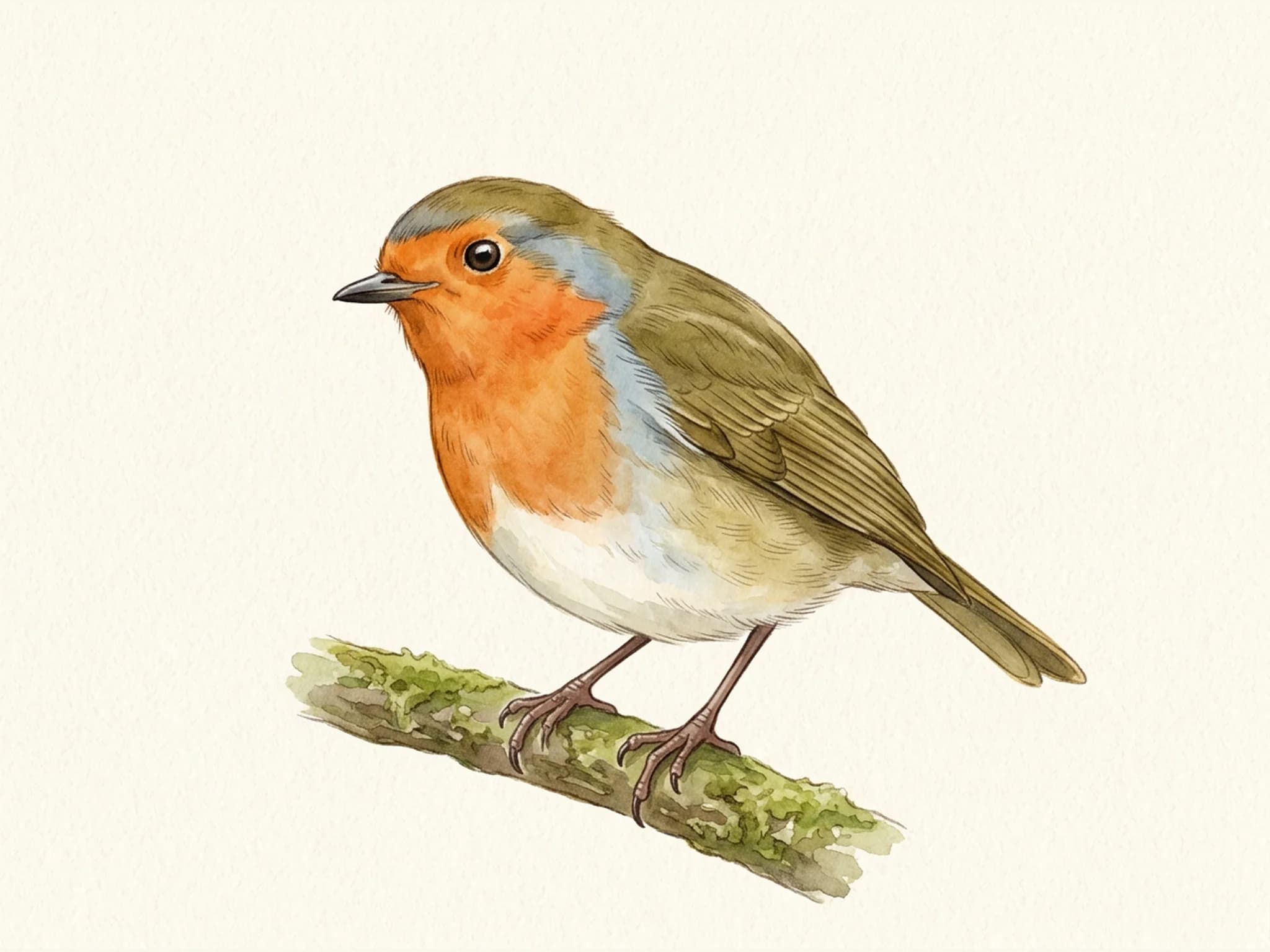
European robin
Erithacus rubecula
Also called: robin, robin redbreast
It keeps you company while you dig: it takes the worms and grubs you turn up.
Trusting and curious, it comes close to the gardener when the soil is turned. It guards its territory all year, even in winter, when it sings from bare branches.
Months when you can see it
How it helps in the garden
It hunts grubs, worms, ants, beetles and spiders on the ground; it clears the beds of small larvae and looks after living soil.
How to recognise it
- Size
- Small and round: 13–14 cm and 16–22 g.
- Colours
- Orange-red face and breast, olive-brown back, pale belly. Young birds are speckled brown, with no red.
- Song
- A melodious, crystal-clear trill, sometimes at night; the dry “tic-tic” is its alarm call.
What it eats through the year
Spring
Larvae, earthworms, beetles and spiders.
Summer
Insects and soft berries.
Autumn
Bramble, ivy and elderberries; insects.
Winter
Small invertebrates, berries, mealworms and crumbs of cheese or fat at the feeder.
Breeding
- When
- From March to July.
- Broods
- 2, sometimes 3.
- Eggs
- 4–6 whitish eggs with reddish dots.
Which nest it uses
A cup of leaves and moss, well hidden: a bank, a hole in a wall, among roots, old flowerpots, ivy or an open-fronted box.
Its nest box · entrance
Open front
- Inner base
- 130 × 130 mm
- Placement
- 1–2 m, hidden
- Orientation
- N–E
How to attract it
Plants
Hedges and shrubs with berries (elder, hawthorn, ivy), ivy on a wall and a corner with leaf litter.
Water
A shallow drinking and bathing dish, kept clean.
Shelter
Dense scrub or a brush pile to hide the nest and escape from cats.
Nest box
Open-fronted (“semi-open”) box, at 1–2 m hidden among vegetation, facing N–E.
Plants from the catalogue it likes
 Ivy (berries in winter)A self-clinging evergreen climber, able to cover walls and the ground even in deep shade, where few plants…
 Nettle (a corner for insects)One of the most useful wild plants.
 ElderA large wild shrub with flat clusters of white flowers in spring and bunches of black berries in summer.
 Hawthorn (common hawthorn)A thorny shrub of wild hedgerows, with white spring flowers and red fruits.
What to avoid
Letting cats roam the garden
The robin looks for food on the ground, very focused, and a cat catches it by surprise.
Feeding it bread
It fills its crop without nourishing it, so it stops looking for real food. Mealworms, oats or fat are better.
Putting out slug and snail bait
The robin eats the pellets or the poisoned snails and is poisoned.
Pruning hedges in spring
That is when it has its nest hidden inside, and cutting leaves it exposed or destroys it.