
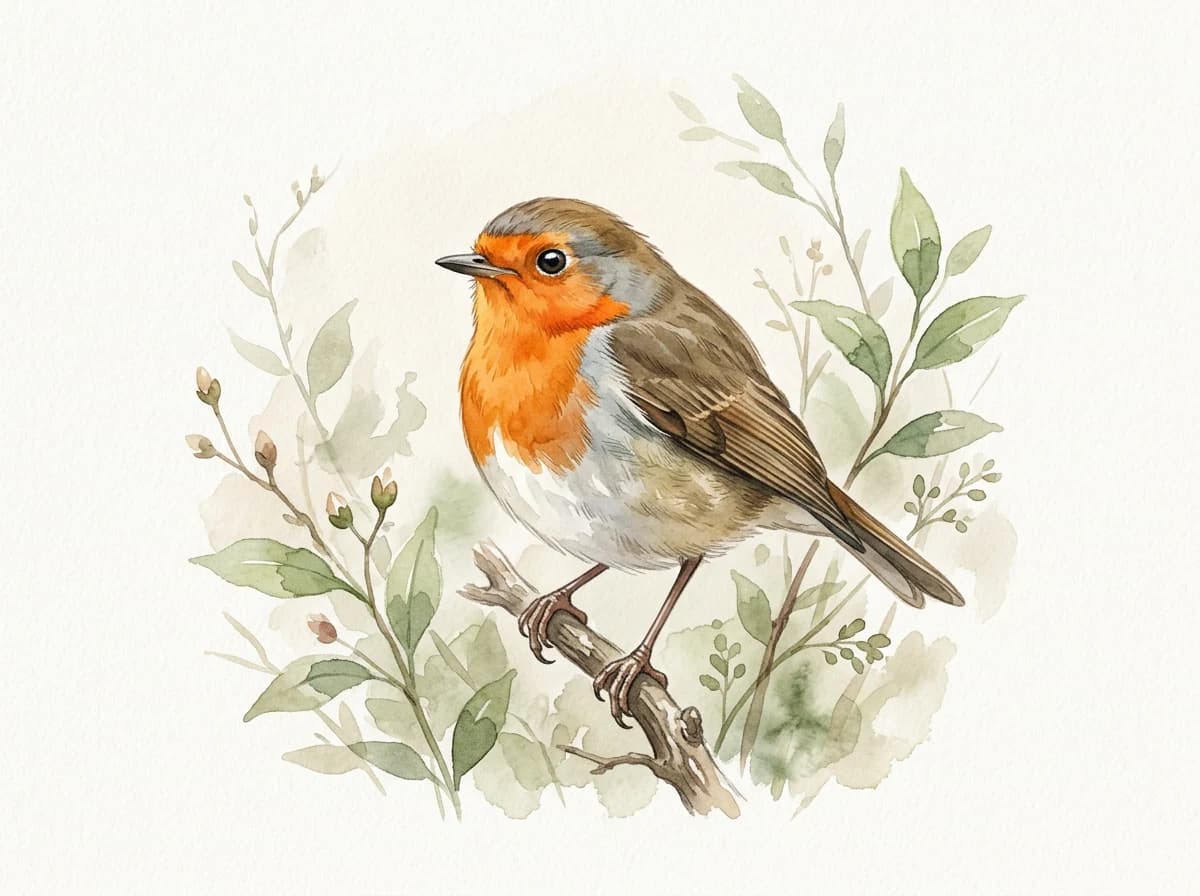
Robin, blackbird and other insect-eating birds
Erithacus rubecula, Turdus merula and other passerines
Also called: European robin, robin, tit, blue tit, great tit, common blackbird
The insect-eating birds of the garden eat caterpillars, worms, beetles, spiders and small slugs. Birds such as the robin, the great tit and the blue tit get used to people easily.

How to recognise it at every stage
Garden allyGarden ally: it follows you when you dig to eat larvae and worms.
Life cycle: Bird: it lays 4 to 6 eggs in a hidden nest; the chicks hatch after two weeks and fly at 14 days, still without the red breast. Two or three broods a year.
Tap a stage to see it full size. The photos are AI reference images checked against real photographs; stages without a reliable photo are shown as text only.
Life-stage calendar
| Jan | Feb | Mar | Apr | May | Jun | Jul | Aug | Sep | Oct | Nov | Dec | |
|---|---|---|---|---|---|---|---|---|---|---|---|---|
| Eggs | ||||||||||||
| Fledgling | ||||||||||||
| Adult |
Approximate months for mainland Spain; in cold areas they start later and in warm areas they last longer. Garden creatures this month
- 1Protect it
Eggs
· 2 cmWhitish with reddish speckles, in a nest of moss and leaves.
- Where to find it
- In wall holes, banks, dense hedges, open nest boxes and even in forgotten flowerpots or watering cans.
- When: Mar–Jul
- What to do
- If you find a nest, step away and do not touch it: they abandon it if disturbed.
- 2Protect it
Fledgling
· 12-14 cmBrown speckled with pale spots, with no red breast; it flies clumsily and begs for food.
- Where to find it
- On the ground and in hedges near the nest.
- When: Apr–Aug
- What to do
- Do not pick it up: its parents keep feeding it. Keep the cat indoors for a few days.
- Often confused with
- Robin chick versus another bird. The brown speckled fledgling does not look like its parents, but it has the same round shape and long legs.
- 3Protect it
Adult
· 13-14 cmA small, round bird, brown above, with an orange-red face and breast.
- Where to find it
- Perched near whoever is digging, in hedges and at the garden's edges.
- When: all year
- What to do
- Protect it: hedges with berries and an open nest box. It is territorial and sings in winter too.
Often confused with
- Robin chick versus another bird. The brown speckled fledgling does not look like its parents, but it has the same round shape and long legs.
What it eats
- Caterpillars, beetles, flying ants
- Worms and soil larvae
- Berries and seeds in winter
How it helps in the garden
How to attract this ally to your garden
- A feeder hung more than 1.5 m above the ground (out of reach of cats).
- A drinking bowl of clean water always available, especially in summer and during frost.
- Nest boxes for great and blue tits, with an entrance hole of 26-32 mm. The robin prefers boxes open at the front.
- Dense hedges that give shelter and nesting sites (privet, honeysuckle, blackthorn).
- In winter, vegetable fat balls with seeds: they give birds the energy they need when insects are scarce. Remove the plastic net, as their feet get caught in it.
Plants in the catalogue that attract it
 Japanese privetAn evergreen shrub with glossy leaves, widely used for hedges because it grows fast and responds well to…
 Japanese honeysuckleA semi-evergreen climber of very vigorous growth, with white flowers that turn yellow over the days and are…
 Blackthorn (sloe)A thorny wild plum of hedgerows and field margins.
What to avoid so you do not harm it by accident
- Feeders at ground level: cats easily catch birds that come down to eat.
- Salty food, white bread, scraps with oil: they are bad for them.
- Removing a nest with eggs or chicks in spring: it is illegal and wipes out the brood.
How to recognise it
Robin: 14 cm, intense orange breast, very trusting. Great tit: 15 cm, black head, white cheeks, black stripe down the yellow breast.
Risk to people: None.
Many allies are protected by Spanish law: do not capture or keep in captivity toads, hedgehogs, bats or native reptiles. Attract them, watch them and thank them from a distance. Rules in other countries differ: check your local regulations.

Allies do better if the garden is varied. Learn to identify each visitor and to prevent problems with good habits.