
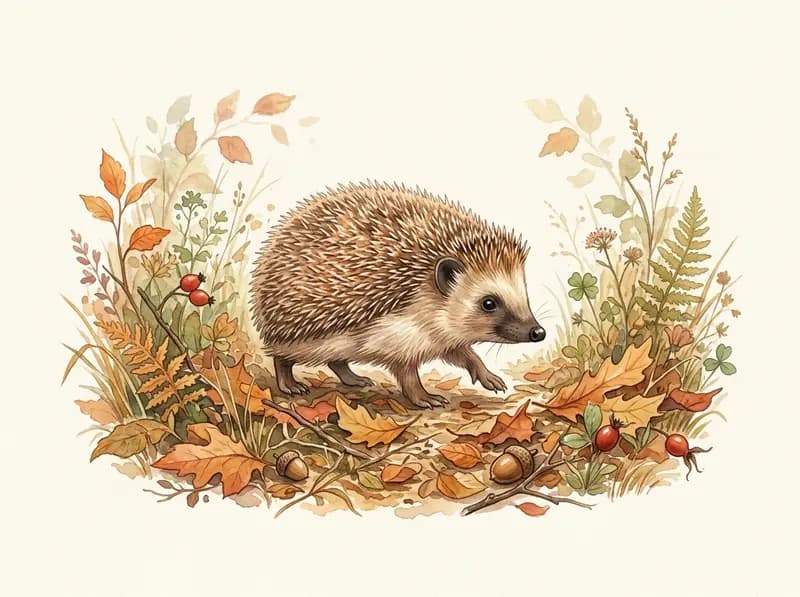
Hedgehog
Erinaceus europaeus
Also called: European hedgehog, common hedgehog, urchin
Another night hunter of slugs and caterpillars, which also eats beetles and earthworms. It is a protected species and in decline because of road traffic and strimmers. If you have one in the garden, look after it.

How to recognise it at every stage
Garden allyGarden ally: at night it eats slugs, snails and beetles.
Life cycle: Mammal: the young are born blind with soft spines in a nest of leaves, suckle for about six weeks and become independent at two months. They hibernate from November to March in cold areas.
Tap a stage to see it full size. The photos are AI reference images checked against real photographs; stages without a reliable photo are shown as text only.
Life-stage calendar
| Jan | Feb | Mar | Apr | May | Jun | Jul | Aug | Sep | Oct | Nov | Dec | |
|---|---|---|---|---|---|---|---|---|---|---|---|---|
| Hoglets | ||||||||||||
| Adult | ||||||||||||
| Leaf nest |
Approximate months for mainland Spain; in cold areas they start later and in warm areas they last longer. Garden creatures this month
- 1Protect it
Hoglets
· 6-15 cmSmall hedgehogs with pale spines that leave the nest at dusk following their mother.
- Where to find it
- In hedges, leaf piles and under sheds.
- When: May–Sep
- What to do
- If you see young on their own by day, watch from a distance; if hours go by without the mother, call a wildlife rescue centre.
- 2Protect it
Adult
· 20-30 cmBody covered in brown spines with pale tips, pointed snout; it rolls into a ball if frightened.
- Where to find it
- At night roaming the garden; by day asleep in hedges and leaf piles.
- When: Mar–Nov
- What to do
- Protect it (protected species): leave 13 cm gaps in fences, a dish of water (never milk) and no slug killers.
- Often confused with
- North African hedgehog. Paler, with a spine-free parting on the head, on the Mediterranean coast and the Canary Islands. Also an ally.
Nests, egg clutches and shelters
- Protect it
Leaf nest
A compact heap of dry leaves and grass under a hedge, logs or a shed.
- Where to find it
- In quiet, dry corners of the garden.
- When: all year
- What to do
- Do not burn or move heaps of leaves or branches without looking first, especially from November to March.
Often confused with
- North African hedgehog. Paler, with a spine-free parting on the head, on the Mediterranean coast and the Canary Islands. Also an ally.
What it eats
- Slugs and snails
- Night-flying caterpillars and earwigs
- Beetles and earthworms
- Young mice occasionally
How it helps in the garden
How to attract this ally to your garden
- Hedges and piles of leaves and sticks: do not sweep everything up in autumn, they are hibernation shelters.
- Leave gaps of about 13 x 13 cm at the base of fences: if gardens are cut off from each other, hedgehogs find neither food nor a mate.
- Put fresh water in a deep saucer at ground level: hedgehogs and insect-eating birds need to drink near the garden.
- As an occasional help, you can leave them some meat-based cat food on a low plate. Never milk or bread.
What to avoid so you do not harm it by accident
- Strimmers and mowers in long grass without checking it first: by day hedgehogs sleep hidden in it and do not run from the noise, so the machine injures them.
- Netting and meshes left lying on the ground: they get tangled and die.
- Chemical insecticides and slug pellets: they poison hedgehogs and other predators that eat contaminated slugs.
- Milk: they are lactose intolerant, and it gives them diarrhoea that can be serious.
How to recognise it
20-30 cm, covered in brown and cream spines. Nocturnal. When frightened it rolls into a ball. A healthy one does not come out by day.
Risk to people: None. It only prickles if you touch it and it curls up. It can carry fleas, fungi and bacteria such as salmonella: wear gloves if you need to handle it and wash your hands afterwards.
Many allies are protected by Spanish law: do not capture or keep in captivity toads, hedgehogs, bats or native reptiles. Attract them, watch them and thank them from a distance. Rules in other countries differ: check your local regulations.

Allies do better if the garden is varied. Learn to identify each visitor and to prevent problems with good habits.