
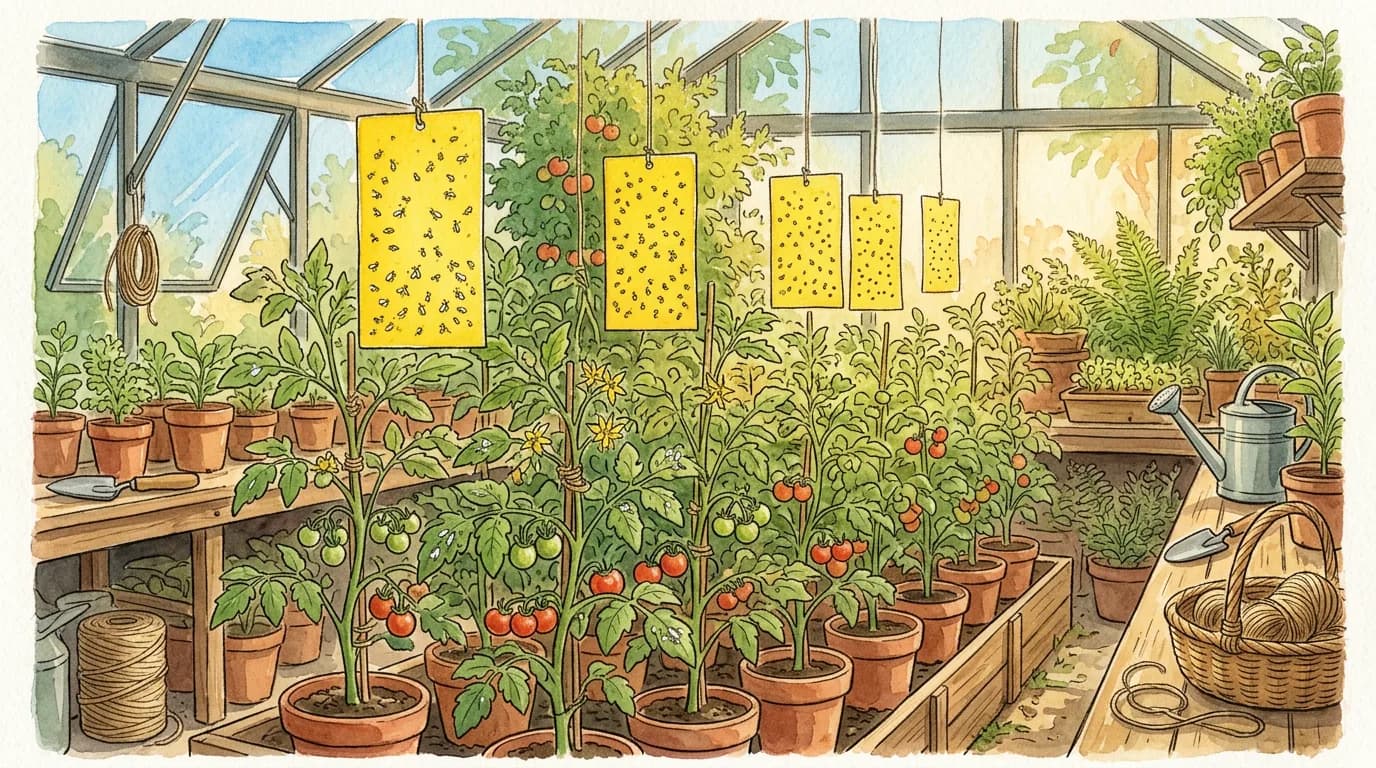
Yellow sticky traps for whitefly
Colour attraction: whiteflies, winged aphids and fungus gnats stick to a yellow card with glue.
Works in practice. They work well for detecting the visitors and bringing down high numbers, but they are recommended mainly as a monitoring tool: they do not replace other methods.
Before you start, read the precautions
You will need
- yellow card or boards with glue
- string
- canes
- scissors
When to use it
From the start of the crop in a greenhouse or on a terrace, to detect the first whitefly. Keep them up for the whole cycle.
Step by step
1Buy yellow boards with glue, or cut rectangles of yellow plastic and smear them with glue or sticky oil.
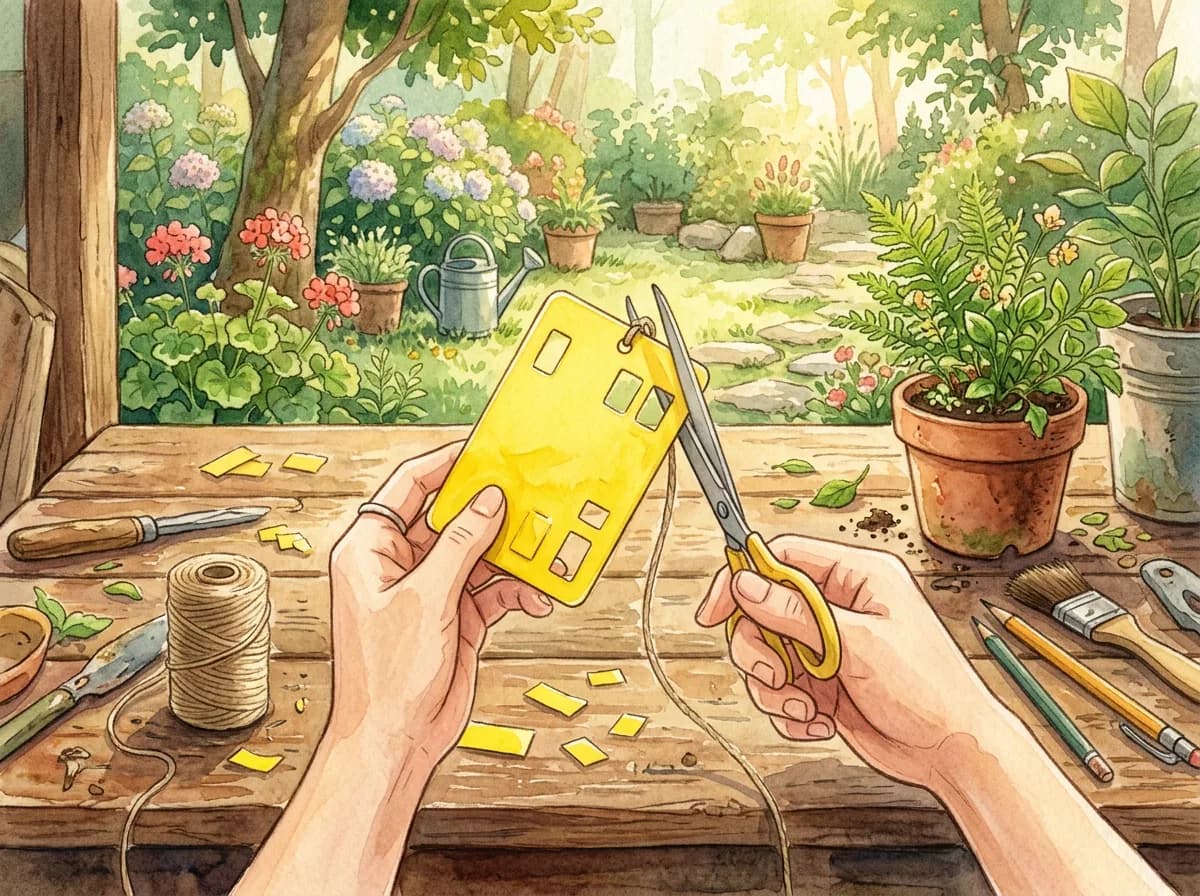
2Hang them on canes or string just above the canopy of the plants, with the sticky side towards the crop and out of direct sun.
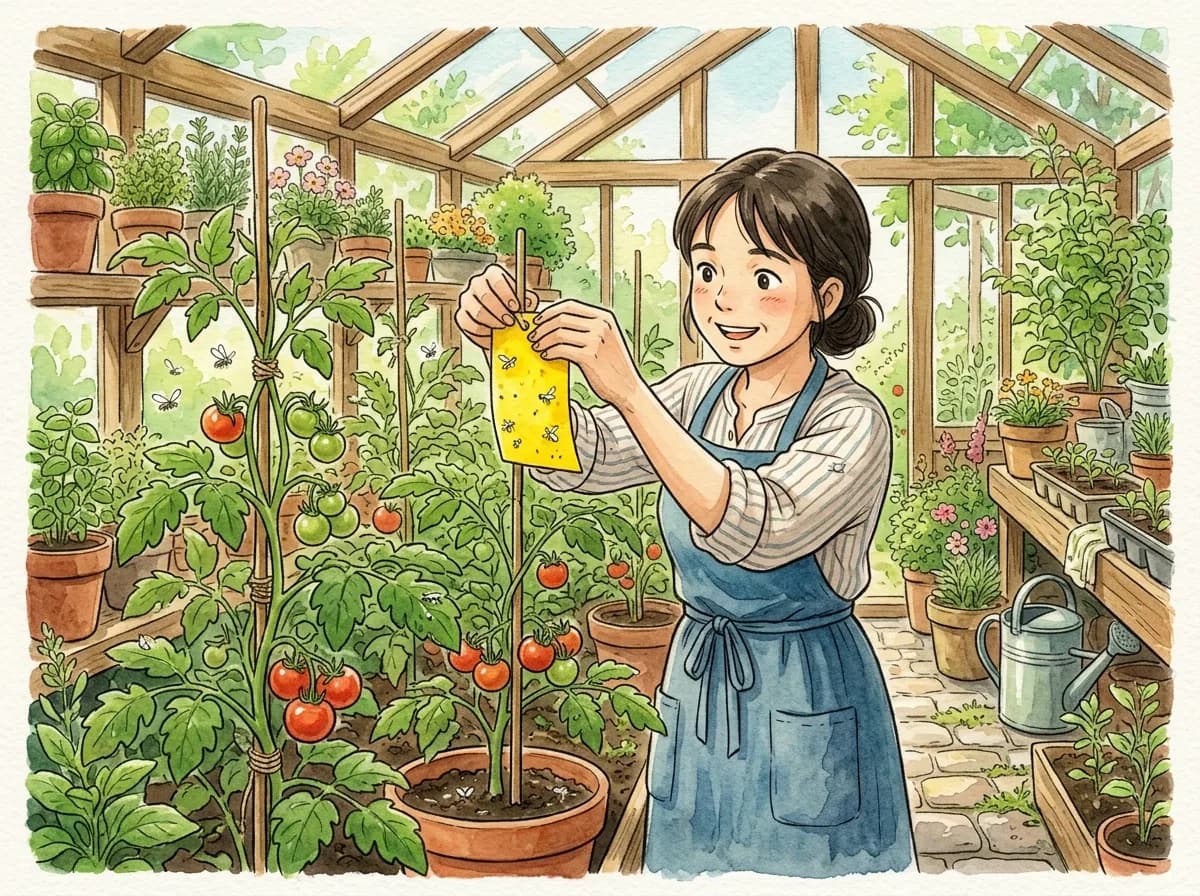
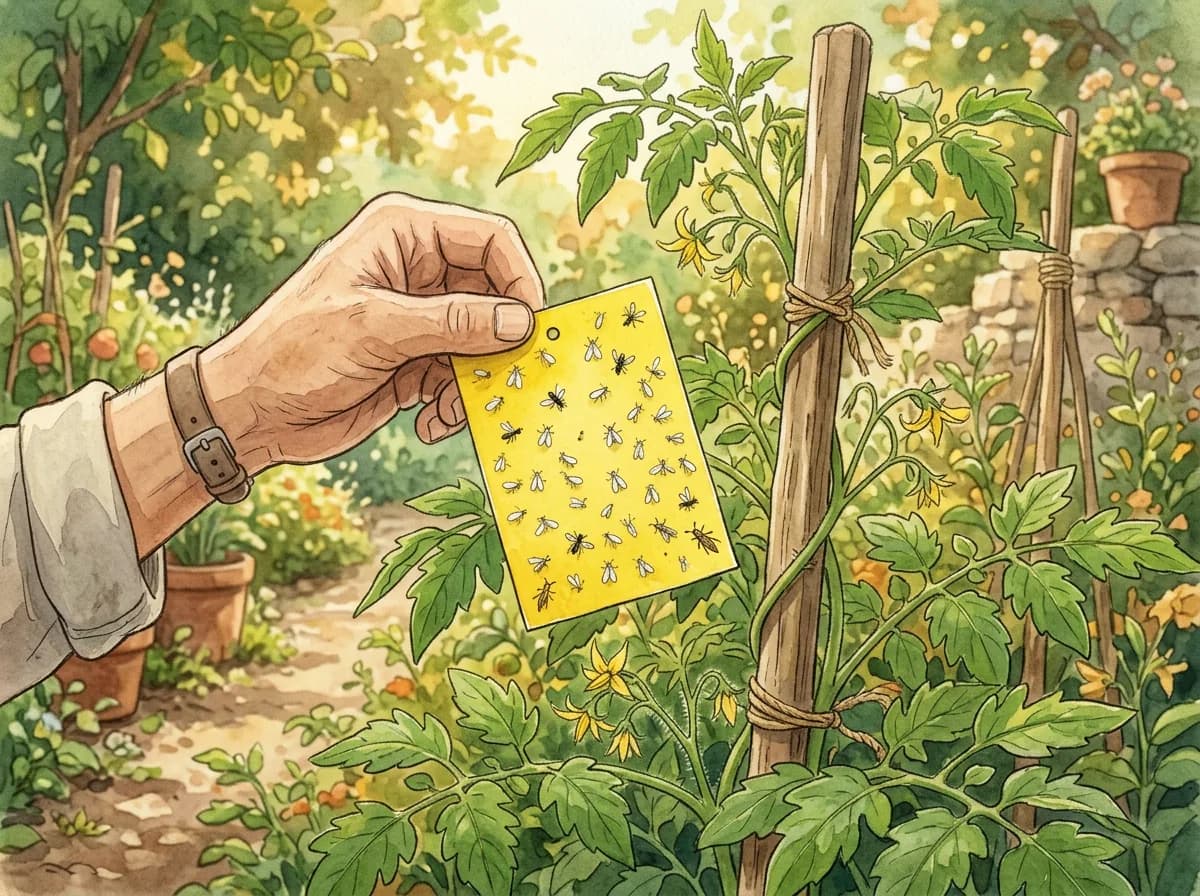
3Check every week: count the insects to know whether the numbers are growing, and replace the traps when they are very full or dirty.
Dose
About 1 trap per medium vegetable plant, or 1 per 2 large plants; as whiteflies fly little, many may be needed. For monitoring only, lower density.
Which plants
Tomato, pepper, aubergine, courgette and houseplants with whitefly or gnats. Not needed on plants without confirmed visitors.
Plants mentioned in this remedy
 Tomato 'Marmande'Marmande tomato, flattened and ribbed, a good size for salads.
 Sweet pepper 'California Wonder'California Wonder pepper, a blocky bell type with thick flesh, for stuffing or eating fresh.
 Long black aubergineAn aubergine with glossy black fruit, for warm climates.
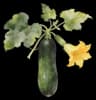 Courgette 'Nero di Milano'A cylindrical, very dark green courgette, productive and early, the classic bush type for continuous picking.
Precautions
- Traps also catch pollinators and bees: place them away from flowers and do not leave them in open-air crops with a lot of bloom.
- Handle with gloves so you do not get stuck in the glue; do not leave them within reach of pets.
- The glue does not come off clothes or plants easily: do not rest it on leaves.
- Remove old traps from the garden: they are plastic and not compostable.
Why it works
Adult whiteflies are attracted to the colour yellow, which mimics young foliage. When they land they get stuck, so the adults that lay eggs go down, although not the nymphs already attached to the leaves.
Sources
- University of California Integrated Pest Management: whiteflies; yellow traps are mainly for monitoring and detection, can lower the population somewhat and only as part of a broader programme