
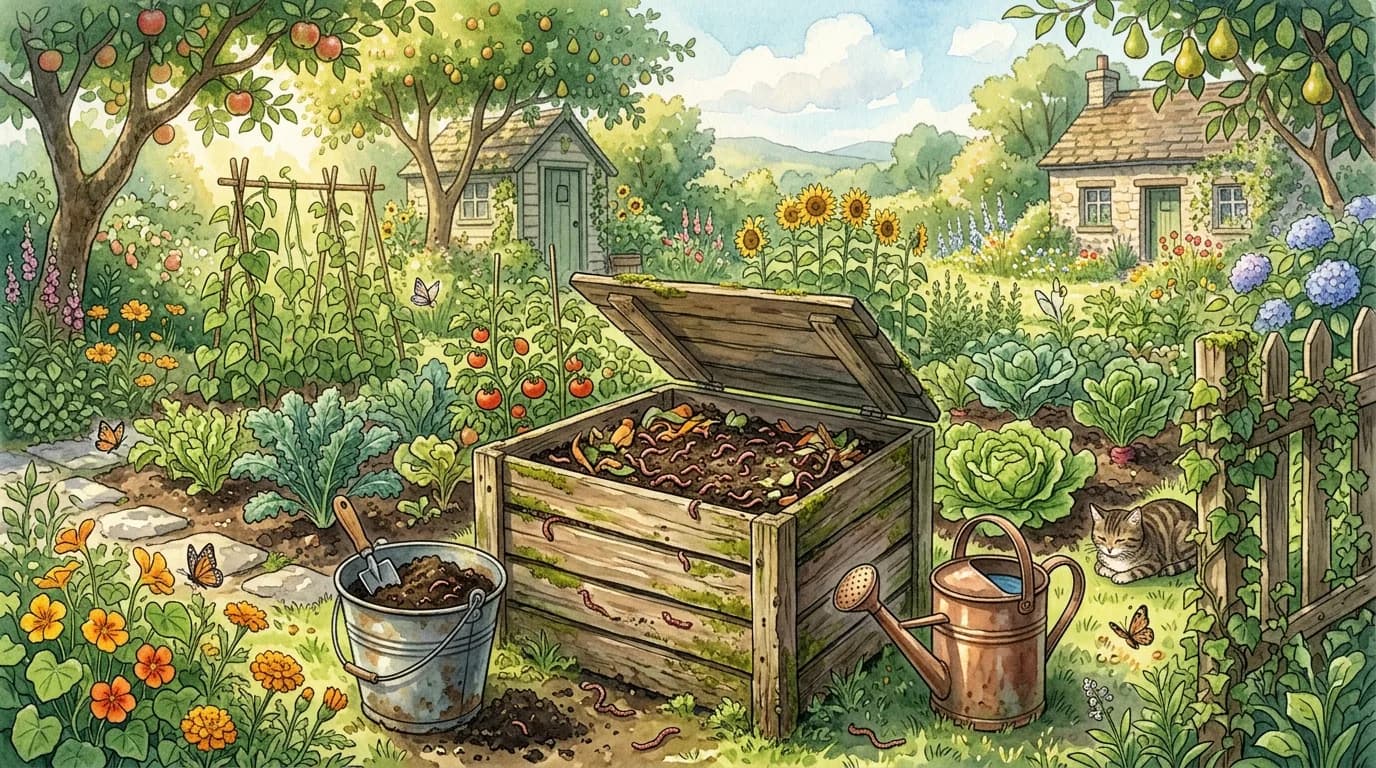
Worm compost tea
A 24-hour infusion of worm castings to give a gentle feed rich in microbial life.
Works in practice. Worm castings as a solid amendment are well supported. The ‘tea’ is in common use, but we have not found solid trials showing that it does better than applying the castings directly, and studies on vermicompost teas have methodological criticisms. If you have castings, it is safer to mix them into the growing medium (see “Homemade worm compost with red worms”).
Before you start, read the precautions
You will need
- worm castings
- water
- bucket
- cloth bag
- watering can
When to use it
During growth, in seed trays, transplants and potted plants that welcome a gentle feed every 2–3 weeks.
Step by step
1Take a couple of handfuls of castings from your worm bin (without worms, or put them back).
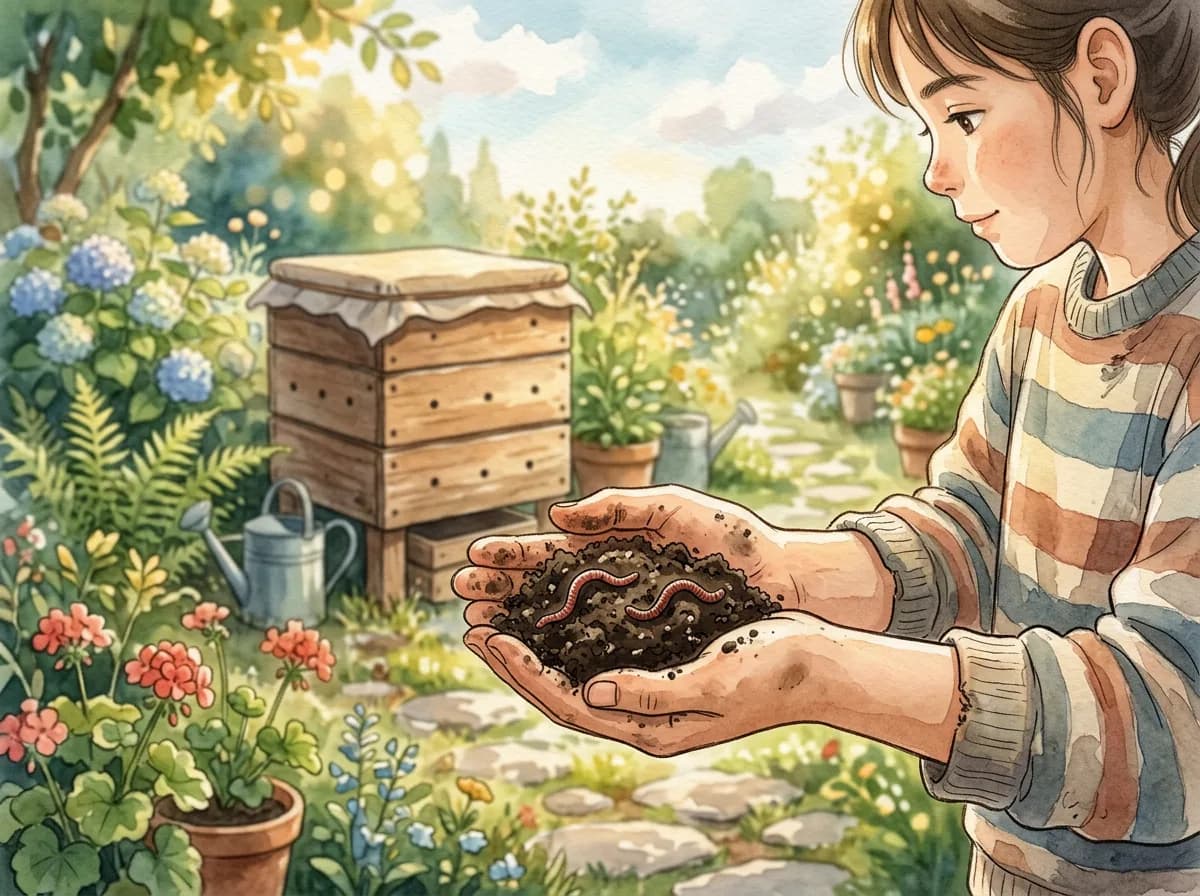
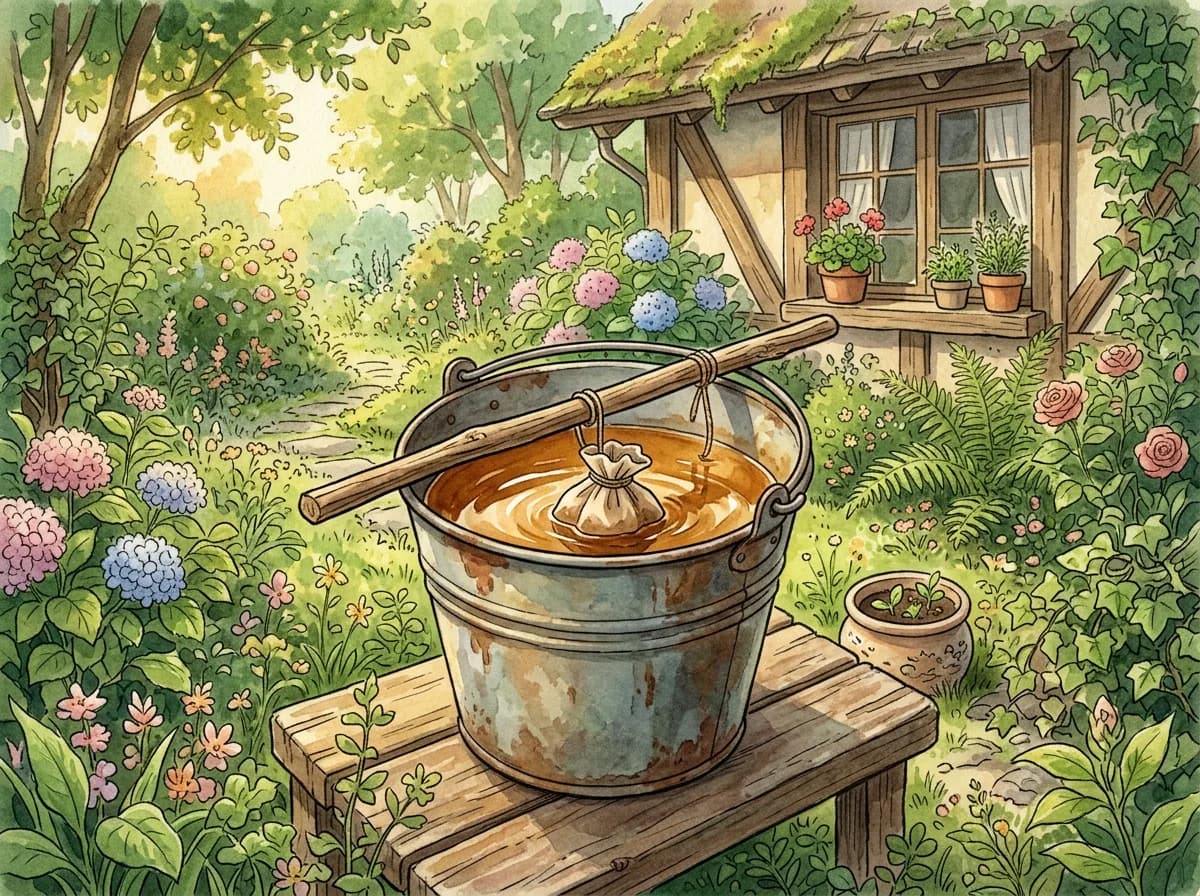
2Put them in a cloth bag and submerge it in a bucket with 10 litres (about 2.6 US gal) of water without chlorine for 12–24 hours, stirring from time to time.
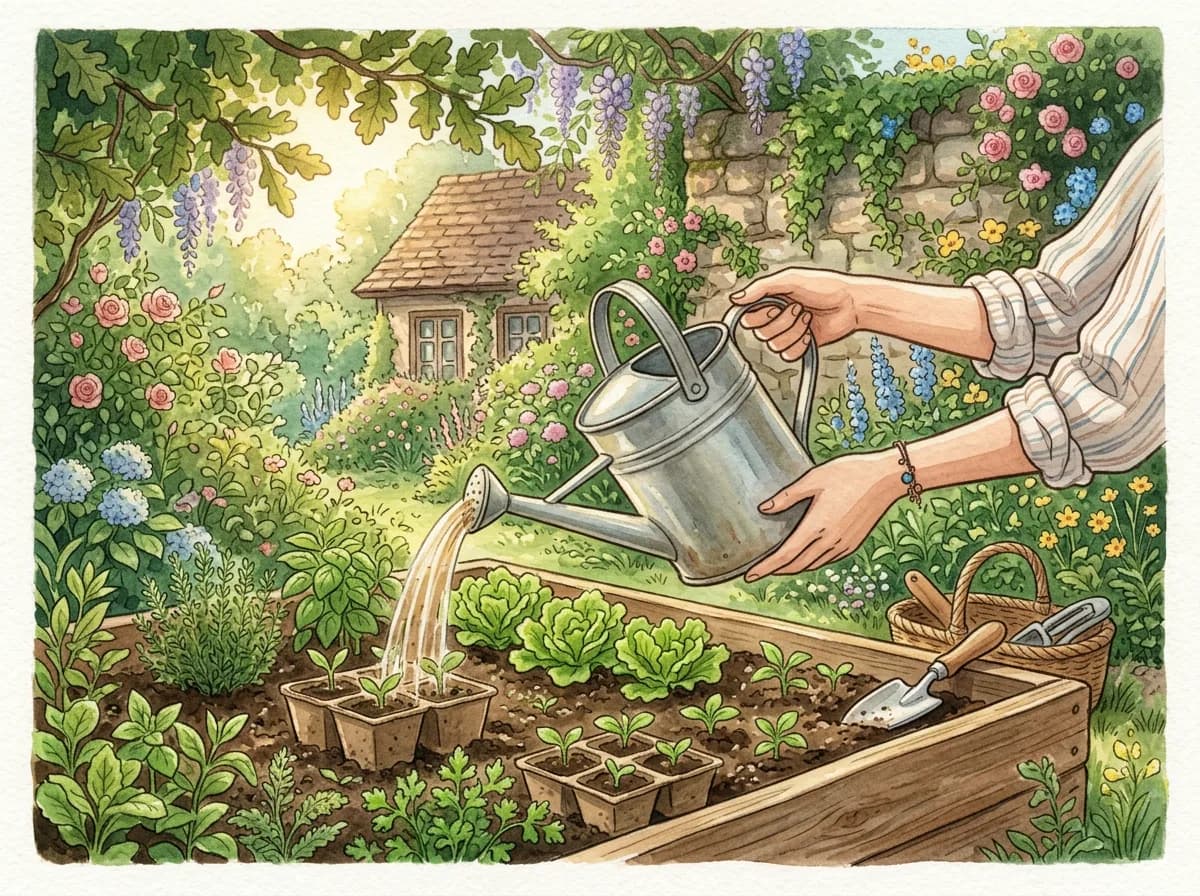
3Remove the bag and water with the liquid the same day, straight onto the growing medium.
Dose
Indicative dose, with no trial to set it: undiluted on established plants; 1:2 with water on seedlings. Every 2–3 weeks. Do not keep it more than a day.
Which plants
Almost all: seed trays, pots, vegetables and flowers.
Precautions
- Do not confuse it with the leachate that drains from the base of the worm bin: that liquid can be anaerobic and is not a tea. If you use it, dilute it 1:10 and avoid edible leaves.
- Do not leave it more than 24 hours: it turns anaerobic and smells bad.
- Avoid spraying it on leaves eaten raw.
Why it works
Worm castings are organic matter that has already been transformed, with nutrients in a stable form and plenty of microbiology. When soaked, the soluble fraction passes into the water.
Sources
- Iowa State University Extension: how to make and use vermicompost (as a solid amendment)
- The effectiveness of the ‘tea’ as such is not supported by solid trials that we have been able to verify