
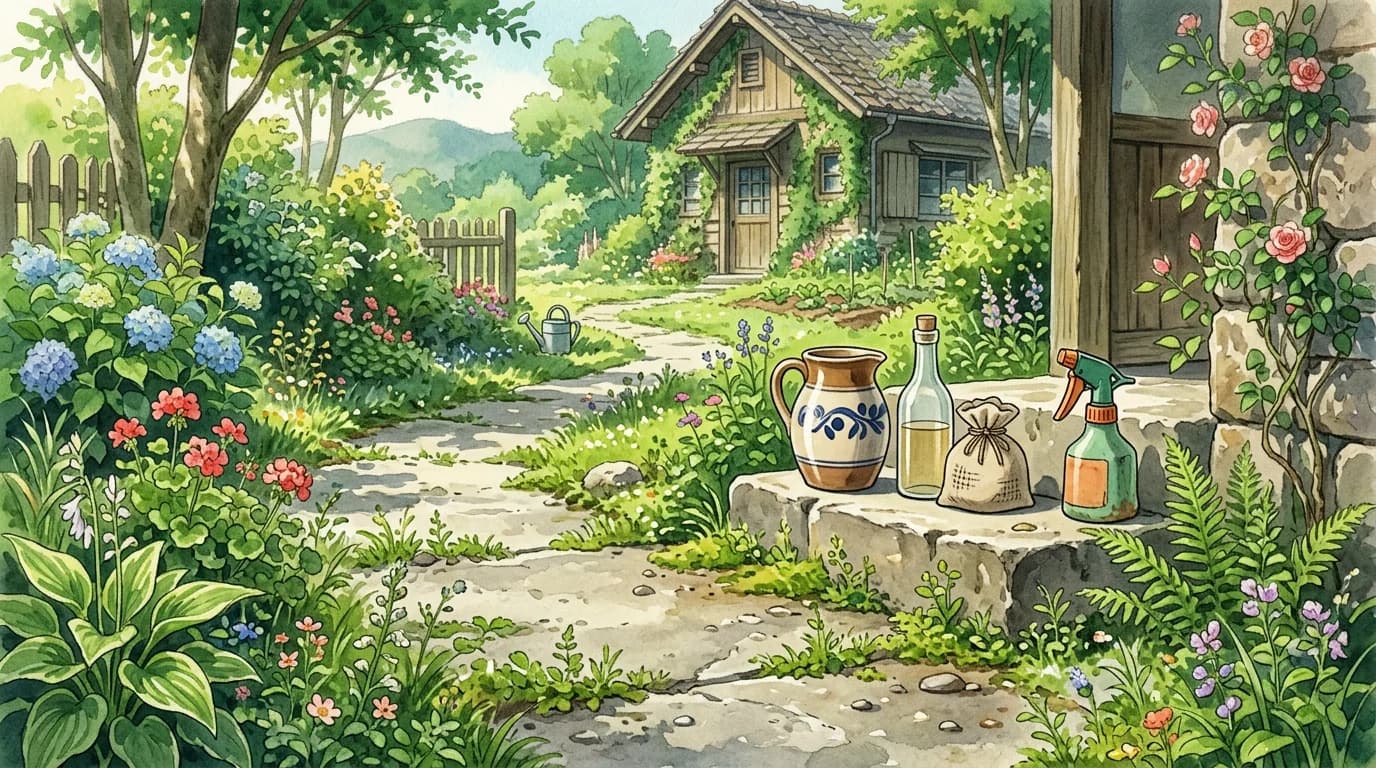
Vinegar, salt and soap as a homemade weed control
A contact mix that scorches the leaves of young weeds in paving joints and paths, without destroying the root and with a risk to the soil.
Use with care. Vinegar acts by contact on small weeds, but does not reach the root: perennials regrow, and it can be dangerous to handle. Salt adds lasting damage to the soil, which is why we remove it from the recipe (see “Myth: is salt a good weed control?”, sal-herbicida-mito).
Before you start, read the precautions
You will need
- white vinegar
- table salt
- washing-up liquid
- spray bottle
When to use it
On young weeds less than 10 cm (3.9 in) tall in paving joints, gravel or paths away from crops, on a sunny, dry, windless day.
Step by step
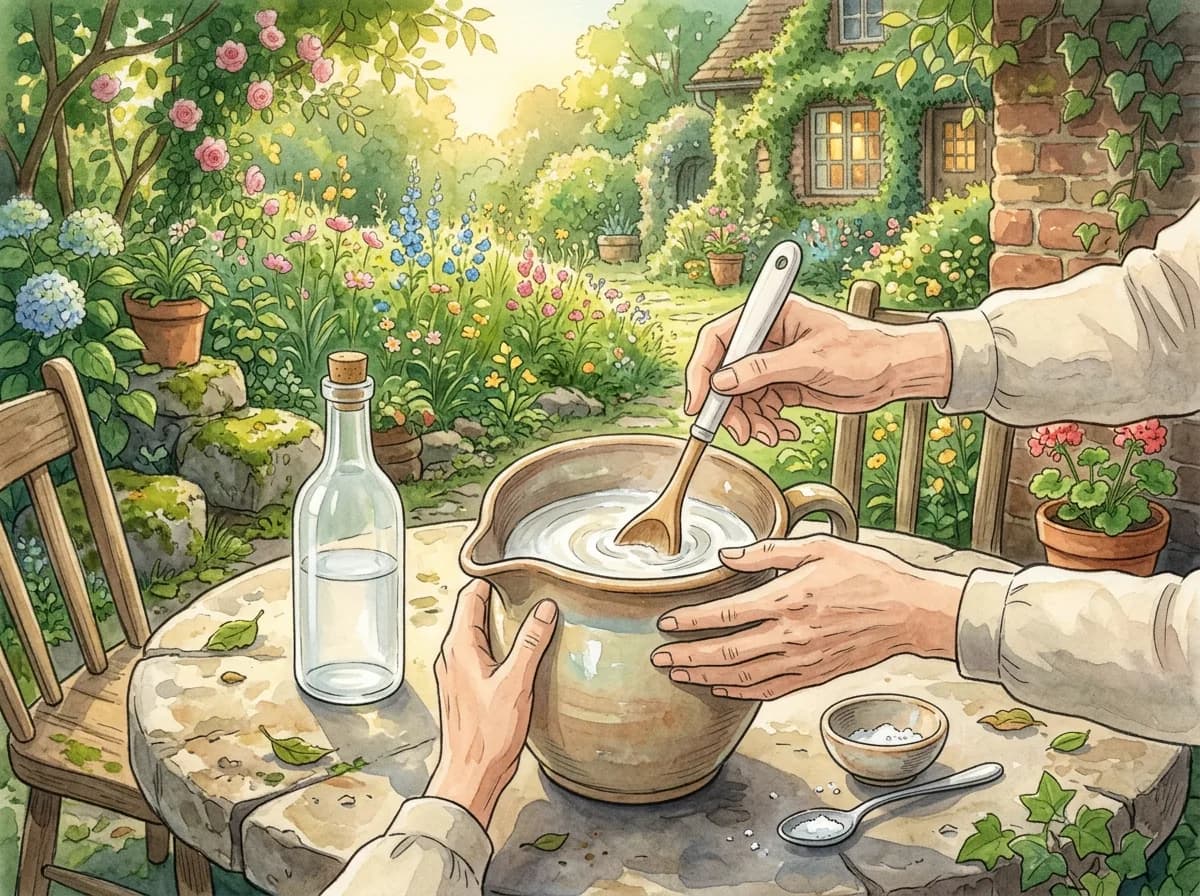
1In a spray bottle mix 1 litre (about 1.1 quarts) of white kitchen vinegar (5 %) with 1 tablespoon of washing-up liquid. Do not add salt: it damages the soil for years.
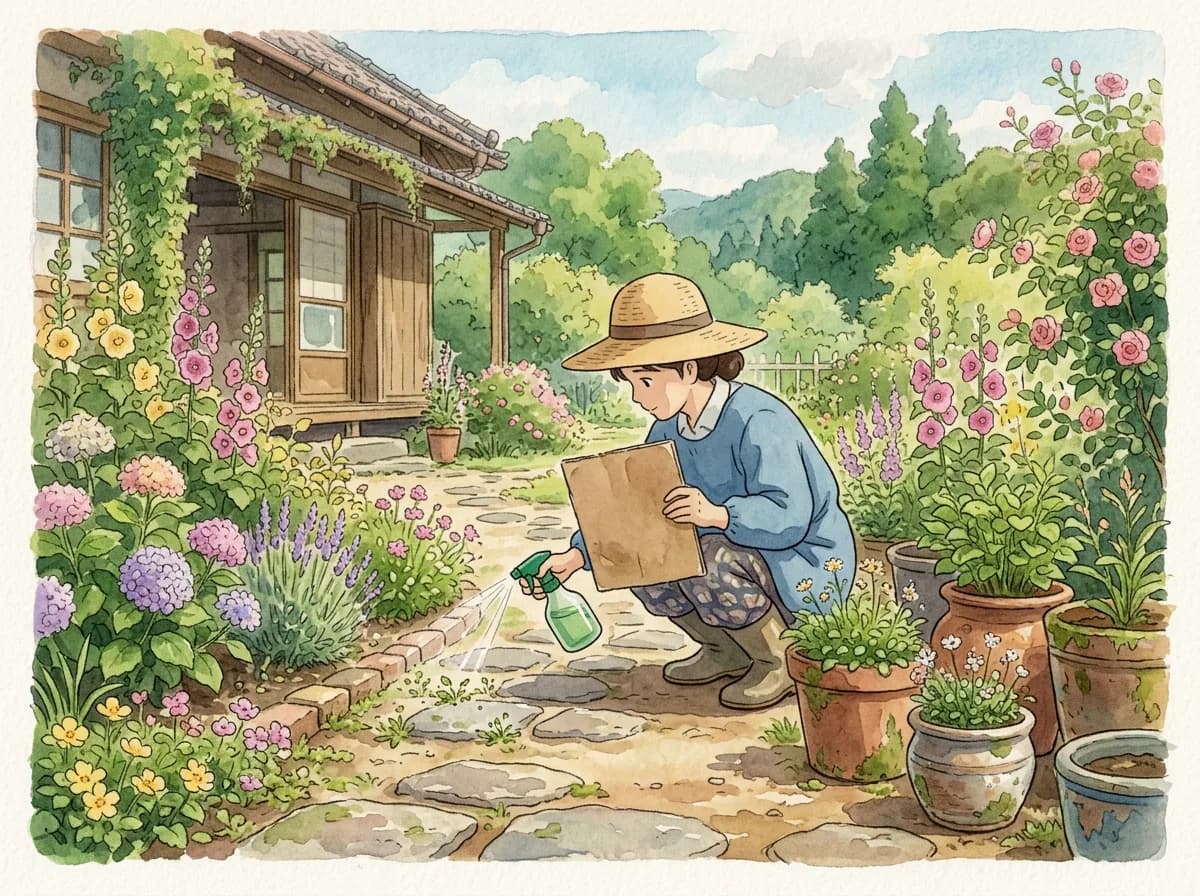
2Choose a sunny day with no rain forecast within 24 h. Spray directly onto the leaves until wet, protecting nearby plants with a piece of cardboard.
3Check after 24 h: the leaves turn brown. Repeat after 7–10 days if they regrow. Remove the dry remains.
Dose
As a guide (no official dose): 1 litre (about 1.1 quarts) of white vinegar (5 %) + 1 tablespoon of washing-up liquid. No salt. Up to 2–3 spaced applications.
Which plants
Young annual weeds in joints and gravel. Do not use it on or next to plants you want, in beds or in pots.
Precautions
- Salt does not break down: it builds up in the soil and can leave it sterile for years; on paths, rain carries it towards flower beds and tree roots.
- Vinegar is non-selective: it also scorches any lawn, flowers and vegetables it touches.
- It is no use against perennials (dandelion, couch grass, Bermuda grass) that regrow from the root.
- Strong vinegar (horticultural, 10–20 %) irritates skin and eyes: use gloves and goggles.
- Never mix it with bleach or hydrogen peroxide.
- Take care with limestone and marble: the acid marks them.
Why it works
Acetic acid dissolves the cuticle and destroys the membranes of the leaves, which dry out within hours; the soap helps the drop stick. It does not translocate to the root, which is why it only affects the part above ground.
Sources
- Oregon State University Extension: organic herbicides (with acetic acid) do not act on the root, do not work on large weeds, need repeating and can be dangerous to handle
- Laidback Gardener: article on the garden myth that salt is a good weed control