
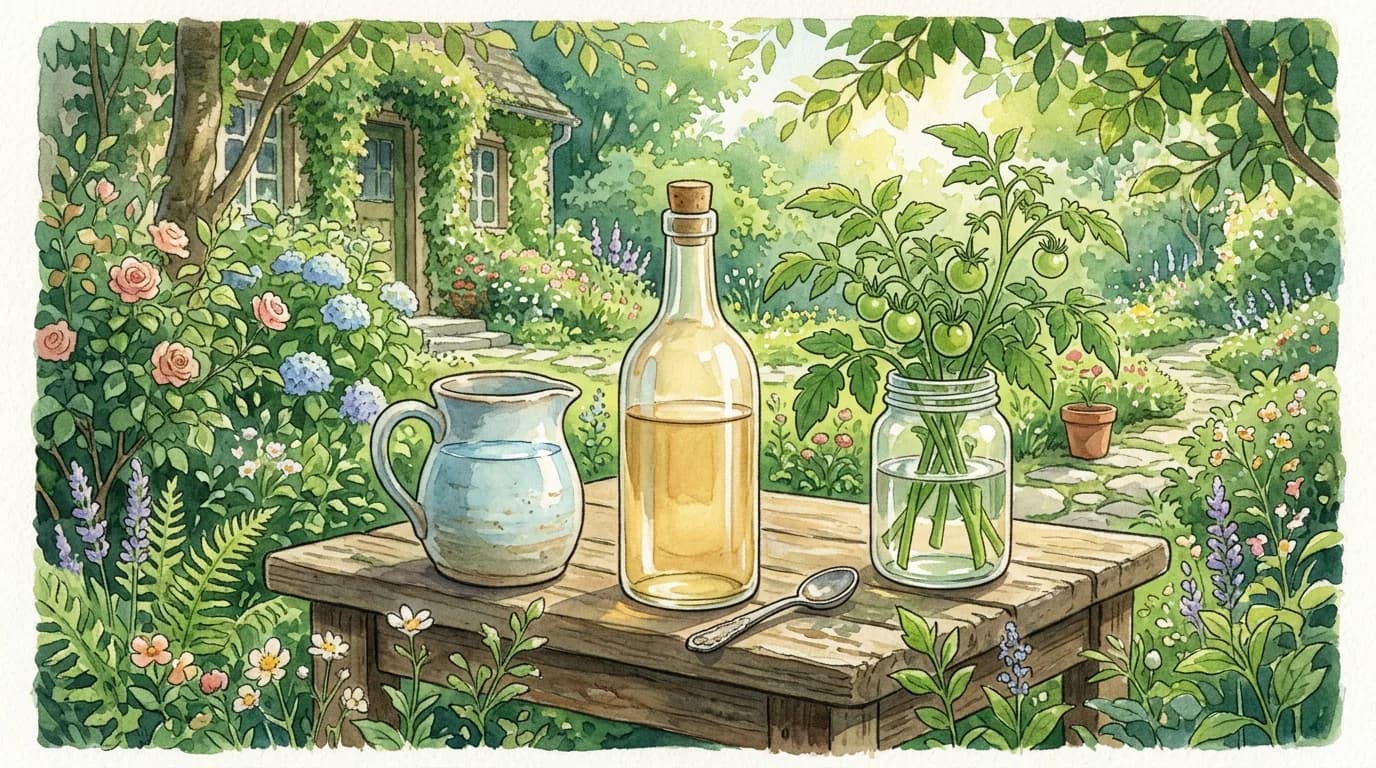
Very diluted apple cider vinegar for rooting
A dash diluted in the soaking water is used as a homemade stimulant, but too much burns the cut.
Use with care. Many hobby gardeners use it, but there are no trials showing that vinegar stimulates rooting more than plain water; in a grape study it only performed as well as coconut water and below the synthetic hormone. It is not a hormone. A minimal dilution could only help correct very alkaline water, and concentrated it damages tissue.
Before you start, read the precautions
You will need
- apple cider vinegar
- water
- glass
When to use it
Only if your tap water is very hard or alkaline, for soaking softwood or semi-hardwood cuttings, in spring and summer.
Step by step
1Measure 1 teaspoon (5 ml, 0.17 fl oz) of apple cider vinegar of usual acidity (5 %) and add it to 1 litre (about 1.1 quarts) of water left to stand.
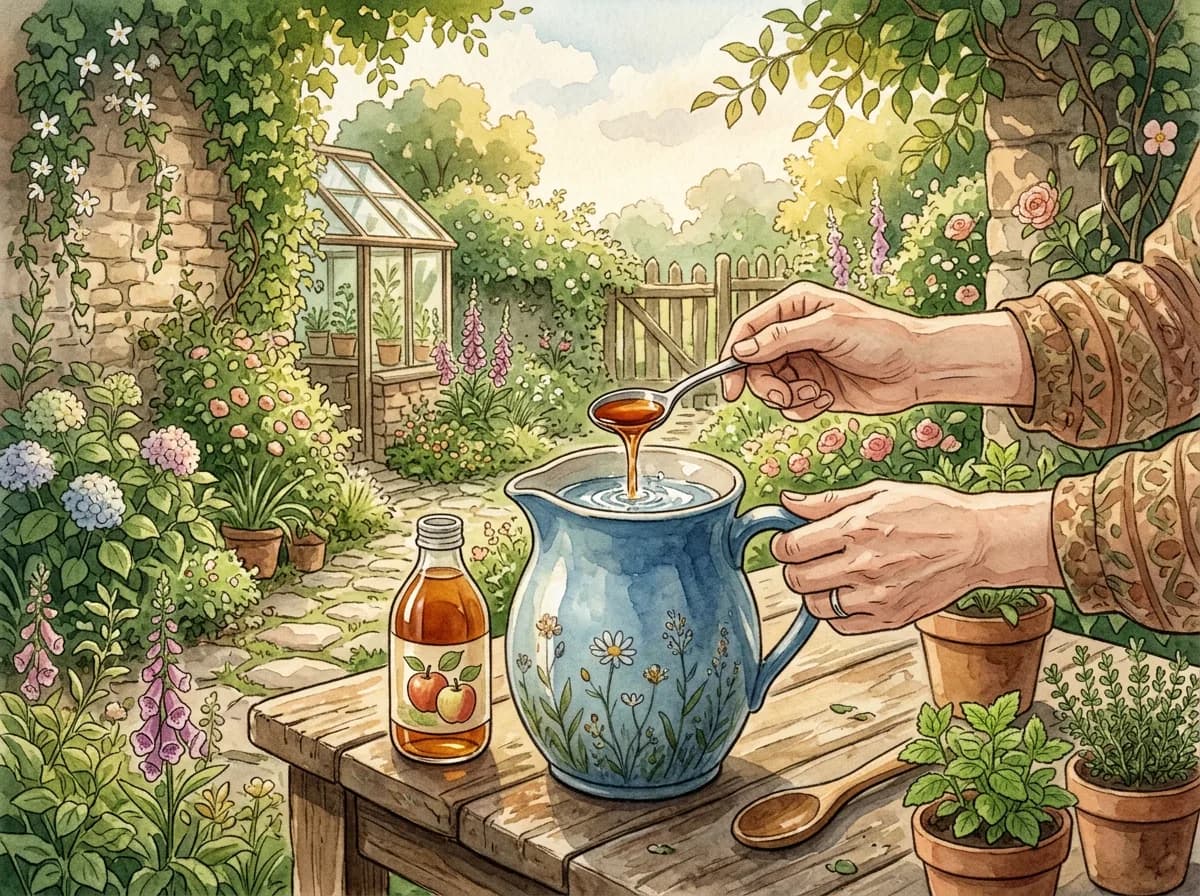
2Soak the base of the cuttings for 4–6 hours in this solution and remove.
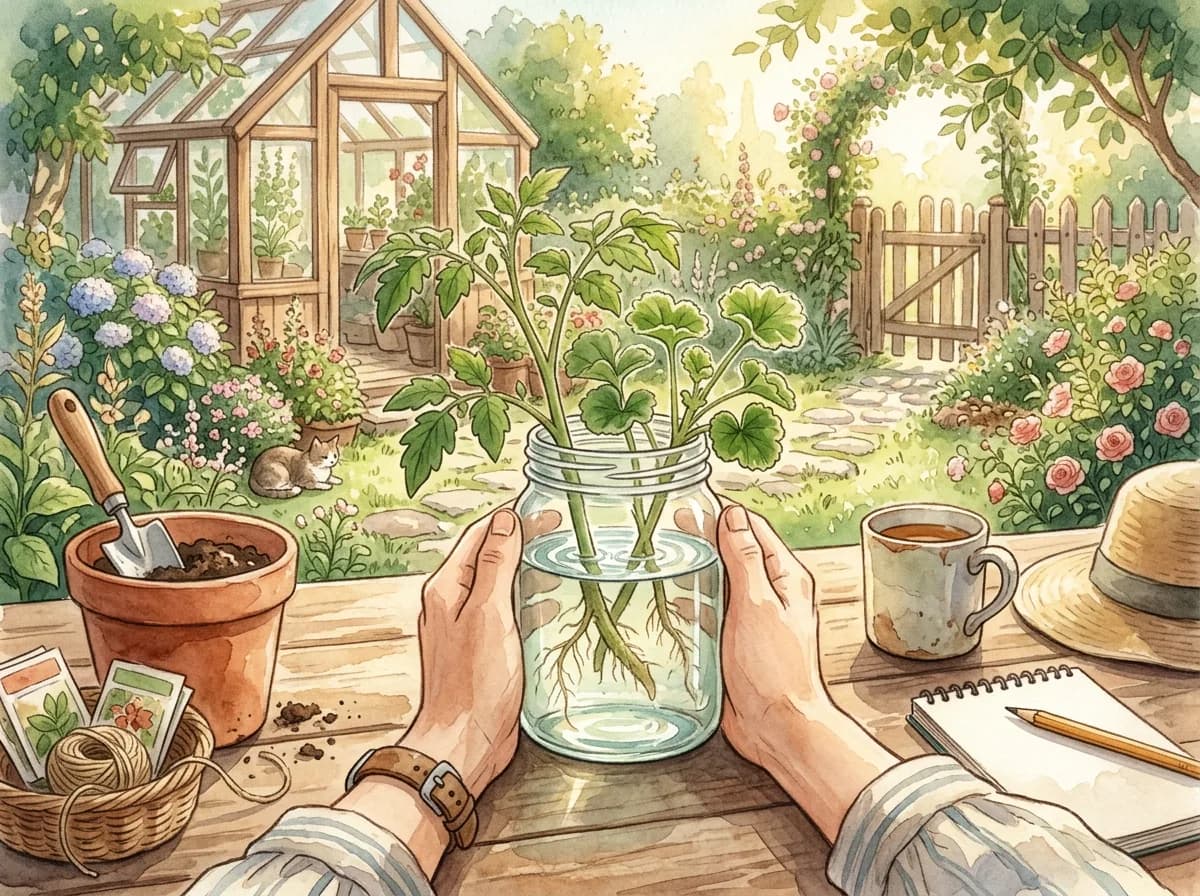
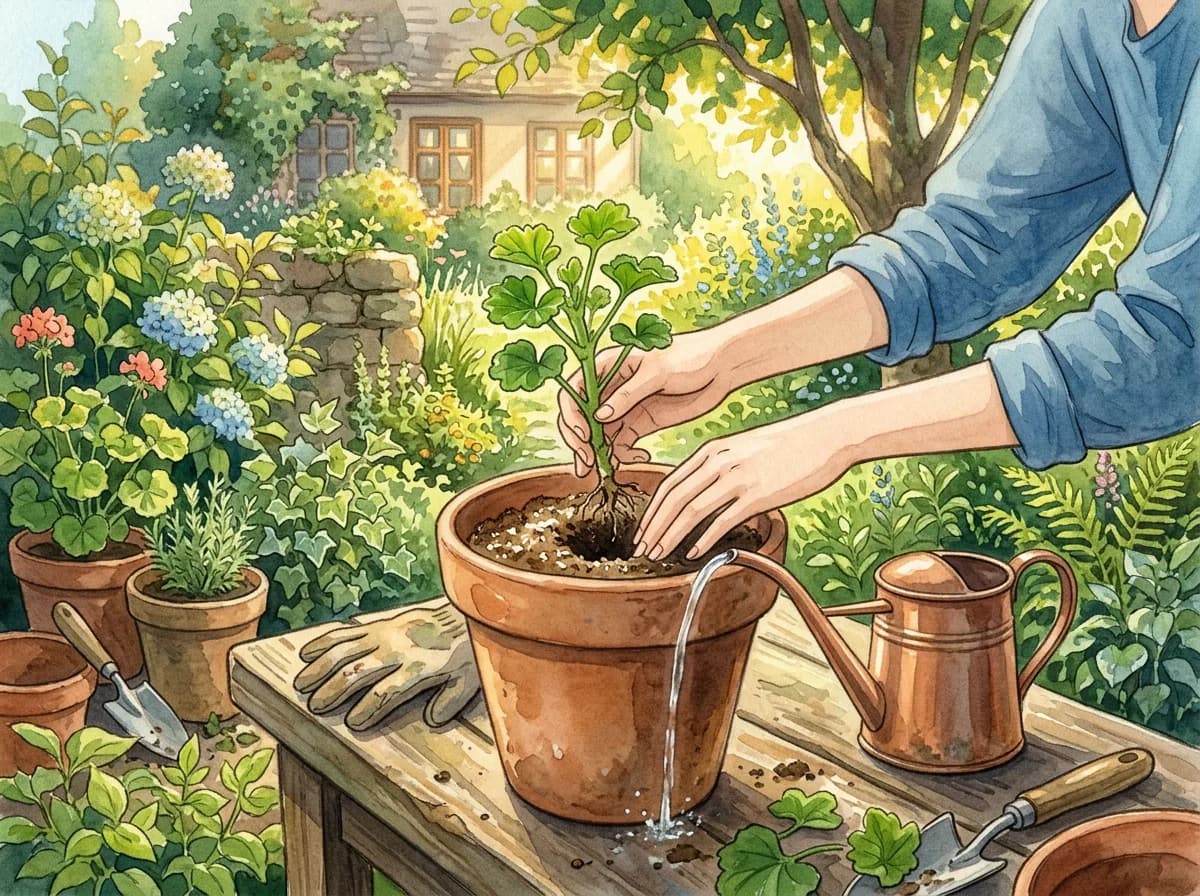
3Plant them in airy growing medium and water with normal water; do not apply vinegar again.
Dose
Indicative and cautious dose: 5 ml (0.17 fl oz) of vinegar (5 % acidity) per litre of water. Only once, in the soak before planting. There is no validated concentration.
Which plants
Cuttings of tomato, pepper, geranium, herbs. Do not use on acid-loving plants without checking the pH, or on delicate plants.
Plants mentioned in this remedy
 Sweet pepper 'California Wonder'California Wonder pepper, a blocky bell type with thick flesh, for stuffing or eating fresh.
 Zonal geraniumThe classic Mediterranean balcony geranium, with dense clusters of very bright flowers all summer long.
Precautions
- Do not use more than indicated: concentrated acetic acid burns the tissue of the cut and young roots.
- Do not mix it with other products (hydrogen peroxide, bleach): they can produce irritating or dangerous compounds.
- Do not use it daily or to water the growing medium: it lowers the pH of small pots too much.
Why it works
In a minimal dose, acetic acid only slightly adjusts the pH of the water; in some species (rhododendron) rooting is better at acid pH, but in others (mulberry) the optimum is neutral. It supplies no auxins and does not stimulate roots by itself.
Sources
- Gardening Know How: vinegar as a homemade rooting hormone (popular article; there is hardly any research)
- Journal of Agriculture, Research and Development (grape propagation): apple cider vinegar compared with coconut water, honey, aloe and naphthaleneacetic acid