
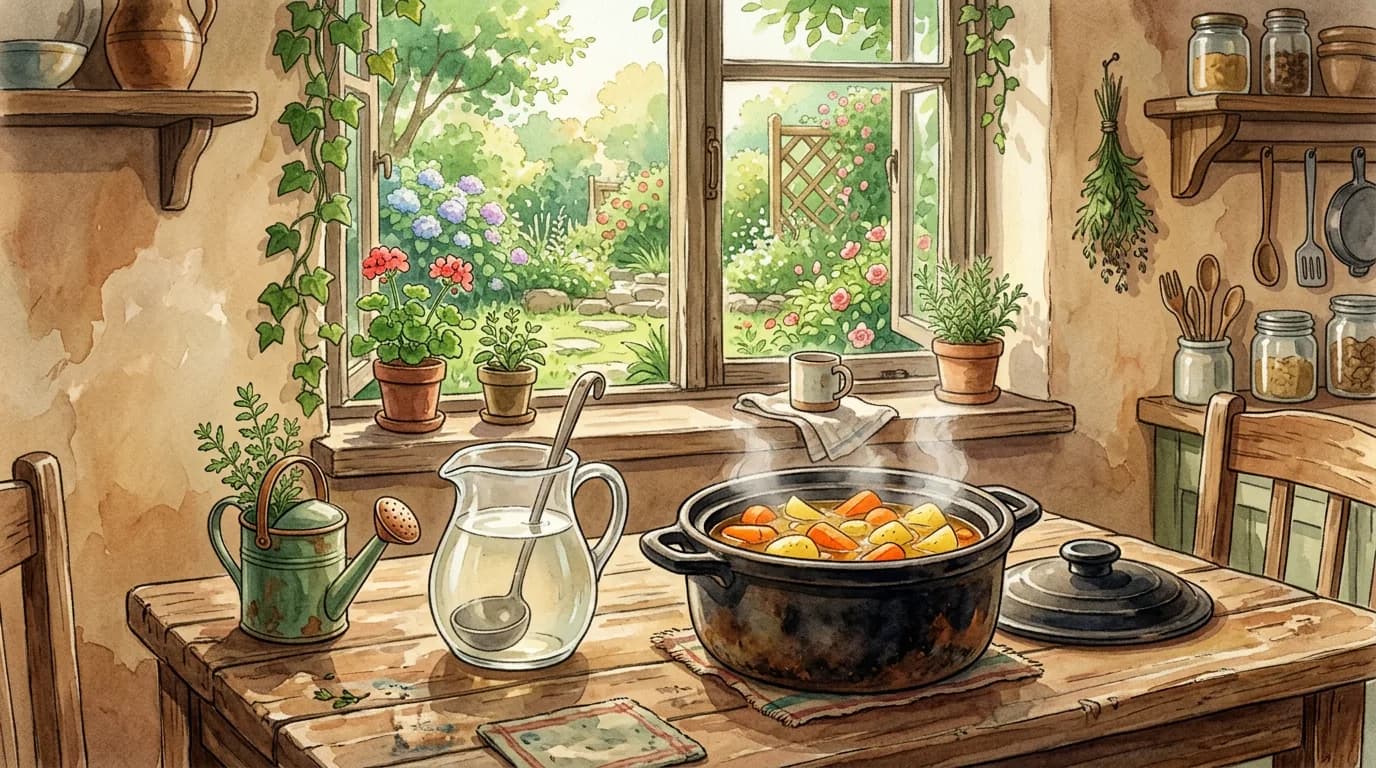
Vegetable cooking water
Unsalted vegetable cooking water, once cold, makes use of a little potassium and minerals for watering.
Works in practice. It is a sensible way of reusing water. It is assumed to carry some minerals from the vegetables, but there are no analyses or studies that measure how much: the contribution, if any, is very small and does not replace a fertiliser.
Before you start, read the precautions
You will need
- unsalted vegetable cooking water
- watering can
- jug
When to use it
When you cook vegetables without salt and want to water pot or garden plants. It works better in growing seasons.
Step by step
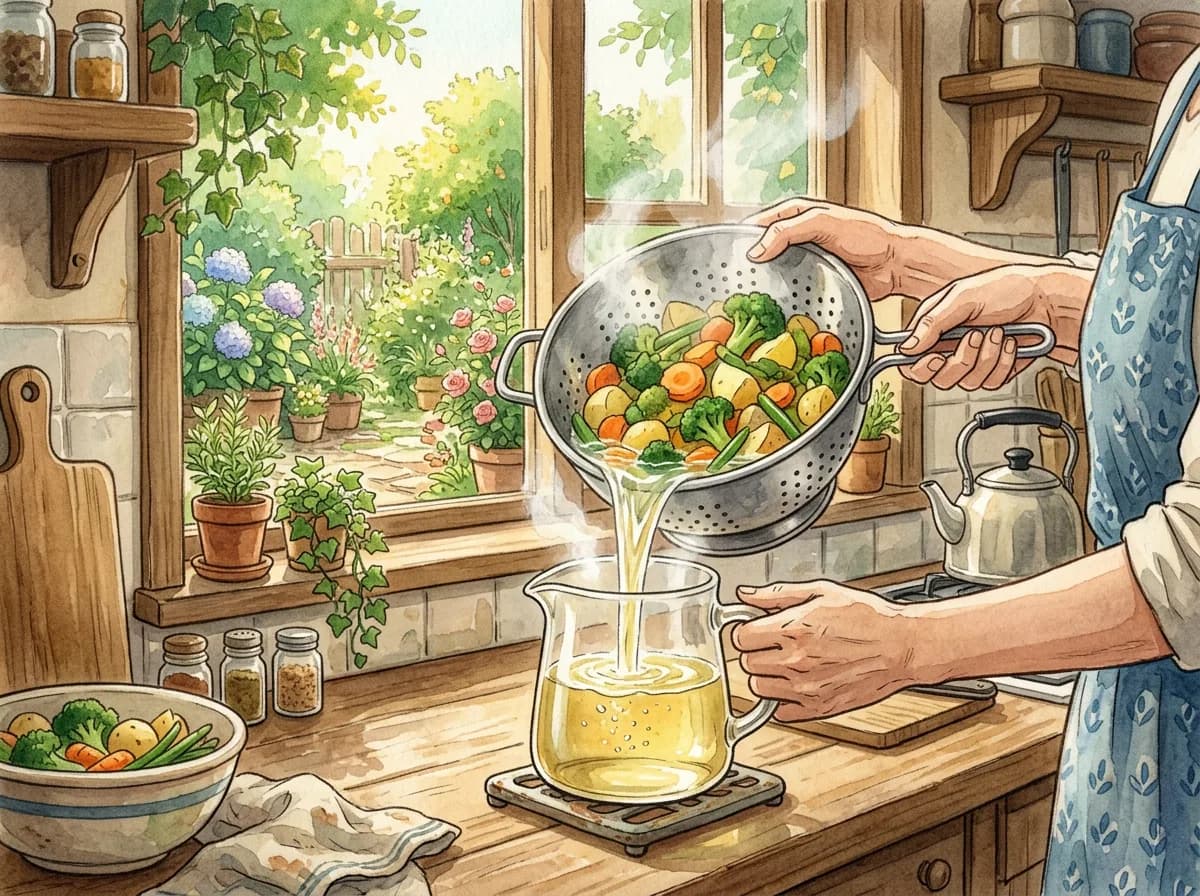
1Cook the vegetables without salt, stock or oil. Drain over a clean jug.
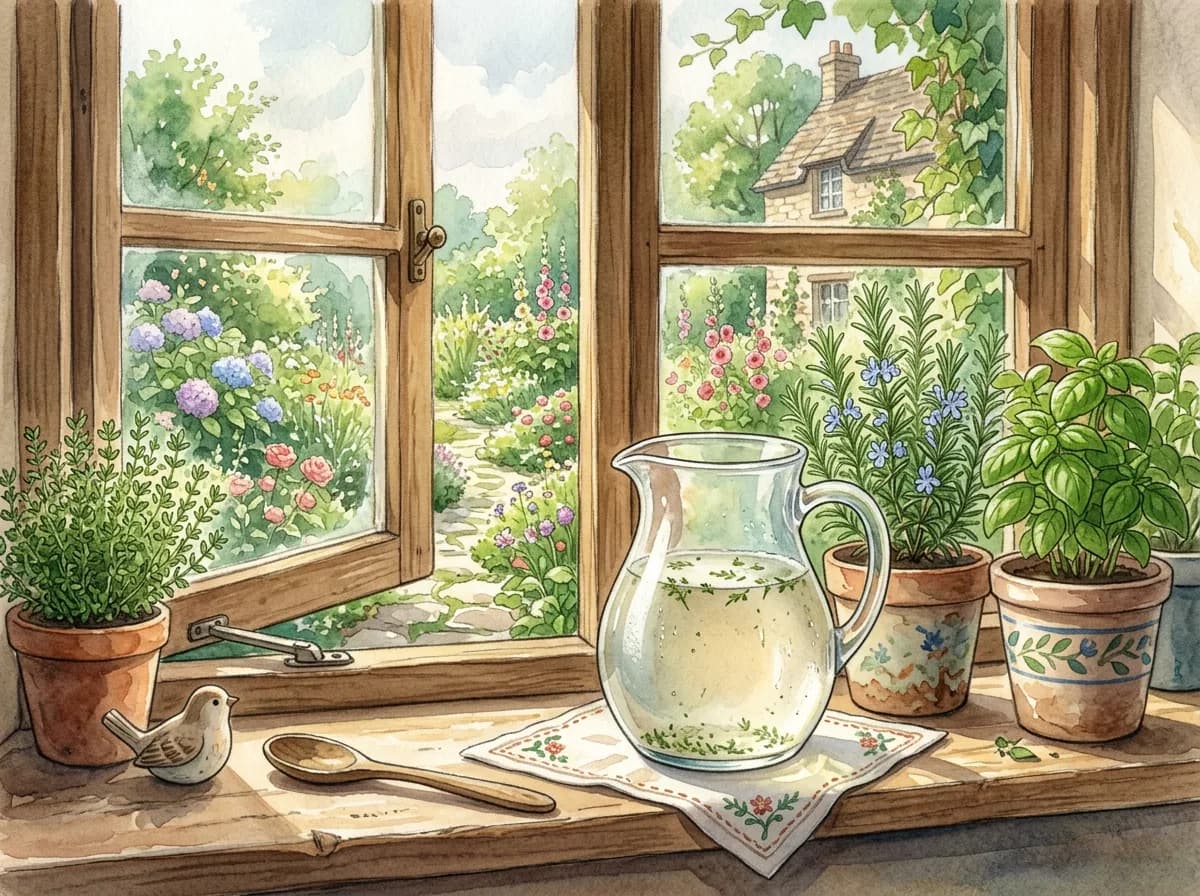
2Let it cool completely in the jug, in the shade or by the window.
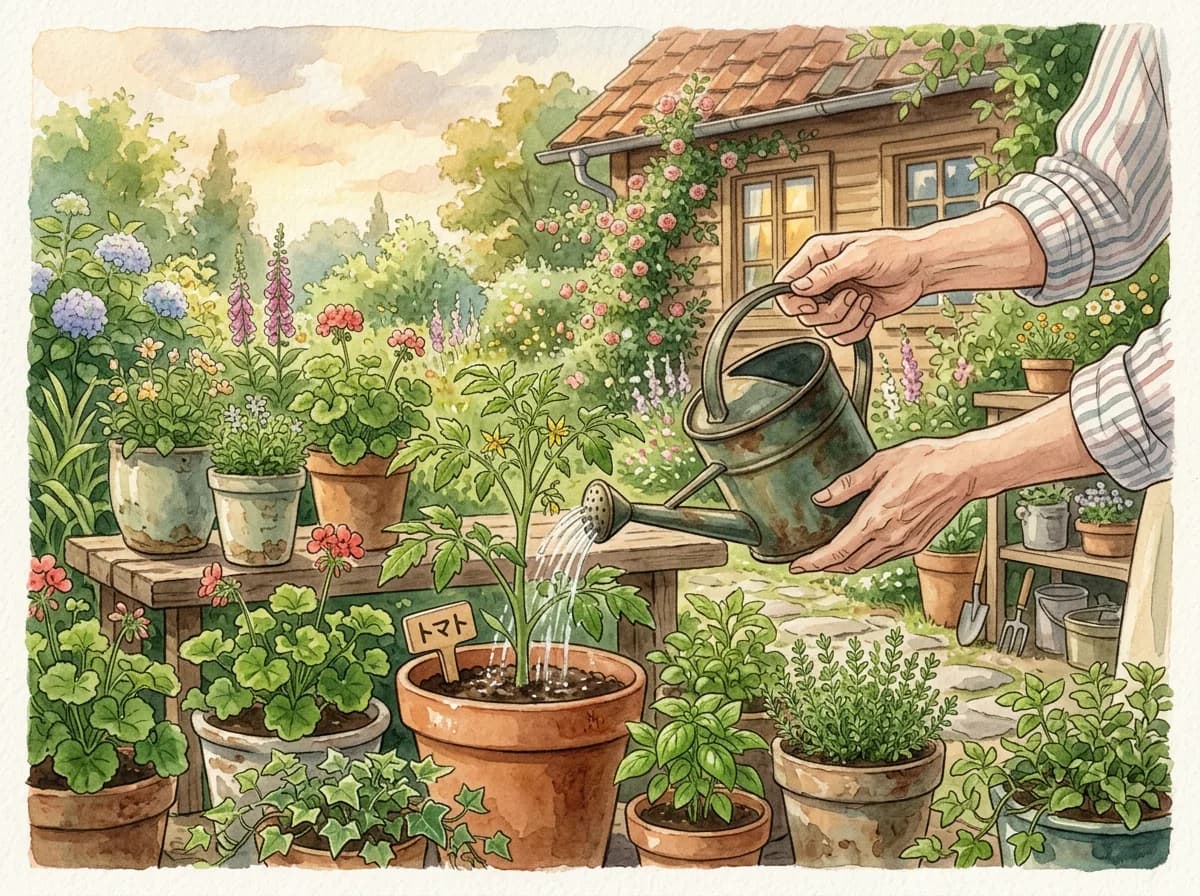
3Water the growing medium with the water at room temperature, the same day.
Dose
Indicative dose (no trials): undiluted if it is clear; 1:1 with water if it is cloudy. One watering a week at most, always cold and without salt.
Which plants
Houseplants, pots, herbs and vegetables. Avoid plants that are very sensitive to salt.
Precautions
- Only unsalted water: salt damages roots and builds up in pots and chalky soils.
- No hot water: it burns the roots. It must be cold.
- Use it the same day: if it ferments, it smells and attracts fungus gnats.
- Do not use pasta or pulse cooking water with salt, oil or seasonings.
Why it works
When boiling, some of the mineral salts and sugars pass from the vegetable into the water. It is a very dilute solution, which is why the effect is a gentle ‘extra’, not a feeding; it has not been quantified.
Sources
- Traditional household practice, with no formal trials: no specific study is cited