
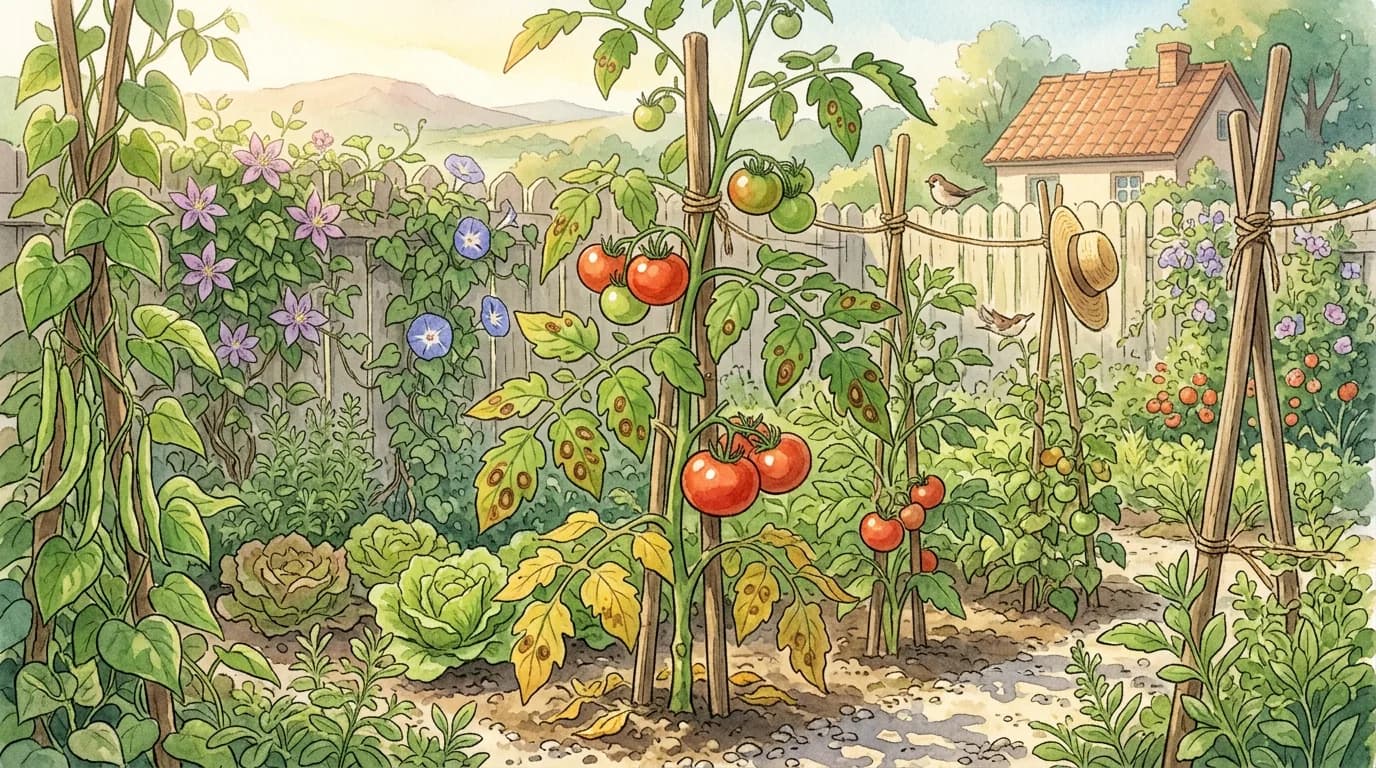
Tomato blight and alternaria: what to do at home
How to tell apart and hold back brown spots on tomato with cultural practices and, if needed, copper.
Works in practice. Cultural measures (removing diseased leaves, mulching, watering at the base, rotating) are well documented. However, downy mildew (late blight) advances very fast with humidity and sometimes only a copper fungicide holds it back.
Before you start, read the precautions
You will need
- scissors
- straw
- rubbish bag
- alcohol
When to use it
From when brown spots with concentric rings appear on lower leaves (alternaria) or dark oily spots that spread fast in cool, damp weather (mildew).
Step by step
1Identify the problem: alternaria makes brown spots with rings on lower leaves; mildew, large, dark, oily spots, with white fuzz on the underside in damp weather.
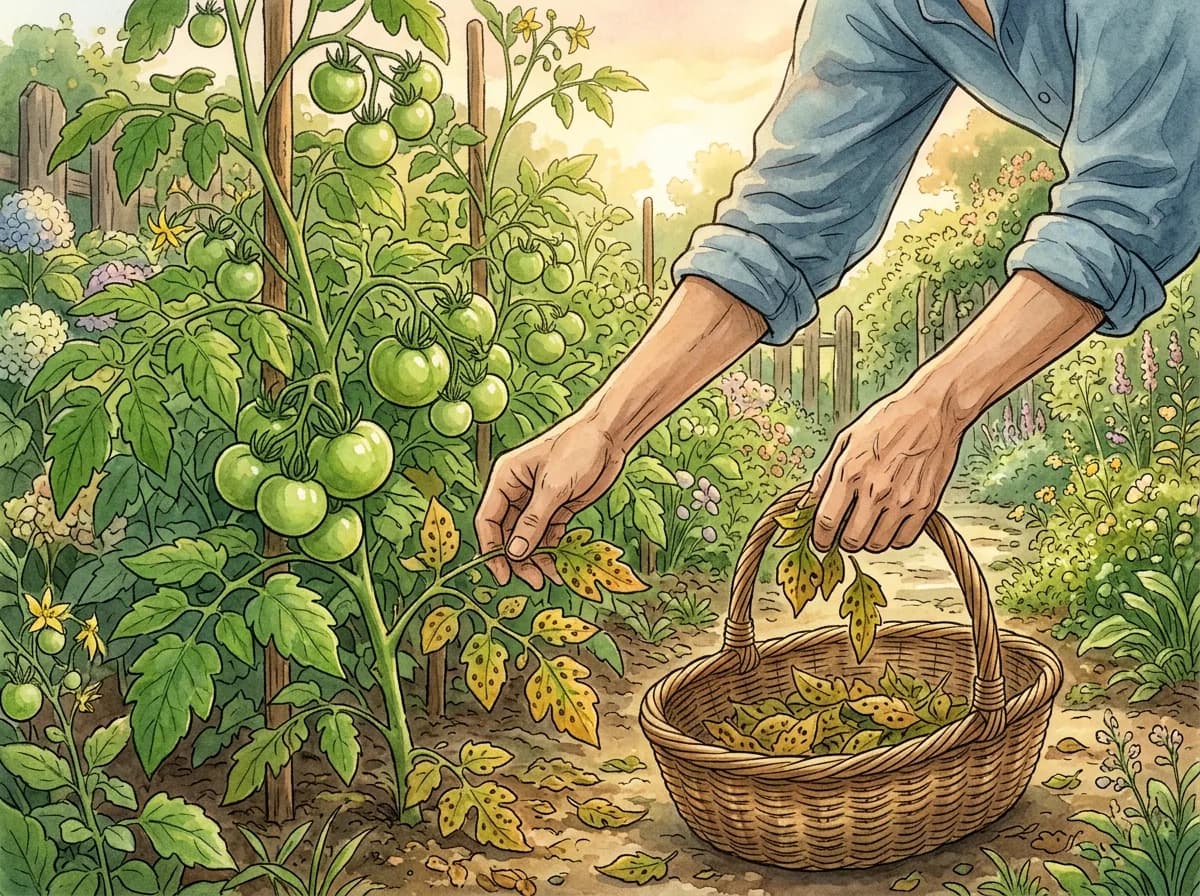
2Remove the affected leaves and fruit, starting with the lower ones, and put them in a closed bag; do not leave them on the ground or compost them.
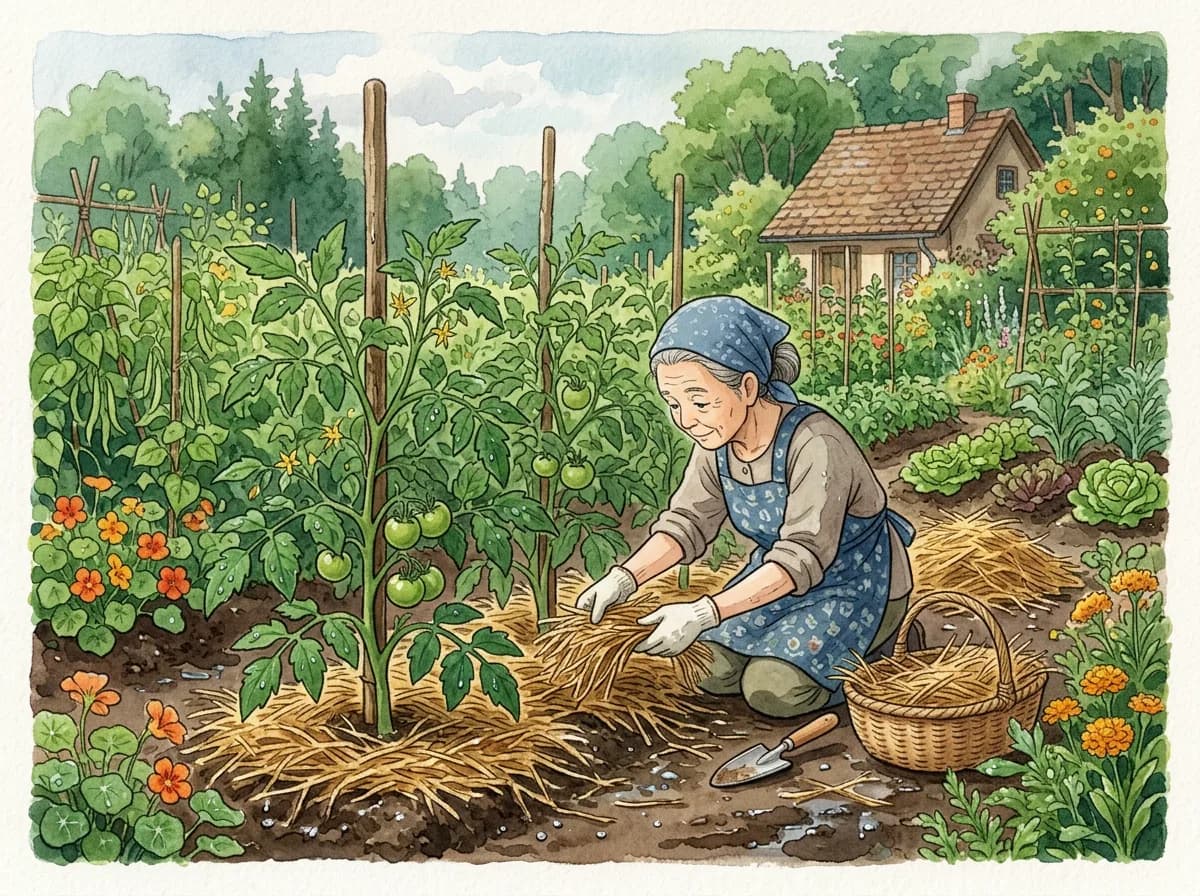
3Mulch the soil with straw so that rainwater does not splash spores, and always water at the base, never over the leaves.
4If the weather is cool and damp and the disease advances, apply authorised copper (see the Bordeaux mixture profile, caldo-bordeles) and repeat according to the label. It is rated “good”, less than other non-organic fungicides.
Which plants
Tomato, potato, pepper and aubergine (nightshades).
Plants mentioned in this remedy
 Tomato 'Marmande'Marmande tomato, flattened and ribbed, a good size for salads.
 Potato 'Kennebec'The 'Kennebec' potato is versatile in the kitchen, with pale skin.
 Sweet pepper 'California Wonder'California Wonder pepper, a blocky bell type with thick flesh, for stuffing or eating fresh.
 Long black aubergineAn aubergine with glossy black fruit, for warm climates.
Precautions
- Downy mildew (late blight) advances faster in cool, damp weather and can wipe out the crop in a few days: act early.
- Always remove the remains from the bed at the end of the crop and do not repeat nightshades for 3 years.
- Copper builds up in the soil: use it in moderation and respect the safety interval.
- Do not save seeds from diseased plants.
Why it works
Alternaria and mildew reproduce with spores that need a wet leaf; removing infected leaves and keeping the foliage dry reduces new infections and contact with spores from the soil.
Sources
- Colorado State University Extension: tomato early blight
- Clemson University Home & Garden Information Center: tomato diseases and disorders