
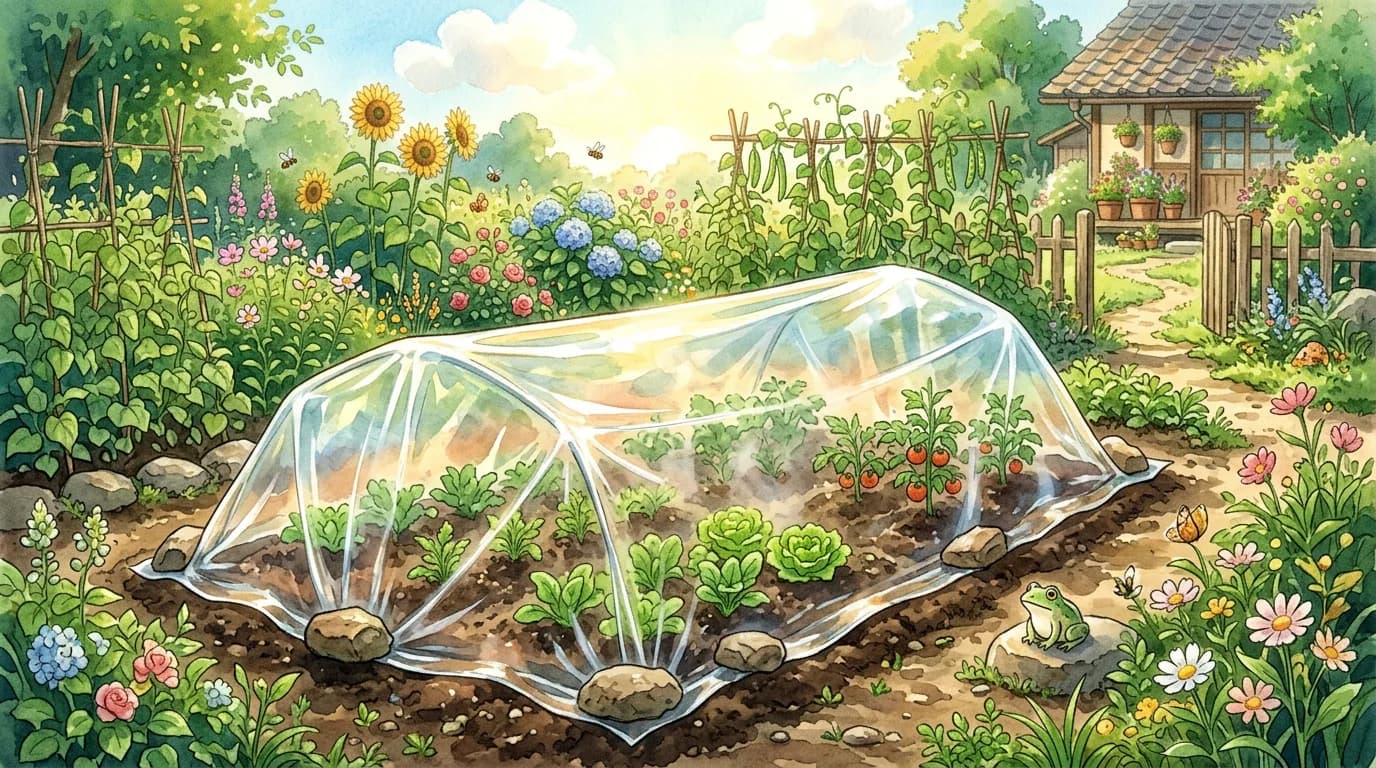
Soil solarisation in summer
Covering a moist bed with clear plastic for weeks heats the top layer and reduces weeds and pathogens.
Well established. Solarisation works like this: with 4–6 weeks of strong sun (up to 8 if there is cold, wind or cloud), the surface layer reaches temperatures that reduce many fungi, bacteria, some of the nematodes and annual weed seeds; it does not reach deep layers nor control perennials with rhizomes well. See also “Soil solarisation against weeds” and “Soil solarisation against nematodes and fungi”.
Before you start, read the precautions
You will need
- clear plastic
- water
- stones or soil to hold it down
When to use it
In high summer (July–August) with weeks of strong sun and a bed with no crop, to sow in autumn.
Step by step
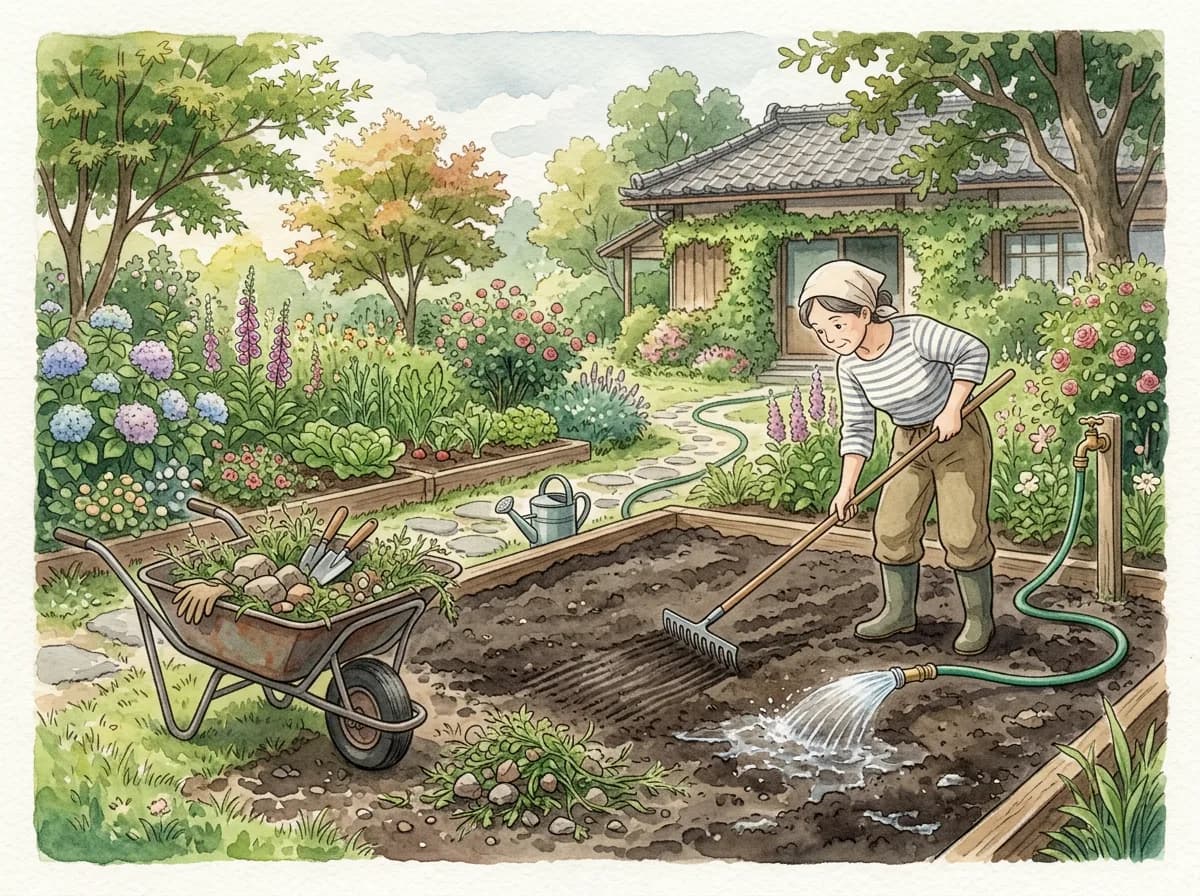
1Remove weeds and stones, level with the rake and water until the soil is well soaked (moisture conducts the heat).
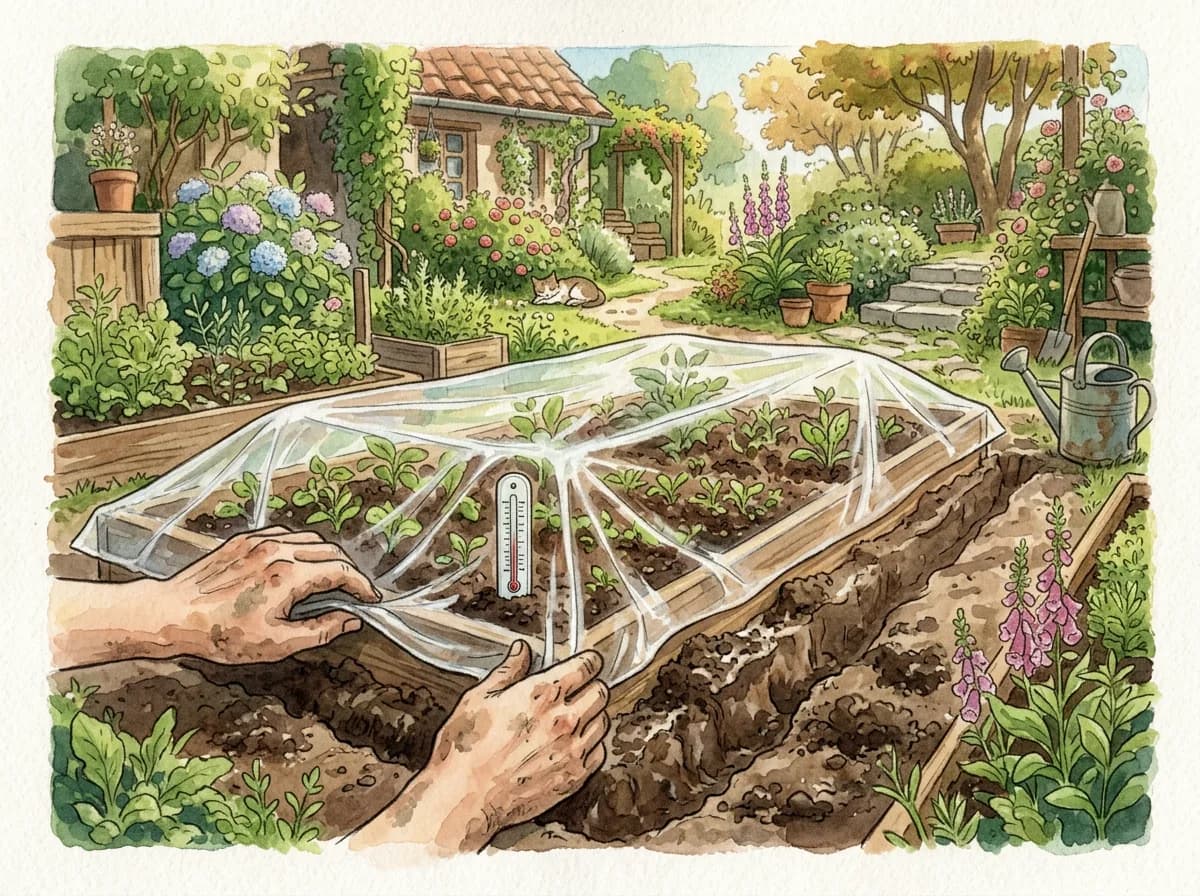
2Lay the thin clear plastic (25–50 microns; thicker where there is wind) very taut and pressed against the soil, with no wrinkles.
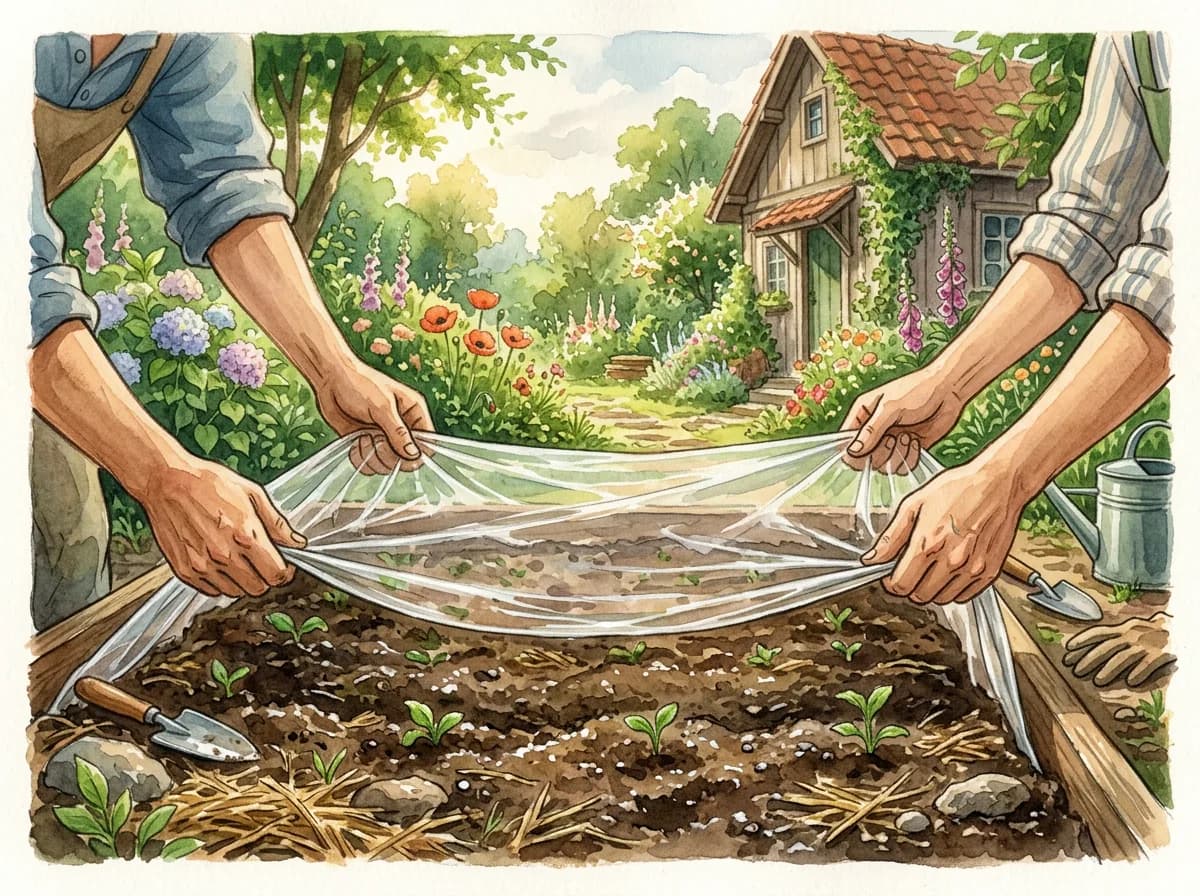
3Bury the edges in a trench or press them down with soil and stones, and leave for 4–6 weeks. Remove it and sow without turning the soil.
Dose
Clear plastic (1 mil ≈ 25 microns gives more heat but tears easily; 1.5–2 mil in windy places), 4–6 weeks in high summer, up to 8 if needed. Black is less effective in warm areas.
Which plants
Beds with problems of verticillium, fusarium, nematodes or annual weeds; afterwards, autumn vegetables.
Precautions
- Black or coloured plastic: less effective in warm areas.
- The plastic tears easily and generates waste; collect it whole and take it for recycling.
- It also affects beneficial soil organisms; they recover with compost.
- It does not reach the deep layers, where pathogens can survive.
Why it works
Clear plastic lets light through and traps heat in a moist soil, which conducts it downwards. Maximums of 42–60 °C (108–140 ºF) are reached at about 5 cm (2 in), with a target of 43–52 °C (110–125 ºF) in the top 15 cm (5.9 in), which reduce seeds, spores and sensitive nematodes; at 45 cm (17.7 in) only 32–37 °C (90–99 °F) is reached.
Sources
- University of California Integrated Pest Management: Soil solarization for gardens and landscapes