
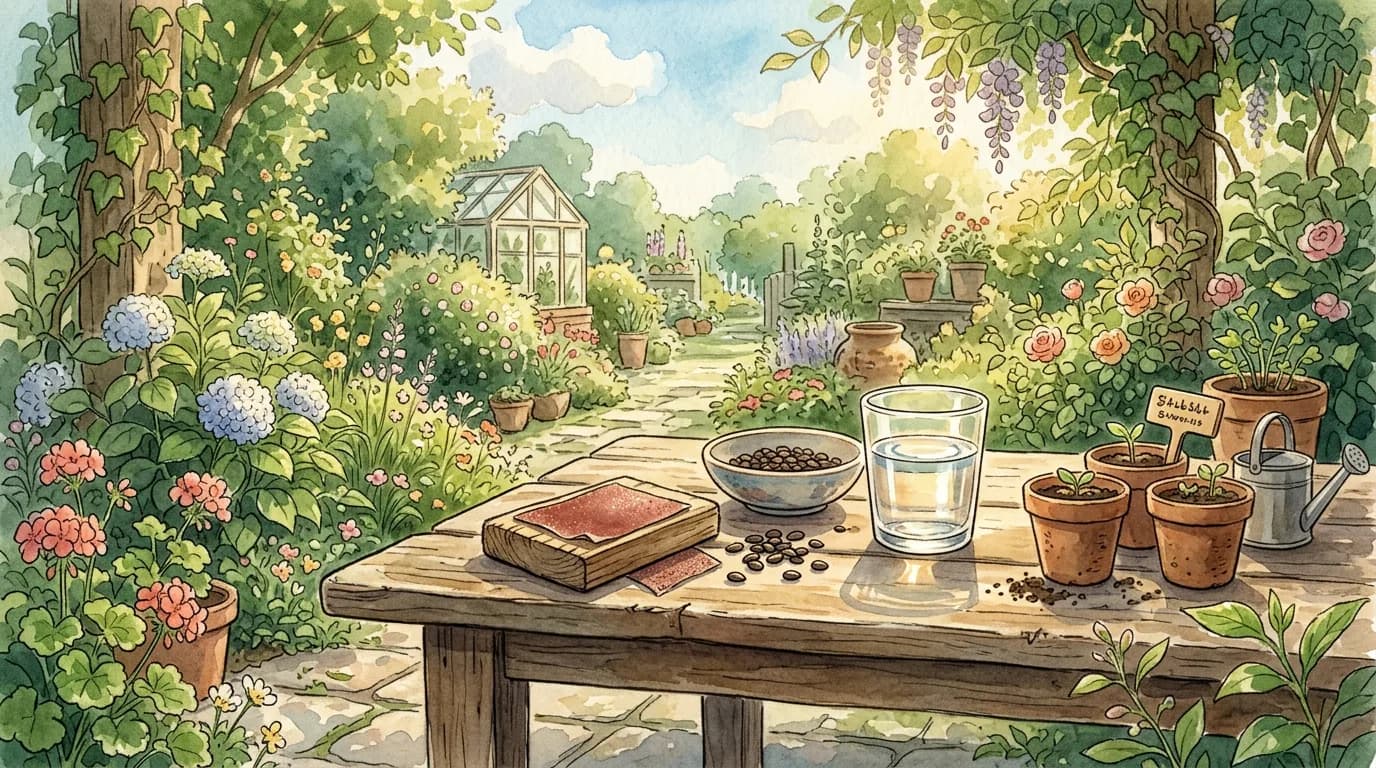
Scarifying hard seeds with sandpaper
Scratching the coat of very hard seeds so they absorb water and germinate.
Well established. Scarification (sanding, filing or soaking in hot water) is the standard technique for seeds with a waterproof coat.
Before you start, read the precautions
You will need
- fine sandpaper
- water
- seeds
When to use it
Before sowing seeds with a very hard coat: okra, sweet pea, lupin, morning glory, canna, acacia or carob.
Step by step
1Stick a piece of medium-fine sandpaper on a board (or use a nail file).
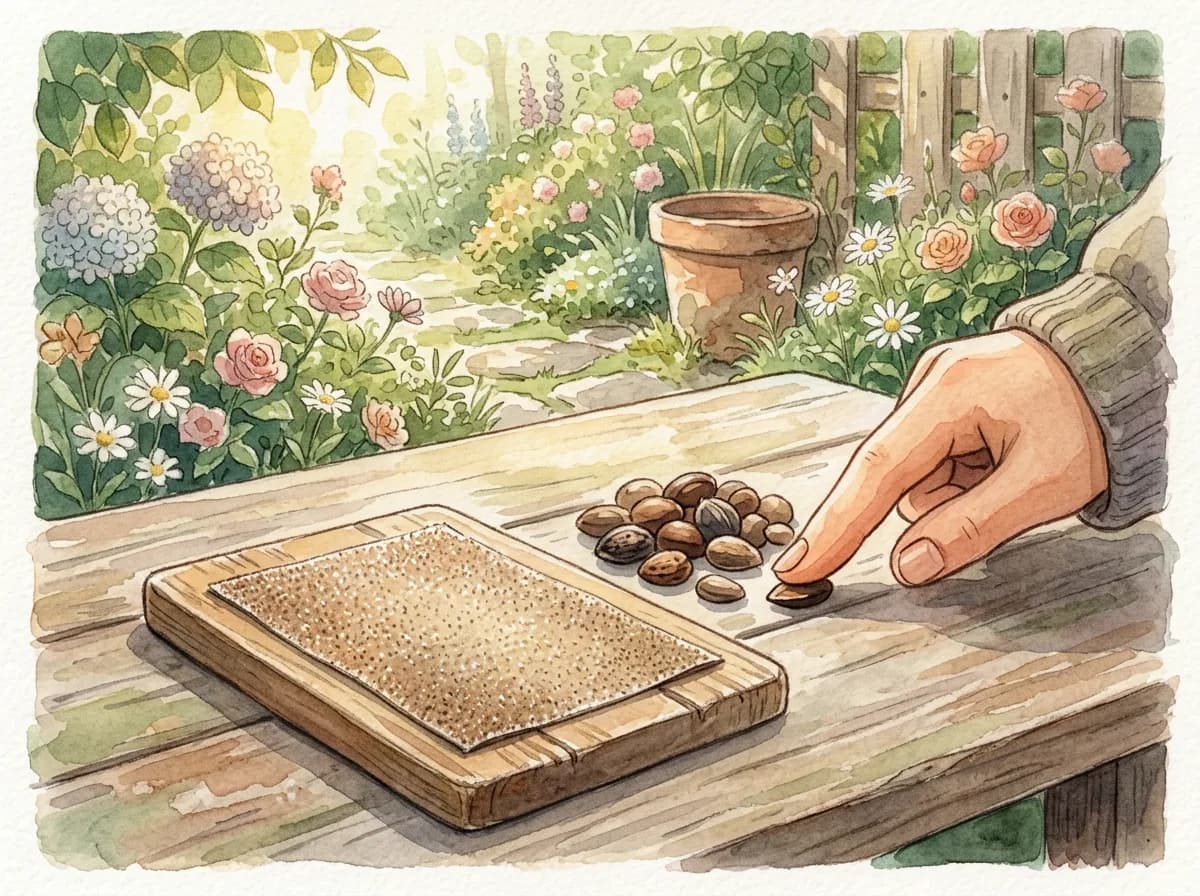
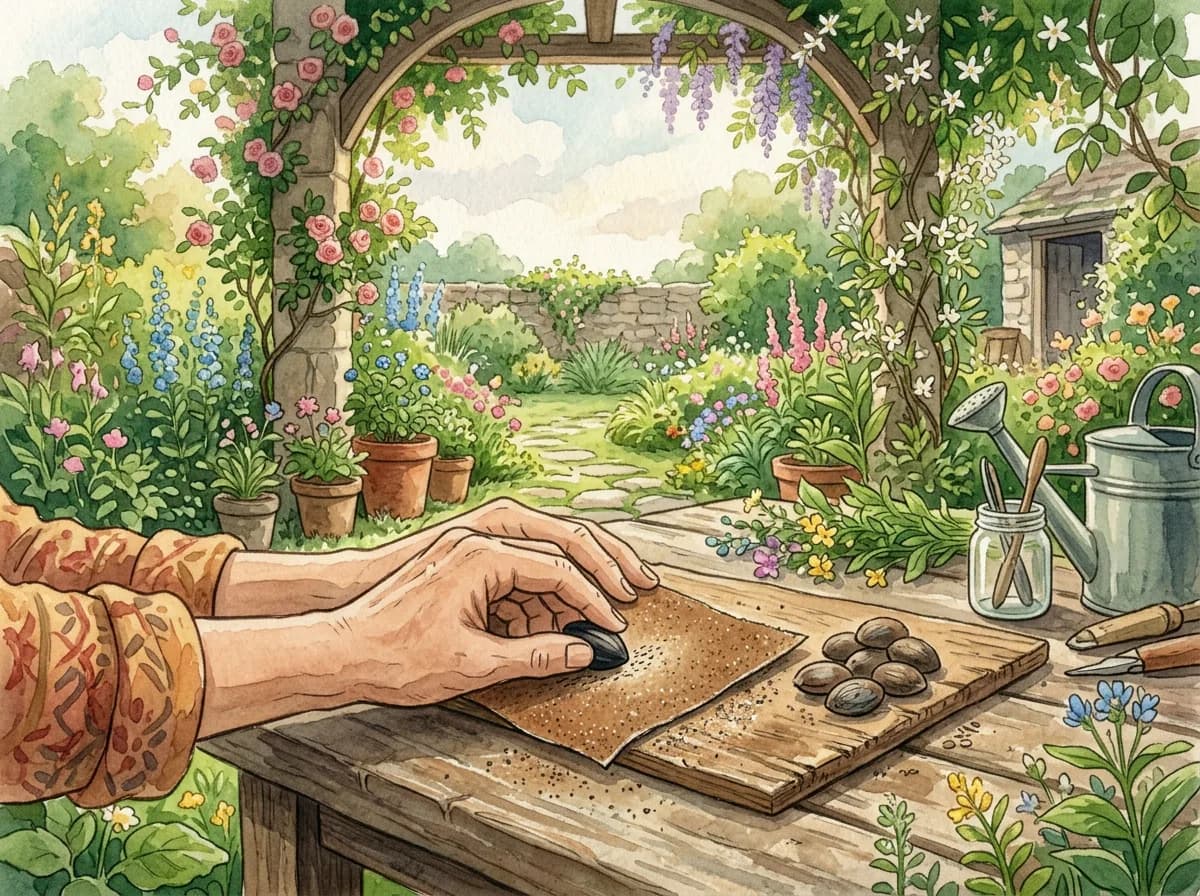
2Rub each seed 2–3 times on one side, away from the embryo, until a duller spot shows; do not go through it.
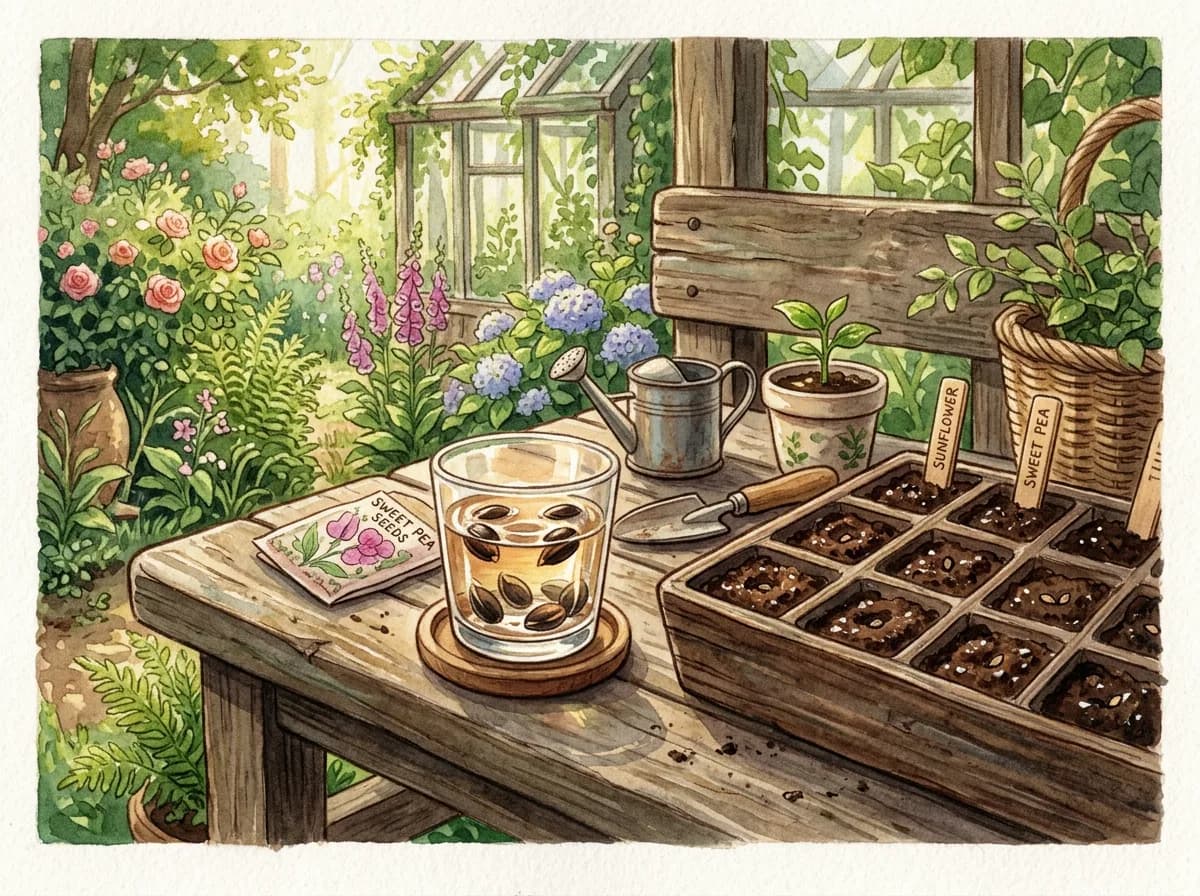
3Soak them for 12–24 h in lukewarm water and sow them immediately.
Dose
Only until the coat loses its shine. Soak afterwards for 12–24 h.
Which plants
Hard-coated seeds. Not for small seeds or common vegetables.
Precautions
- If you sand too much you damage the embryo and the seed rots.
- It is not necessary for small, soft seeds (lettuce, tomato, carrot).
- Sow soon afterwards: a scarified seed loses protection and dries out or goes mouldy.
Why it works
In many legumes and wild species the coat is waterproof. Scratching it opens a path for water to reach the embryo and germination to start.
Sources
- University of Florida IFAS Extension (Institute of Food and Agricultural Sciences): Advanced seed starting (most people nick or sand the coat; hot water at 77 to 99 °C)
- Oklahoma State University (HLA-6211): mechanical scarification, with hot water or acid, and stratification