
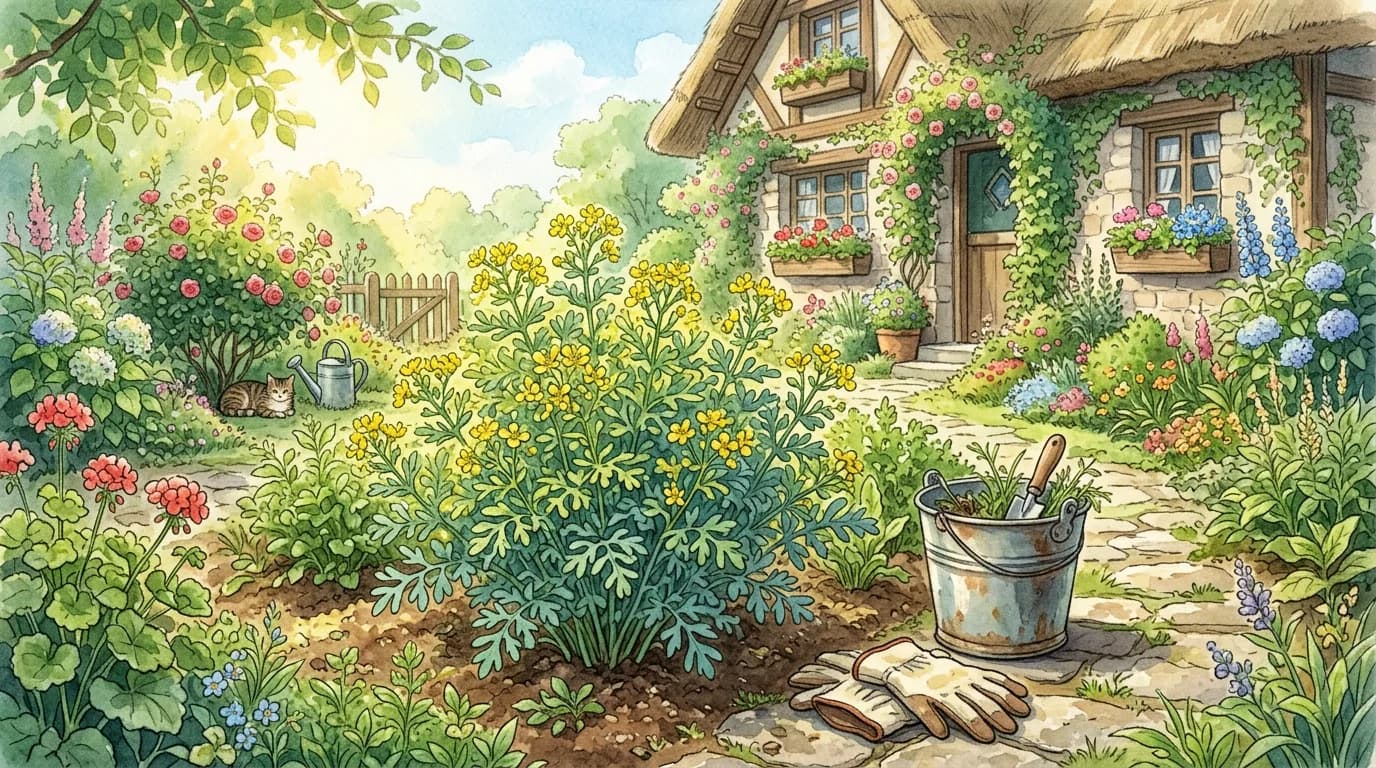
Rue steeping: better not to use it
A traditional repellent for aphids and caterpillars that calls for protection: rue burns the skin in the sun.
Use with care. There is traditional use as a repellent, but no trials support it and rue contains furocoumarins that cause burns and blisters on skin in the sun. The medical review cited expressly warns against using it as an insect repellent. Our recommendation: do not use it.
Before you start, read the precautions
You will need
- rue
- water
- gloves
- spray bottle
When to use it
We do not recommend it. If you still have it in the garden and decide to take the risk, do so only for an occasional visit, well protected and at dusk or under a cloudy sky. Potassium soap or a jet of water is almost always better.
Step by step
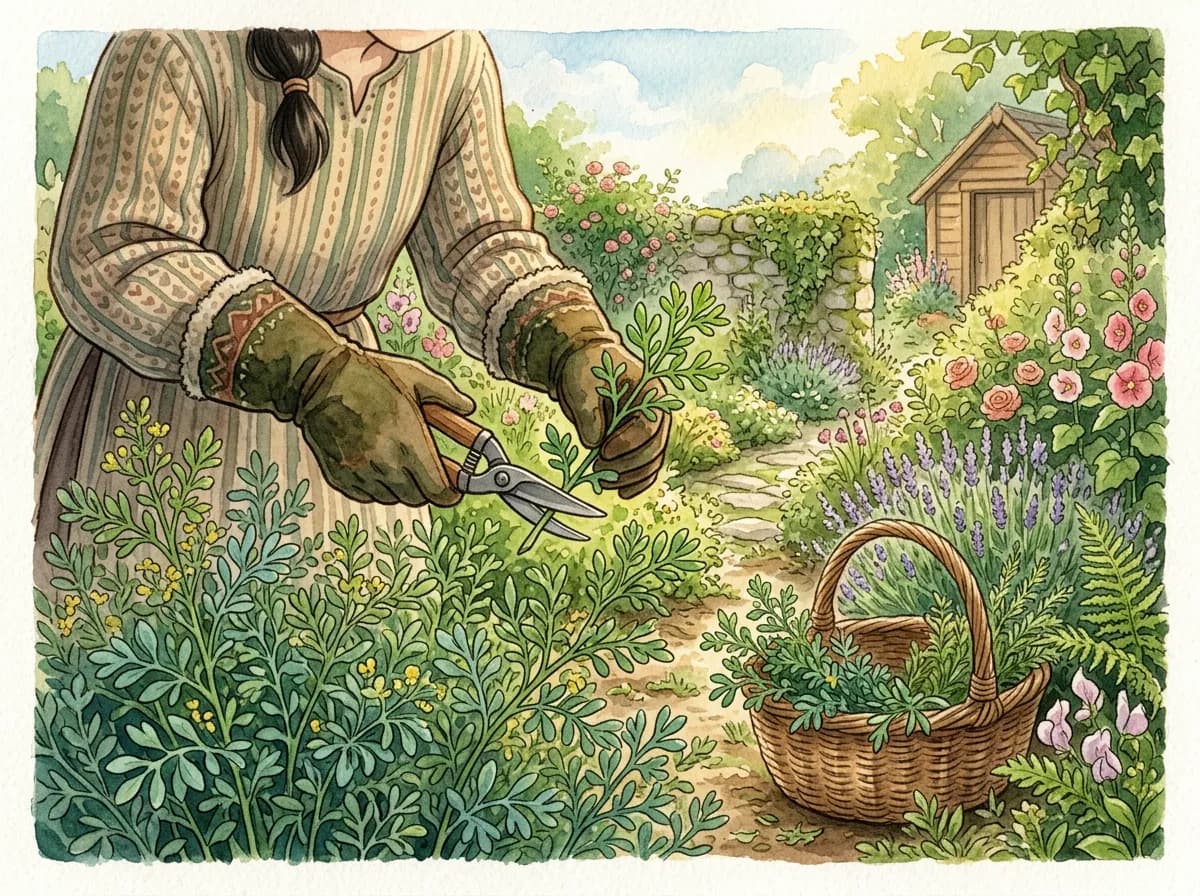
1Put on long gloves, long sleeves and goggles. Cut 20 g (0.7 oz) of fresh rue sprigs first or last thing in the day, never in full sun.
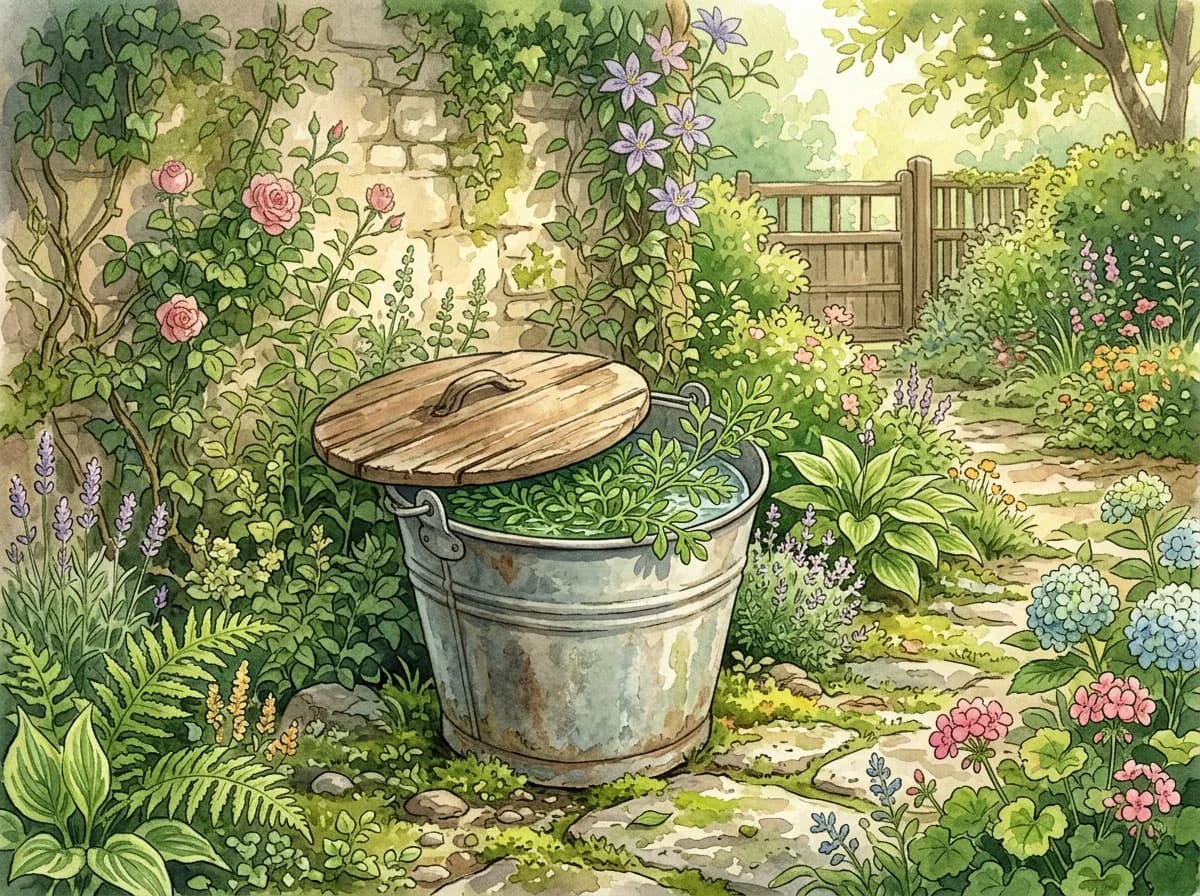
2Chop them, cover with 1 litre (about 1.1 quarts) of water and leave to steep for 24 h in a covered bucket out of reach of children and pets.
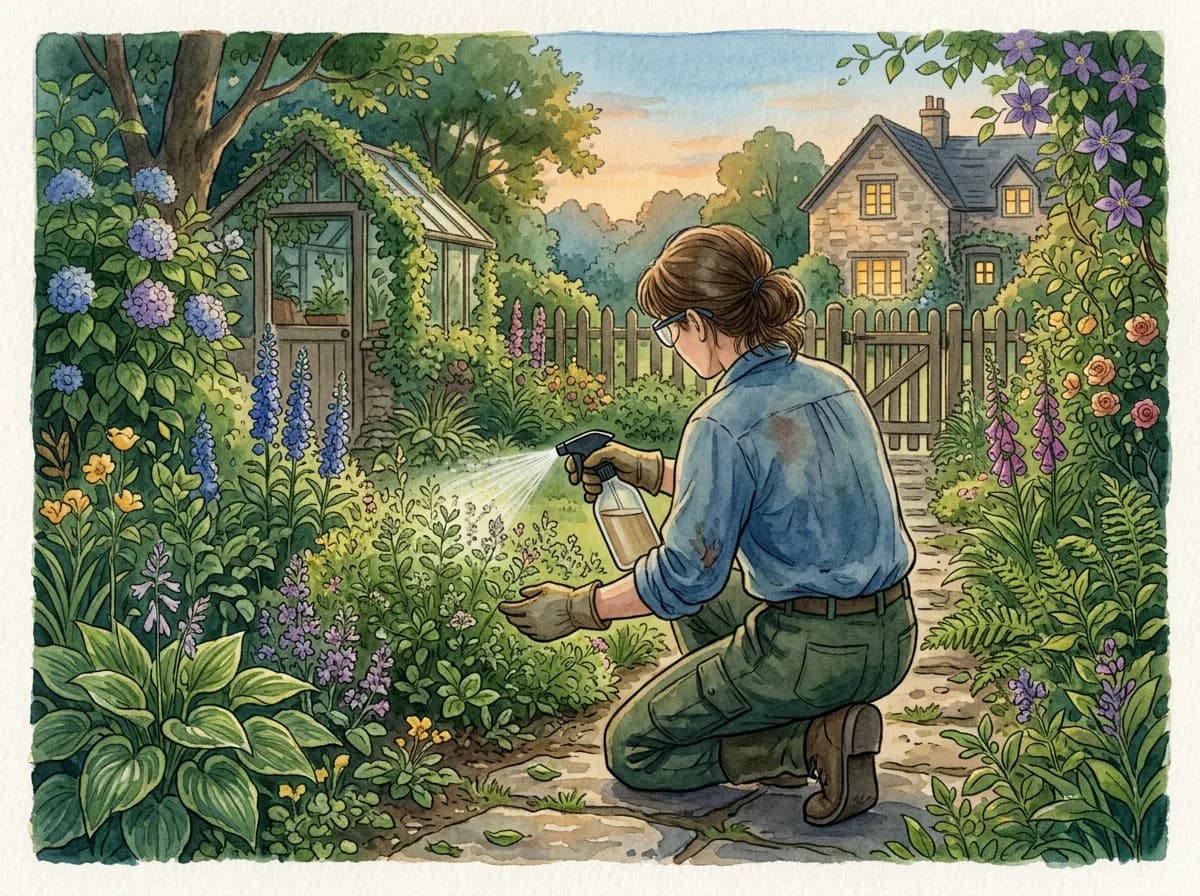
3Strain and spray with protection (no wind, at dusk) onto the affected plants. Wash your clothes and the spray bottle afterwards.
Dose
There is no backed dose. As a guide and not recommended: 20 g (0.7 oz) of fresh rue per litre of water, undiluted. One application every 7–10 days, at most 2–3 times.
Which plants
Roses, ornamentals and fruit trees visited by aphids. Avoid leaf vegetables and young or delicate plants.
Plants mentioned in this remedy

Precautions
- Rue juice plus sun causes phytophotodermatitis: redness, burns and blisters days later. Wash with soap and water if you touch it and avoid the sun for 48 h.
- Do not use it in gardens where small children play or with pets that chew plants.
- Do not apply it to vegetables that you will eat in the next 15 days.
- Do not use during pregnancy: rue causes abortion if swallowed. Never use it as a medicinal remedy.
Why it works
Its intense smell and its alkaloids and furocoumarins repel some insects. Those same substances are what make the plant dangerous for the skin.
Sources
- PubMed (Dermatitis, 2007): “Rue the herb: Ruta graveolens-associated phytophototoxicity”. Clinical case of phototoxicity; abstract consulted, not the full text