
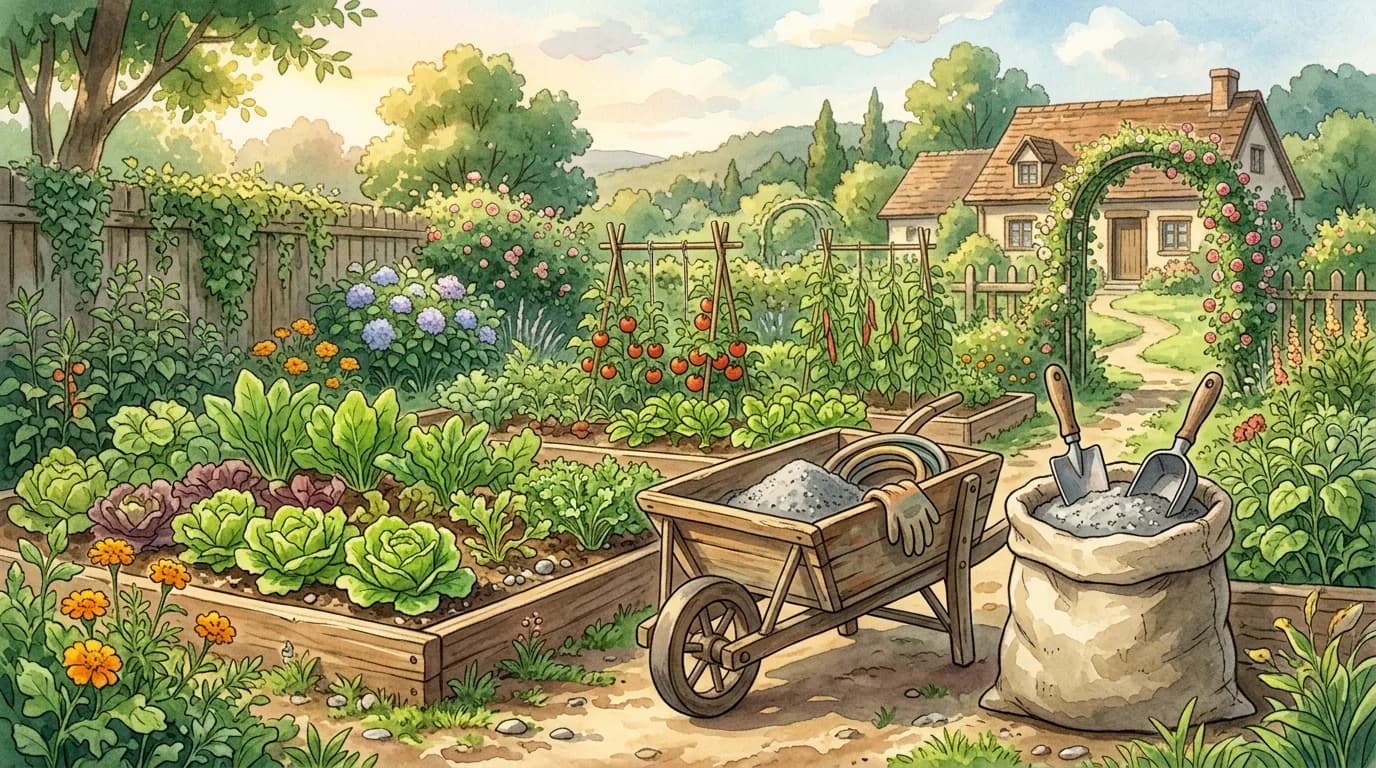
Rock dust (basalt) as a slow amendment
Very finely ground rock that releases minerals slowly; it helps in poor, acid soils, with modest effects.
Works in practice. It supplies calcium, magnesium, silicon and traces, but it is released very slowly and crop results are uneven: some field trials with basalt (USA, UK, with very high agricultural doses) show yield improvements and others see no effect; a study concluded that it depends on the soil and benefits poor sandy soils most. We have not found a guide for the home garden.
Before you start, read the precautions
You will need
- rock dust (basalt)
- compost
- mask
When to use it
In autumn or before planting, in sandy, acid or exhausted soils of Atlantic areas; less useful in chalky inland soils.
Step by step
1Buy very fine basalt or granite dust (less than 0.1 mm), from a garden or organic-farming supplier.
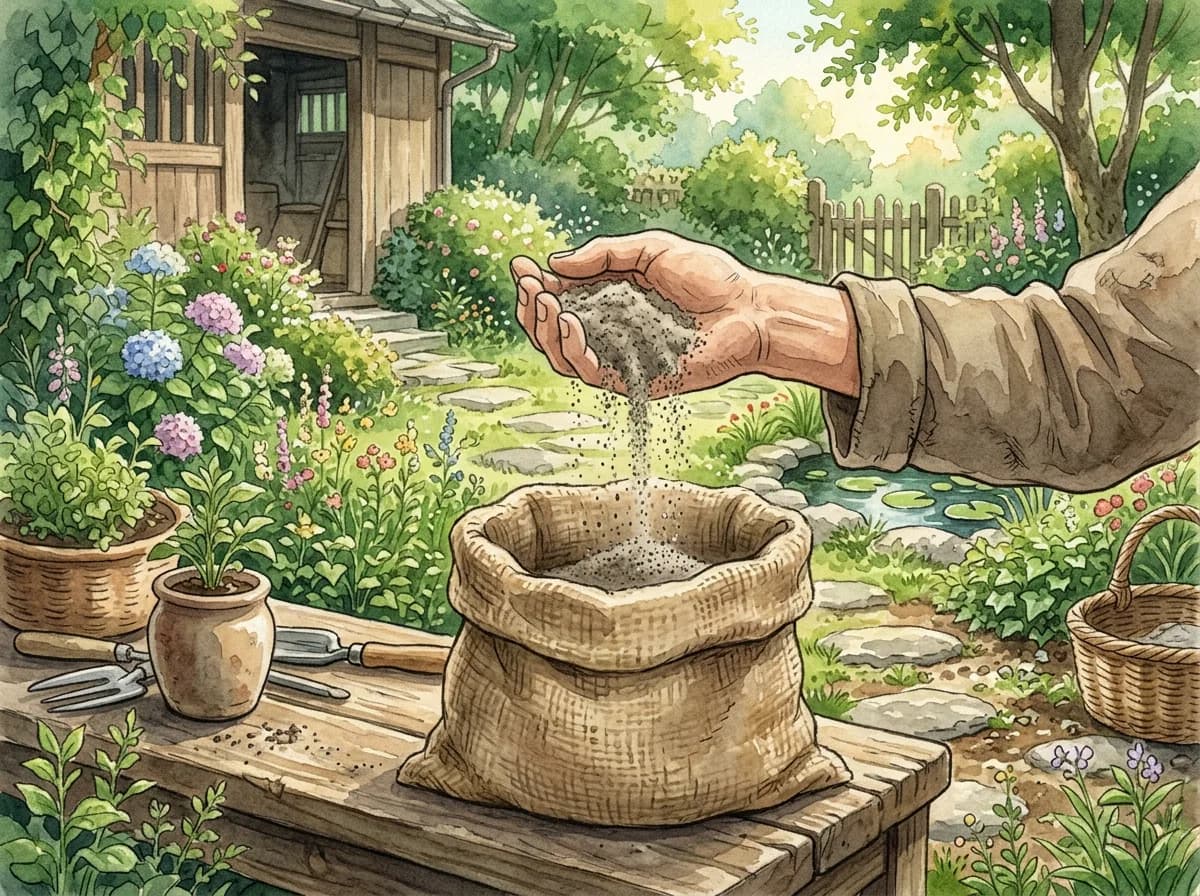
2Mix it with compost in the wheelbarrow, wearing a mask so you do not breathe in the dust.
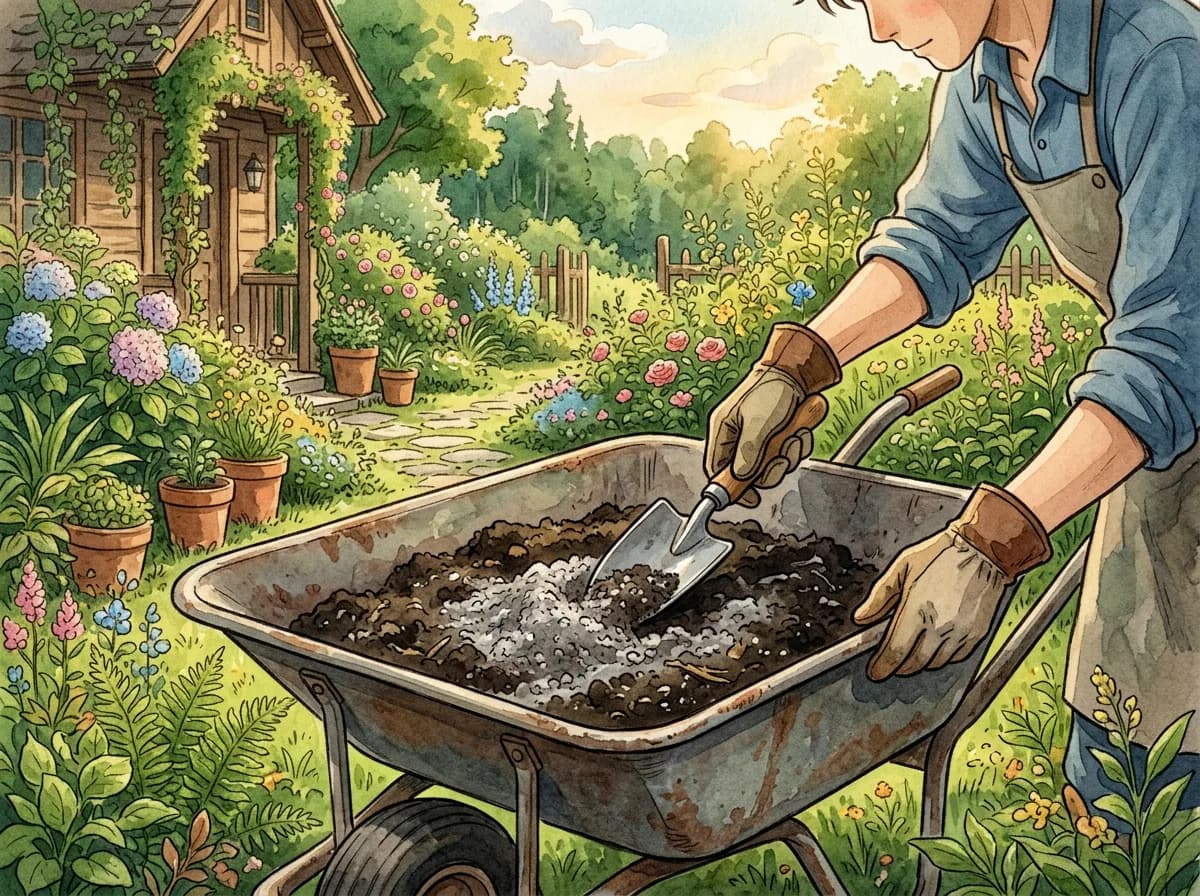
3Spread the mix over the bed and work it into the top 10 cm (3.9 in) of soil. Water.
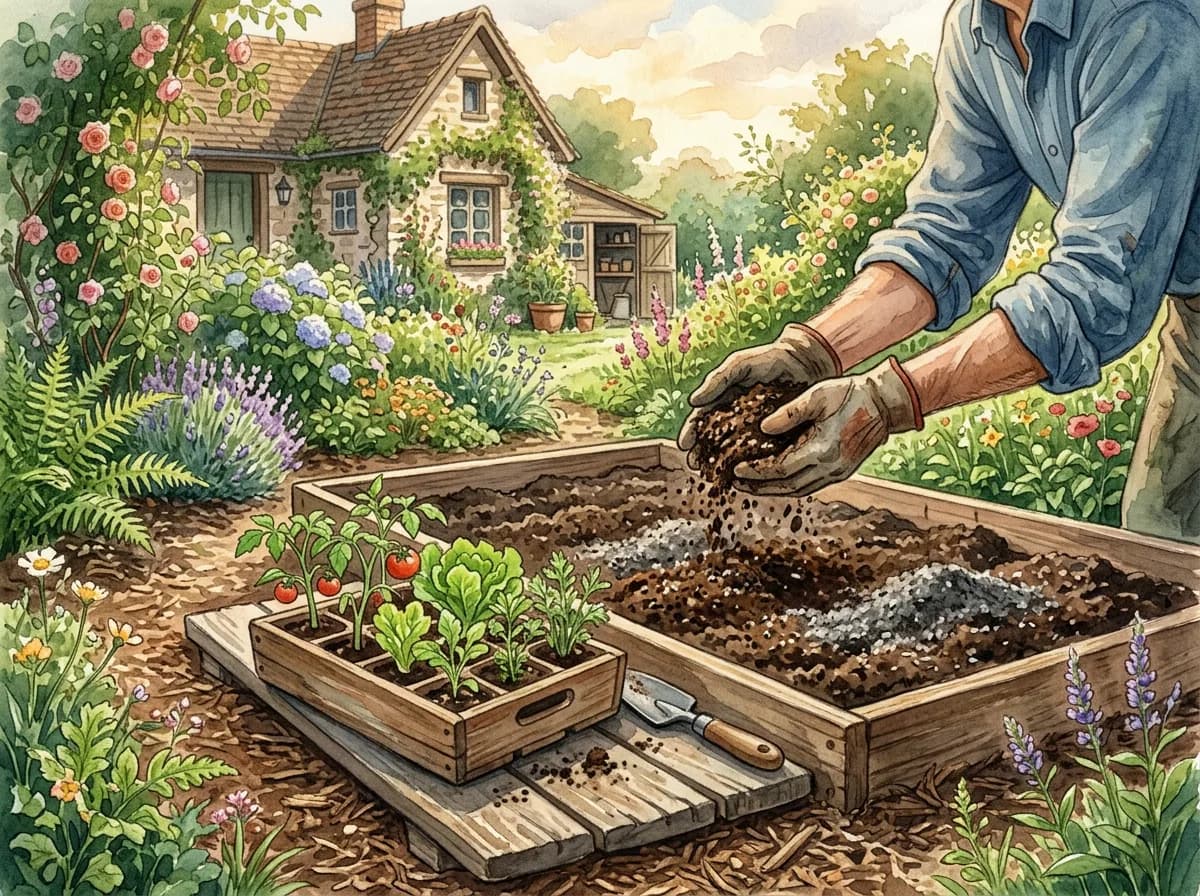
Dose
Indicative dose, with no verified backing for the home garden: 100–300 g/m² once, repeatable every 2–3 years; no more than 500 g/m². Agricultural trials use tonnes per hectare (several hundred g/m²).
Which plants
Vegetables and fruit trees in poor, acid or sandy soils. Of little use in chalky soils.
Precautions
- Fine dust irritates the lungs: FFP2 mask when handling it.
- If the soil is already chalky and rich in minerals, it adds hardly anything.
- Buy rock without contaminants (check its origin), without excess free quartz.
- Do not expect quick effects: it takes seasons to show.
Why it works
The minerals of the rock (olivine, pyroxenes, feldspars) weather slowly, releasing calcium, magnesium, potassium and silicon. The finer the dust, the faster; in soils that are already rich in nutrients it can even reduce the uptake of some elements (pot trial).
Sources
- Rothamsted Research: rock dust can supply potassium and improve growth in sandy soils, but there is no universal result
- Beerling et al. / University of Sheffield: four-year trial with basalt on maize and soya (USA), yield improvements of 12–16 % with agricultural doses