
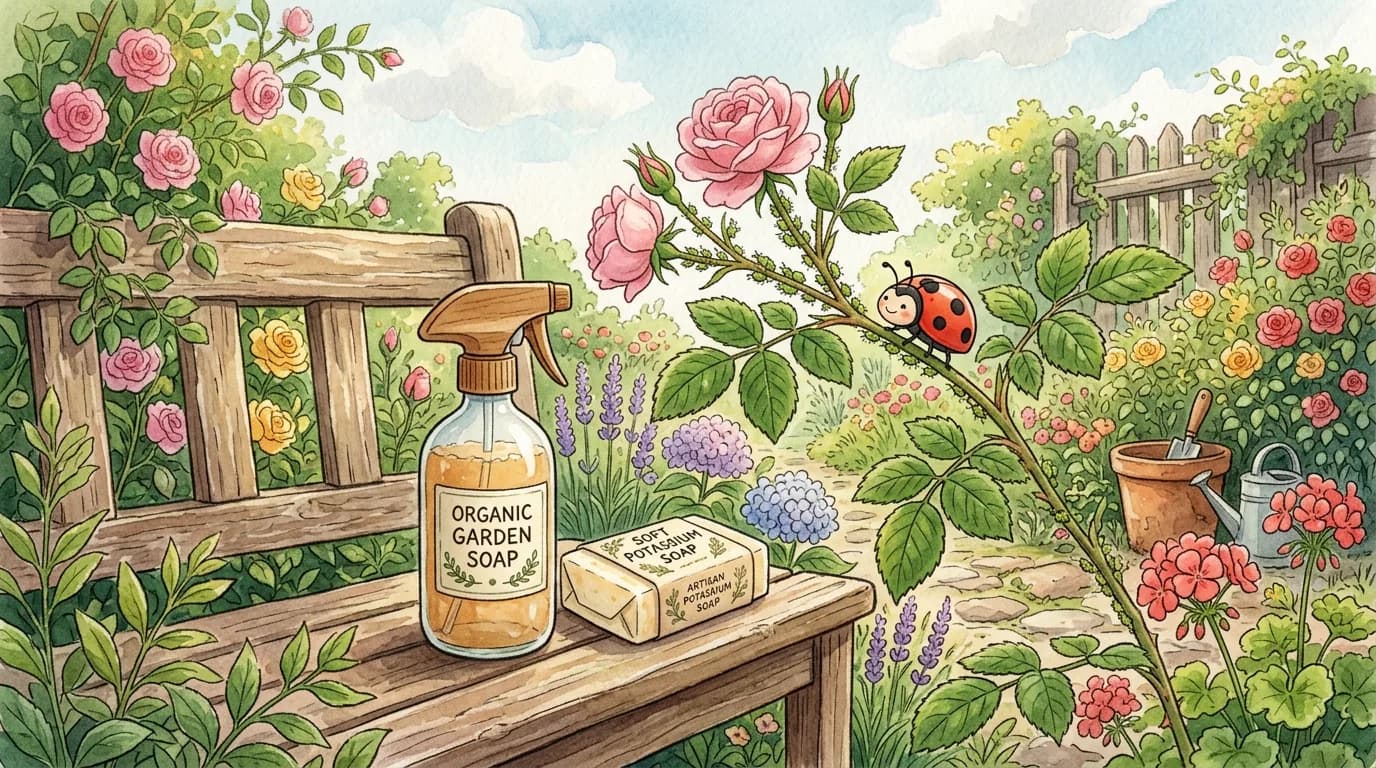
Potassium soap against aphids
A contact spray for aphids, whitefly and soft scale insects.
Well established. Potassium soap is authorised in organic farming and acts by contact on soft-bodied insects. Its effect is real but has no residual action: you have to repeat and reach every insect.
Before you start, read the precautions
You will need
- potassium soap (sold in garden centres)
- soft or rain water
- spray bottle
When to use it
When you see colonies of aphids, whitefly or soft scale. Best first thing in the morning or at dusk.
Step by step
1Dissolve the potassium soap in lukewarm water (hard water reduces its effectiveness).

2Spray thoroughly the undersides of the leaves and the tender shoots, where they hide.
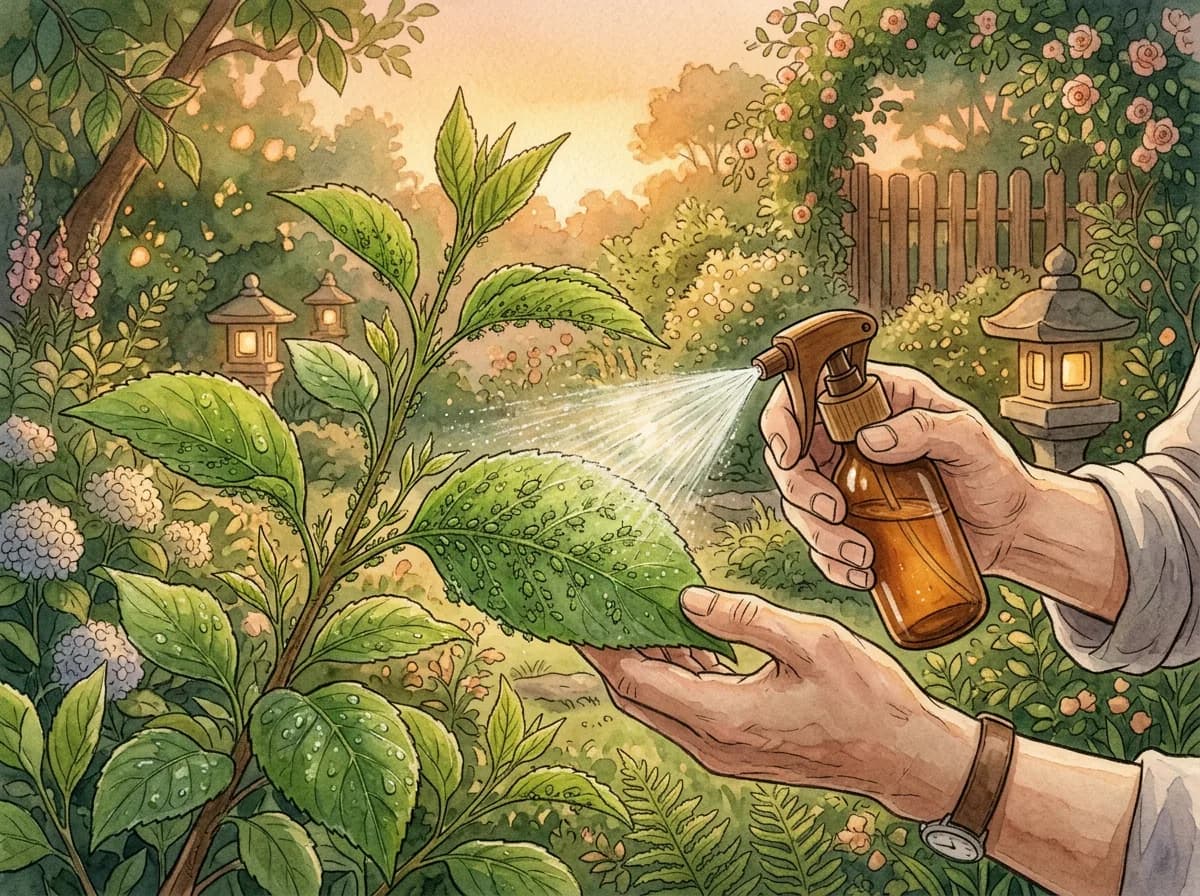
3Repeat every 5–7 days, 2–3 times. Rinse with clean water after a few hours if the sun is strong.

Dose
As a guide: 10–20 g (0.4–0.7 oz) of potassium soap per litre of water (1–2 %); if your product has a label, follow the label.
Which plants
Works on most vegetables and ornamentals. Take care with plants with wax or fine hairs (some succulents, ferns, young pumpkin).
Plants mentioned in this remedy
 Boston fernA fern with long, arching fronds, widely used in hanging baskets for its lush habit.
 Butternut squashButternut squash: elongated, sweet and long-keeping.
Precautions
- Do not apply in full sun or above 30 °C (86 °F): it can scorch the leaves.
- Test first on a few leaves and wait 24 h, especially on delicate or hairy-leaved plants.
- It is toxic to bees and ladybirds if it lands directly on them: do not spray flowers or over beneficial insects.
- Use potassium soap, not kitchen detergents or perfumed soaps: they damage plants. For use as a spray, look for a product that states that use on its label.
Why it works
Potassium salts of fatty acids break the protective cuticle of soft-bodied insects and dehydrate them. They do not affect those that do not come into contact with the solution.
Sources
- University of California Integrated Pest Management: aphids; insecticidal soaps act by contact, need full coverage, have to be repeated, should not be used on drought-stressed plants or above 32 °C, and should be tested first on a small area
- EU organic farming regulations: potassium salts of fatty acids (potassium soap) as an authorised insecticide (no direct link)