
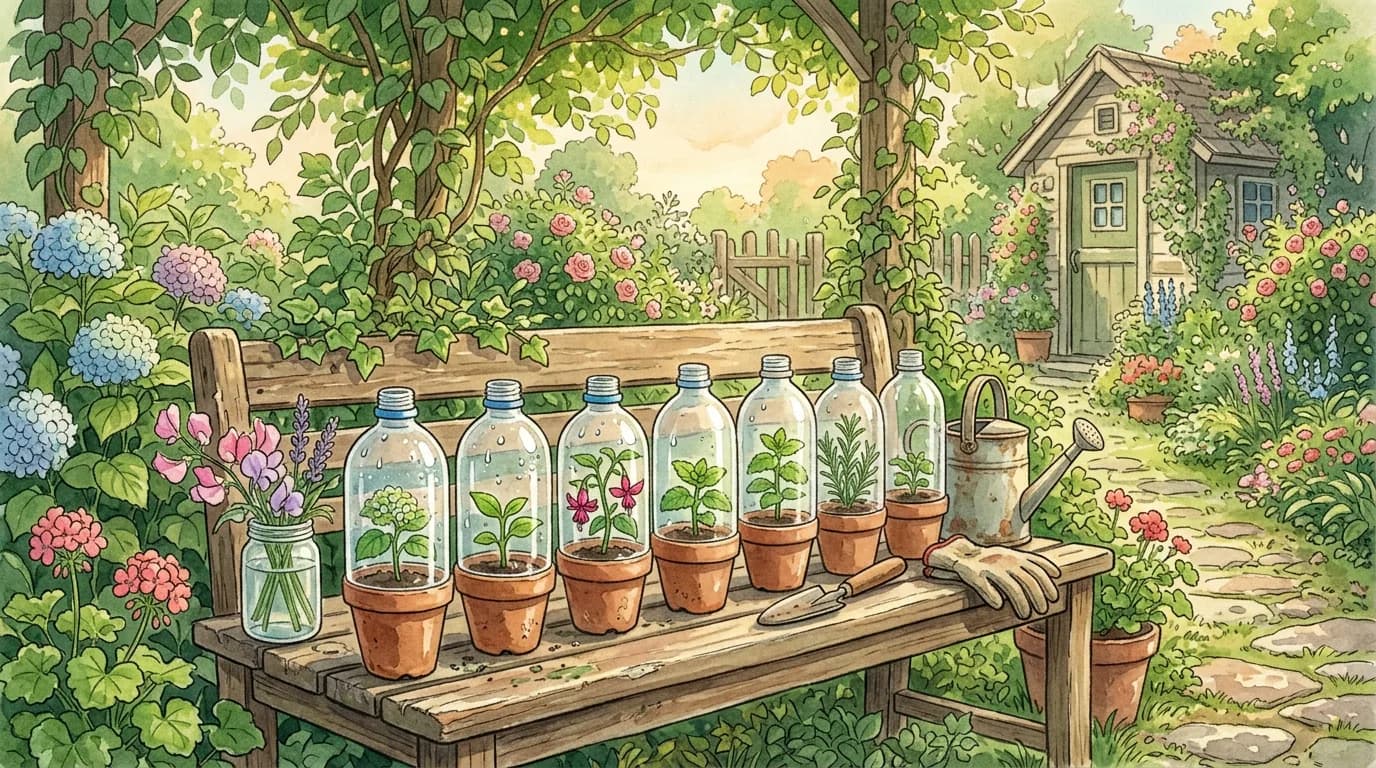
Plastic bottle as a mini greenhouse for cuttings
A cut-down bottle keeps the humidity around the cutting until it roots.
Well established. Keeping humidity high around a leafy cutting, with a dome or bag, is a standard recommendation while there are no roots.
Before you start, read the precautions
You will need
- plastic bottle
- pot
- growing medium
- perlite
When to use it
On any leafy cutting (geranium, hydrangea, rosemary, basil, tomato) in spring and summer, or indoors in autumn.
Step by step
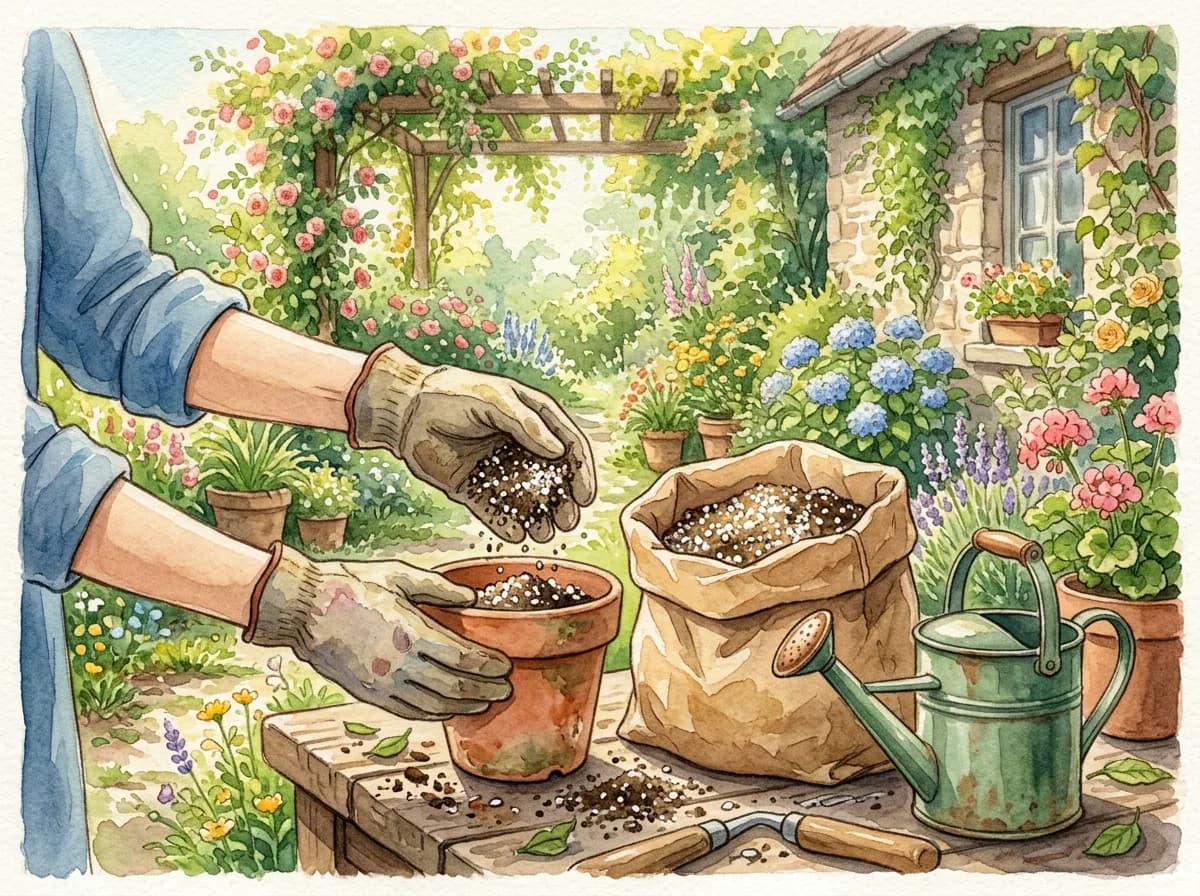
1Fill a pot with light growing medium (half peat or coir, half perlite), water it and let it drain.
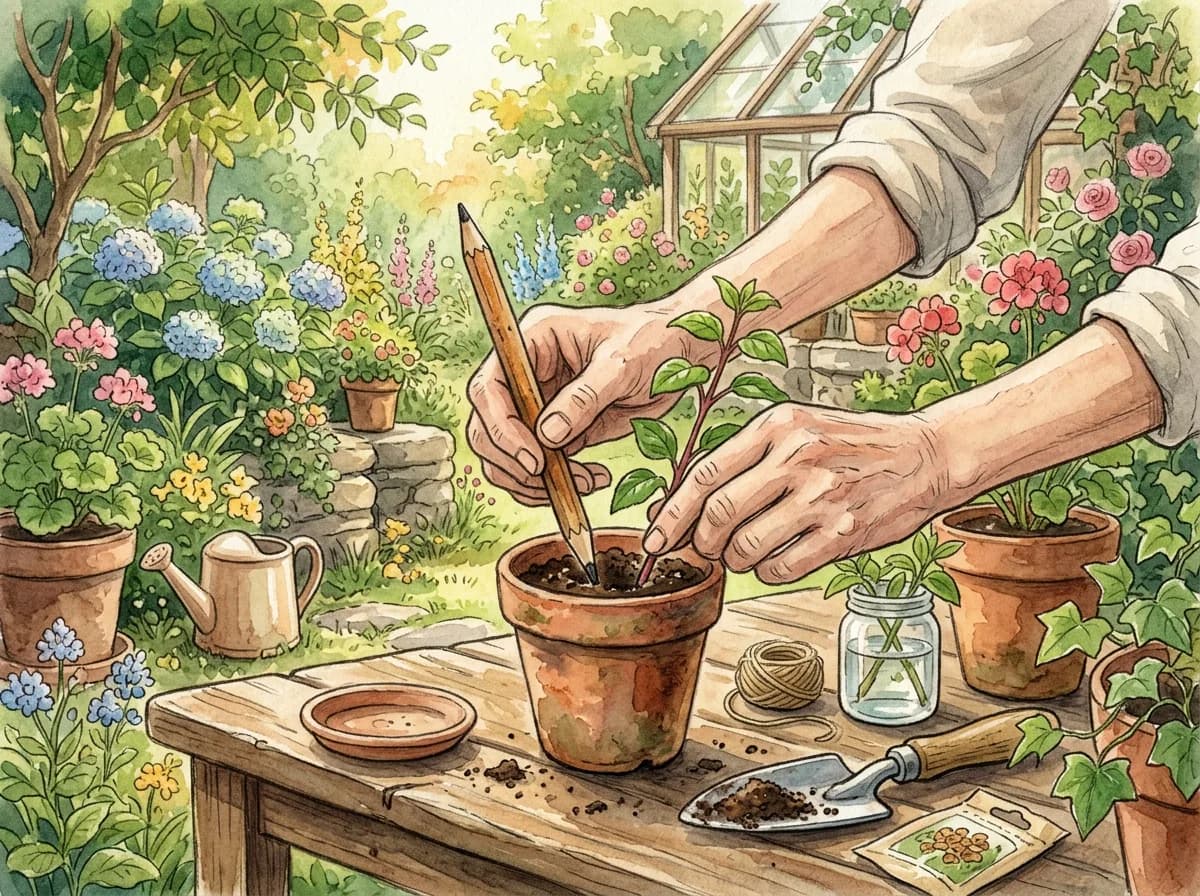
2Make a hole with a pencil, plant the cutting with 2–3 leaves above ground and firm the soil well at the base.
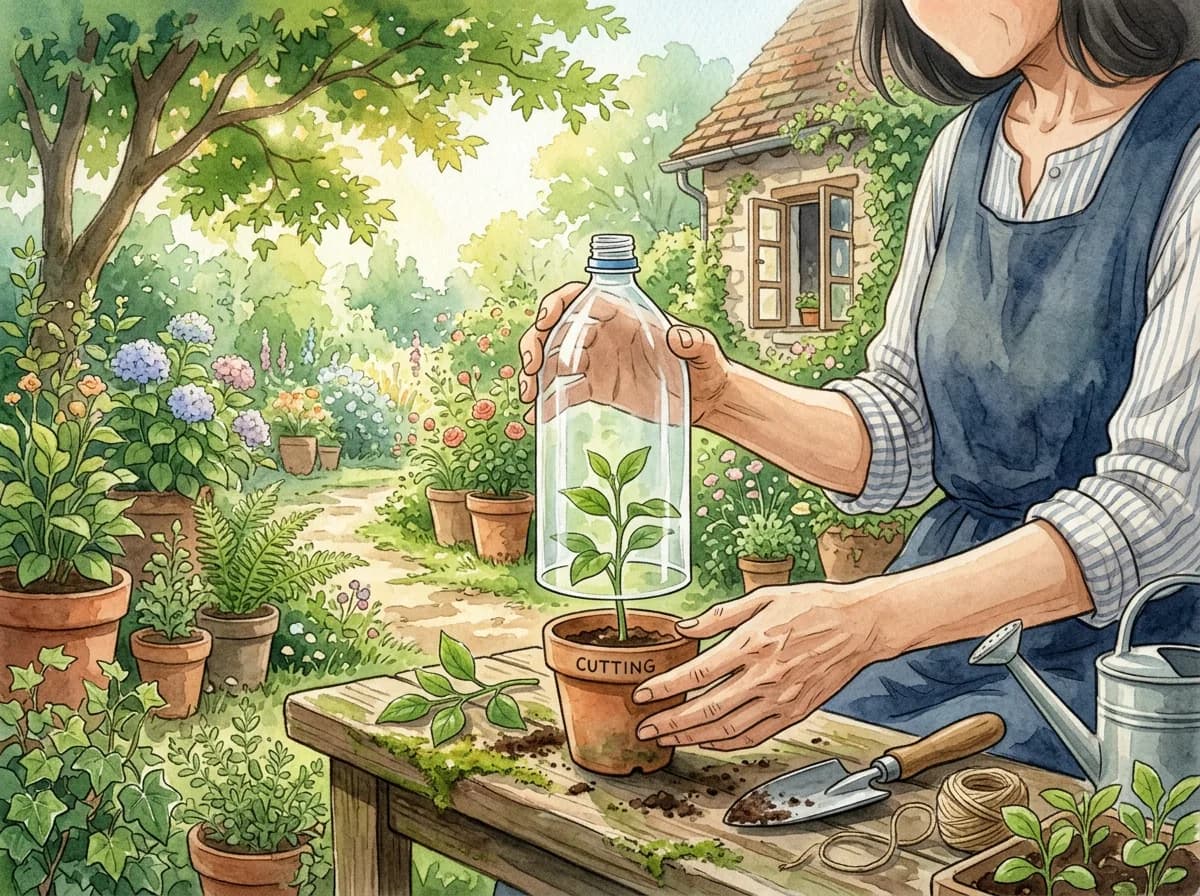
3Cut the base off a 2-litre bottle, place it upside down over the pot and leave the cap open for ventilation.
Dose
Ventilate for 10 minutes a day (or leave the cap open). No direct sun; 20–24 °C (68–75 °F).
Which plants
Almost all leafy cuttings. Succulents and cacti do not need it (they rot with humidity).
Precautions
- No direct sun: under plastic a greenhouse effect builds up and the cutting gets cooked.
- If there are constant water droplets and mould, ventilate more and remove fallen leaves.
- Remove it gradually once there are new shoots to harden the plant off.
Why it works
The plastic keeps humidity around the leaves and reduces transpiration and dehydration while the cutting has no roots yet to replace the water.
Sources
- University of Vermont Extension: humidity dome to hold moisture while it roots; open it if it drips
- Laidback Gardener: “Rose cuttings in a potato” (mentions rooting under an upturned bottle)