
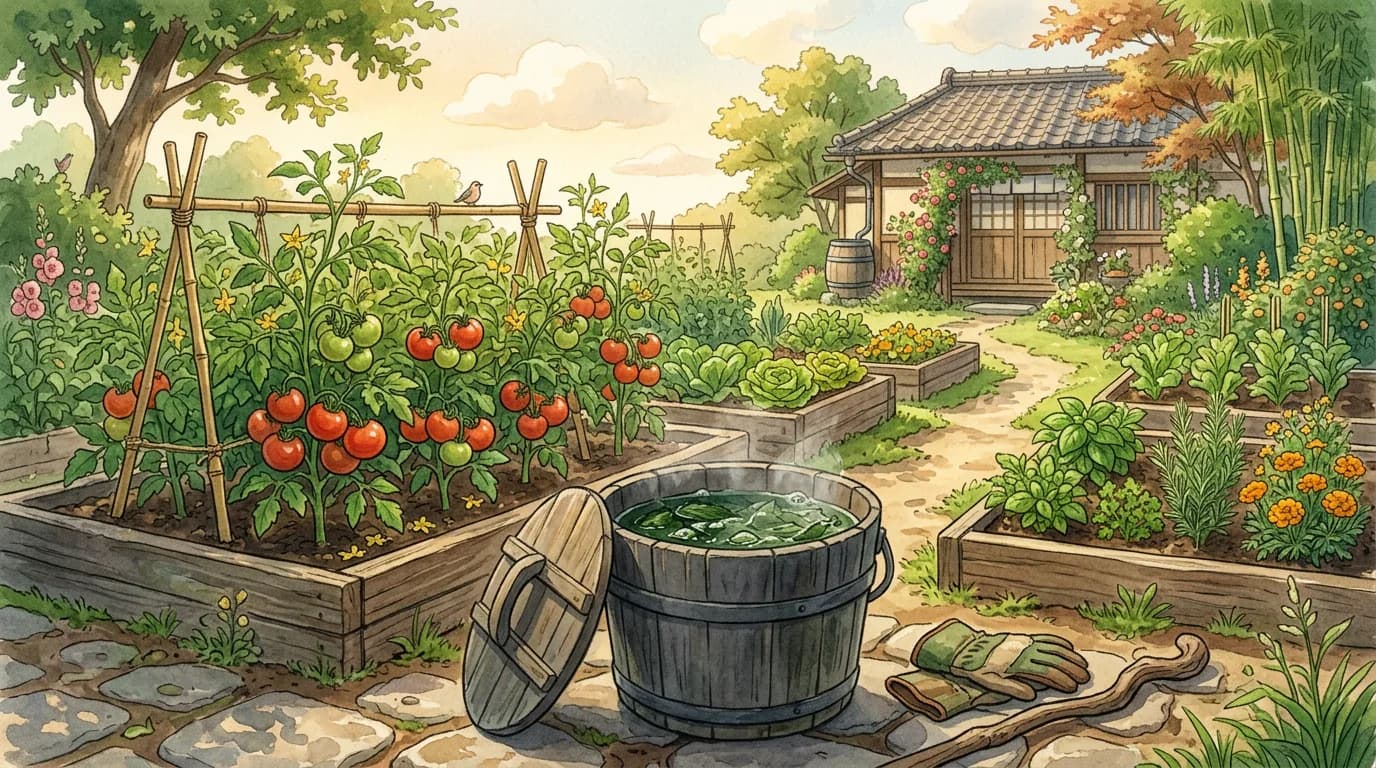
Nettle feed
A homemade liquid fertiliser rich in nitrogen to give plants a green boost in spring.
Works in practice. It is a liquid fertiliser of traditional use. In a citizen-science study (19 pairs of samples, not peer reviewed) nettle feeds had more nitrogen and phosphorus than comfrey feeds, with comparable potassium, although with a lot of variation between samples. A field trial with nettle feed on organic potato (PeerJ) found no effect on yield. Its effect as an insect repellent is not proven.
Before you start, read the precautions
You will need
- fresh nettles
- water without chlorine (rain or left to stand)
- bucket with a loose lid
When to use it
During the vegetative growth phase (spring–early summer) on demanding leaf and fruit vegetables: tomato, courgette, cabbage, aubergine.
Step by step
1Gather nettles before they set seed (wear gloves). Chop or crush the stems and leaves.
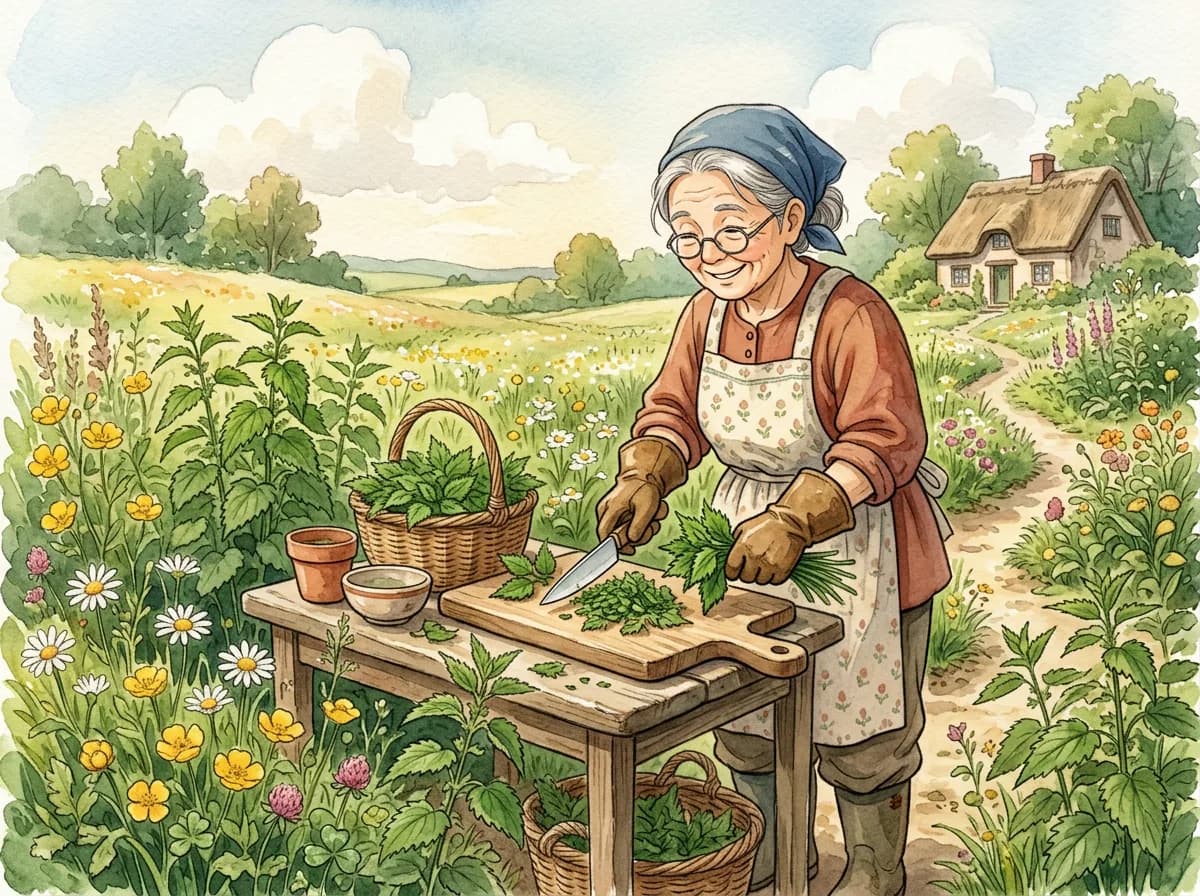
2Fill a bucket with 1 kg (2.2 lb) of fresh nettle for every 10 litres (about 2.6 US gal) of water. Cover without closing fully and stir daily.
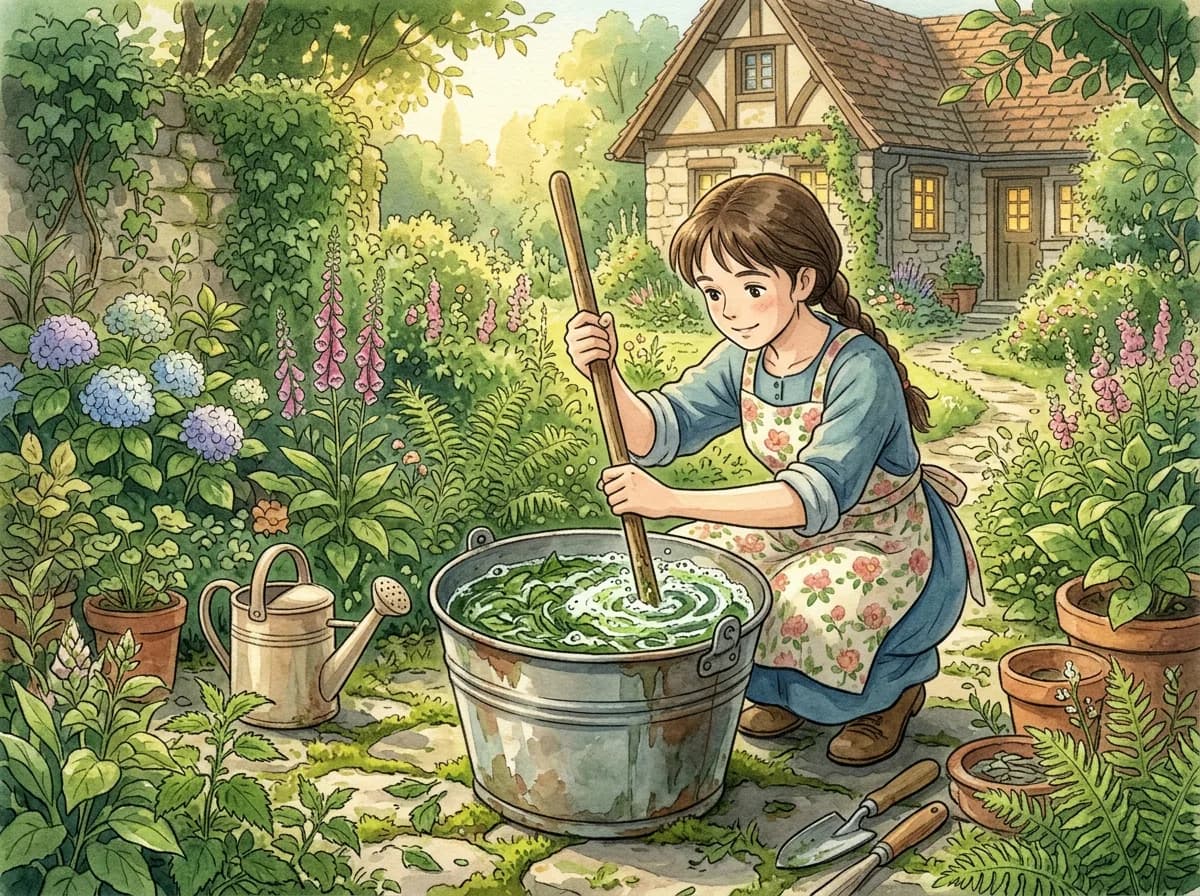
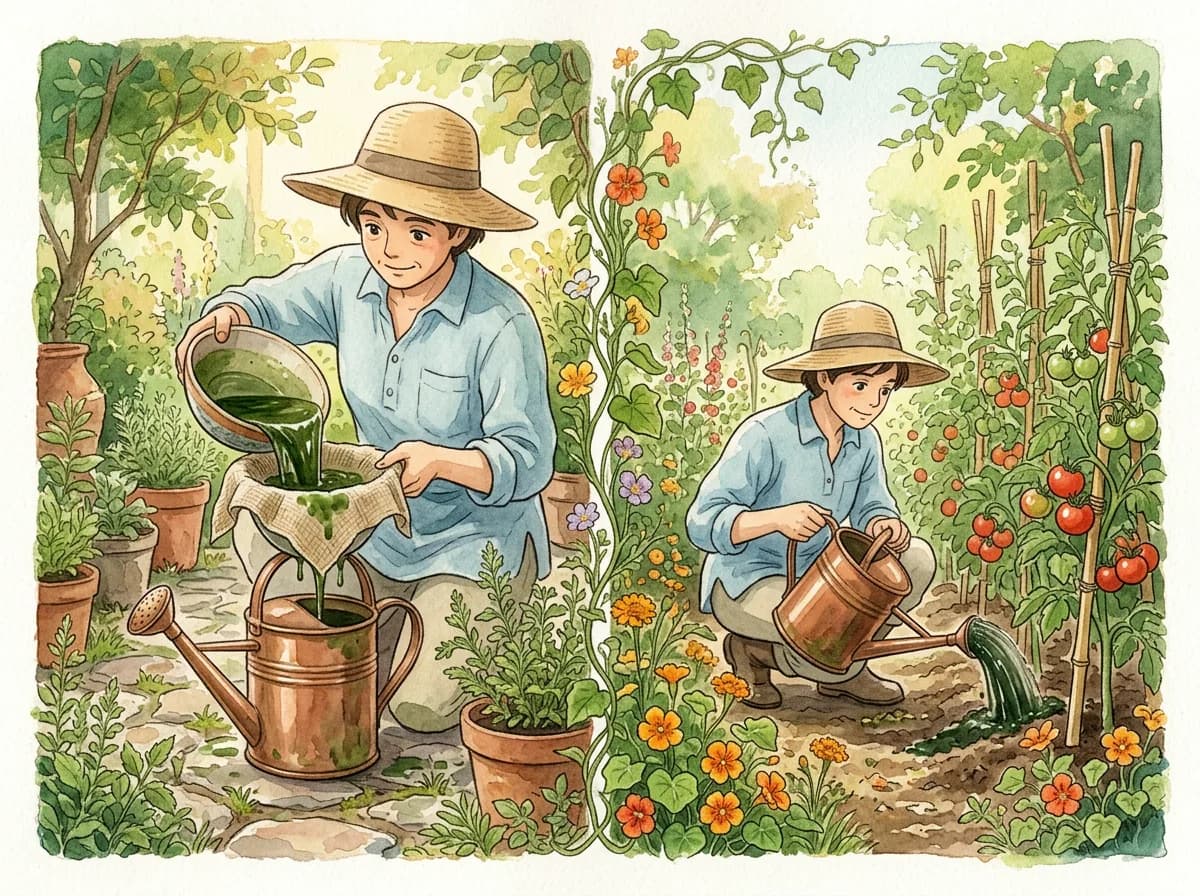
3After 7–15 days (depending on the heat), when it stops bubbling, strain and dilute for use.
Dose
Indicative dose: start by diluting 1 part of feed in 10 of water (1:10) and, if it is very dark, dilute more: 1:20 is recommended for a thick liquid, until it looks like weak tea. Water onto the soil every 10–15 days; do not spray it on the leaves.
Which plants
Good for leaf and fruit vegetables that are growing. Avoid on legumes (they fix their own nitrogen) and on onions/garlic close to harvest.
Precautions
- It smells strong; put it away from windows. Stirring adds oxygen and reduces the bad smell.
- Do not use it neat: it burns roots and leaves. Spraying it as a foliar feed is not advised.
- Avoid it when the plant is already in full flower and fruit if you want good fruit quality: too much nitrogen gives leaves and little fruit.
Why it works
Nettle accumulates nitrogen and minerals in its tissues and when steeped some passes into the liquid. The concentration varies a lot with the plant, the season (young leaves are better) and the time, and it is not proven to keep aphids away.
Sources
- Garden Organic (UK): comparison of comfrey and nettle feeds in 19 gardens
- Royal Horticultural Society: homemade fertilisers (nettle and comfrey; dilution 1:20, do not use as a foliar spray)
- PeerJ: nettle feed on organic potato, with no significant effect on yield