
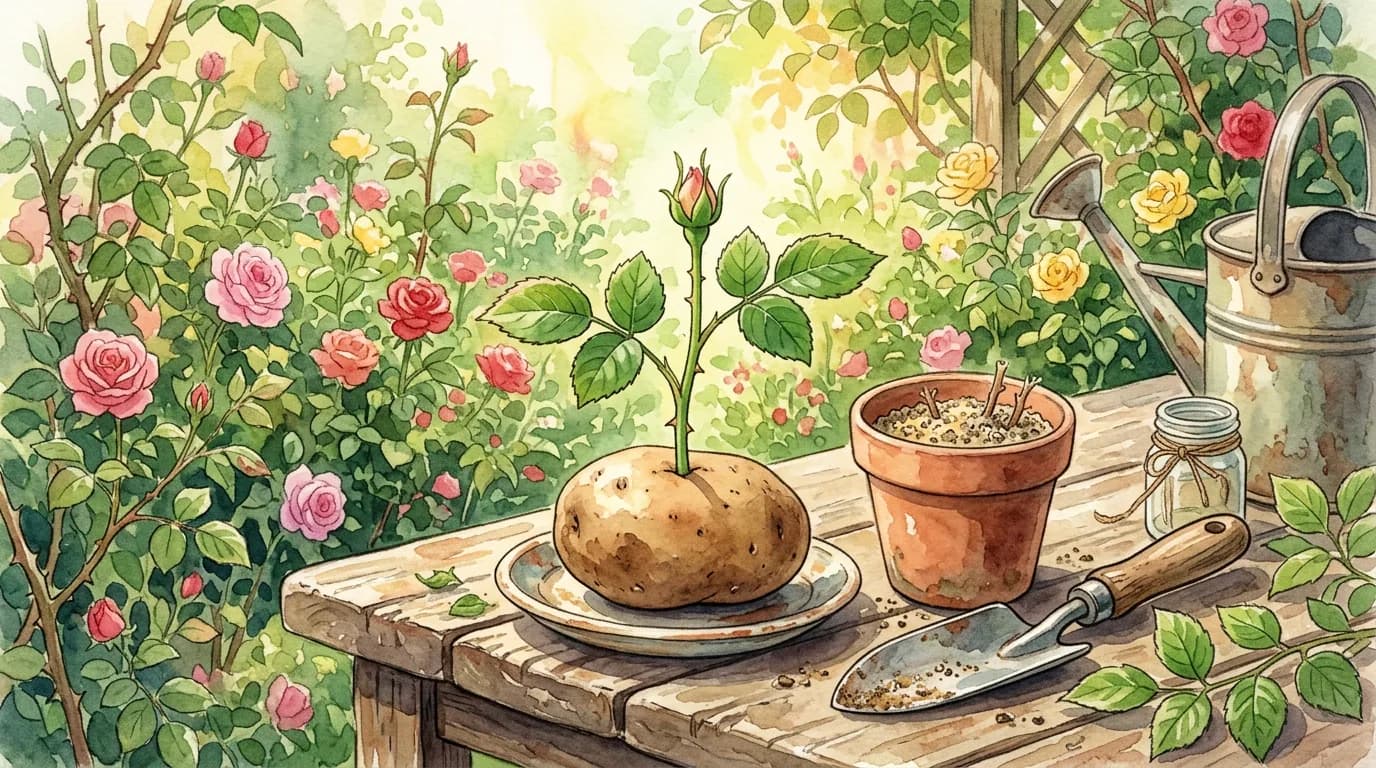
Myth: rose cutting pushed into a potato
The viral potato trick is not necessary: the cutting roots just as well (or better) without it.
Myth. It is sold as a miracle method. It can work, but it is unnecessary: the potato only supplies moisture (not “sugar” that the roots absorb) and a cutting roots just as well with less effort in airy growing medium, for example under an upturned bottle.
Before you start, read the precautions
You will need
- potato
- secateurs
When to use it
It is not needed. For rose cuttings, better in autumn-winter (hardwood) or spring (semi-hardwood), in sandy growing medium.
Which plants
Rose (and woody cuttings in general): they root better in coarse sand and peat or in well-drained garden soil.
Plants mentioned in this remedy
 patataThe 'Kennebec' potato is versatile in the kitchen, with pale skin.
 Rugosa roseA very hardy rose with distinctive wrinkled leaves, extraordinarily resistant to cold, salt and disease.
Precautions
- A soft, damp potato rots and encourages fungi at the base of the cutting.
- A rotting potato can attract rodents and other animals that dig it up.
- If you use a potato, it should have no sprouts or anti-sprouting treatment, although even so we do not recommend it.
Why it works
A potato holds moisture and that helps the cutting not dry out, but a damp, airy growing medium does the same without the risk of rot. Rooting in a pot or in the ground under a bottle gives equally good results with less effort. Indicative alternative: a cutting of about 20 cm (7.9 in) with 3–4 buds, buried 2/3 deep in a pot with sand and peat, with moderate watering.
Sources
- Laidback Gardener: “Rose cuttings in a potato”