
MythGeneral care
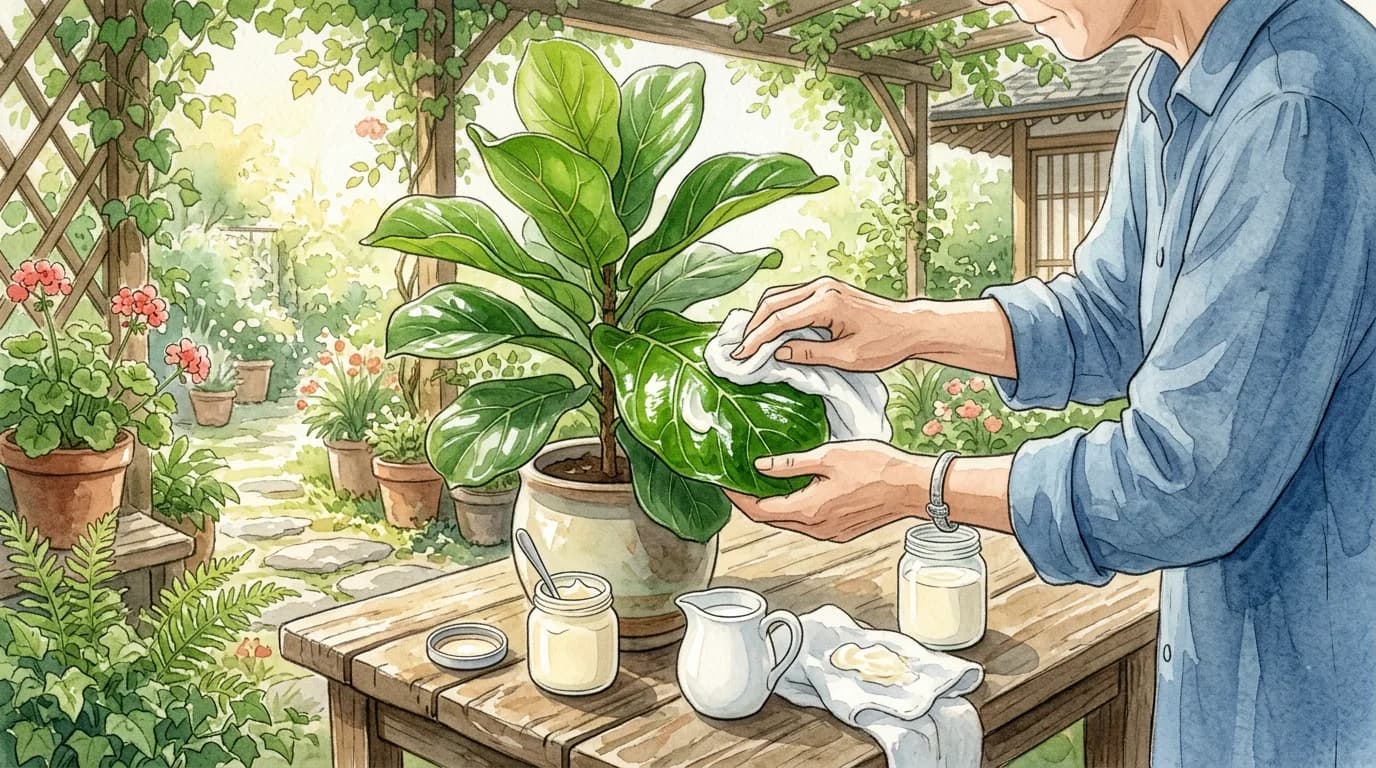
Myth: polishing leaves with mayonnaise, milk or beer
These products clog the leaves, rot and attract unwanted visitors; to give shine, cleaning with water is enough.
Myth. The shine is temporary and comes at the cost of leaving greasy residues that can attract dirt and fungi. There are no studies that back it compared with cleaning with water; our advice against it is based on common sense.
Before you start, read the precautions
You will need
- mayonnaise
- milk
- beer
- cloth
When to use it
We do not recommend it; better clean with water (see the profile on cleaning leaves).
Which plants
None. Above all not on hairy or waxy leaves (African violet, echeveria).
Plants mentioned in this remedy
 African violet (Saintpaulia)A small perennial with a flat rosette 10 to 30 cm across, made up of rounded, fleshy, dark green leaves…
 Echeveria (Mexican snowball)A very compact succulent with a rosette of bluish leaves, one of the most widely grown for its stone-flower…
Precautions
- A layer of oil or grease can partly cover the leaf and reduce light and gas exchange (plausible explanation, not measured).
- Dairy and mayonnaise go rancid and smell bad, and favour fungi and flies.
- Dust sticks more to a smeared leaf.
- Commercial leaf polishes are not necessary either: a healthy leaf already shines.
Why it works
It does not work: the leaf shines because it has a clean waxy cuticle. Any layer of grease, protein or sugars covers it and it stops exchanging gases normally.
Sources
- No verified source against the myth: there are no studies proving that homemade leaf polishes harm or help. They are advised against on common sense (greasy residues, dust and bad smells); cleaning with water is the safe thing.