
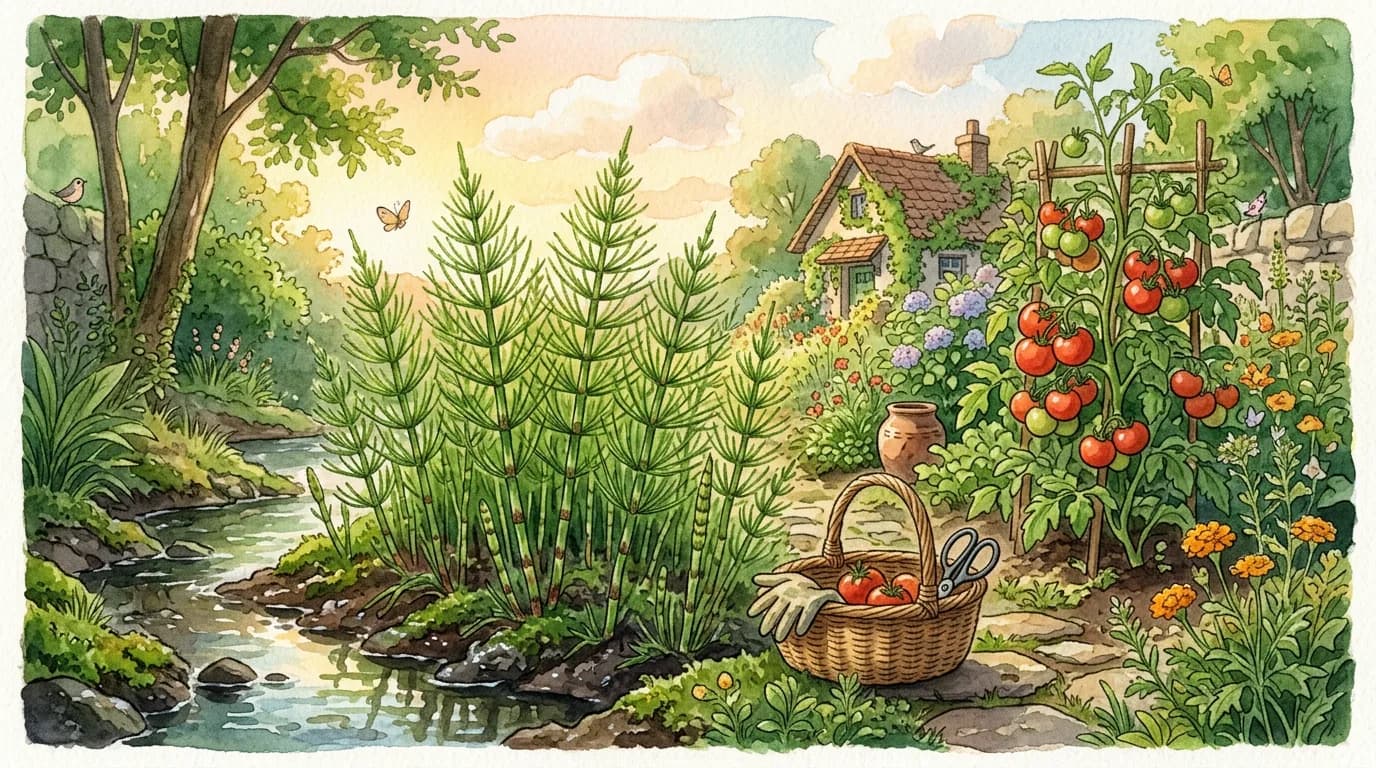
Myth: horsetail supplies potassium
Horsetail decoction works as a booster against fungi because of its silica, but it is not a potassium fertiliser.
Myth. Horsetail is known for its silica (published figures vary a lot, from a few points to more than 20 % of the dry weight), not for potassium. The standardised extract is authorised in the EU as a basic fungicide substance, but that does not mean the homemade decoction works. Its use is preventive, not as a fertiliser.
Before you start, read the precautions
You will need
- fresh or dried horsetail
When to use it
Do not use it to correct potassium deficiencies. If you want to try it as a preventive, in spring, on healthy plants.
Which plants
Its traditional use is on vegetables and roses as a preventive foliar spray; not as a source of potassium.
Precautions
- It does not replace a fertiliser: if there is a lack of potassium (scorched leaf edges, poor fruit), use ash, comfrey feed or compost.
- Identify the plant carefully: Equisetum arvense is the one that is used; other horsetails (such as E. palustre) are toxic to livestock.
- As a preventive fungicide, its effectiveness is modest and depends on applying it before the disease appears.
Why it works
There is no basis for using it as a potassium fertiliser: what characterises it is silica. The plant is credited with a preventive effect against fungi (it is a basic fungicide substance in the EU), but the result of a homemade decoction is not proven and its field data are modest.
Sources
- Equisetum arvense extract: first basic substance approved in the EU for crop protection (preventive fungicide, standardised extract)