
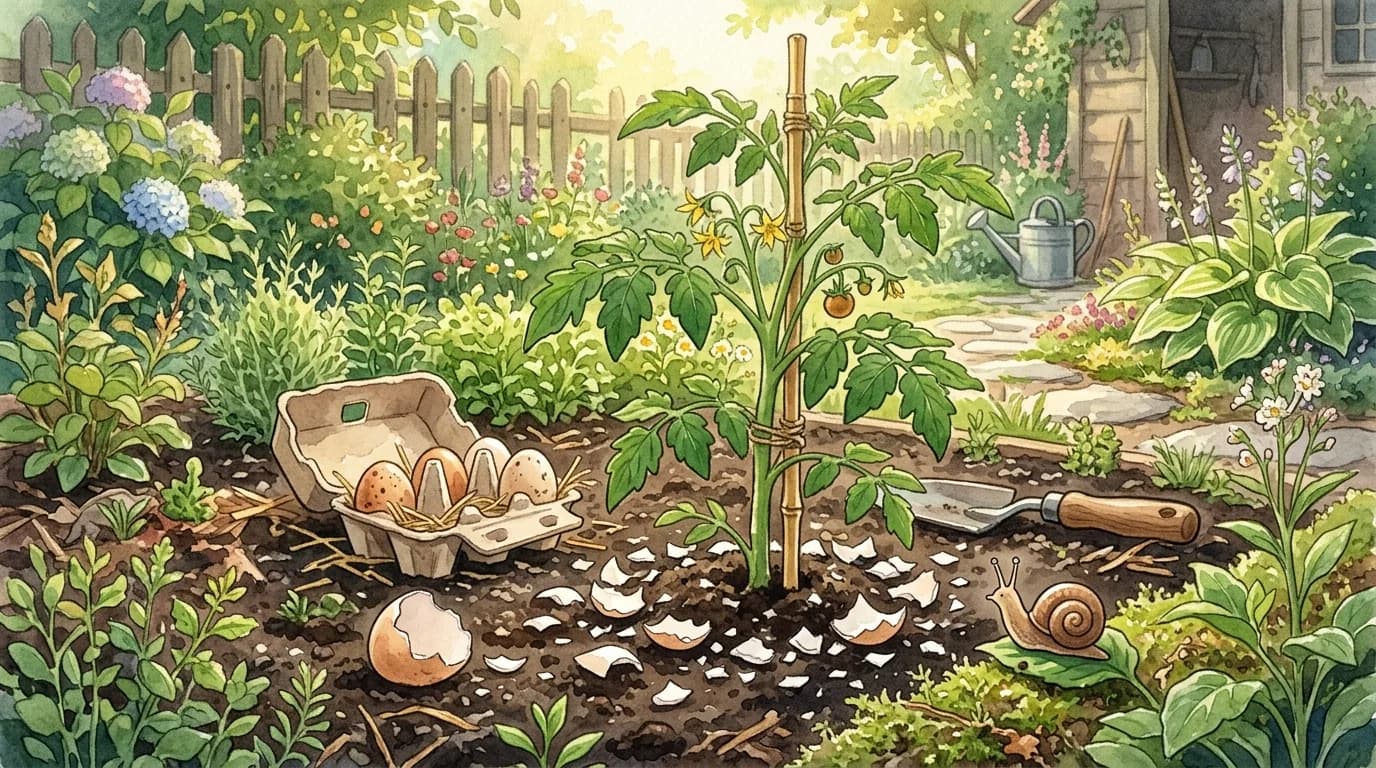
Myth: eggshells fertilise with phosphorus
Eggshells are almost entirely calcium carbonate: they are not a useful source of phosphorus nor do they act quickly.
Myth. Shells are 94–97 % calcium carbonate, that is, a liming material, not a phosphate fertiliser. Ground very fine they neutralise soil acidity; ground coarse they are practically ineffective (Mitchell study, 1994). For their use as calcium, see “Eggshells as a source of calcium”.
Before you start, read the precautions
You will need
- eggshells
When to use it
Not recommended as a source of phosphorus. For calcium there are faster and more reliable options.
Which plants
They do not supply enough to any plant as a phosphorus fertiliser. They can go into the compost, without expecting miracles.
Precautions
- Do not expect it to cure phosphorus deficiencies or prevent tomato blossom end rot: that problem is usually caused by irregular watering, not by a lack of calcium in the soil.
- Whole shells can attract rodents if they are not clean.
- In chalky soils (high pH), calcium carbonate does not dissolve and adds nothing.
- If you compost them, crush them well; they add little, but they do no damage.
Why it works
It does not work the way people say: the shell's phosphorus is minimal, and the calcium in the carbonate is only released in acid soils and if it is powdered. Soaking them in water does not release useful amounts either.
Sources
- Iowa State University (Holmes et al., 2011): Using ground eggshells as a liming material in corn and soybean production (composition 94–97 % CaCO3)