
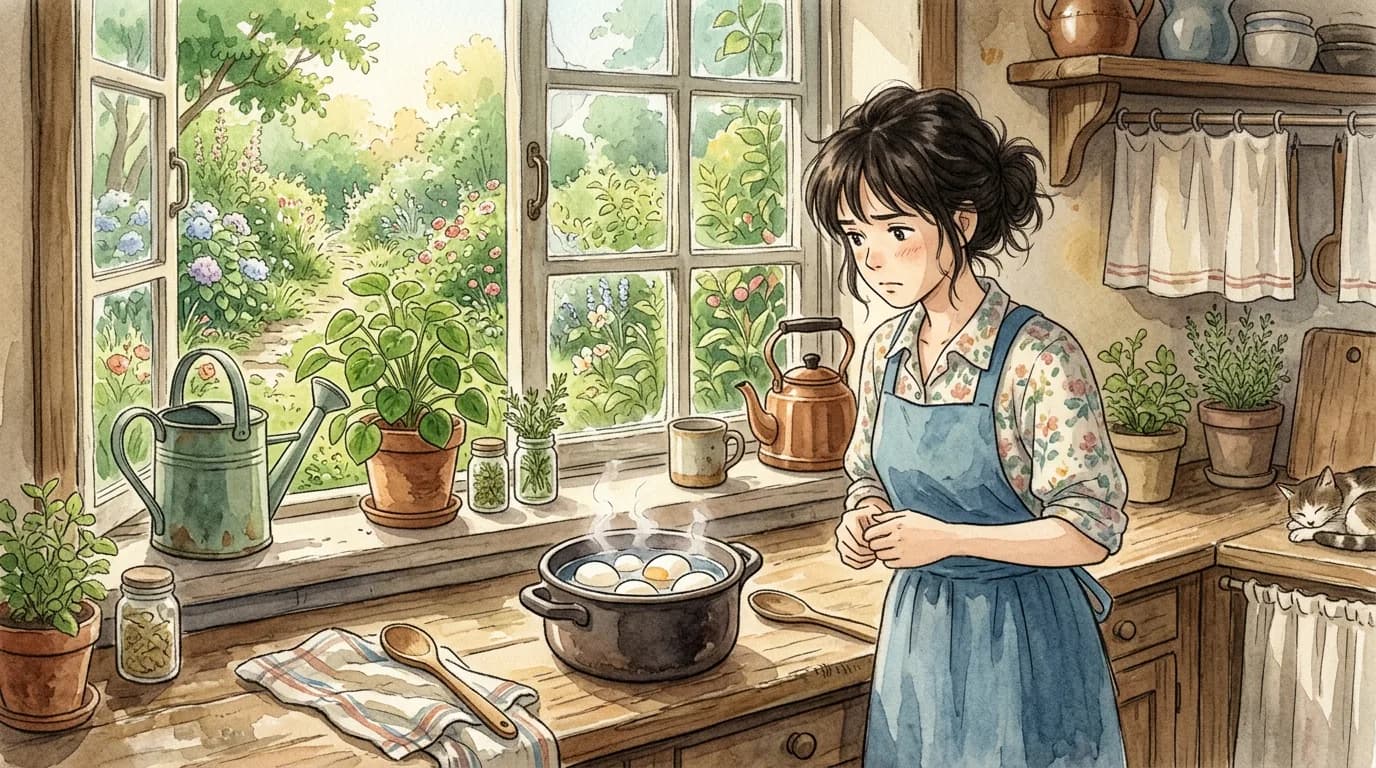
Myth: egg cooking water is not a calcium fertiliser
Egg cooking water carries tiny traces of calcium; watering with it does not prevent blossom end rot or feed plants.
Myth. The shell is mostly calcium carbonate (94–97 %), very poorly soluble in neutral water. We have not found analyses of egg cooking water: it is reasonable to think that very little calcium passes. And tomato blossom end rot depends mainly on watering.
Before you start, read the precautions
You will need
- egg cooking water
When to use it
Do not use it as a remedy. If you want to make use of the cooking water, unsalted and already cold, you can water with it as normal water, but do not expect any nutritional effect.
Which plants
None in particular: it is no use for tomatoes or peppers with blossom end rot.
Plants mentioned in this remedy

Precautions
- If the water contained salt, do not use it: it scorches roots and makes the growing medium salty.
- Water with traces of egg can smell and attract insects if left outside.
- For real calcium, use well-ground shell, gypsum or lime depending on the soil.
Why it works
The calcium carbonate of the shell barely dissolves in water of neutral pH. It dissolves better with acids, but cooking water is not one. That is why the water hardly gets enriched in calcium.
Sources
- University of Illinois (Extension): Using eggshells in the garden and compost (the shell has to be ground fine to be of use)
- Iowa State University (Holmes et al., 2011): composition of the shell (94–97 % CaCO3)