
Measuring soil pH with red cabbage
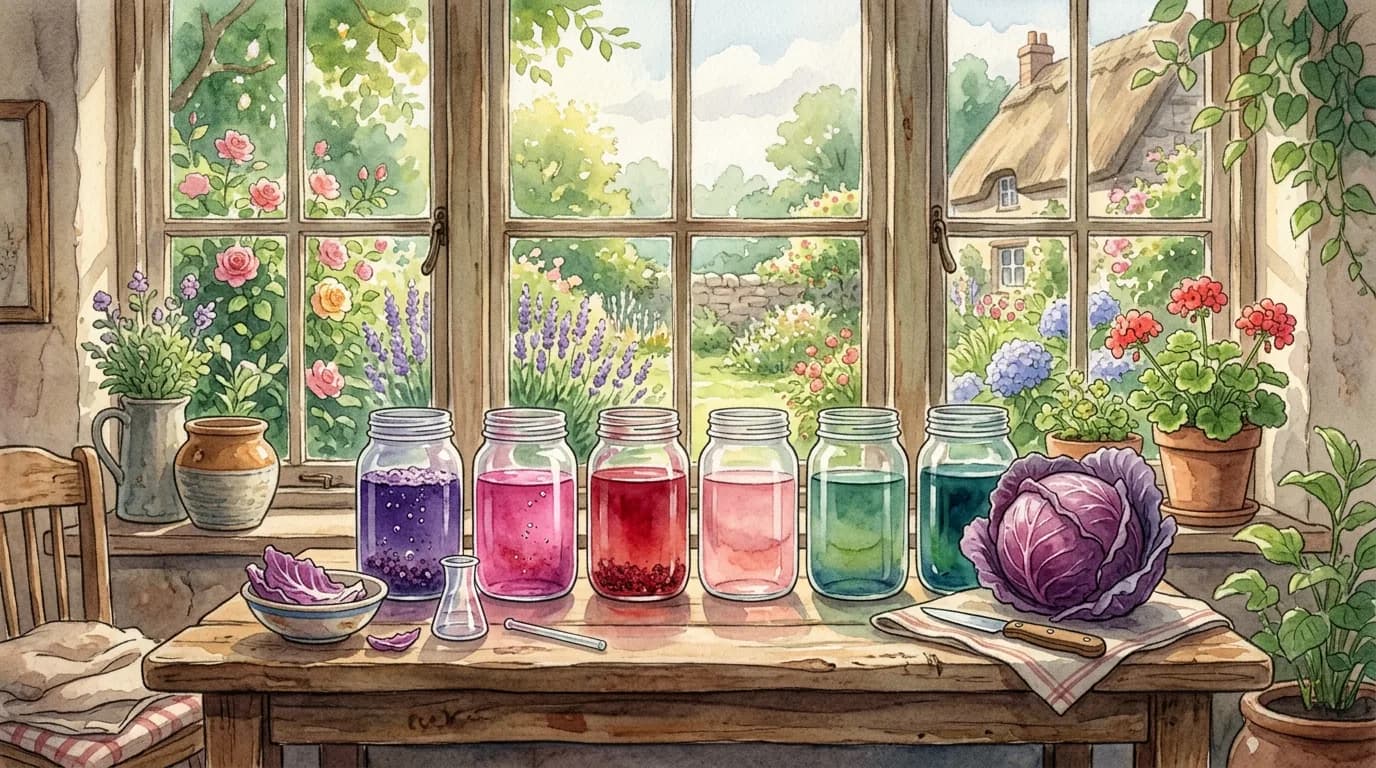
Red cabbage juice changes colour with the pH and works for a rough homemade estimate.
Works in practice. The anthocyanins of red cabbage change from red (acid) to blue and green (alkaline) and it is a very well-known chemistry demonstration, but we have not found any comparison with laboratory analysis. Home kits give results different from the laboratory's; to decide how much lime or sulphur to add, use an analysis. Here it is only good as a rough screening.
Before you start, read the precautions
You will need
- red cabbage
- rainwater
- white vinegar
- bicarbonate of soda
When to use it
Before deciding whether to lime, acidify or plant acid-loving plants, or to check whether the water or the soil of a pot is very alkaline.
Step by step
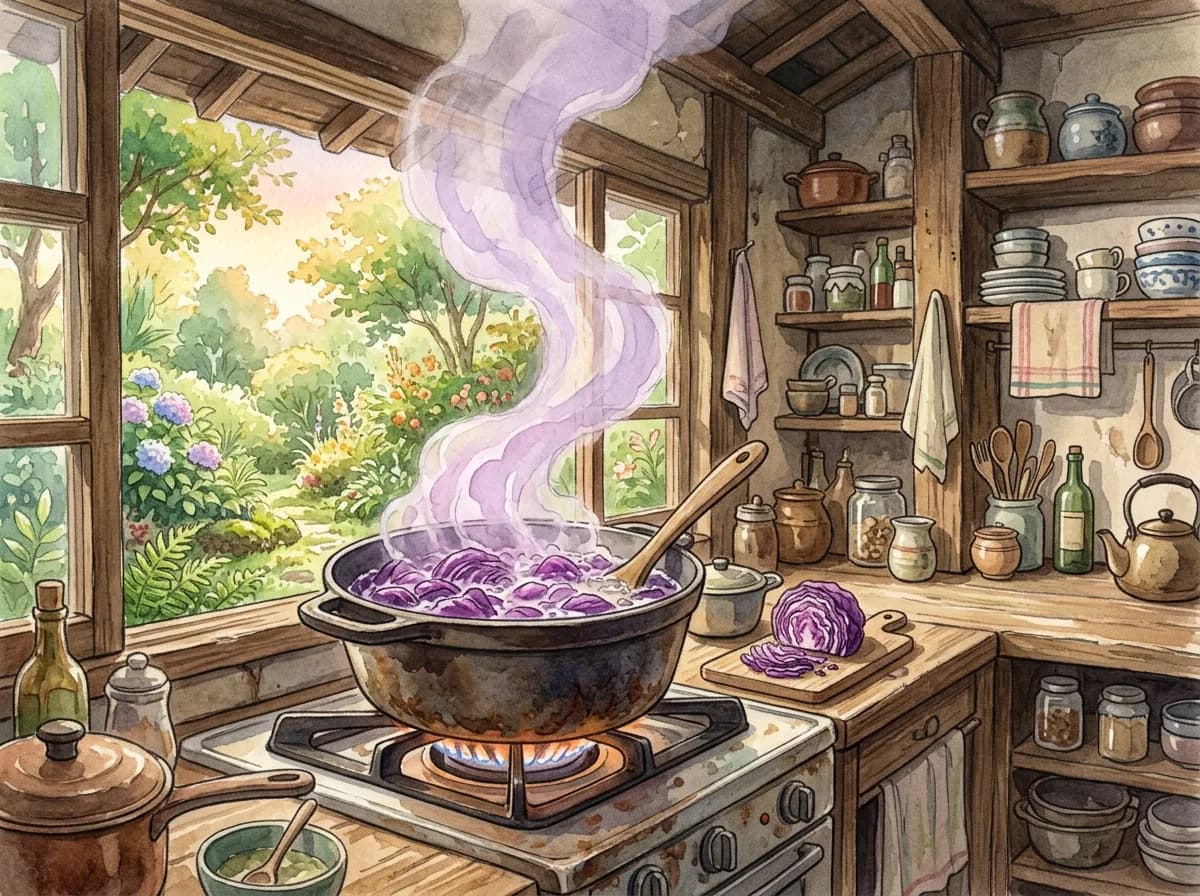
1Boil about 100 g (3.5 oz) of chopped red cabbage in half a litre of water for 10 minutes until the water turns purple.
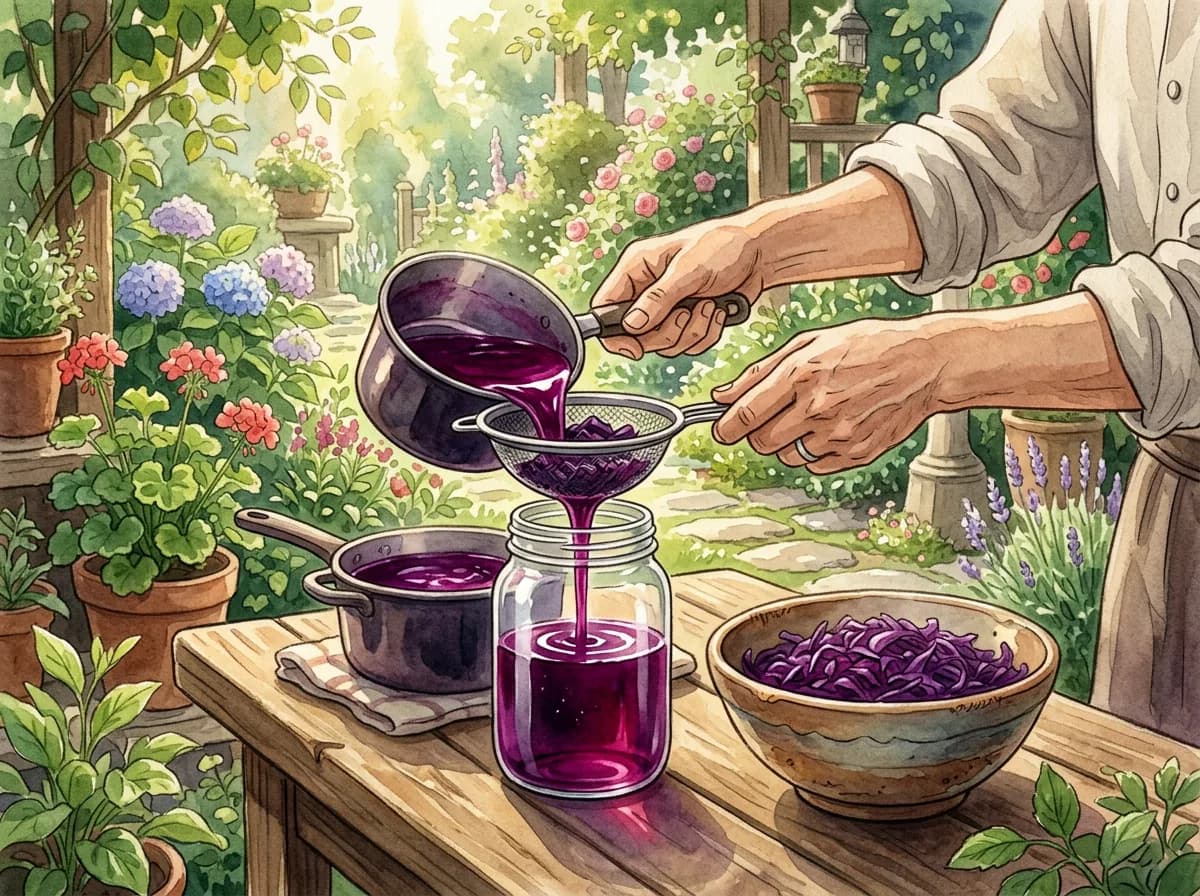
2Strain and let the liquid cool. Keep it in a glass jar in the fridge for up to a week.
3Mix 1 tablespoon of soil with 3 tablespoons of rainwater or distilled water, let it settle and pour the clear liquid onto a spoonful of indicator. Compare with vinegar (red) and bicarbonate of soda (blue-green).

Dose
Indicative (a popular-science recipe, no standard): about 100 g (3.5 oz) of cabbage per 500 mL (16.9 fl oz) of water. 1 part soil to 3 of water and 1 of indicator for the test.
Which plants
Useful for any vegetable garden or pot before planting acid-loving plants or vegetables sensitive to pH.
Plants mentioned in this remedy

Precautions
- Do not use tap water if it is hard: it turns the test blue. Use rain or distilled water.
- It is an estimate: the colour does not equal an exact pH. To lime or acidify, check against a laboratory analysis.
- Take samples from 3–5 points and mix them, at 10–15 cm (3.9–5.9 in) deep.
- Do not use the jars for food afterwards, in case traces of soil remain.
Why it works
The anthocyanins of the purple pigment change structure with the acidity of the medium: in an acid medium they are red or pink, close to neutral purple and in an alkaline medium blue or green. That allows a quick visual comparison.
Sources
- University of New Hampshire Extension: home soil kits are good for seeing whether the pH is within a reasonable range, but they are not precise
- Montana State University: soil test kits versus laboratory (results differ moderately or greatly)
- The red cabbage method has no published validation that we have been able to verify; it is a teaching resource