
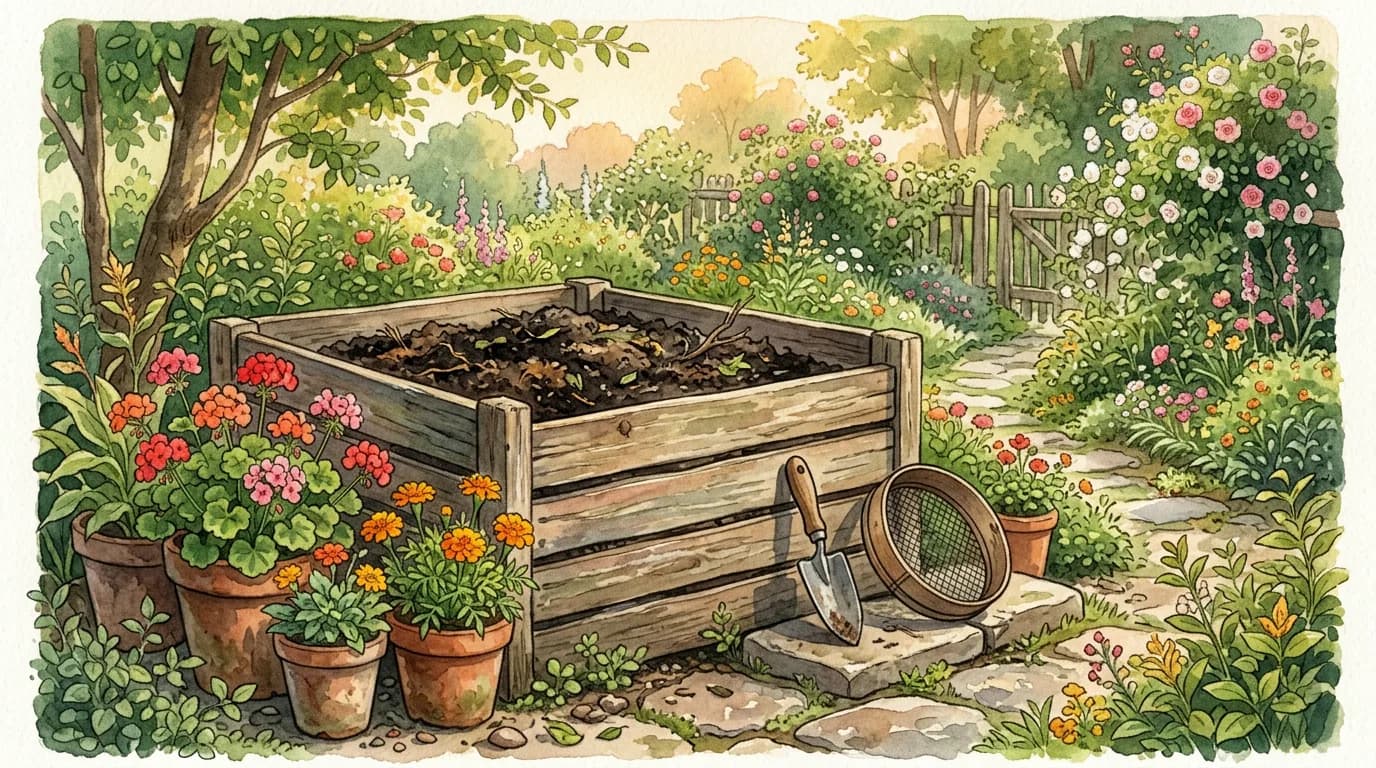
Mature compost for flowering
A layer of well-made compost on pots and flower beds supplies phosphorus and potassium slowly and gently.
Works in practice. Mature compost as an amendment is a standard practice (it improves structure and water retention). Its nutrients are released slowly and vary with what was composted; it is not a fertiliser aimed at flowering, and we have not been able to cite a specific trial on phosphorus and potassium.
Before you start, read the precautions
You will need
- mature compost
- sieve
- hand trowel
When to use it
In spring, before flowering, and again in mid-summer on plants that flower a lot (roses, geraniums, marigolds, fruiting vegetables).
Step by step
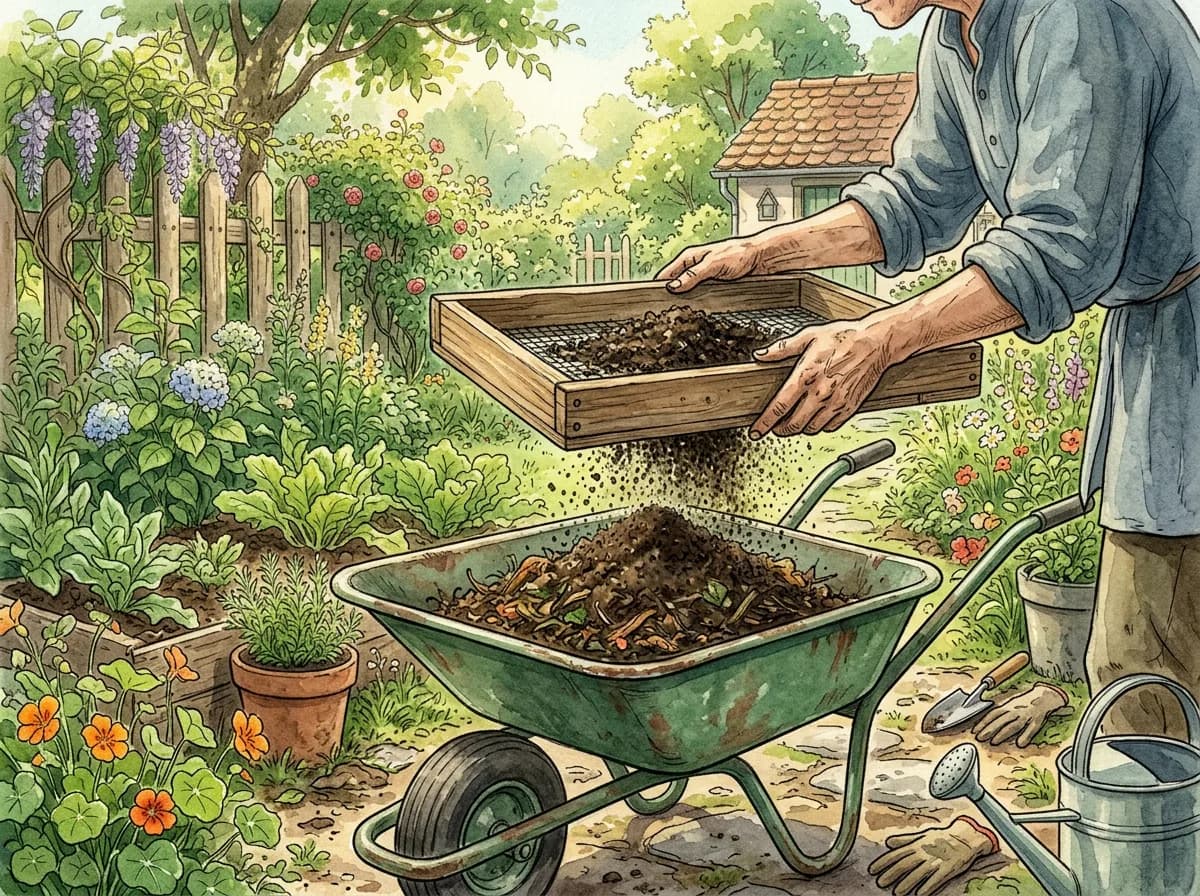
1When the compost is dark, crumbly and smells of earth, sieve it to remove large pieces.
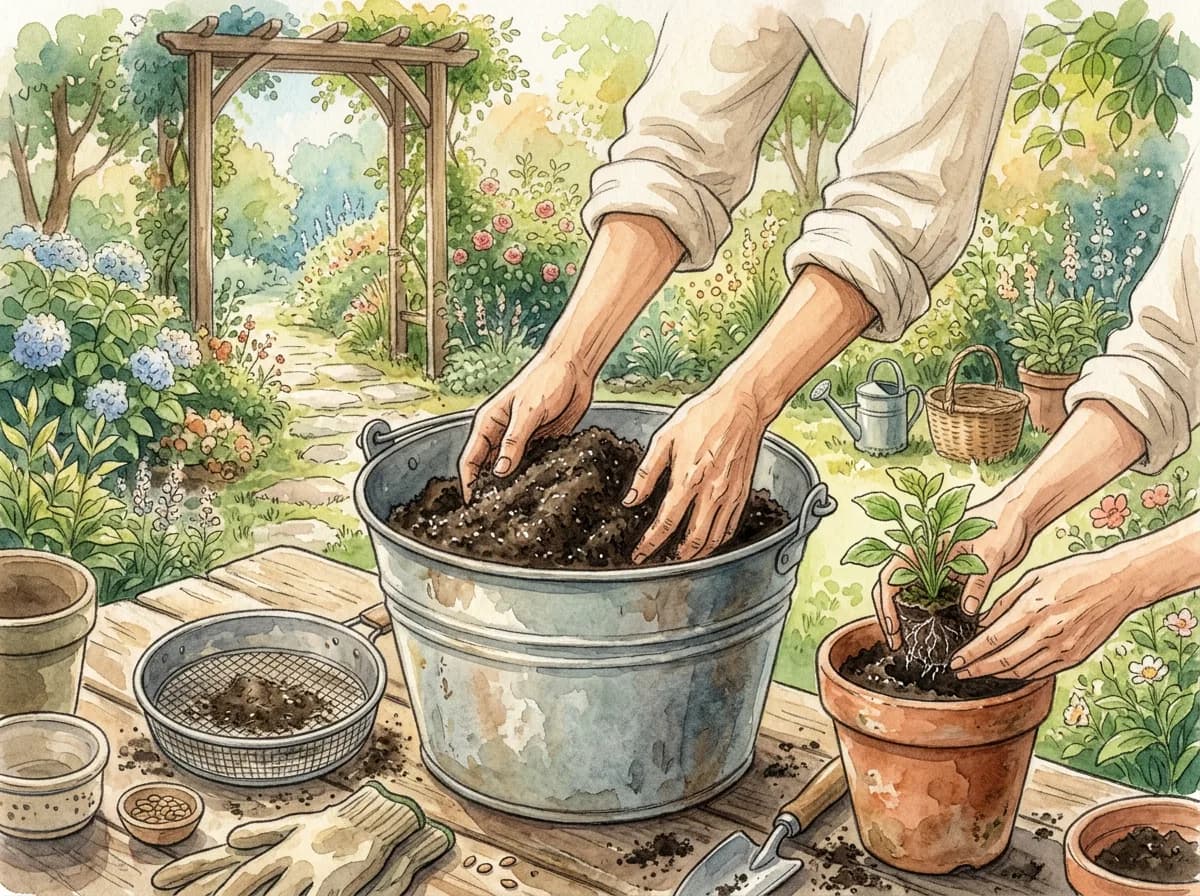
2In pots, mix 20–30 % of compost into the growing medium when transplanting.
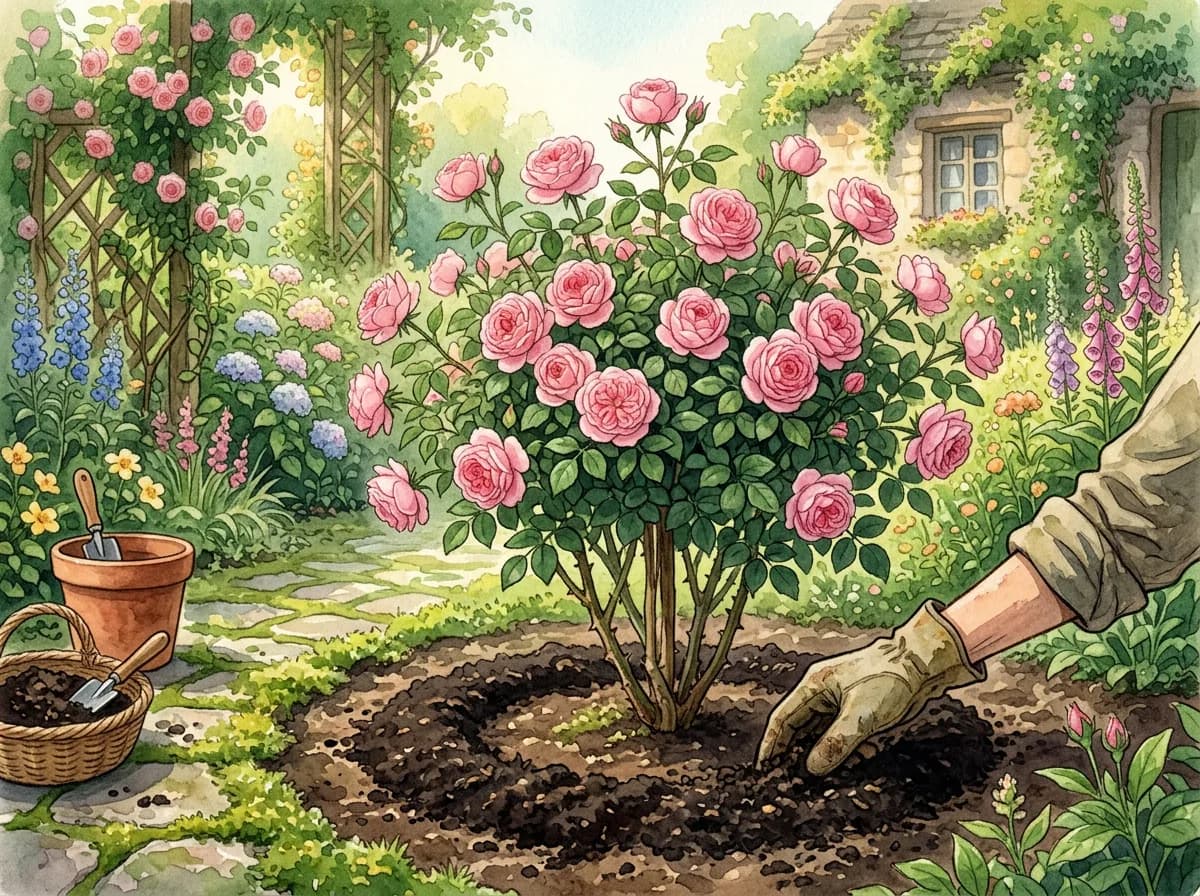
3On roses and flower beds, spread a ring of 2–3 cm (0.8–1.2 in) of compost around the plant without touching the stem.
Dose
Indicative dose (usual practice): 2–3 cm (0.8–1.2 in) layer on the surface (about 20–30 L, about 5.3–7.9 US gal per m²), once or twice a season. In a pot, 20–30 % of the growing medium.
Which plants
Roses, geraniums, fruiting vegetables, fruit trees and flowers in general.
Plants mentioned in this remedy

Precautions
- Do not use immature compost: it smells of ammonia, heats up and burns roots.
- Do not pile it against the stem: it encourages rot.
- It does not replace a base fertiliser if the soil is very poor.
- Its nutrient content varies with what you compost: do not expect a ‘fertiliser’ effect.
Why it works
Compost contains phosphorus and potassium in organic forms that are released as microbes transform them, and it also holds water and nutrients in the soil.
Sources
- University of Connecticut: compost, compost tea and manure and food safety (mature, well-managed compost)
- Washington State University Extension: coffee grounds and compost (reference for C/N ratio and compost maturity)