
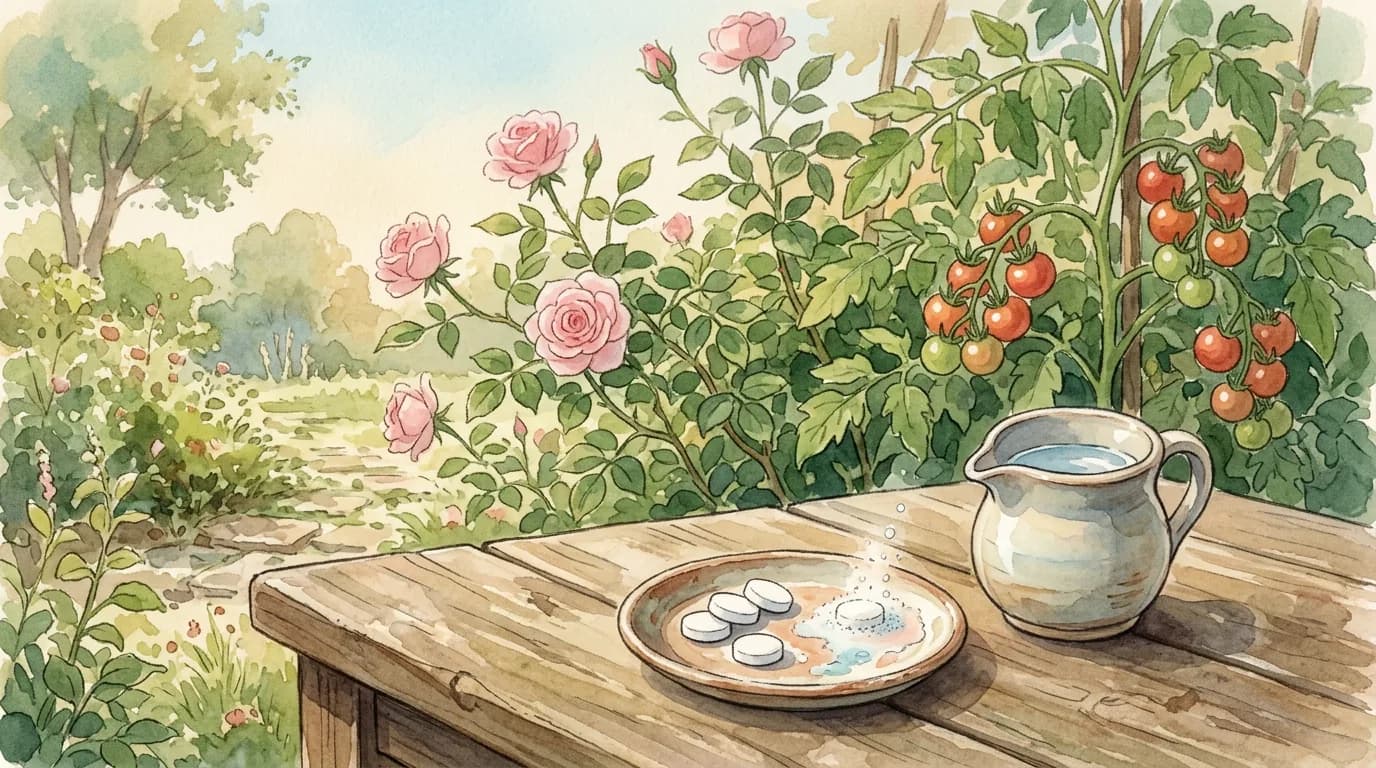
Is aspirin any use as a homemade fungicide?
Salicylic acid is real, but dissolving aspirin in the spray bottle is not proven as a remedy for fungi.
Myth. Salicylic acid is a defence hormone of plants and is studied for inducing resistance, but laboratory tests use controlled doses and formulations. Videos that promise to cure fungi with aspirin have no solid backing in the garden.
Before you start, read the precautions
You will need
- aspirin
When to use it
Not recommended as a treatment. If you want to strengthen the plant, rely on ventilation, watering at the base and preparations of proven effectiveness.
Which plants
There are no plants for which it is recommended. Serious studies are limited to trials with pure salicylic acid on crops such as tomato, not to aspirins dissolved at home.
Plants mentioned in this remedy

Precautions
- An excess of salicylate can cause spots, dwarfing and scorching on young leaves.
- Tablets contain excipients and coatings (even gastro-resistant ones) that are not meant for plants.
- Aspirin is toxic to cats and dogs if they eat it: keep it away and do not leave scraps within reach.
- Do not delay an effective treatment by trusting in this remedy.
Why it works
In theory, salicylic acid activates the plant's “systemic acquired resistance”. But that does not mean an aspirin dissolved in water reliably protects against downy or powdery mildew; results in real gardens are patchy and there is no validated homemade dose.
Sources
- Gao et al. (2015), Frontiers in Plant Science: review of salicylic acid in plant defence and systemic acquired resistance (mechanism, not homemade doses)