
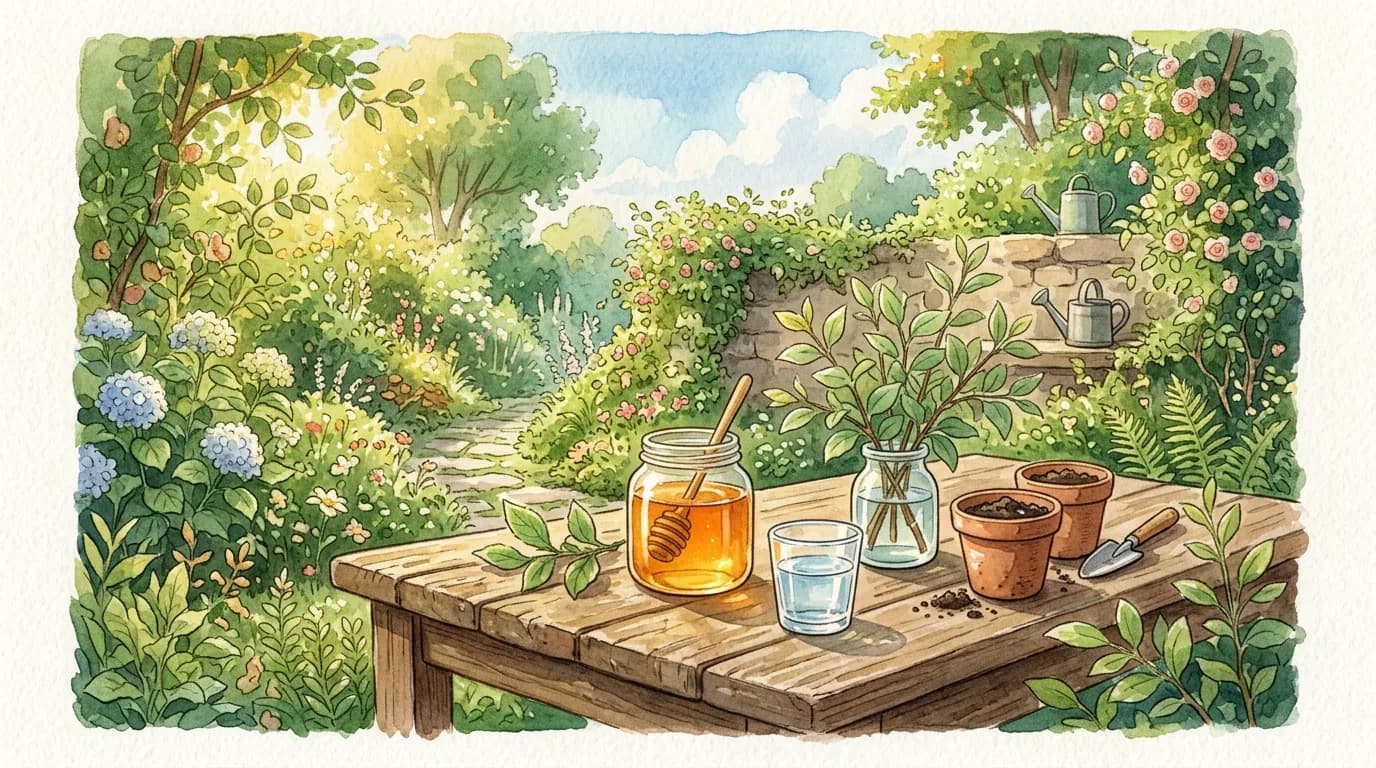
Honey as an aid for rooting cuttings
Water with a little honey to dip the base of cuttings: it protects the cut and may help in some species.
Works in practice. In a Hawaii trial (not peer reviewed) diluted honey rooted three easy ground-cover plants well, but on the woody shrub (Hibiscus clayii) it rooted worse than commercial hormone. In a 2025 study (Bowden et al., Agriculture), adding honey to IBA (indolebutyric acid) did not improve rooting of miniature rose or camellia and only helped magnolia with multifloral honey. So: possible help for easy plants, limited benefit for difficult ones.
Before you start, read the precautions
You will need
- honey
- water
- glass or small jar
When to use it
When preparing semi-hardwood cuttings of shrubs, herbs and houseplants, in spring and early summer.
Step by step
1Boil water and let it cool until lukewarm. Dissolve a tablespoon (about 20 g, 0.7 oz) of raw honey in 500 ml (16.9 fl oz).
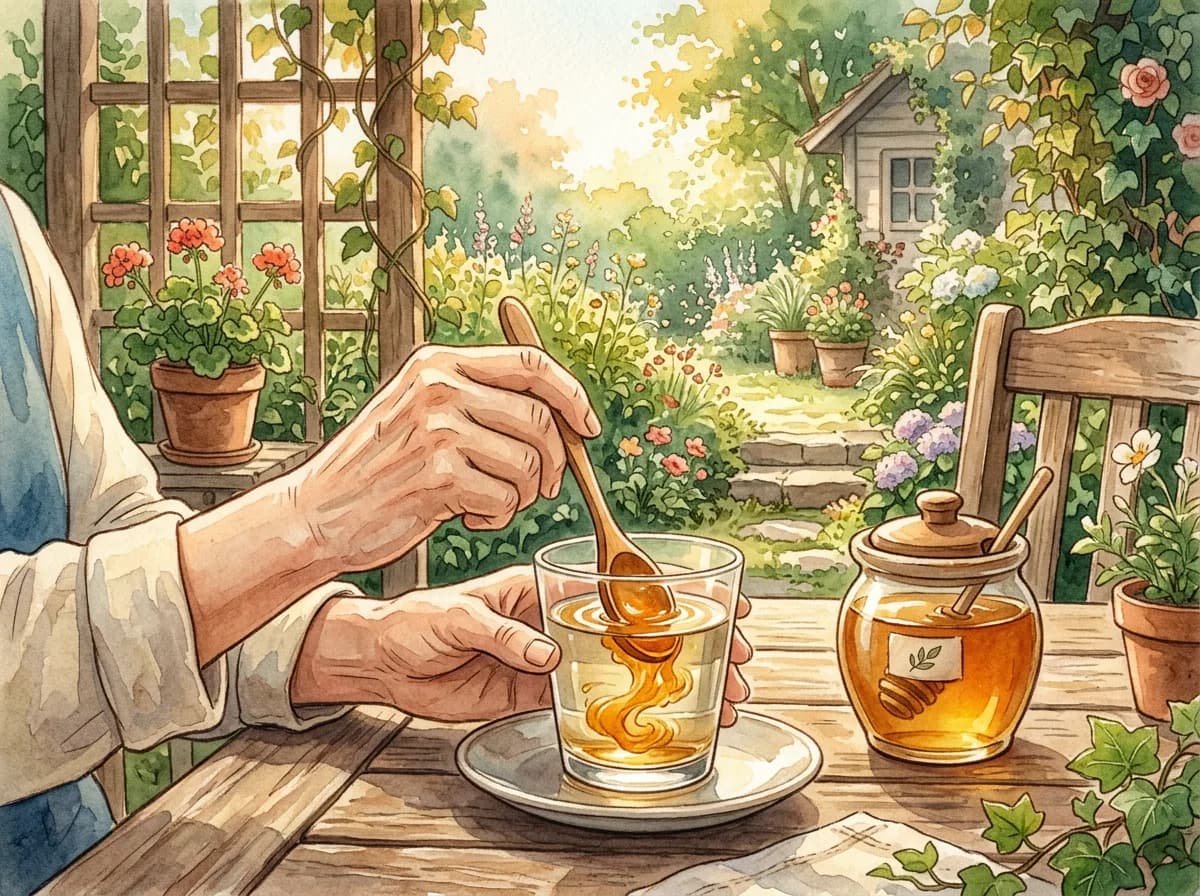
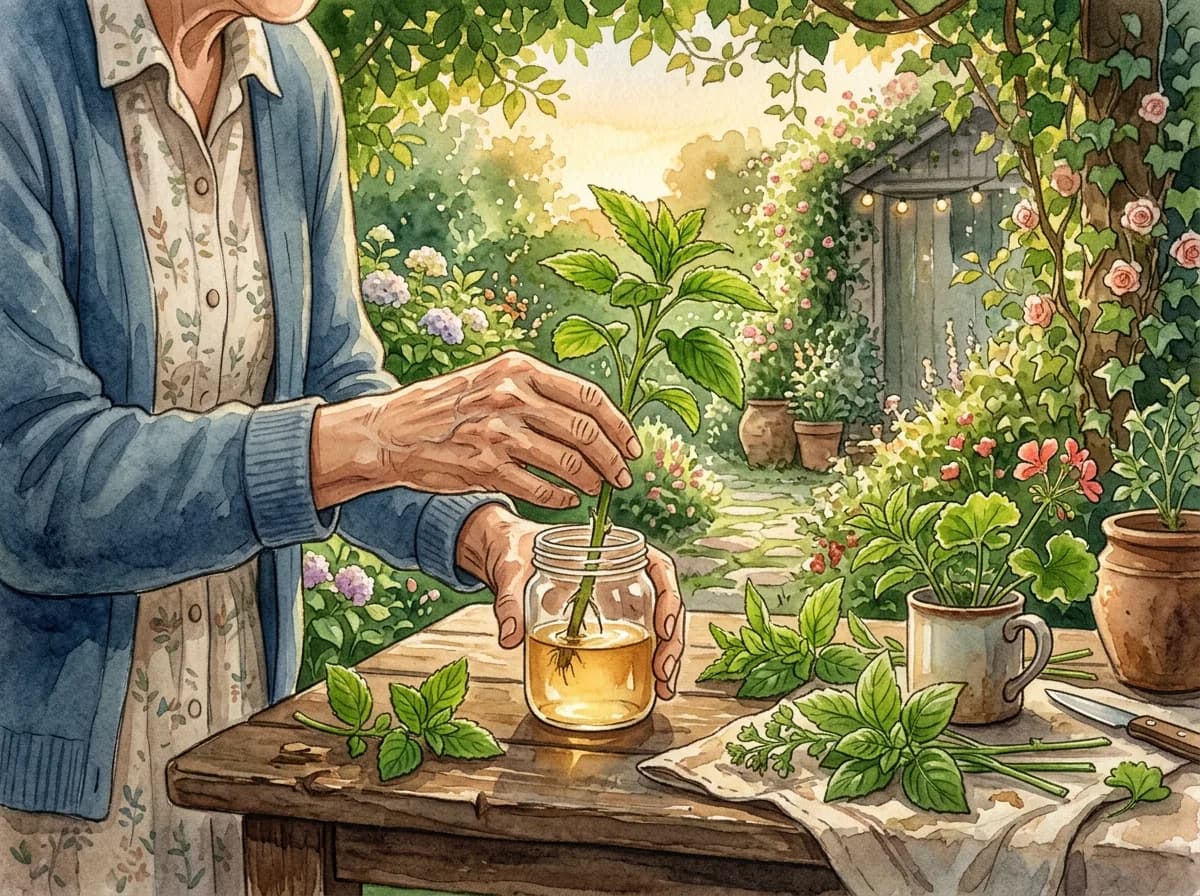
2Cut the cutting with clean scissors, remove the lower leaves and dip the base 2–3 cm (0.8–1.2 in) into the mixture for a few seconds.
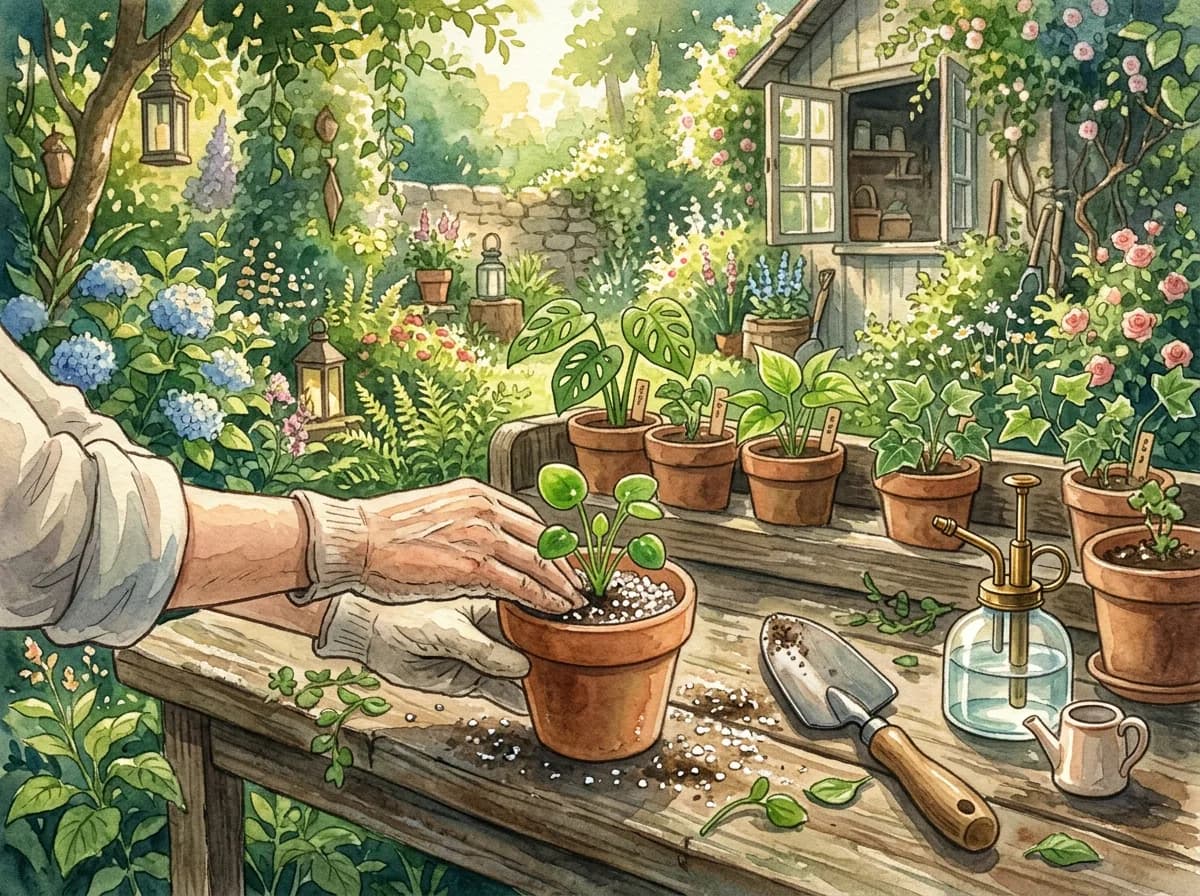
3Plant straight away in a light, moist growing medium (a mix of peat or coir with perlite) and keep the air humidity high.
Dose
Indicative dose: 20 g (0.7 oz) of honey (one tablespoon) per 500 ml (16.9 fl oz) of water (≈4 %); the Hawaii trial used 2 tablespoons per 2 cups (≈8 %). More honey is not better. Prepare it on the spot and throw it away after use.
Which plants
Tested on easy ground-cover plants (Hawaii trial); on woody shrubs the benefit is doubtful and on very difficult plants it is not enough.
Precautions
- If the mixture is left for days it ferments and attracts flies and fungi: never keep it.
- With very concentrated honey the growing medium sticks to the base of the cutting and it rots: better thin than thick.
- Do not expect miracles with difficult species (olive, camellia, magnolia): there commercial hormone rules.
Why it works
Honey is credited with antibacterial and antifungal activity that would protect the cut wound while the plant forms roots (this is the trial authors' hypothesis, not something proven). It has not been shown to supply auxins, so it does not replace a rooting hormone.
Sources
- Firth and Trask, Kauai Master Gardeners / CTAHR (University of Hawaii): honey as an alternative to rooting hormones
- Bowden et al. (2025), Agriculture 15(3):256: honey as an adjuvant for rooting rose, camellia and magnolia (limited results)