
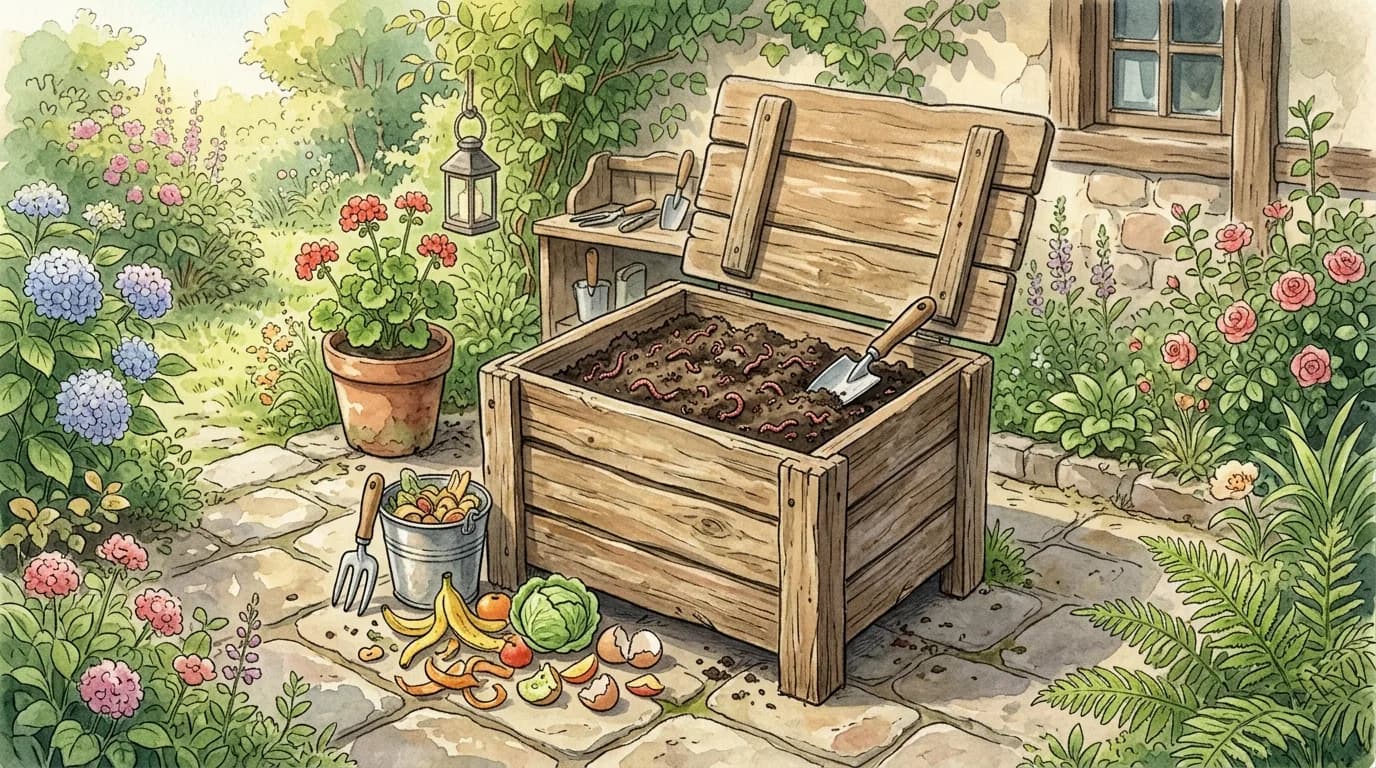
Homemade worm compost with red worms
Compost worms (Eisenia fetida) turn kitchen scraps into a very rich humus in a few weeks.
Well established. Vermicompost is an amendment: worm castings contain more nitrate, phosphorus and potassium than ordinary soil. It requires looking after temperature (13–25 °C, 55–77 °F; ideal 18–21 °C, 64–70 °F) and moisture so that the worms live.
Before you start, read the precautions
You will need
- red worms (Eisenia)
- kitchen scraps
- cardboard
- shredded paper
When to use it
At any time of year if you control the temperature. The range is 13–25 °C (55–77 ºF); in Spain, best in the shade and cool in summer and sheltered in winter.
Step by step
1Prepare a box with holes and a bed of wet, squeezed-out cardboard and paper (like a sponge).
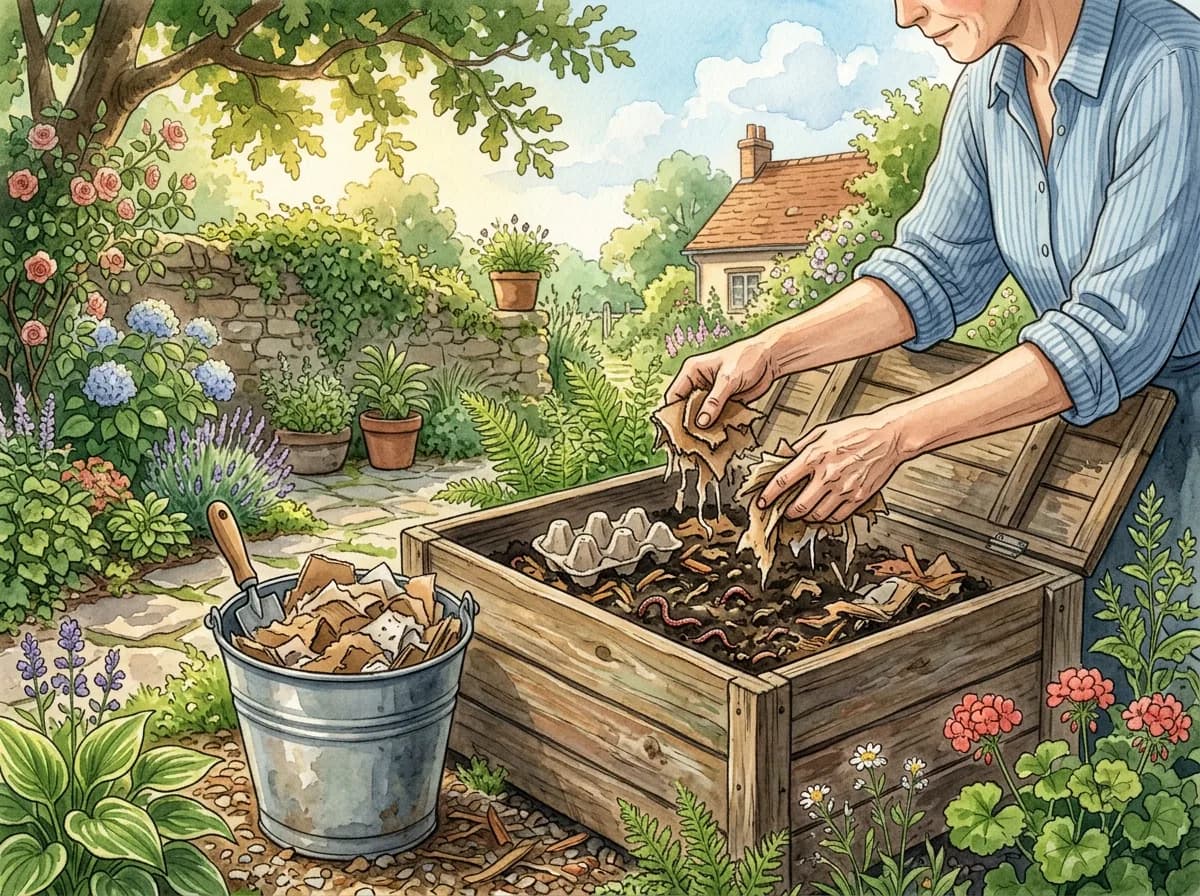
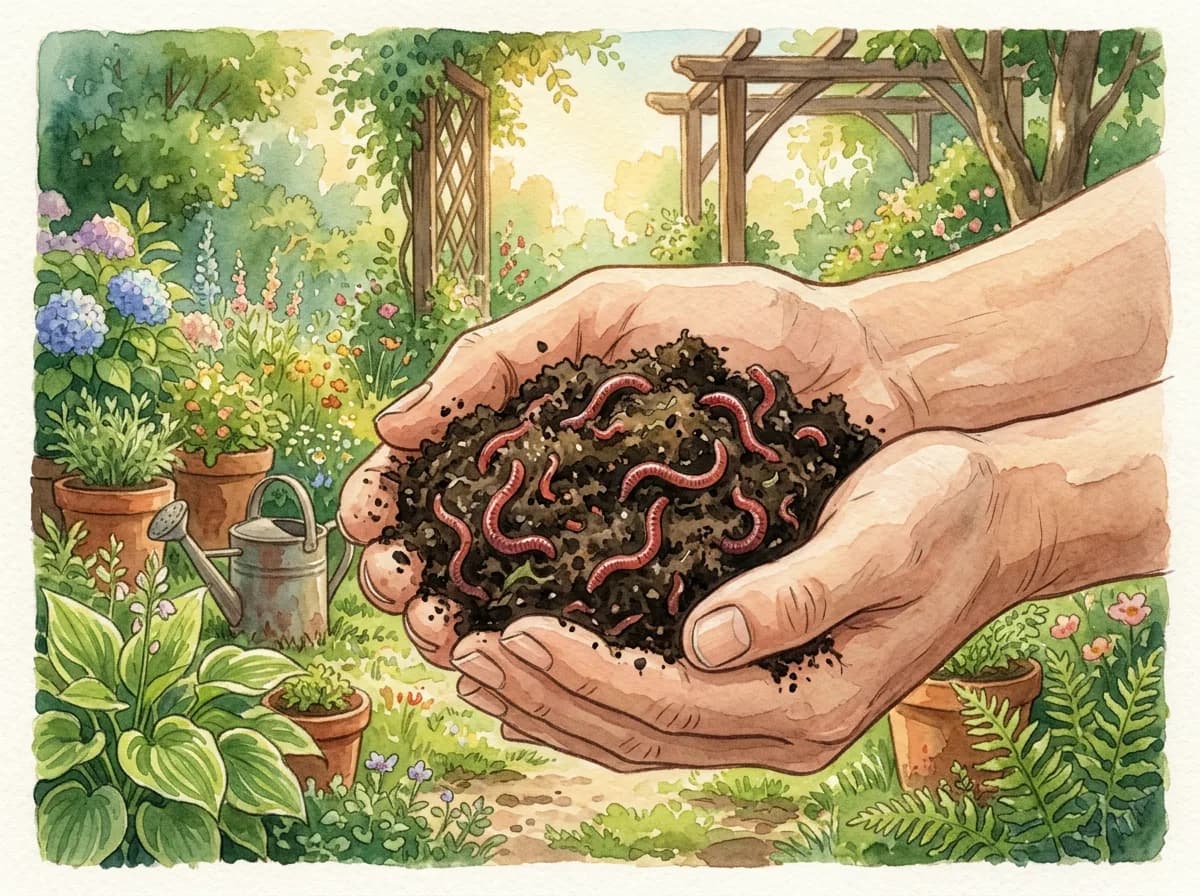
2Add the red worms (garden earthworms will not do) and let them settle in for a few days.
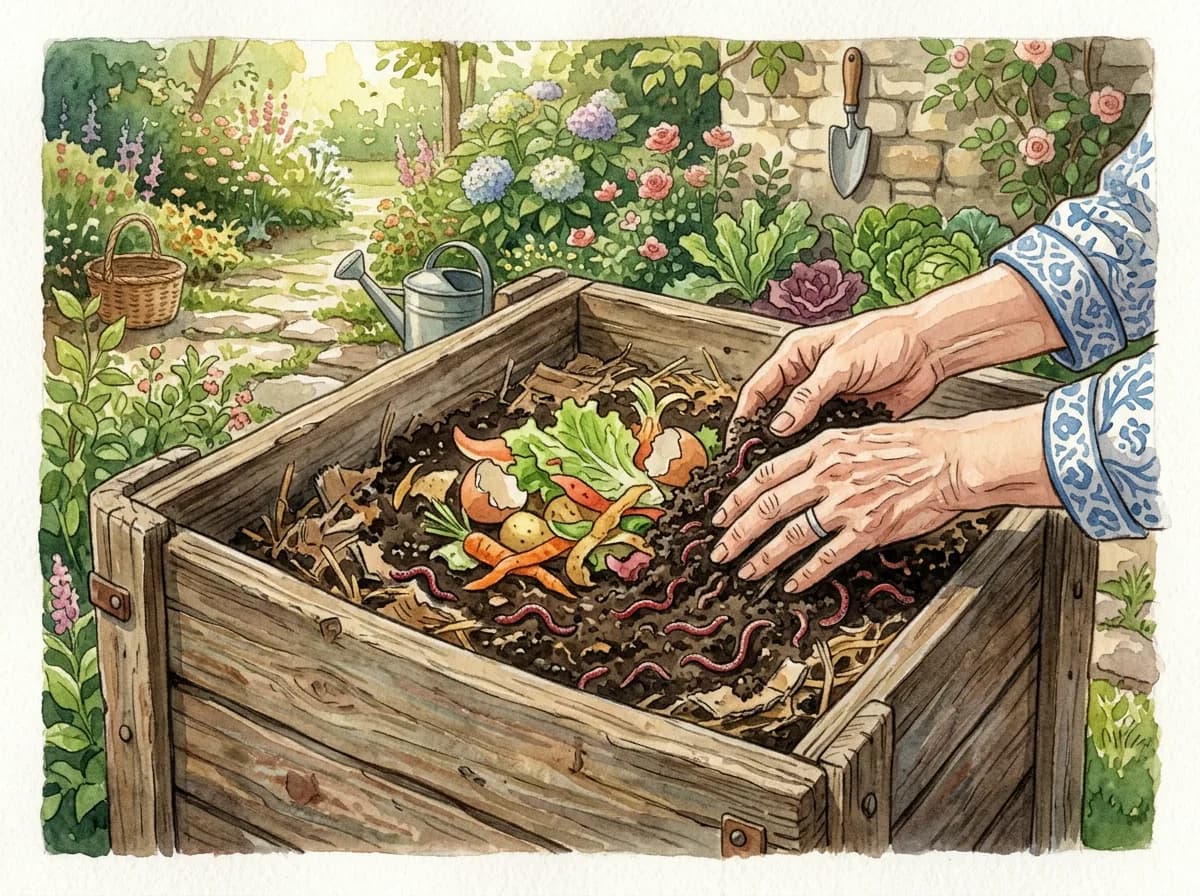
3Feed with chopped fruit and vegetable scraps buried in the bed, once a week, without overdoing it.
Dose
As a guide: 450 g (15.9 oz) of worms (1 lb) process up to about 225 g (7.9 oz) of scraps a day. For plants, it can be used as a surface mulch or mixed into pots; 10–20 % in growing medium or 1–2 kg/m² on a bed is a practical rule of thumb with no verified figure.
Which plants
Vegetables, pots, fruit trees and seed trays (mixed at 10–20 % into growing medium).
Precautions
- Do not give them meat, fish, cheese, oils, vinegar, too much salt, onion, garlic, peppers or citrus or pet waste.
- Excessive heat (above about 25–30 °C, 77–86 °F) is fatal to them; excessive moisture drowns them.
- The liquid that drains off is not worm tea: it can be anaerobic; dilute it a lot before using it and do not use it on edible leaves. See also “Worm compost tea”.
- Harvest when it is dark and without recognisable scraps; it takes several months.
Why it works
Worms shred and digest organic matter together with micro-organisms and excrete humus in the form of little cylinders. That humus is rich in soluble nutrients and in substances that improve soil structure.
Sources
- Iowa State University Extension: How to create and use vermicompost