
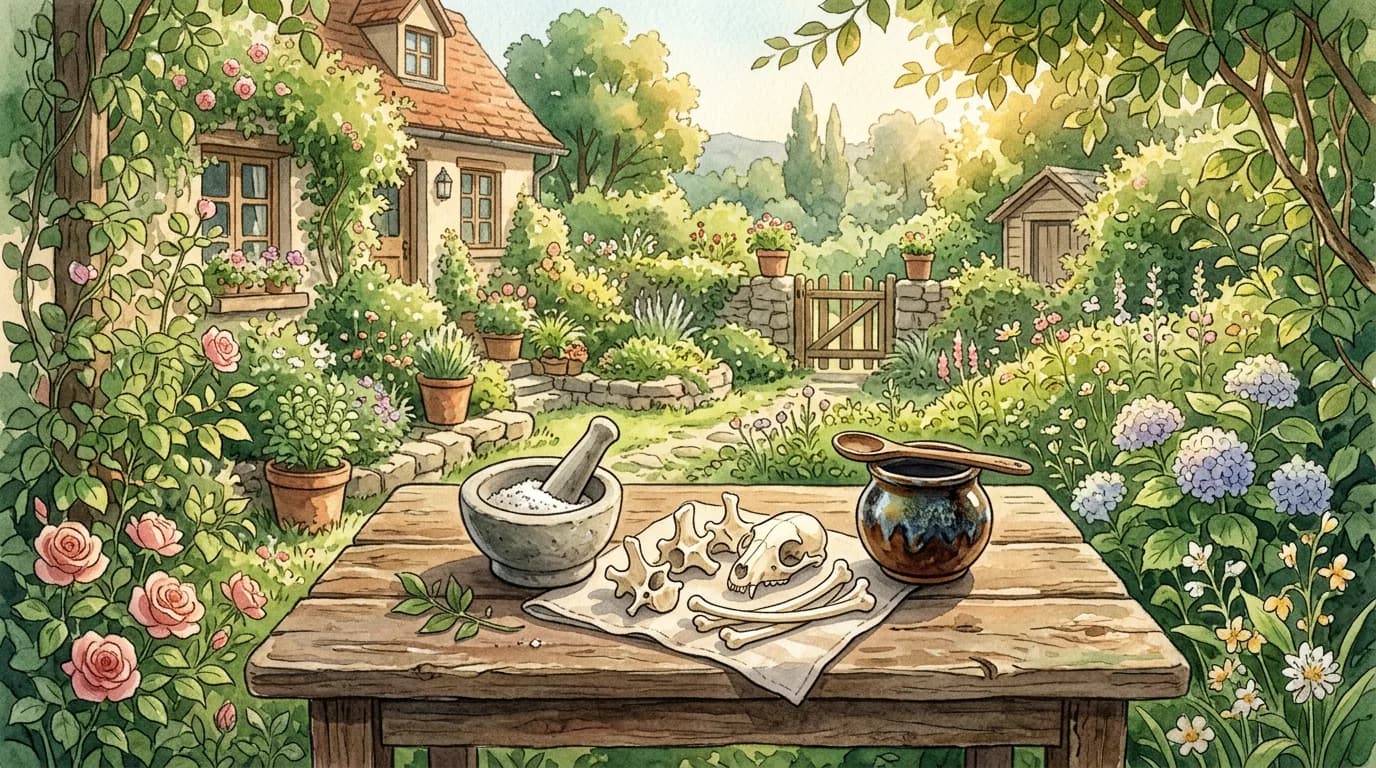
Homemade bone meal
Boiled, dried and crushed bones: a slow source of phosphorus and calcium that only does well in neutral or acid soils.
Use with care. Bone meal is a slow-release phosphorus and calcium fertiliser; in an Iranian trial it released phosphorus a month later than superphosphate, and much faster if it was acidulated. That it does better in acid soils is what you would expect from the chemistry of calcium phosphate, but it is not the result of that trial. Made at home it comes out coarser than the commercial kind and is even slower; in chalky soils it does little.
Before you start, read the precautions
You will need
- clean kitchen bones
- pot
- oven
- hammer and cloth sack
When to use it
When planting fruit trees, roses, bulbs or root vegetables, or when preparing the bed in autumn. It is a base fertiliser, not a rescue one.
Step by step
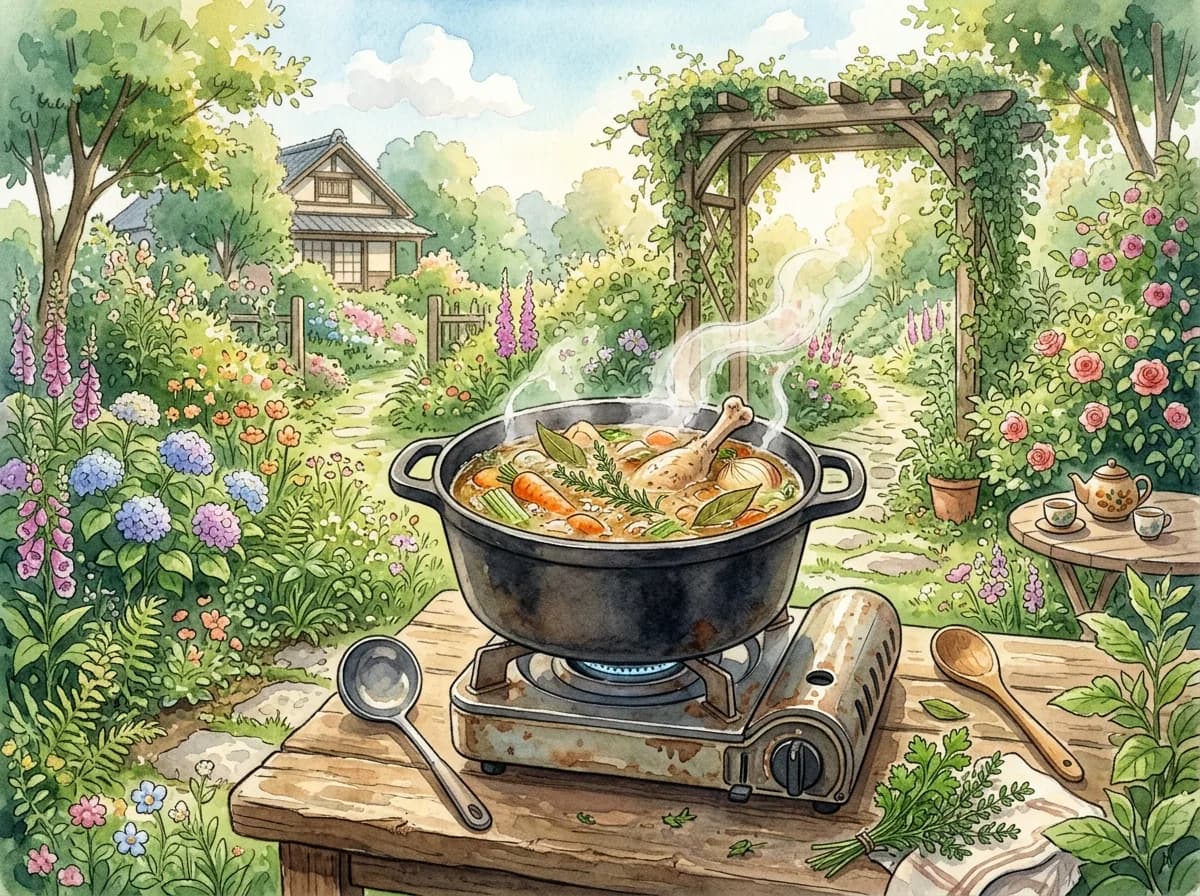
1Boil kitchen bones (chicken, pork, beef) for 1–2 hours to remove fat and scraps of meat. Drain them.
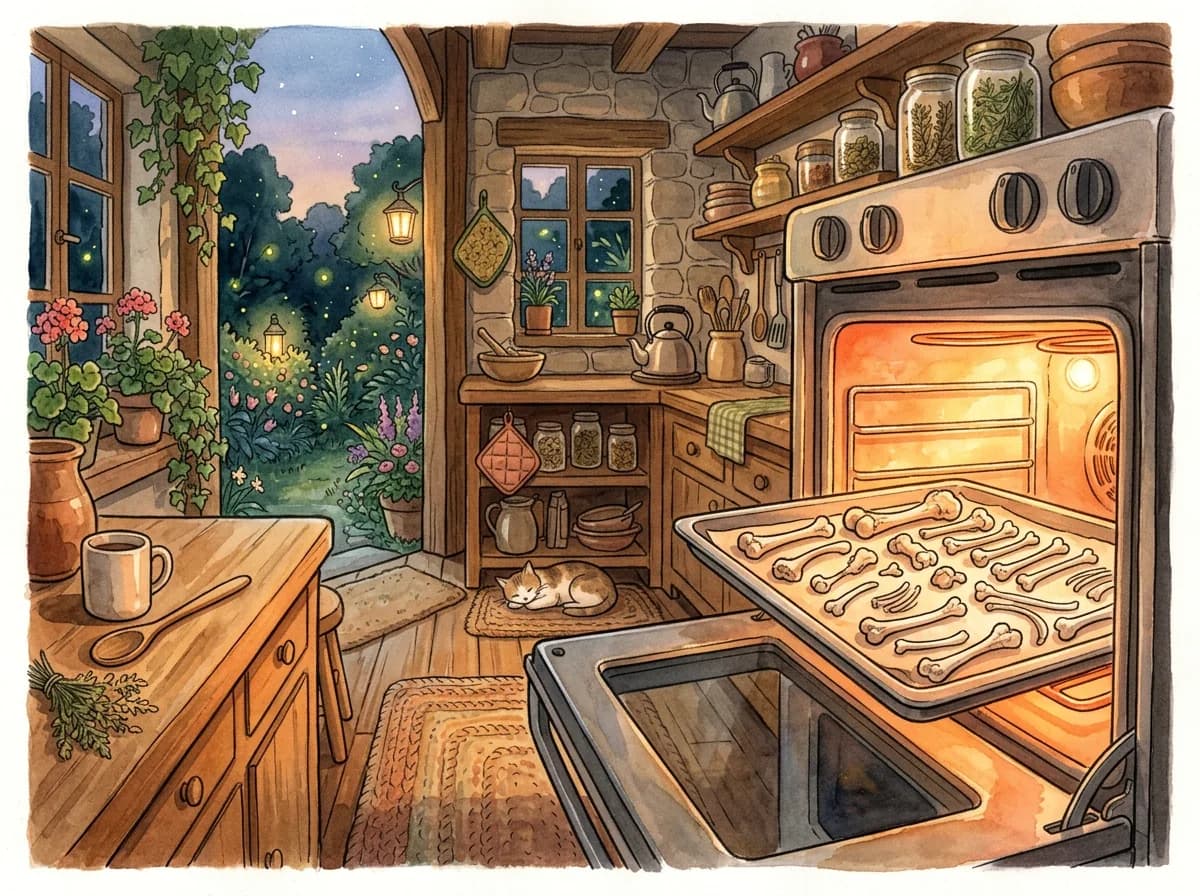
2Dry them in the oven at about 150–180 °C (302–356 °F) until they are white and brittle (1–2 hours).
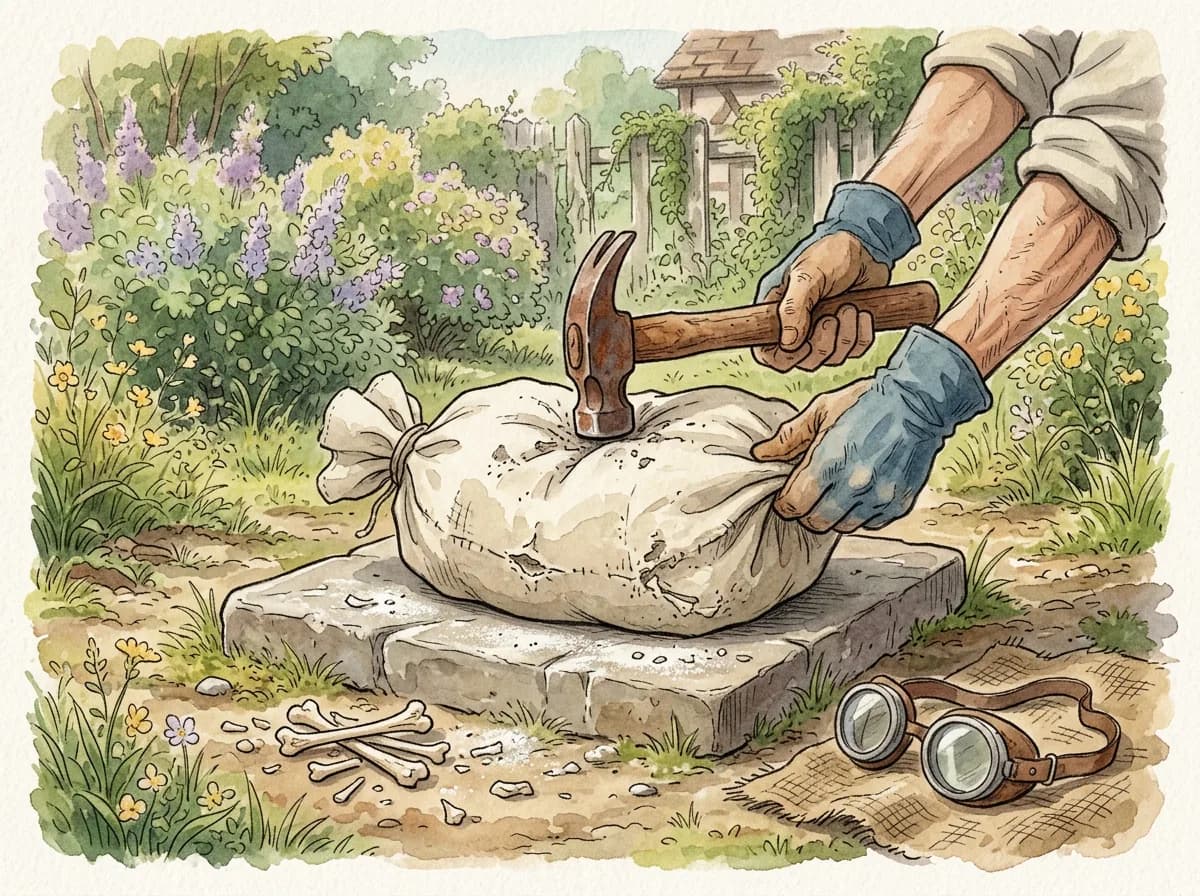
3Once cool, crush them inside a cloth sack with a hammer, wearing goggles and gloves, until you get the finest powder possible.
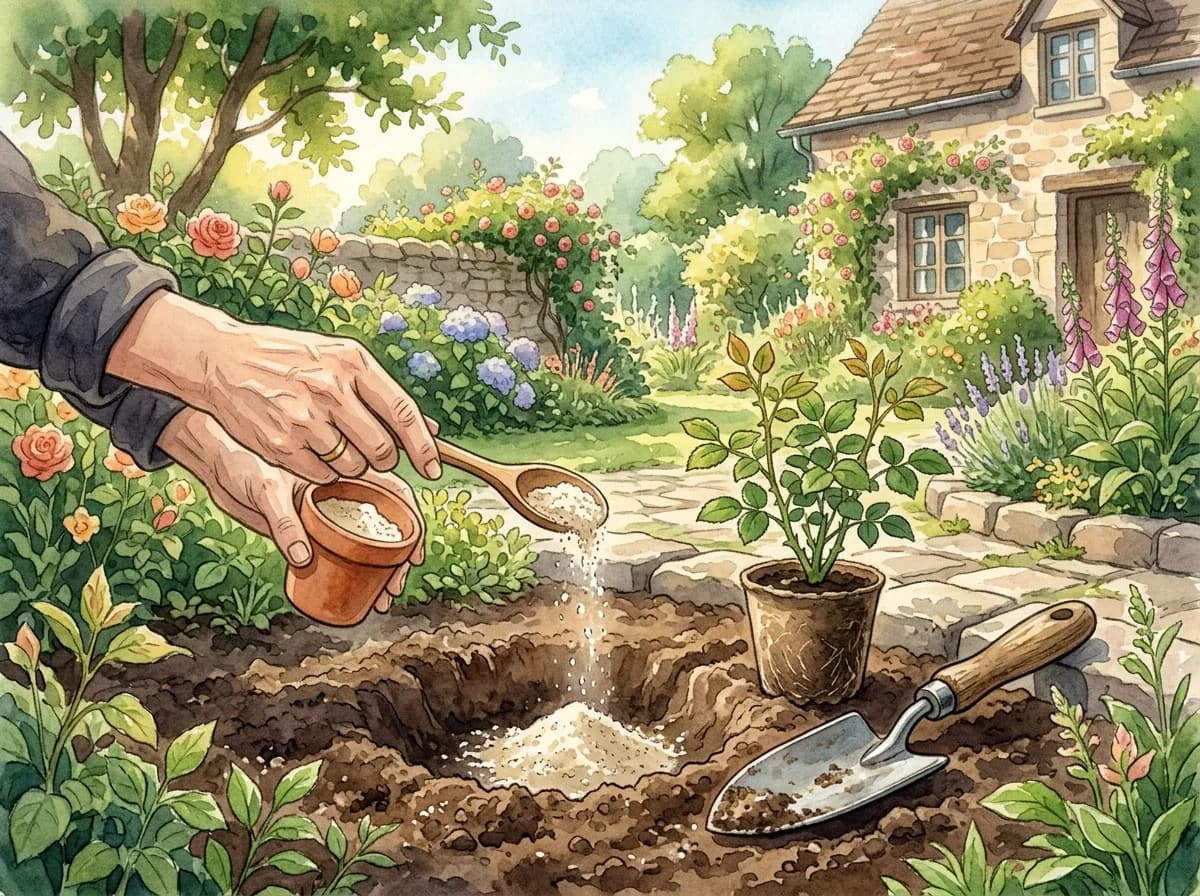
4Mix a tablespoon (about 15 g, 0.5 oz) with the soil of the planting hole, or sprinkle about 40–50 g (1.4–1.8 oz) per square metre and bury it shallowly.
Dose
Indicative and cautious dose (the trial used 400–800 kg/ha, that is 40–80 g/m², of commercial meal): in a planting hole, 1–2 tablespoons mixed with the soil; in a bed, no more than about 40–50 g/m² a year, and only if a test shows a lack of phosphorus.
Which plants
Good for roses, fruit trees, bulbs, tomatoes and root vegetables. It is not needed if your soil already has plenty of phosphorus (a soil test is recommended).
Precautions
- Avoid bones with scraps of fat or meat: they attract dogs, foxes and rodents.
- Use only bones from your own kitchen, from healthy animals, and keep it out of reach of dogs and cats: ground bones attract them and can cause digestive problems.
- Wear goggles and gloves: fragments fly. Avoid breathing the fine dust.
- If your soil is chalky (pH above 7.5), phosphorus is hardly released; measure the pH before pressing on.
Why it works
Bone is mostly calcium phosphate. Microbes and roots dissolve it little by little, better in acid soils. That is why it is a base fertiliser with a slow effect.
Sources
- Laboratory and greenhouse trial: bone meal compared with acidulated meal and superphosphate (400 and 800 kg/ha); phosphorus is released with a delay