
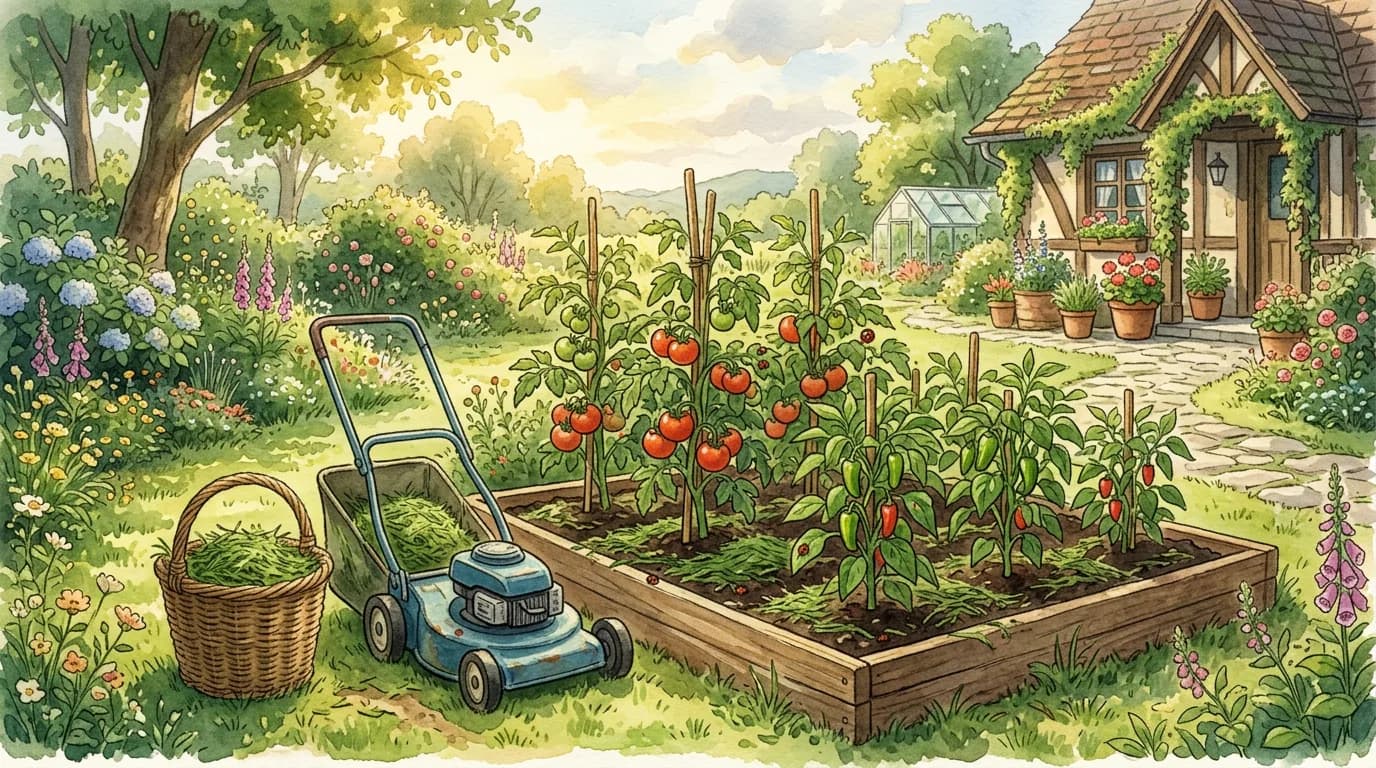
Grass clippings as mulch
Lawn mowings, in a thin layer and already wilted, supply nitrogen and protect the soil.
Use with care. A common mulching practice, with no specific trial cited here. It works if the layer is thin and somewhat dry; in thick, fresh layers it ferments and stinks. And a lawn treated with herbicides of the aminopyralid, clopyralid or picloram family can damage tomatoes, beans and other vegetables.
Before you start, read the precautions
You will need
- grass clippings
- rake
- tarpaulin
When to use it
In spring and summer, as soon as the lawn gives clippings, on established vegetables (tomato, pepper, courgette, cabbage).
Step by step
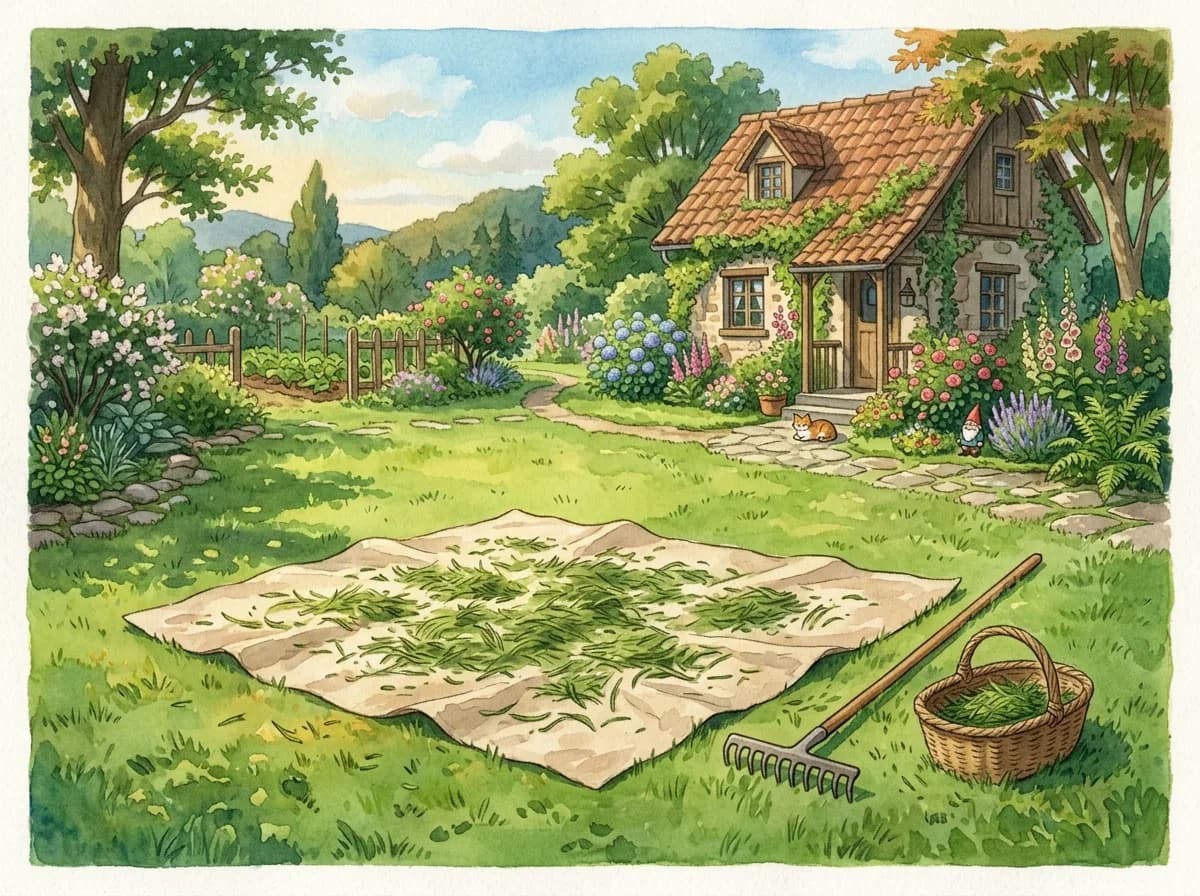
1Collect the grass and spread it in a thin layer on a tarpaulin in the sun for 1–2 days so it wilts.
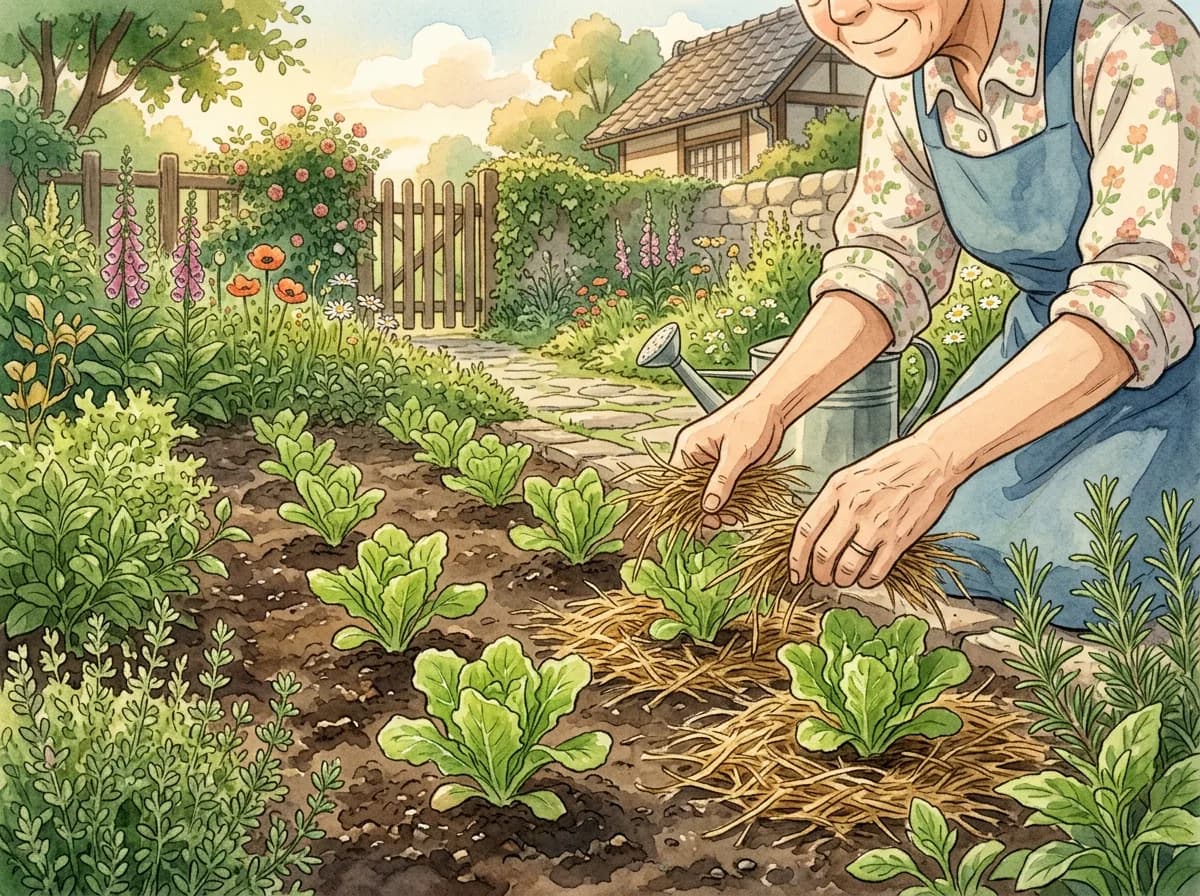
2Spread a layer of 2–3 cm (0.8–1.2 in) around the plants, not pressed against the stems.
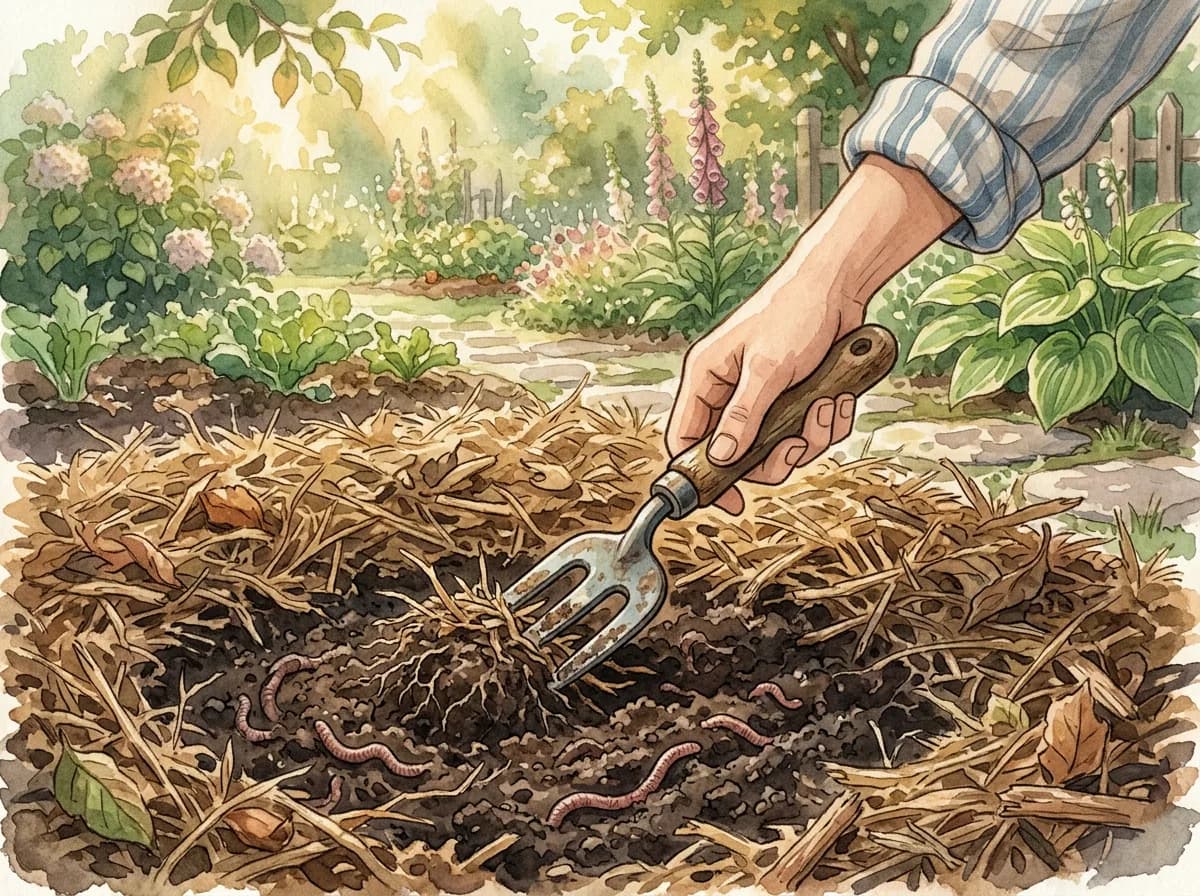
3Check after a few days: if it mats down or smells, turn it with a fork so it can breathe.
Dose
Indicative dose (common practice, no verified figure): layer of 2–3 cm (0.8–1.2 in), renewable every 3–4 weeks. Never more than 5 cm (2 in) at one time.
Which plants
Fruit and leaf vegetables that are already established. Not on seed trays or freshly transplanted seedlings.
Precautions
- Do not use grass treated with broadleaf or residual herbicides: they can distort or destroy tomatoes, beans, potatoes and other plants, and persist for years in compost and manure. If in doubt, test first: sow beans or peas in a pot with the material (bioassay).
- Do not use it if the lawn has weed seeds or has already flowered.
- Thick, fresh layers heat up, ferment and attract flies.
- Do not heap it against the stems.
Why it works
Fresh grass is rich in nitrogen and breaks down fast. Wilted and in a thin layer it covers the soil, keeps moisture and holds back weeds, releasing nitrogen little by little.
Sources
- North Carolina State University Extension: persistent herbicides in hay, manure, compost and grass clippings; bioassay with beans or peas
- University of Florida IFAS Extension (Institute of Food and Agricultural Sciences): beware of residual herbicides in hay and straw for mulching
- The dose (layer of 2–3 cm) is common practice and we have not been able to verify it in an extension source