
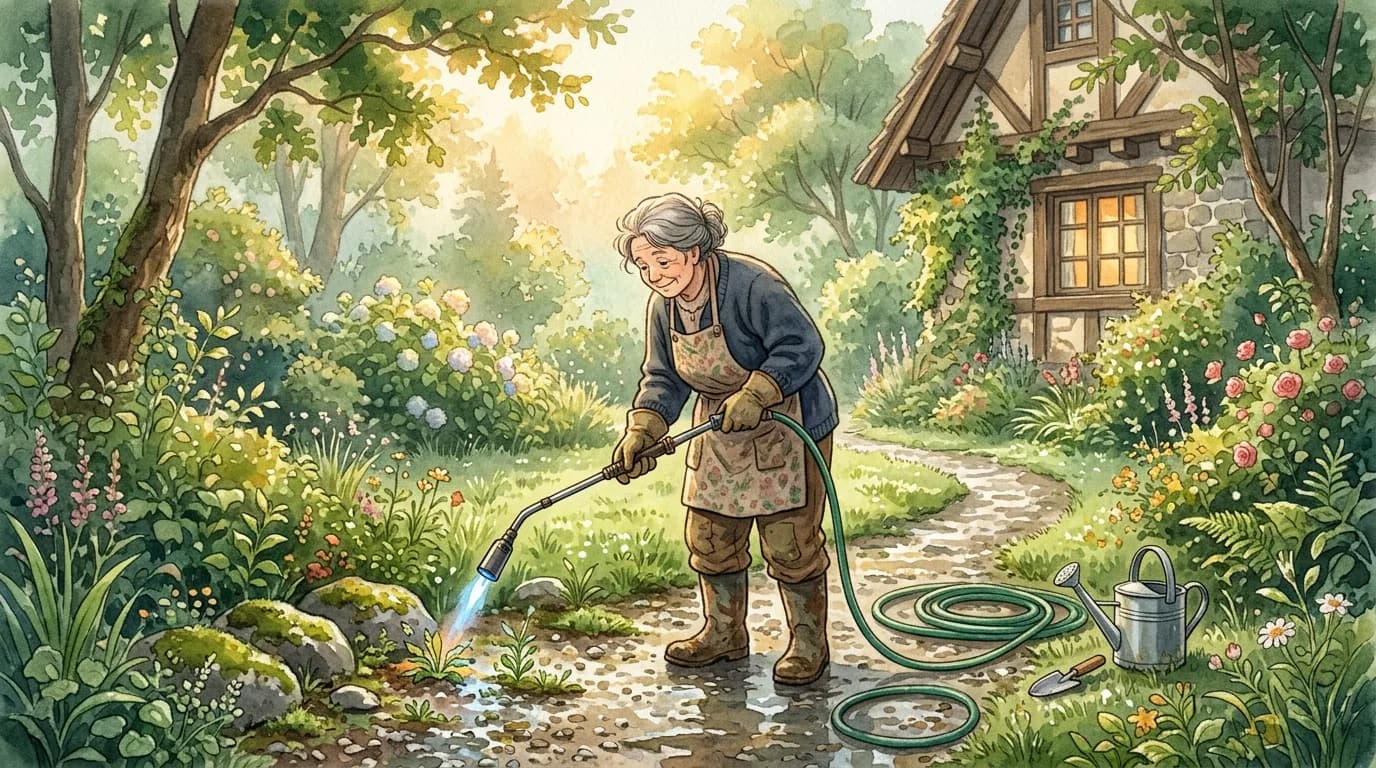
Flame weeder (gas burner) for weeds
Passing a brief flame over young weeds wilts them without chemicals, but it carries a fire risk.
Use with care. Thermal weeding is a recognised and effective technique on young annual weeds, but it is dangerous if used in dry conditions or with wind and it has to be repeated on perennials.
Before you start, read the precautions
You will need
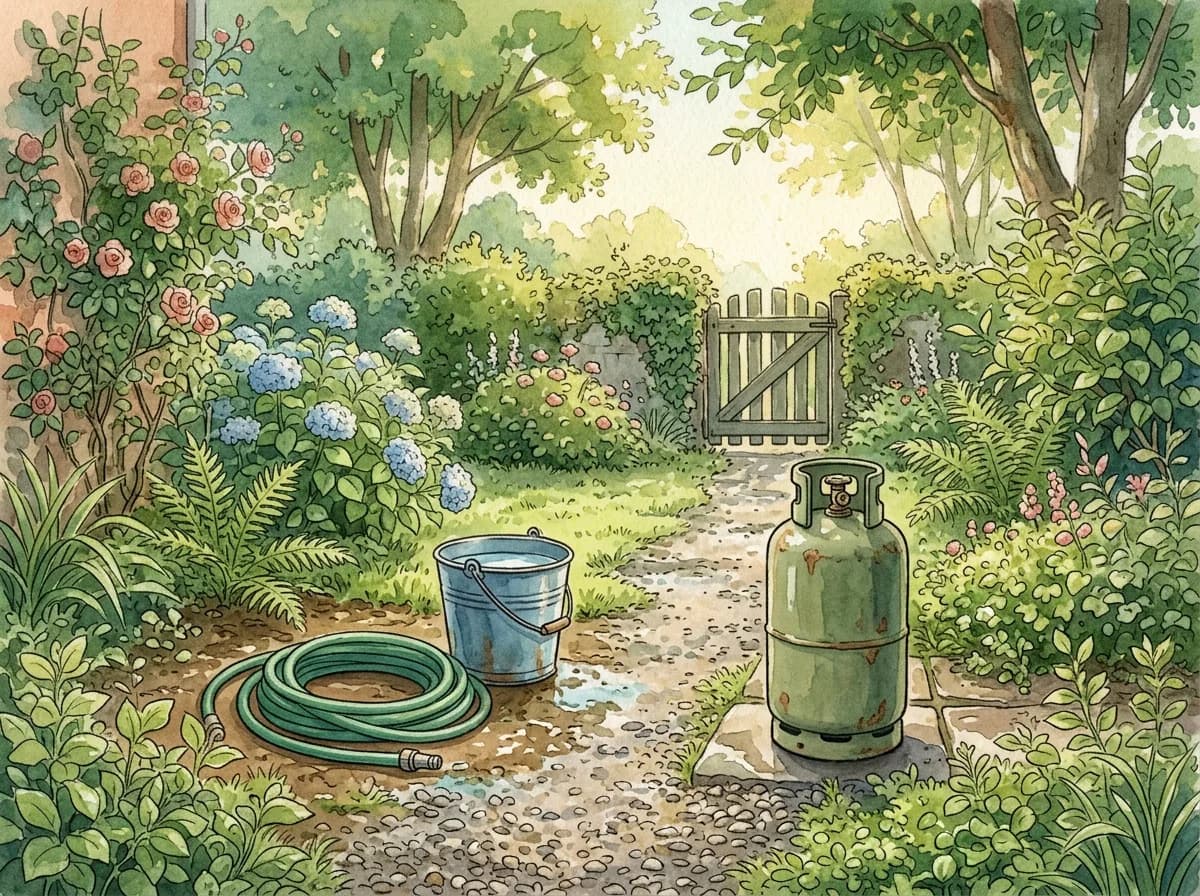
- propane gas burner
- hose
- bucket of water
- leather boots and gloves
When to use it
On paths, gravel and beds prepared before sowing, on days without wind and with damp surroundings. Never in a dry summer or with a fire risk warning.
Step by step
1Before starting, have an open hose and a bucket of water to hand, and check that there is no straw, dry mulch, plastics or dry grass nearby.
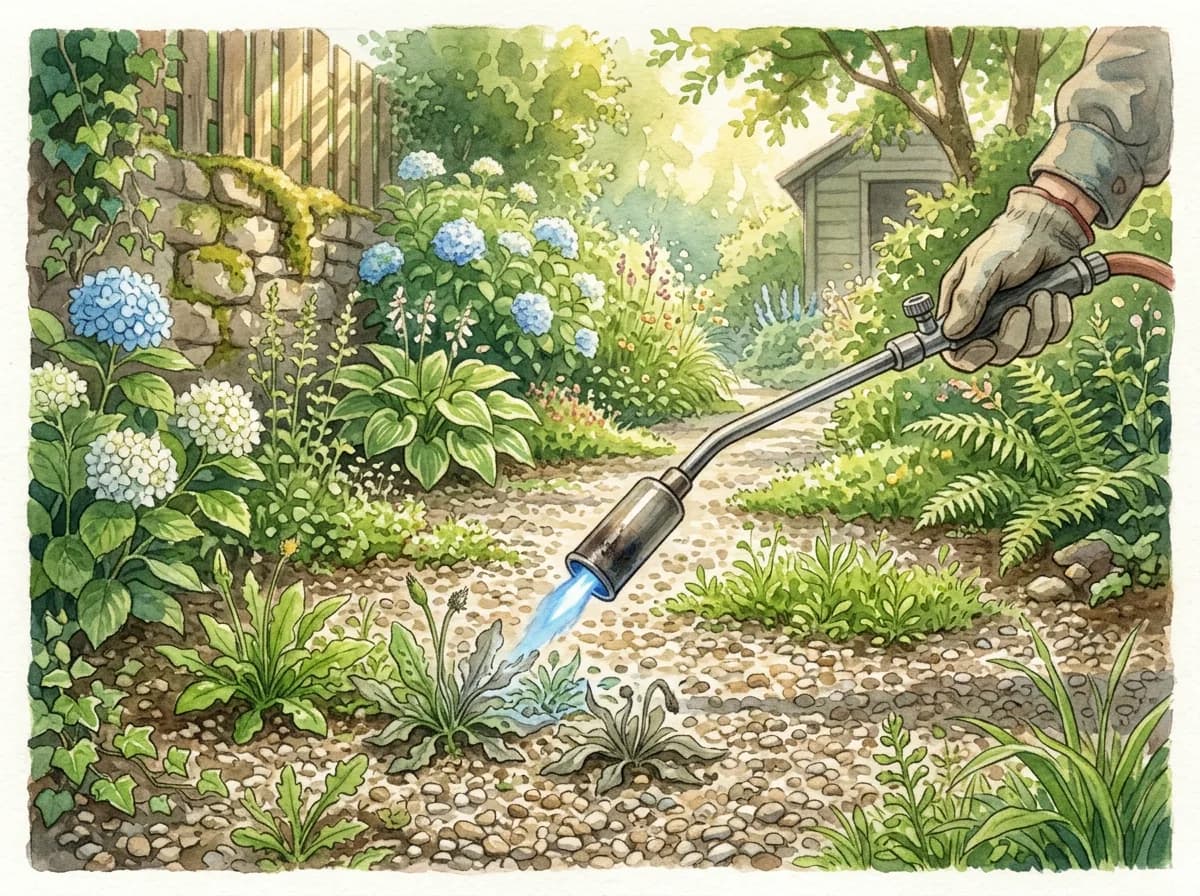
2Wearing closed boots, leather gloves and natural-fibre clothing (synthetics melt), pass the flame slowly over each weed until the leaf changes sheen and looks matt. There is no need to burn or char it.
3Check the trail: make sure no ember or smouldering material is left. On established perennials repeat roughly every two weeks.
Which plants
Young annual weeds on gravel, paths and prepared beds. Not near crops or areas with dry material.
Precautions
- Fire risk: do not use it in a dry summer, in wind or near buildings, hedges, straw or plastics. In Spain, the use of fire is restricted in the danger season: check your region's regulations.
- Do not point it at plants you want or at the surface roots of trees and shrubs.
- Take care with the gas bottle: secure it, ventilate and do not leave it in the sun.
- Do not use on gravel with dry remains, bark mulch or peat soils.
- It is not effective against deep-rooted perennials: it only weakens them.
Why it works
The intense heat of the flame breaks the walls of the plant cells and the plant wilts and dies in a day or two. It is meant to pass quickly, not to burn it.
Sources
- University of Vermont Extension: flame weeding
- Iowa State University Extension: how to utilize flame weeding