
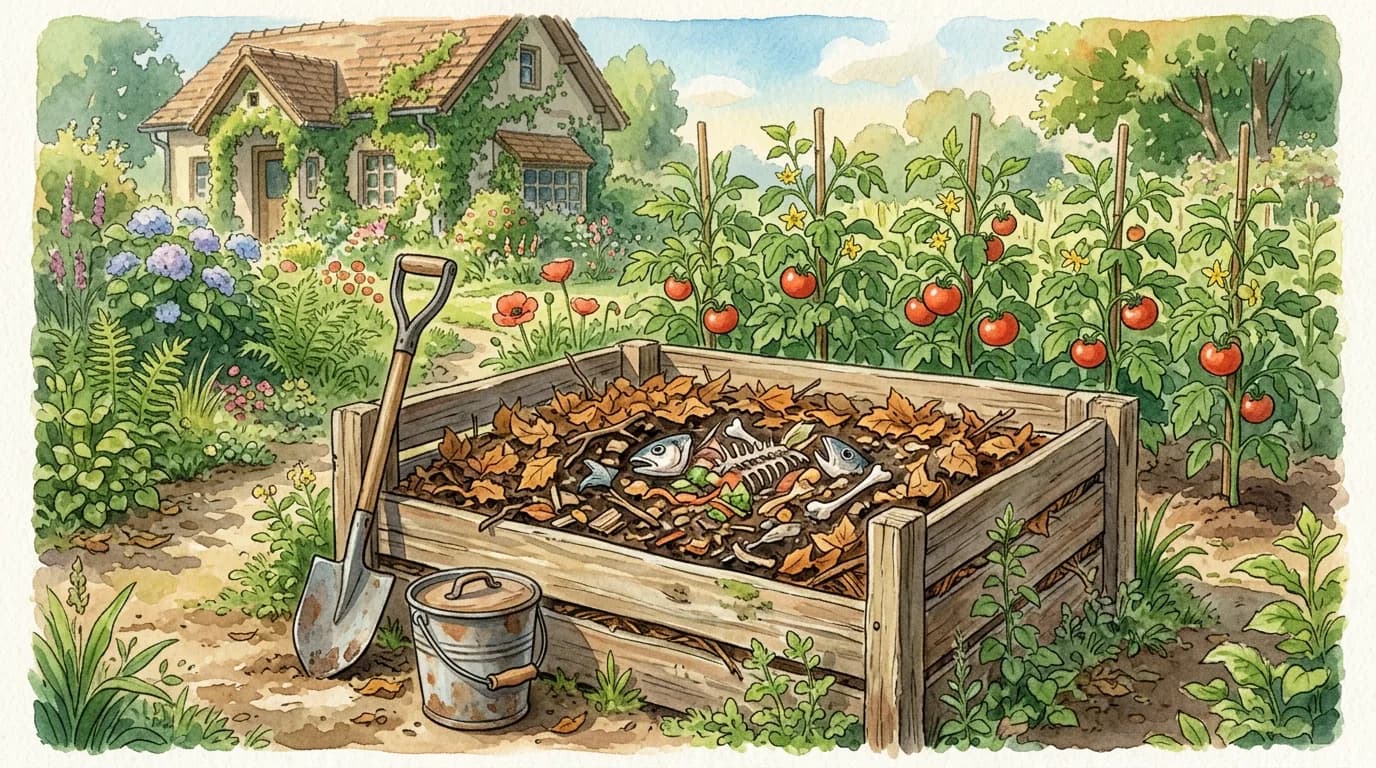
Fish scraps in the compost
Fish heads and bones supply nitrogen and phosphorus if they are buried well inside a pile with plenty of dry material.
Use with care. Fish is very rich in nitrogen, but badly covered it smells and attracts animals. It is composted in large piles (more than 1.2 m, 3.9 ft per side, that is, more than 4 feet) covered with at least 60 cm (23.6 in) (2 feet) of wood chips or dry material; in a small home compost bin that is hard to achieve, and several guides advise against putting fish in home heaps.
Before you start, read the precautions
You will need
- raw fish scraps
- compost
- dry leaves
- wood chips
- spade
When to use it
In an active compost bin with good aeration, in any season (faster in summer).
Step by step
1Only if you have a large, hot pile: dig a hole in the centre of an active compost pile and put in a few fish scraps (heads, bones, skins).
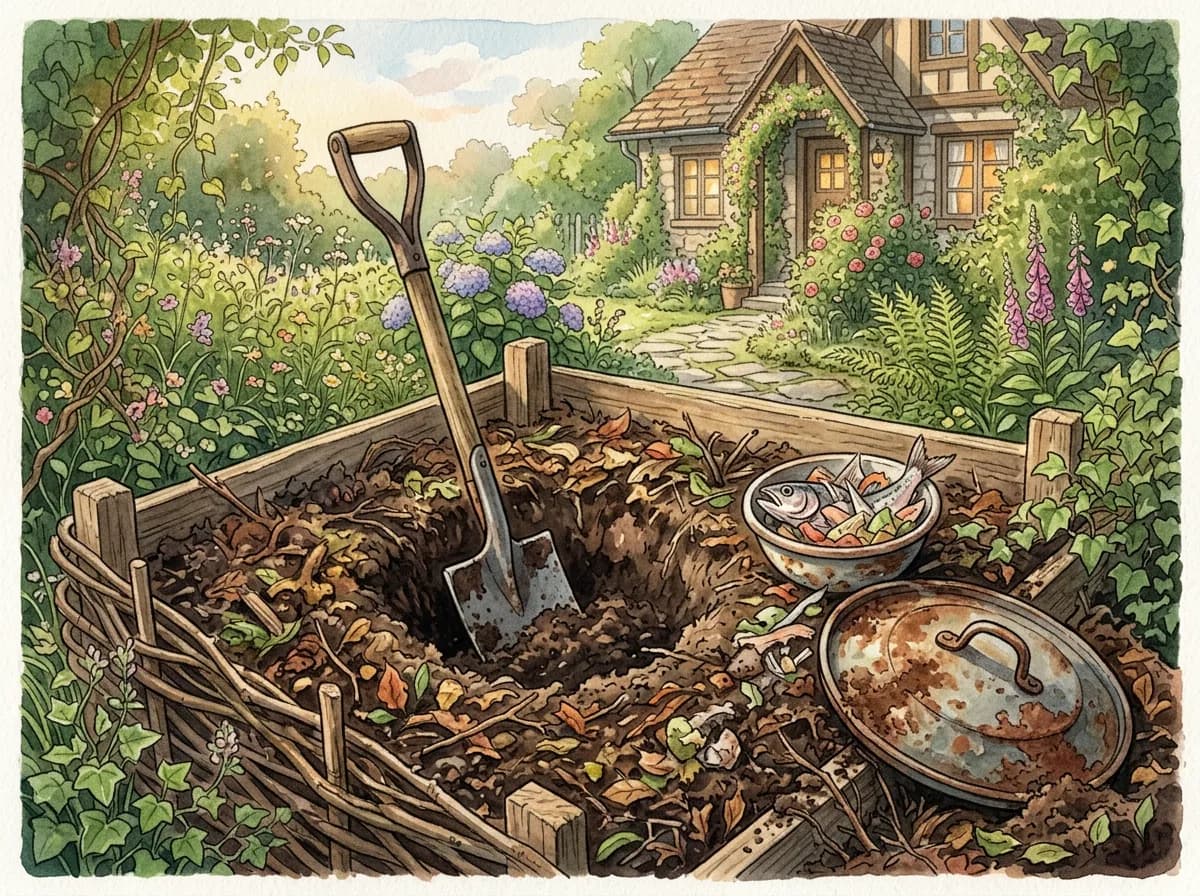
2Cover them immediately with a thick layer of dry material (dry leaves, sawdust or chips; large piles need much more cover) and close the hole.
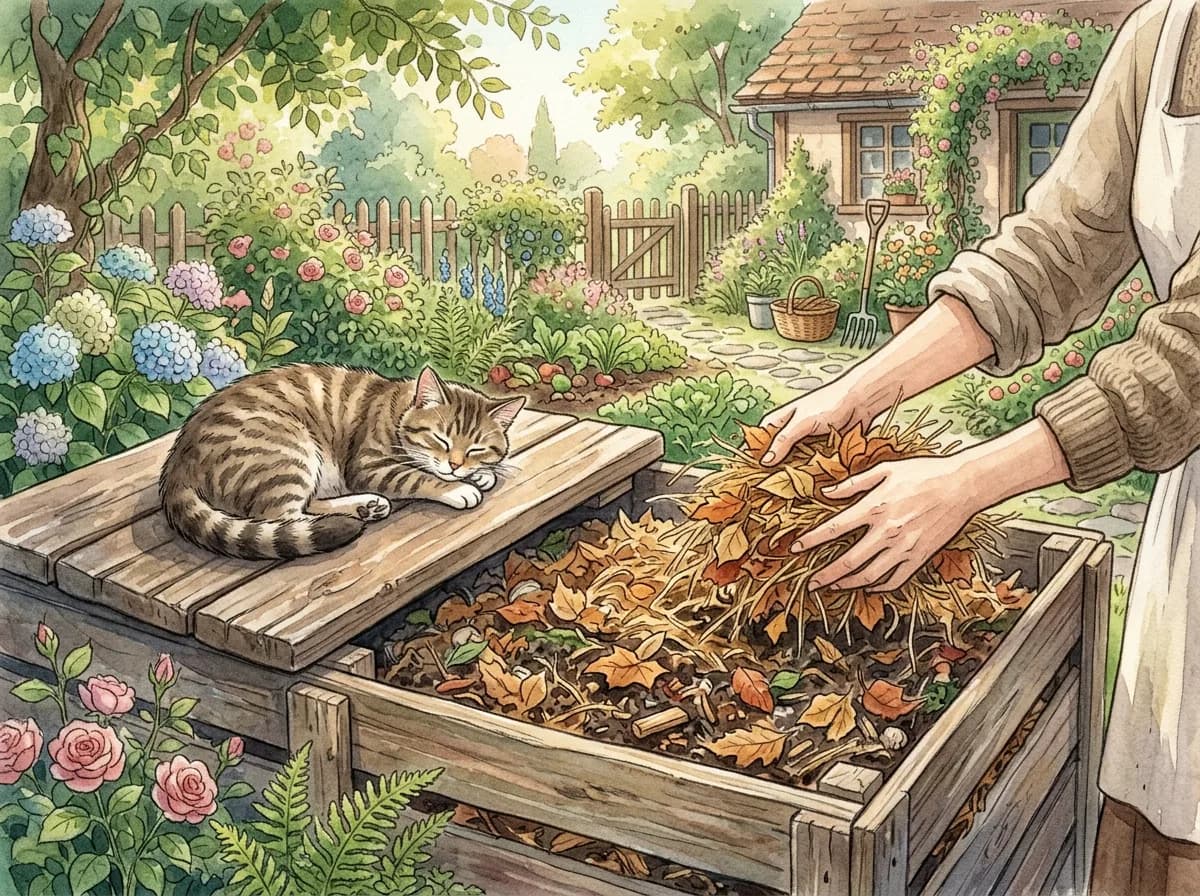
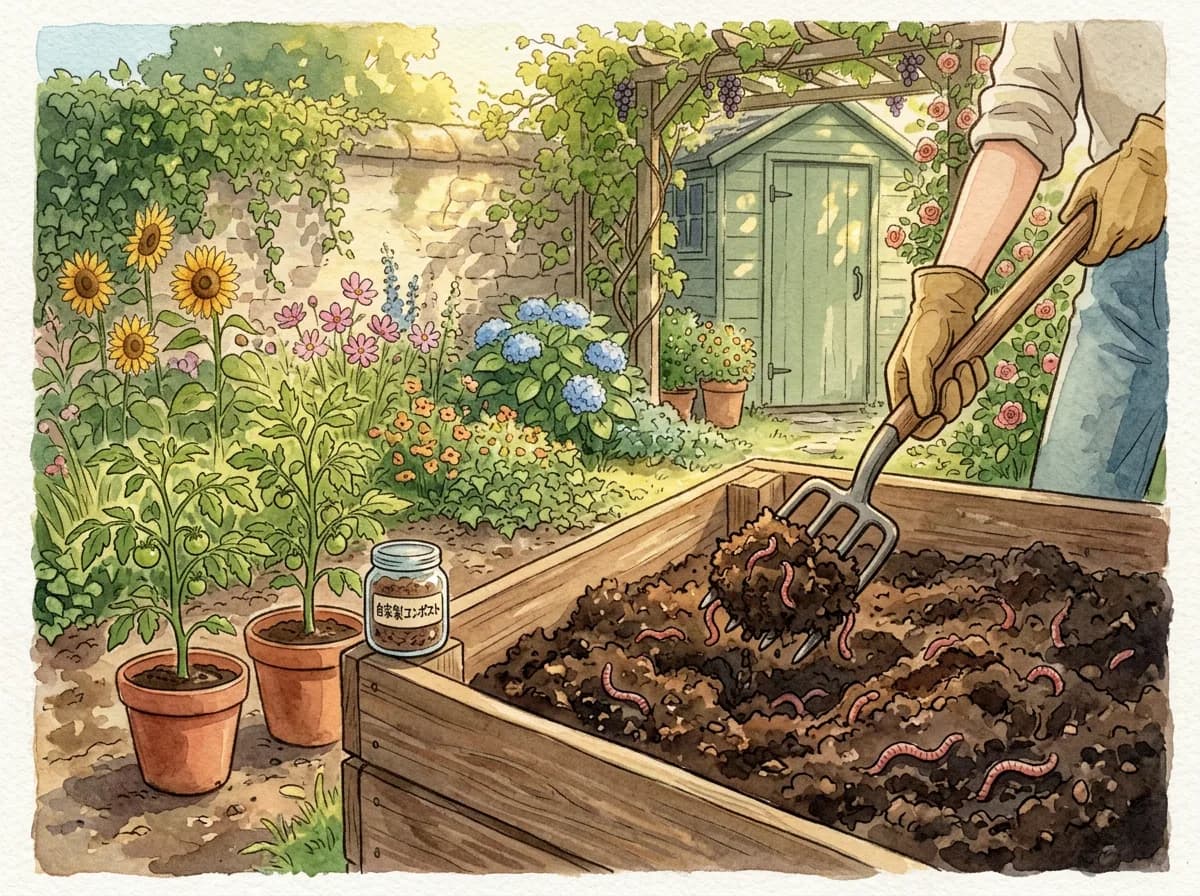
3Let the pile work for several months. When it is dark, with no visible bones and no smell, use it as normal compost.
Dose
Indicative and cautious dose, with no verified figure: only a few scraps (at most 10 % of the volume) in a large pile. Use the resulting compost like any mature compost: 2–3 cm (0.8–1.2 in) on the surface.
Which plants
It is used as compost: suitable for fruit trees, fruiting vegetables and flowers.
Precautions
- Never in a worm bin: it is fatal to the worms and stinks.
- Only raw fish: no salt, oil, sauces or cooked fish.
- If there are cats, foxes, rats or wild boar nearby, use a closed compost bin.
- Do not leave it on the surface: it smells and attracts flies.
Why it works
Fish has a lot of nitrogen and phosphorus in organic form. Mixed with dry material (carbon) it composts without rotting, and the nutrients stay in the humus.
Sources
- Cornell Waste Management Institute: composting fish waste (piles of more than 4 feet, 2 feet of carbon cover, 3–4 months without turning)