
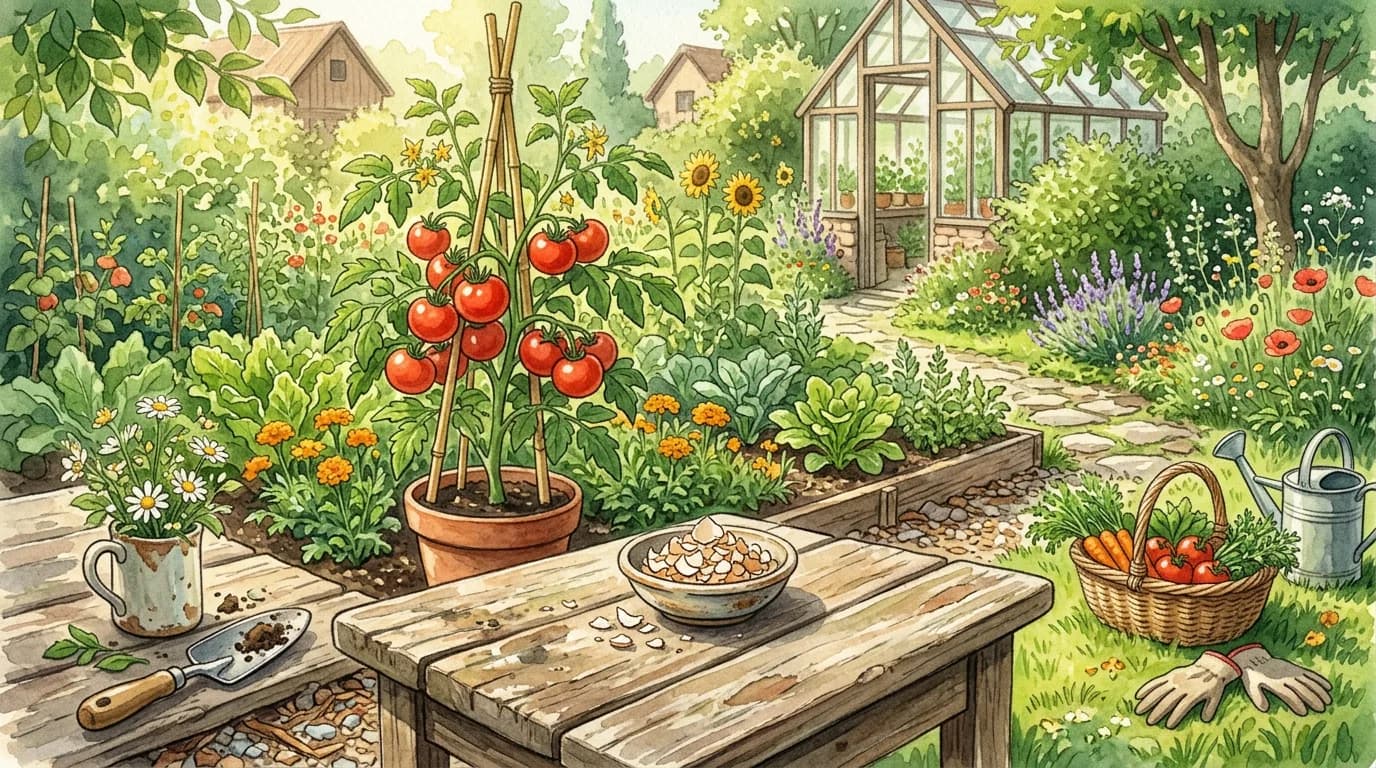
Eggshells as a source of calcium
Ground very fine they supply calcium and raise the pH a little, but slowly; whole or in pieces they do almost nothing.
Works in practice. Shells are 94–97 % calcium carbonate. In one study, coarse shells “were not much better than nothing” and finely ground ones performed like pure calcium. Tomato blossom end rot is mainly due to irregular watering. For the phosphorus myth, see “Myth: eggshells fertilise with phosphorus”.
Before you start, read the precautions
You will need
- eggshells
- mortar or coffee grinder
When to use it
When preparing the planting hole or mixing with compost, in slightly acid soils or soils poor in calcium. In chalky soils it adds nothing you do not already have.
Step by step
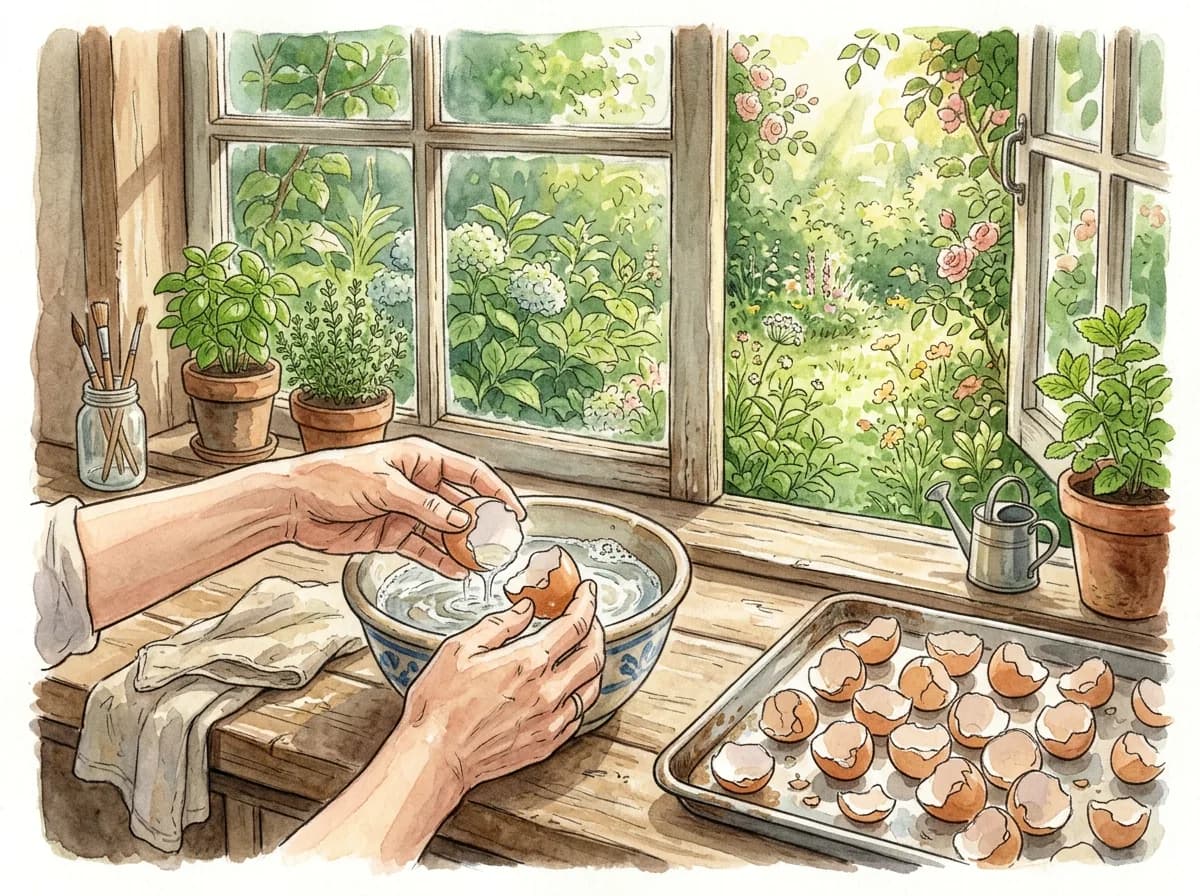
1Save the shells, rinse them with water to remove traces of egg white and dry them well; if you want to reduce the risk of salmonella, heat them for a few minutes in an oven at about 100–120 °C (212–248 °F) (a precaution, not from the source cited).
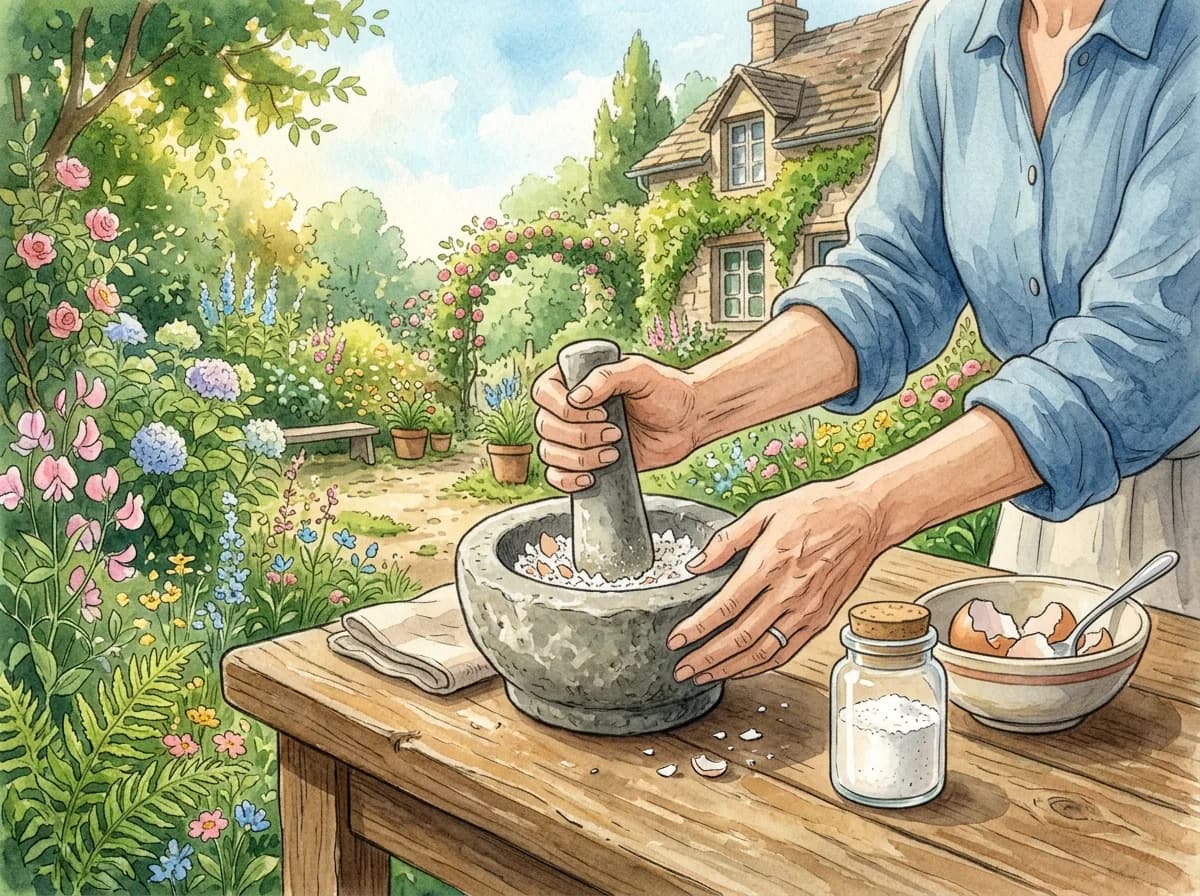
2Crush them to a flour with a mortar, a blender or a coffee grinder that you do not use for coffee.
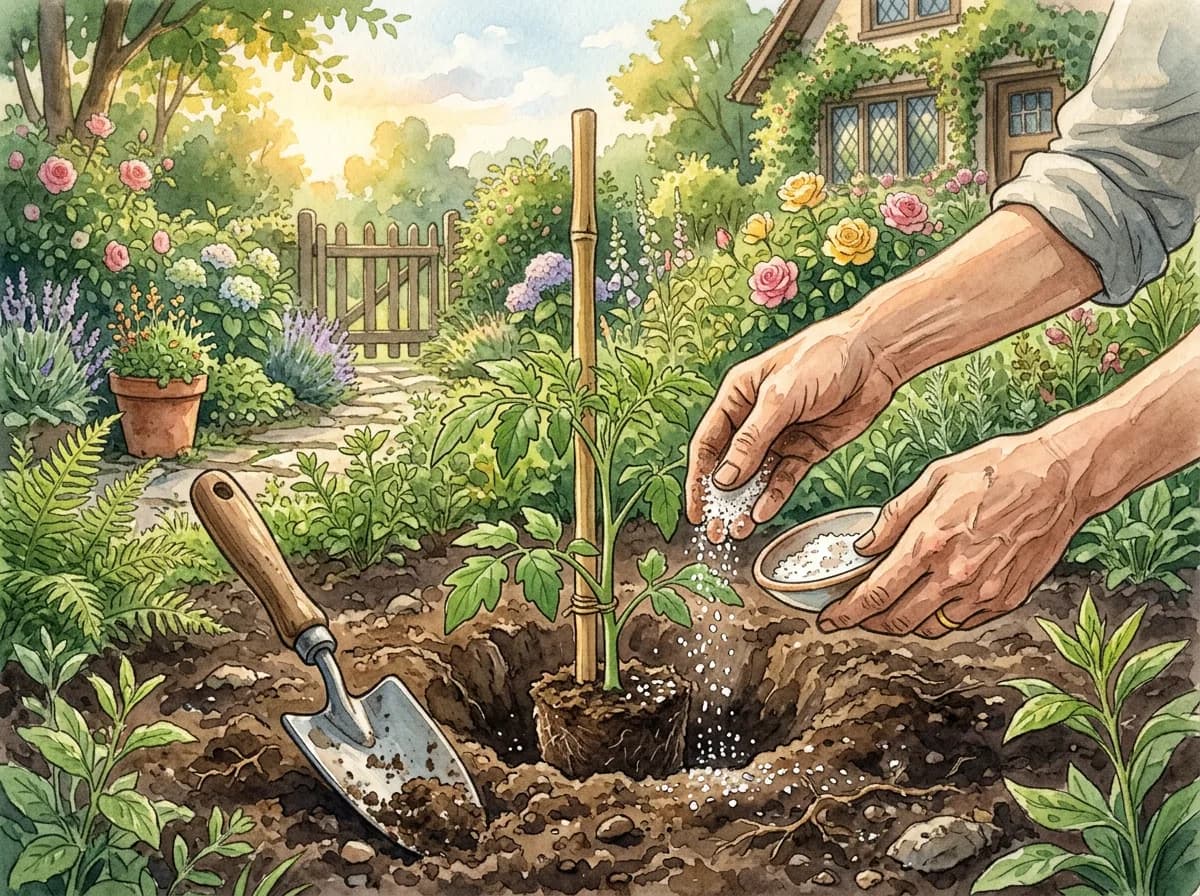
3Mix the powder with the soil of the planting hole, or sprinkle it and mix it in shallowly on the bed. Water.
Dose
Indicative and cautious dose (no verified figure): 1–2 tablespoons of fine powder per plant at planting, or about 50–100 g (1.8–3.5 oz) per m² a year, and only if the soil is acid or poor in calcium. Coarse shells take at least a year to break down.
Which plants
Useful for tomato, pepper and courgette planted in acid soil. Pointless in chalky soils, which are already rich in calcium.
Plants mentioned in this remedy
 Tomato 'Marmande'Marmande tomato, flattened and ribbed, a good size for salads.
 Sweet pepper 'California Wonder'California Wonder pepper, a blocky bell type with thick flesh, for stuffing or eating fresh.
Precautions
- If you only break them by hand, the effect on the soil is practically nil in a season.
- They do not replace regular watering: tomato blossom end rot is mainly due to irregular watering, not to a lack of calcium in the soil.
- Raw shells can carry salmonella; dry them well and wash your hands after handling them.
- Do not throw them whole onto the compost heap if you have rats or rodents: the traces of egg attract them.
Why it works
The calcium carbonate of the shell dissolves slowly in soil water, especially if it is slightly acid, and releases available calcium and a slight liming effect. The finer the powder, the more surface and the faster it reacts.
Sources
- University of Illinois (Extension): Using eggshells in the garden and compost (fine shell works, coarse almost does not)
- Iowa State University (Holmes et al., 2011): ground eggshells as a liming material (94–97 % CaCO3)