
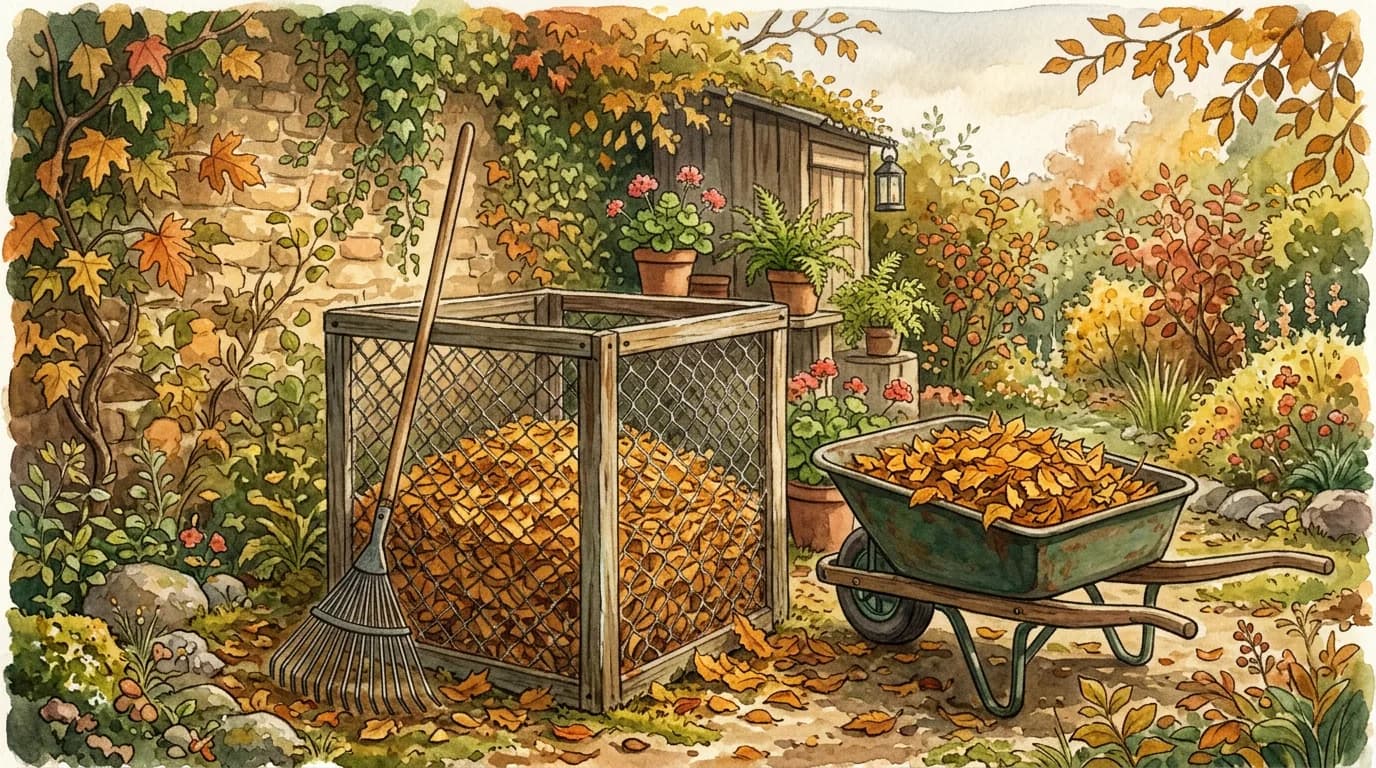
Dry leaf mulch (leaf mould)
Autumn leaves piled up and dampened turn within 1–2 years into a dark mould that holds water and conditions the soil.
Works in practice. A usual gardening practice; we have not been able to cite a specific trial. It is cheap and useful as a conditioner and mulch, although it supplies few nutrients. The process is slow: about 6 months with shredded leaves, up to 1–2 years whole (it varies with the leaf species).
Before you start, read the precautions
You will need
- dry leaves
- wire mesh or cage
- water
When to use it
In autumn, when the leaves fall; the product is ready in 1–2 years. Use it as mulch or mixed into the soil in spring.
Step by step
1Rake up leaves of deciduous trees (oak, maple, lime, ash) and move them to a corner.
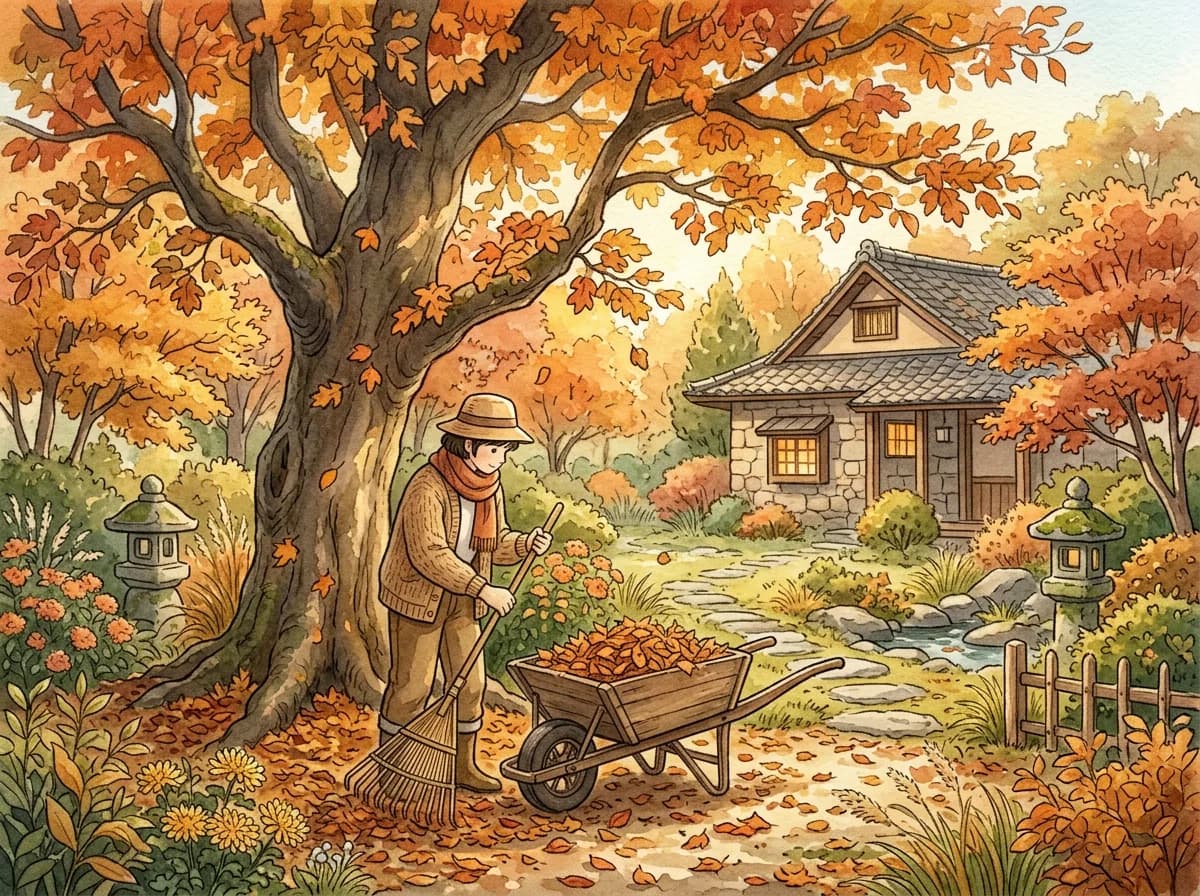
2Moisten them well, until they are like a squeezed-out sponge, and pile them in a mesh cage or in bags with holes.
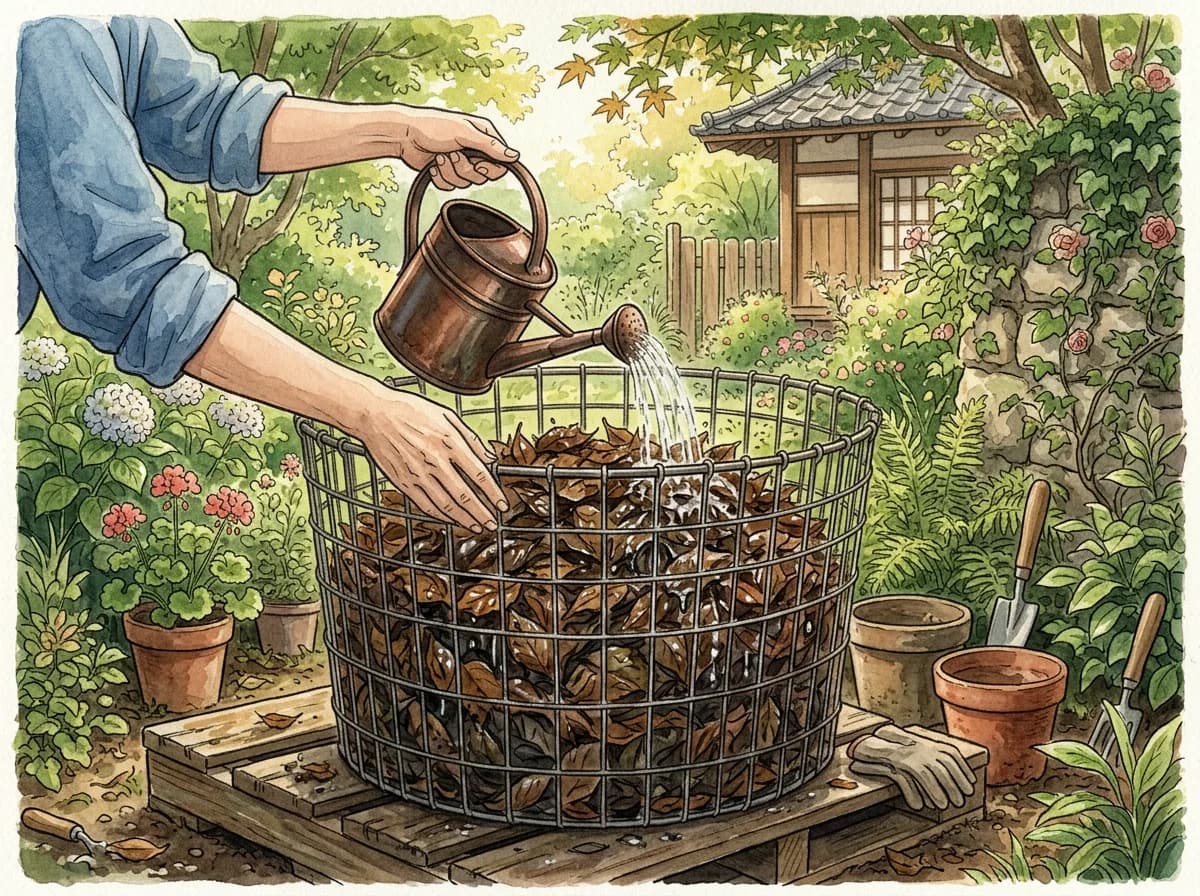
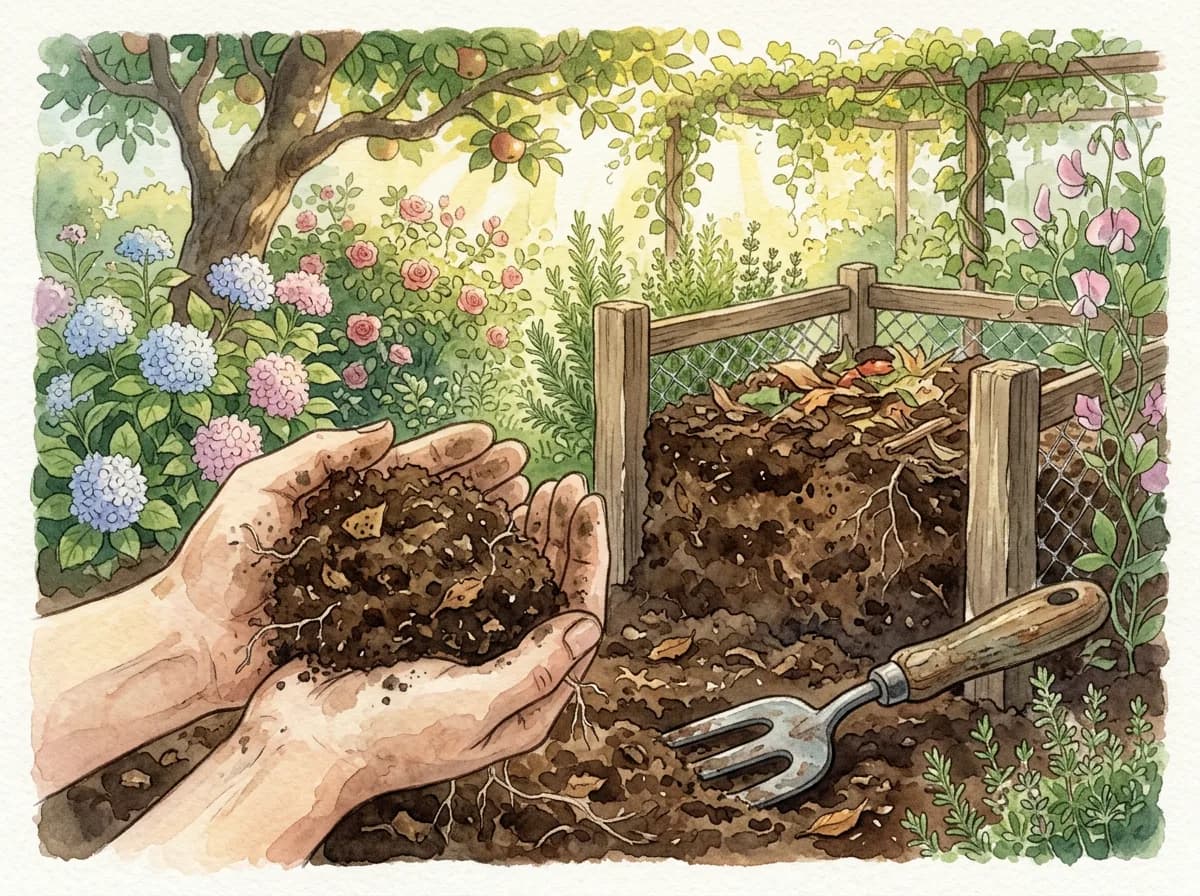
3Leave them to rest and wet them again if they dry out. When it has turned dark and crumbly, use it as mulch or mixed with compost.
Dose
Indicative dose (common practice): as mulch, a layer of 3–5 cm (1.2–2 in); mixed into the soil, up to 20–30 % of the volume.
Which plants
Vegetables, ornamentals and fruit trees as mulch or improver. Very useful in sandy soils to hold water.
Precautions
- Black walnut and eucalyptus leaves can contain compounds that inhibit other plants: keep them in a separate heap and wait several months before using them near tomato or potato.
- Do not use leaves from diseased plants (black spot on roses, mildew): they can keep spores.
- Very thick leaves (chestnut, plane) take longer; shred them with the mower.
- If it dries out completely, it stops breaking down; keep it moist.
Why it works
Fungi slowly break down the lignin and cellulose of the leaves, leaving a humus-rich material that holds a lot of water and improves structure. It is poor in nitrogen, so it serves as a conditioner more than as a fertiliser.
Sources
- Usual gardening practice; we have not been able to verify a specific extension source on leaf mould
- Oregon State Extension: adding organic matter to improve almost all garden soils