
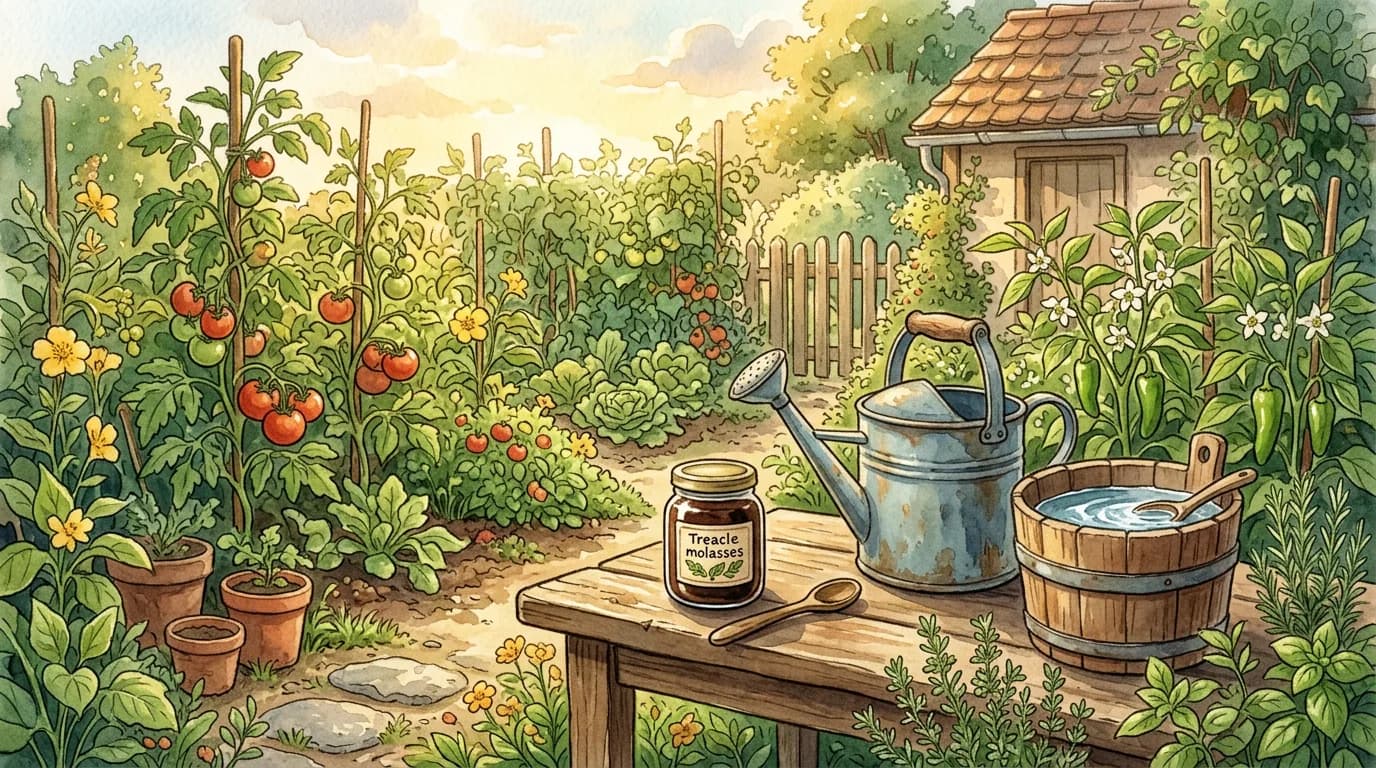
Diluted molasses
A little cane molasses in the watering water supplies potassium and sugars that feed soil microbes.
Works in practice. Molasses contains potassium and sugars and many gardeners use it to feed soil life. A trial on strawberry (Frontiers, 2025, dried molasses with mustard meal) found changes in soil bacteria, but it does not isolate the effect of the molasses; there is no scientific basis for the claims and it can attract ants. Limited evidence.
Before you start, read the precautions
You will need
- cane molasses
- water
- bucket
- tablespoon
- watering can
When to use it
In spring and summer, every 2–3 weeks, on fruiting vegetables and in soils poor in organic matter.
Step by step
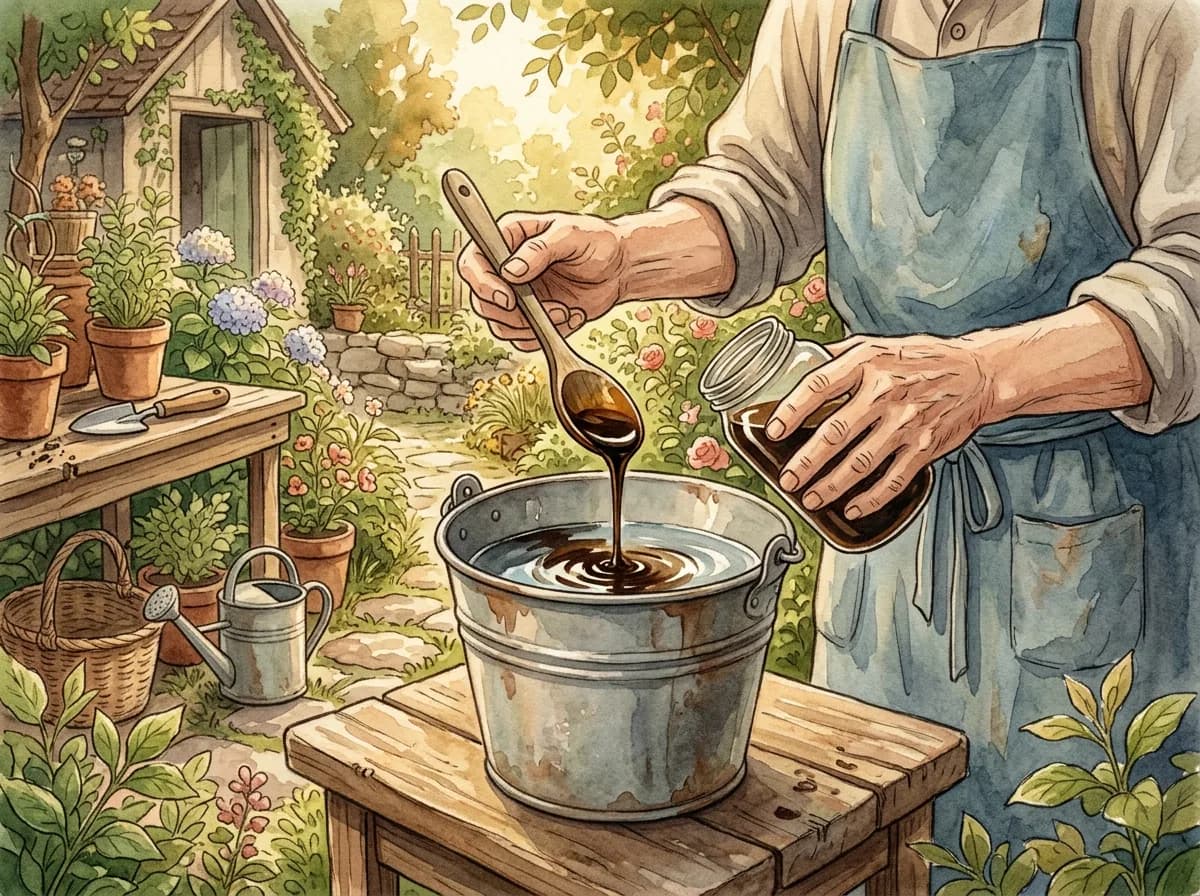
1Dissolve 1 level tablespoon (about 15 g, 0.5 oz) of cane molasses per 5 litres (about 1.3 US gal) of lukewarm water, stirring well.
2Water the soil at the base of the plants with the mixture, never over the leaves.
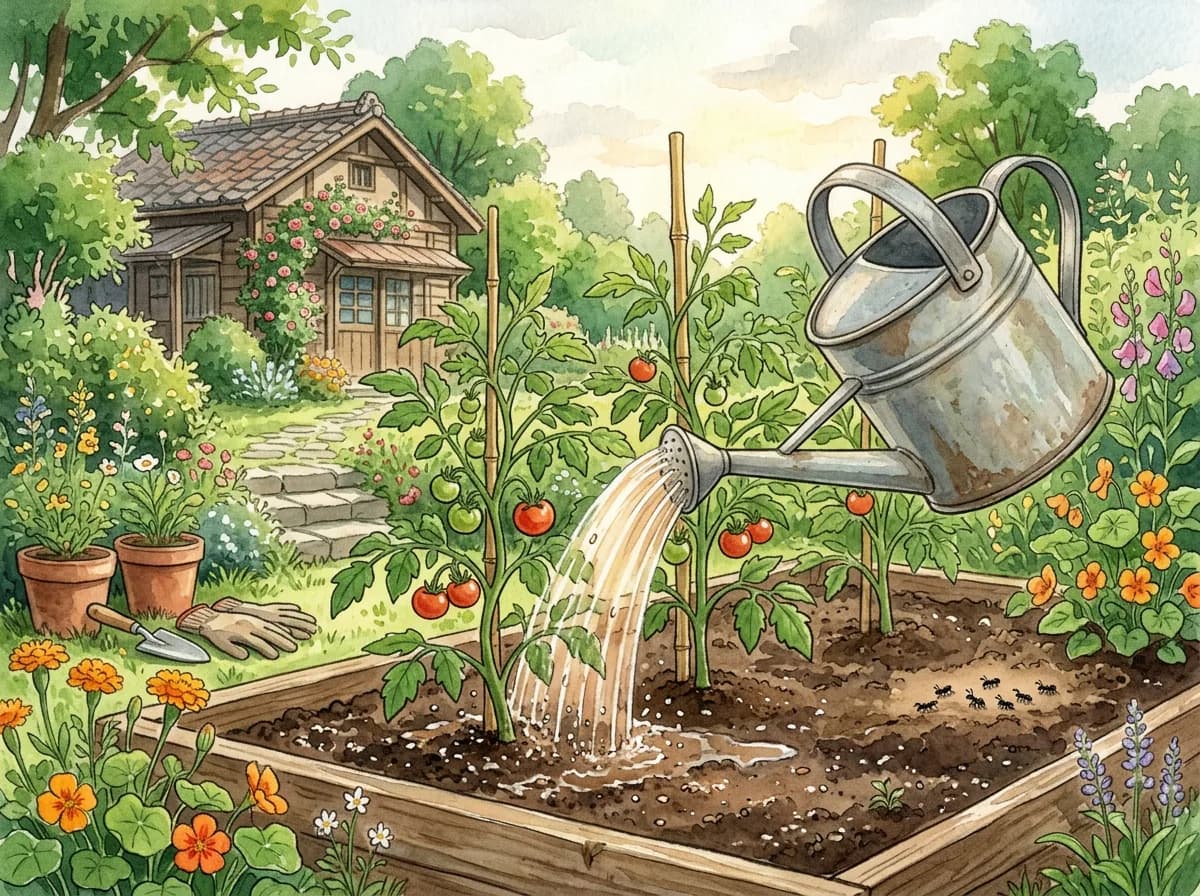
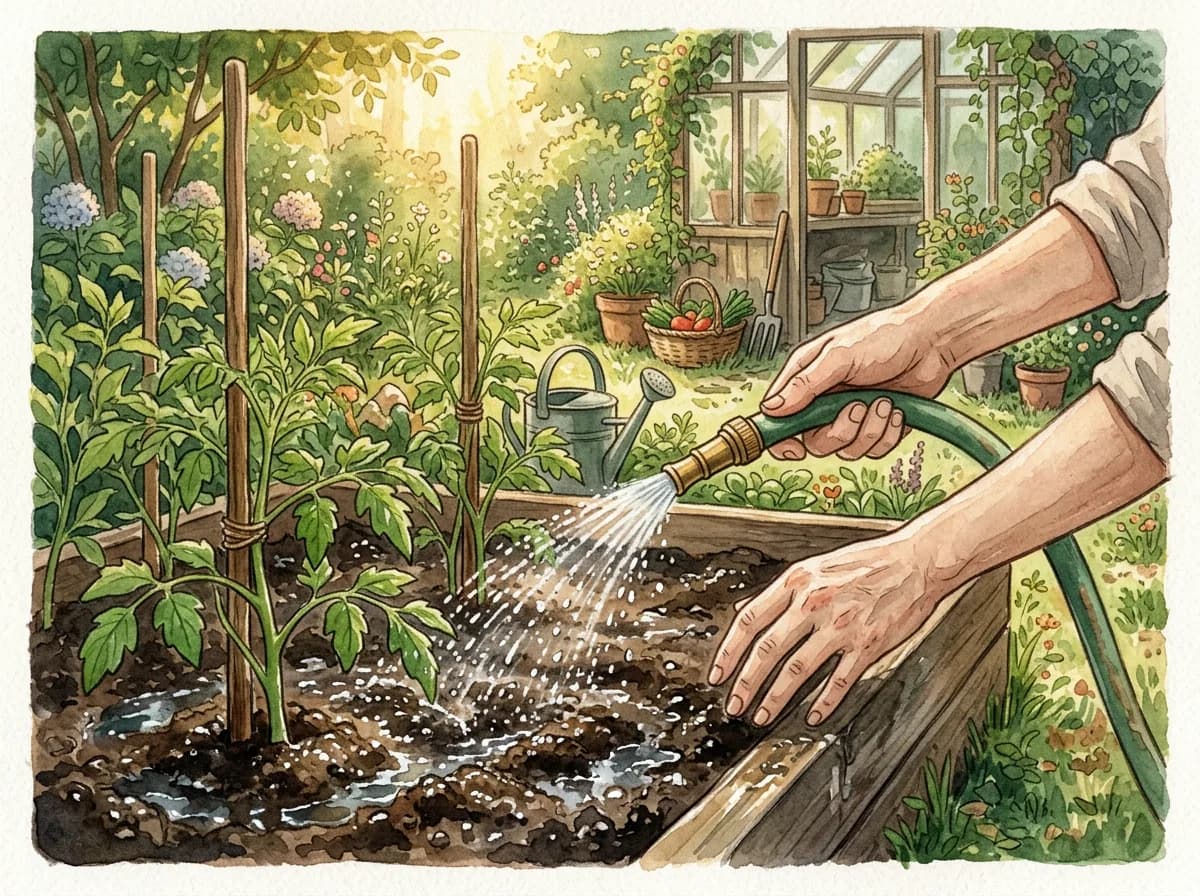
3If you notice ants, stickiness or fungus gnats, water afterwards with clean water and space out the applications more.
Dose
Indicative and cautious dose, with no verified figure: 1 level tablespoon (about 15 g, 0.5 oz) per 5 L (about 1.3 US gal) of water, every 2–3 weeks. Do not exceed that dose.
Which plants
Tomato, pepper, courgette and other fruiting vegetables in the ground. Avoid houseplants and seed trays.
Plants mentioned in this remedy
 Tomato 'Marmande'Marmande tomato, flattened and ribbed, a good size for salads.
 Sweet pepper 'California Wonder'California Wonder pepper, a blocky bell type with thick flesh, for stuffing or eating fresh.
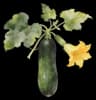 Courgette 'Nero di Milano'A cylindrical, very dark green courgette, productive and early, the classic bush type for continuous picking.
Precautions
- Too much sugar: it favours fungi, fungus gnats and ants, and can cause bad smells in pots.
- Do not use it in small pots or in growing media that already get waterlogged.
- Choose cane molasses without sulphites and without additives.
- It is not a complete fertiliser: it does not supply nitrogen or phosphorus in any quantity.
Why it works
Sugars feed soil bacteria and fungi, which trigger the release of nutrients. Molasses also supplies some potassium, although its content varies with the product.
Sources
- Ask Extension (Oregon State): no scientific basis for adding molasses or sugar to the soil; it can attract ants
- Frontiers in Sustainable Food Systems (2025): dried molasses and mustard meal on strawberry (changes in soil bacteria)