
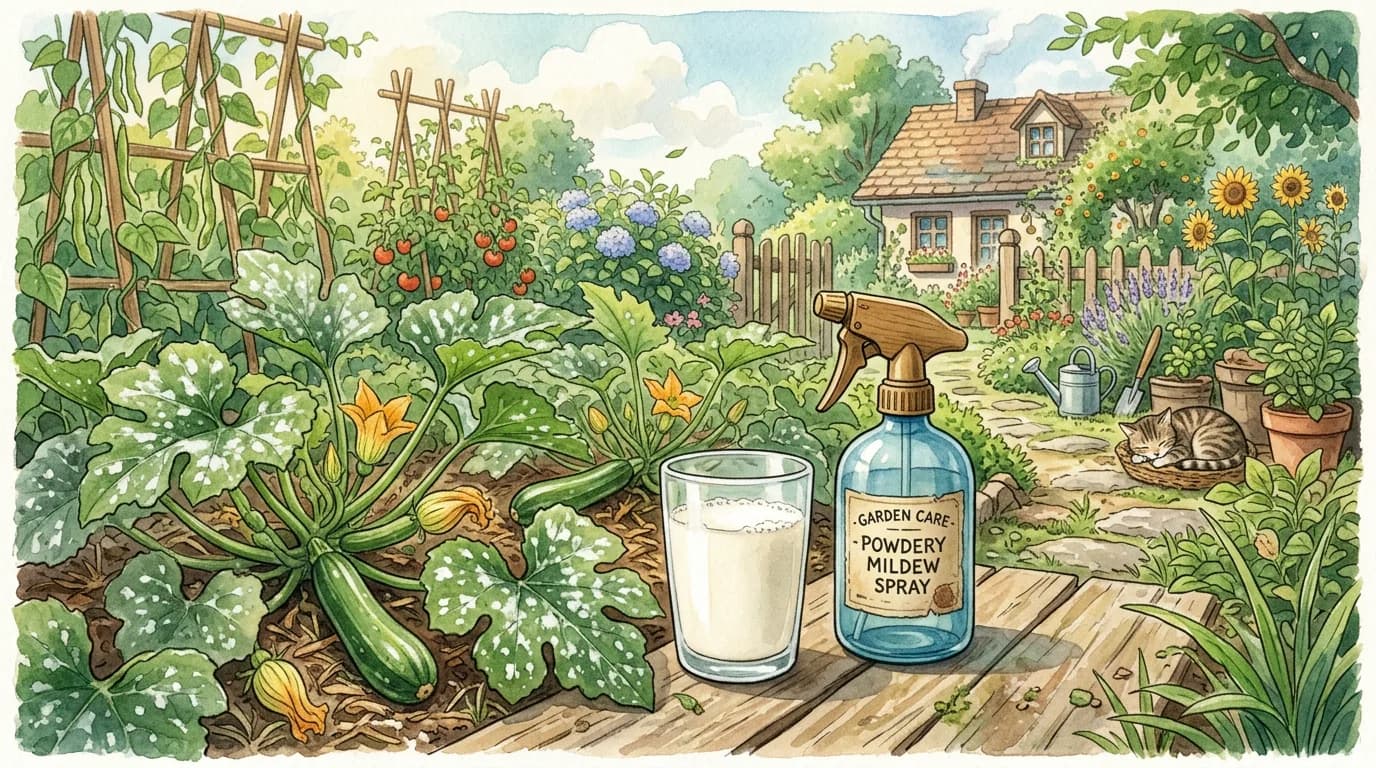
Diluted milk against powdery mildew
A spray of milk in water to hold back the white powder on courgette, cucumber and rose.
Works in practice. Bettiol's trials (Brazil, courgette, 1999) and later work showed control comparable to that of some fungicides with fresh cow's milk, but it is not known whether pasteurised or powdered milk works the same. It works better as prevention and in light infections than as a cure for a heavily affected plant. The data come from abstracts of that work.
Before you start, read the precautions
You will need
- milk (whole or skimmed)
- water
- spray bottle
When to use it
At the first white spots on the leaves, or as prevention in hot periods with humid nights.
Step by step
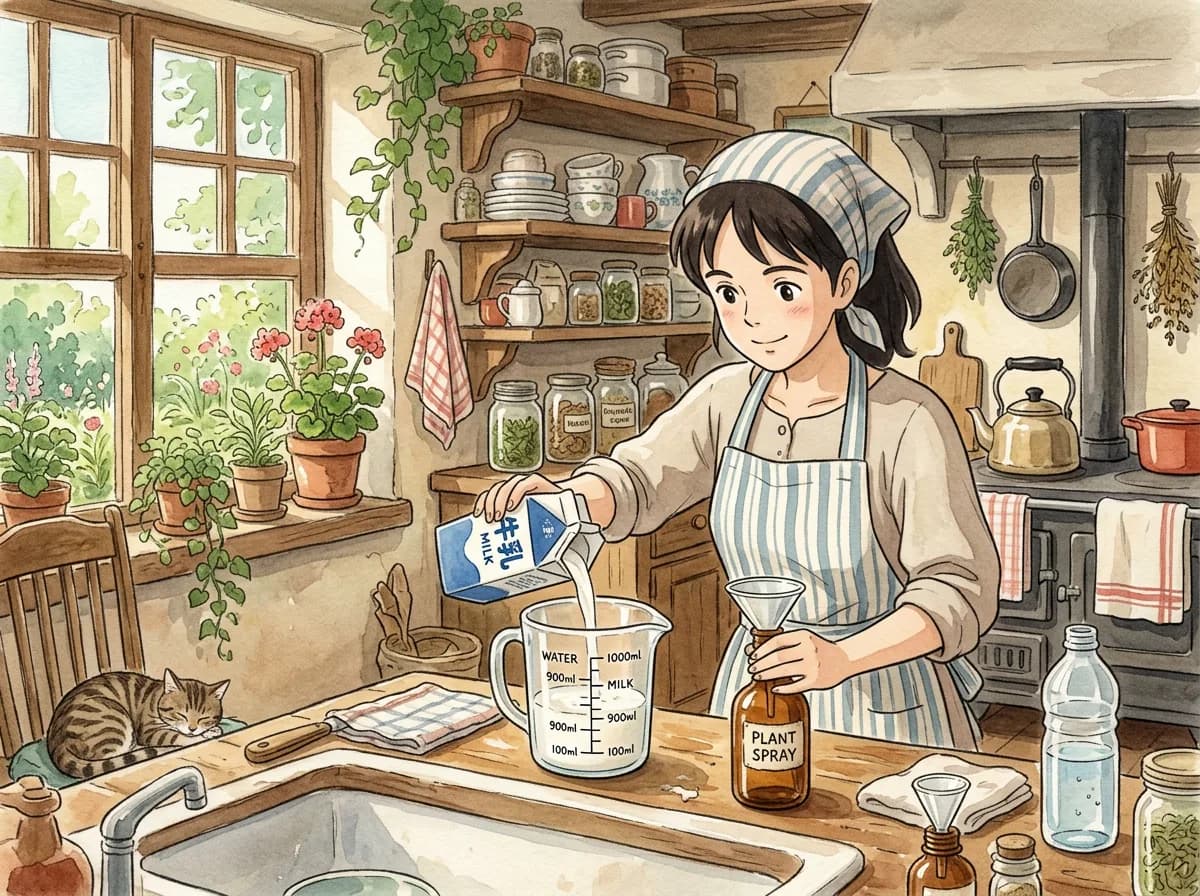
1Mix 1 part of milk with 9 of water (10 %). It does not have to be organic.
2Spray the leaves on both sides, best in the morning in gentle sun so that it dries.
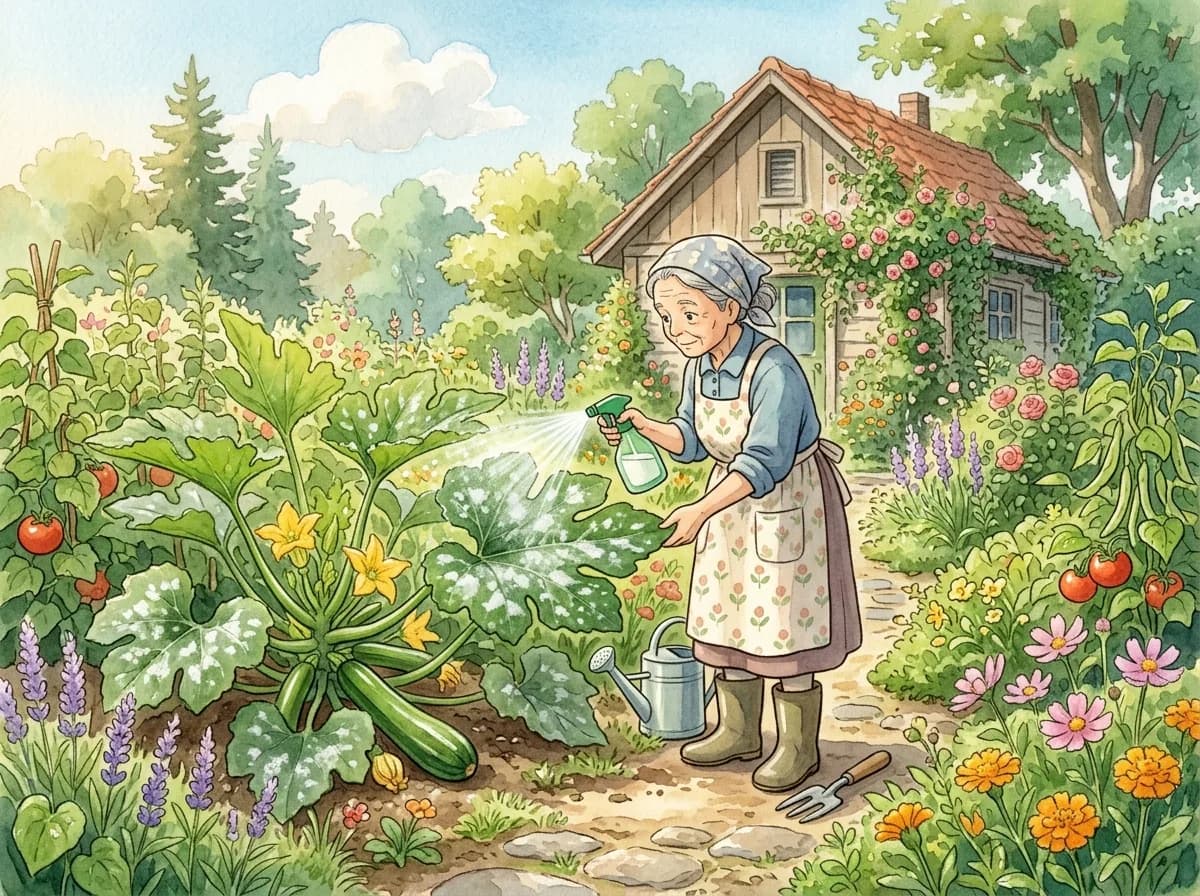
3Repeat every 7–10 days. Remove the most affected leaves and do not water over the top.

Dose
10 % milk (100 ml, 3.4 fl oz per litre of water), once a week. In the studies concentrations of 10 to 50 % were tried, but above 30 % mould can appear on the leaves: do not go above 30 %.
Which plants
Courgette, cucumber, melon, rose. Little help for downy mildew or other fungi that are not powdery mildew.
Plants mentioned in this remedy
 Courgette 'Nero di Milano'A cylindrical, very dark green courgette, productive and early, the classic bush type for continuous picking.
 Cucumber 'Marketmore'The 'Marketmore' cucumber is a classic salad cucumber resistant to several diseases.
 Piel de Sapo melonPiel de Sapo is the classic Spanish melon, one that keeps for a long time.
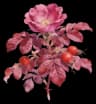 Rugosa roseA very hardy rose with distinctive wrinkled leaves, extraordinarily resistant to cold, salt and disease.
Precautions
- If you overdo it, milk can leave a bad smell and mould on the leaves (especially above 30 %).
- The trials used fresh whole milk: with pasteurised, UHT or powdered milk the effect is not proven.
- Do not apply it at night: prolonged humidity favours more fungi.
- It does not replace prevention: ventilation, watering at the base and spacing between plants.
Why it works
The mechanism is not settled; a germicidal effect of components of milk and a stimulation of the plant's defences have been suggested.
Sources
- Bettiol, W. (1999) “Effectiveness of cow's milk against zucchini squash powdery mildew”, Crop Protection 18: 489–492; and Medeiros et al. (2012), Crop Protection 40: 8–15. No verified link: only secondary abstracts