
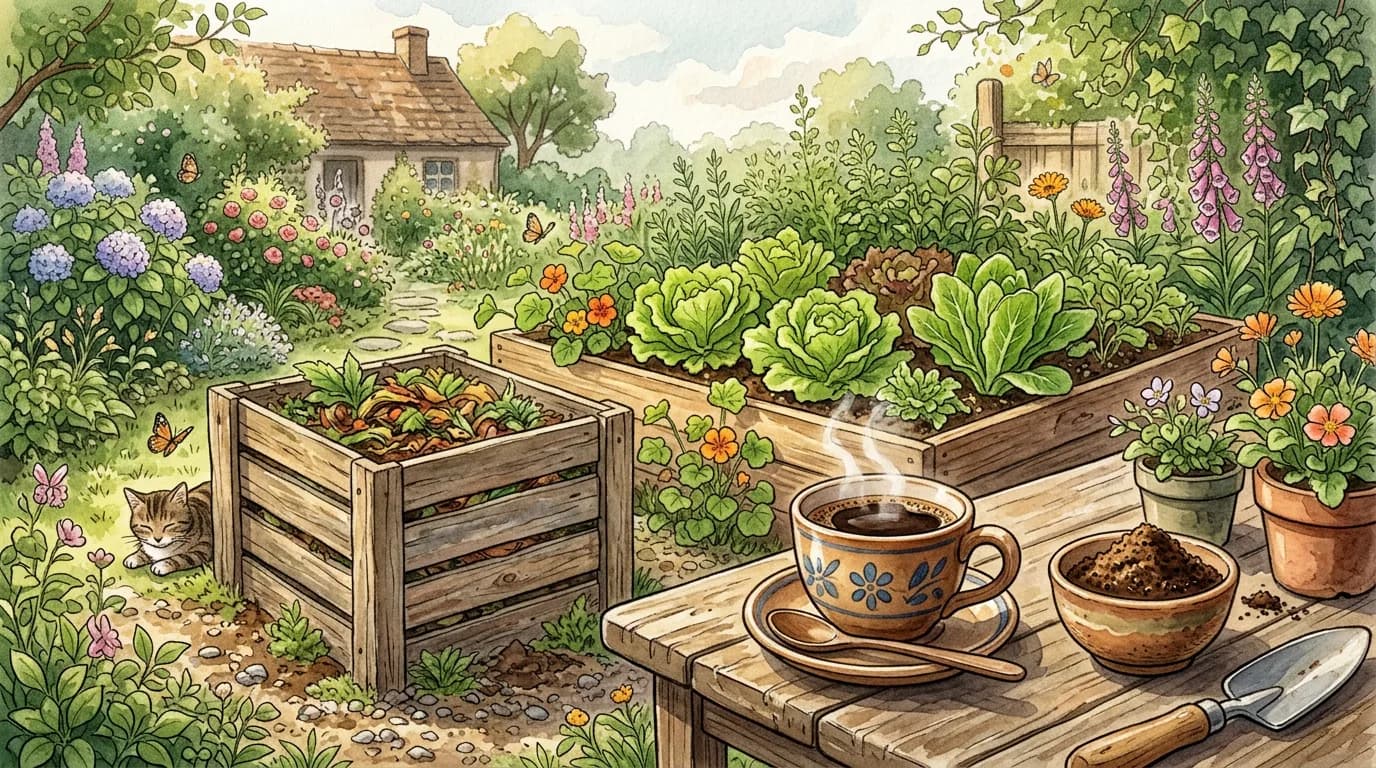
Coffee grounds as fertiliser
They supply nitrogen and organic matter, but only in thin layers or inside the compost.
Use with care. Grounds contain protein and nitrogen, but fresh they can be toxic to plants, they reduce germination in experiments and are not reliably acidic (their pH runs from slightly acid to somewhat alkaline). Use them mainly composted. See also “Myth: coffee grounds do not acidify the soil”.
Before you start, read the precautions
You will need
- coffee grounds
- compost
- dry leaves
When to use it
All year, best as part of the compost. As a direct fertiliser, in spring or summer on established plants.
Step by step
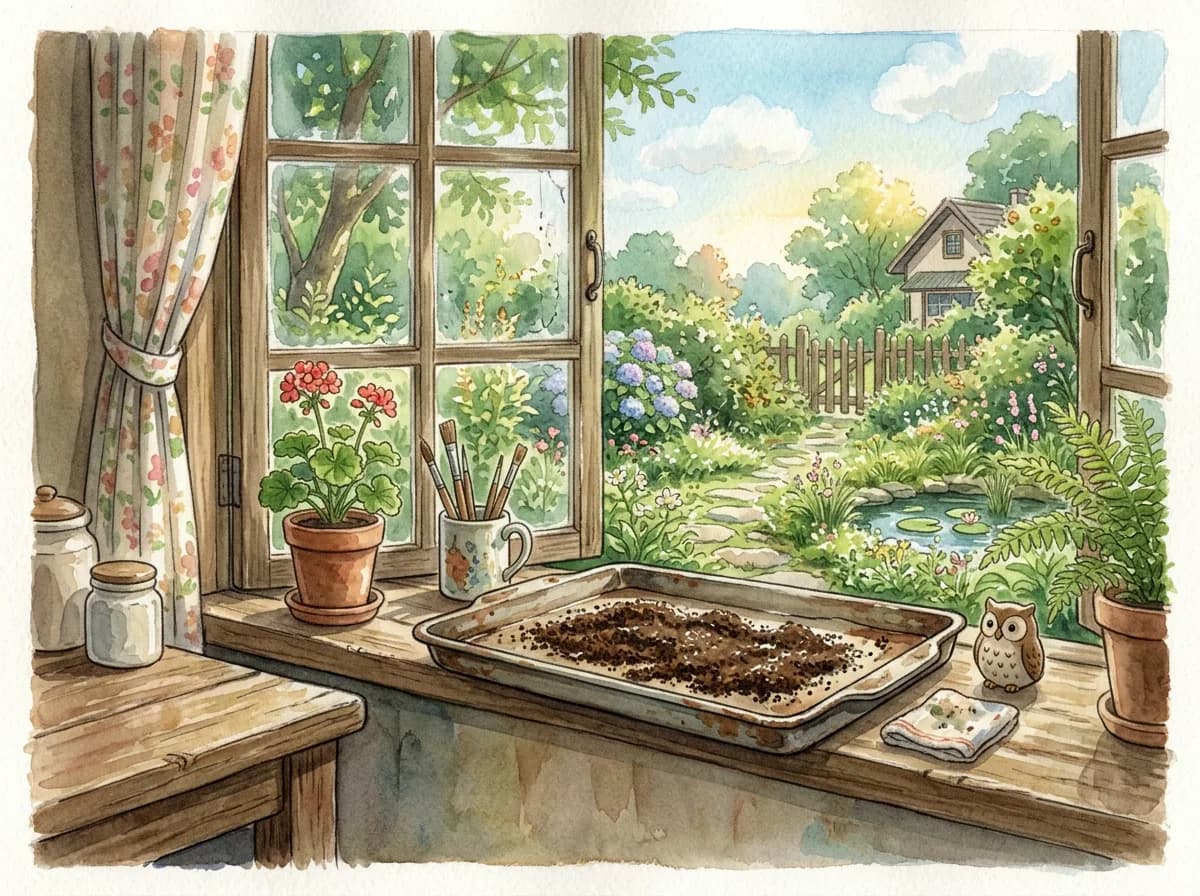
1Let the grounds dry spread on a tray for a few days to avoid mould.
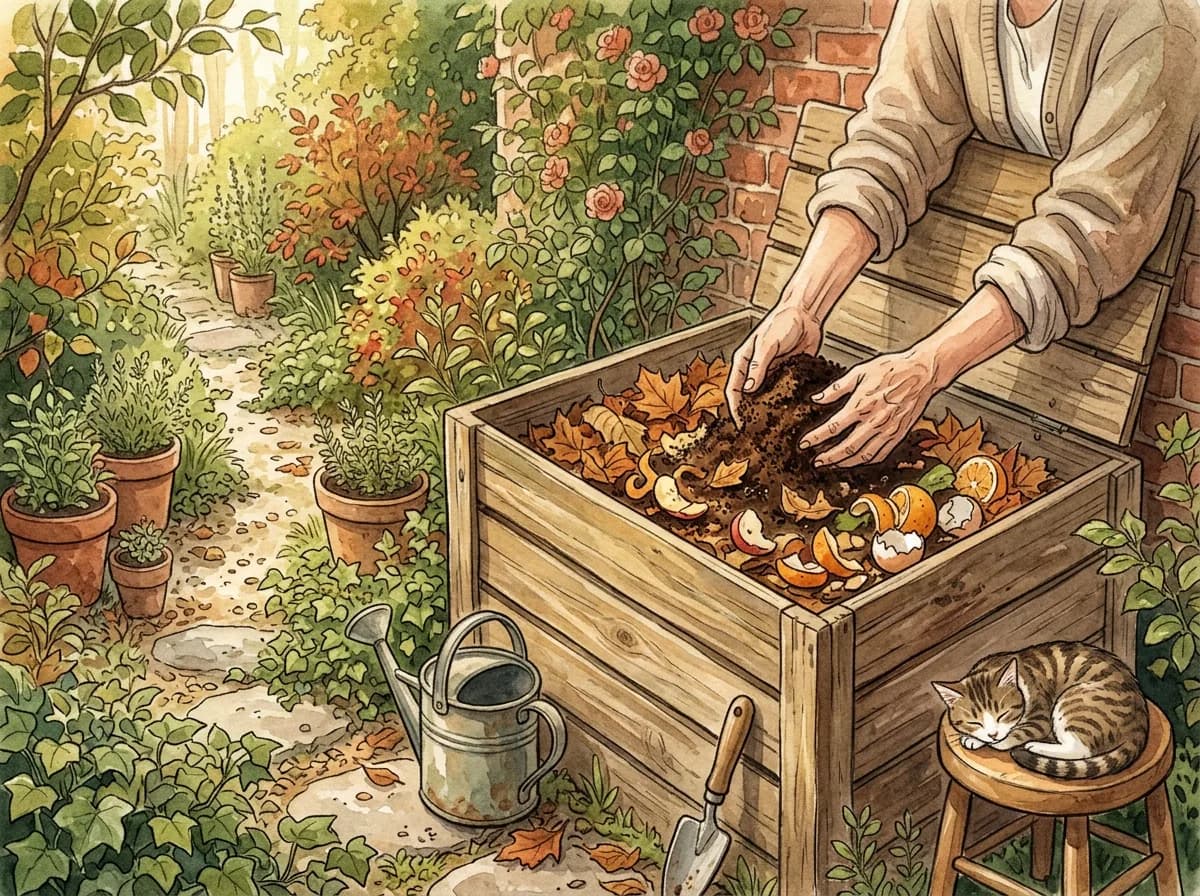
2Mix them into the compost with dry material (leaves, cardboard, straw). Do not exceed roughly 20 % of the total volume.
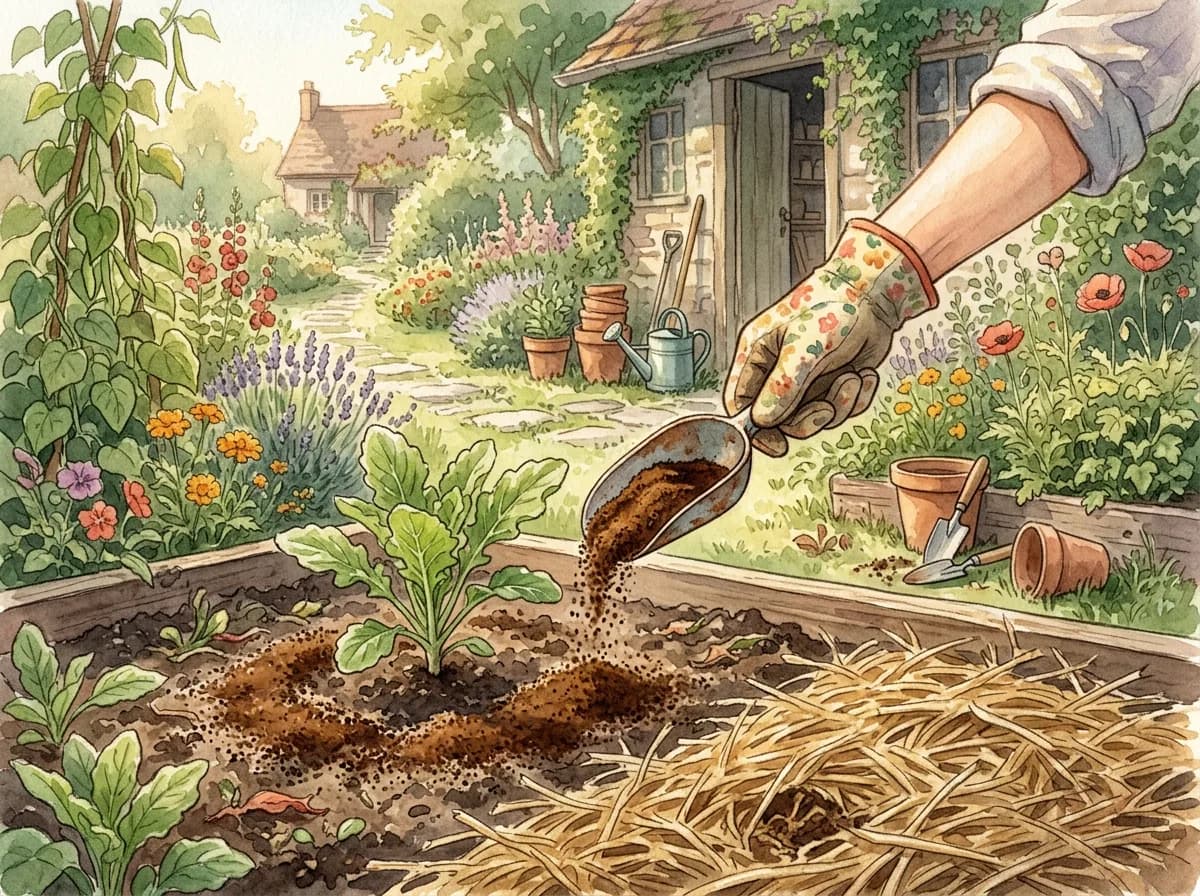
3If you use them directly, use grounds that are already composted: a layer of up to ~1 cm (0.4 in) covered with a thick mulch; do not mix them fresh into the soil.
Dose
In compost: up to 20 % of the volume. Direct: only if the soil test shows a lack of nutrients, a layer of composted grounds of up to 1.3 cm (0.5 in) (½ inch) covered with about 10 cm (3.9 in) of thick mulch, never a thick layer on its own.
Which plants
Good for leaf vegetables, roses and fruit trees. Not on freshly sown seeds or small seedlings.
Precautions
- Do not use them in thick layers or on seed trays: they compact and can slow germination.
- Do not expect them to acidify the soil: their pH is variable and often close to neutral.
- Grounds with sugar or milk rot and attract flies: use only black coffee.
- Better without filter paper containing plastics or non-compostable capsule bags.
Why it works
Grounds have more than 10 % protein; their C/N ratio starts at around 25:1 and drops towards 10:1 as they break down. That is why they work better inside the compost than applied fresh.
Sources
- Washington State University: Using Coffee Grounds in Gardens and Landscapes