
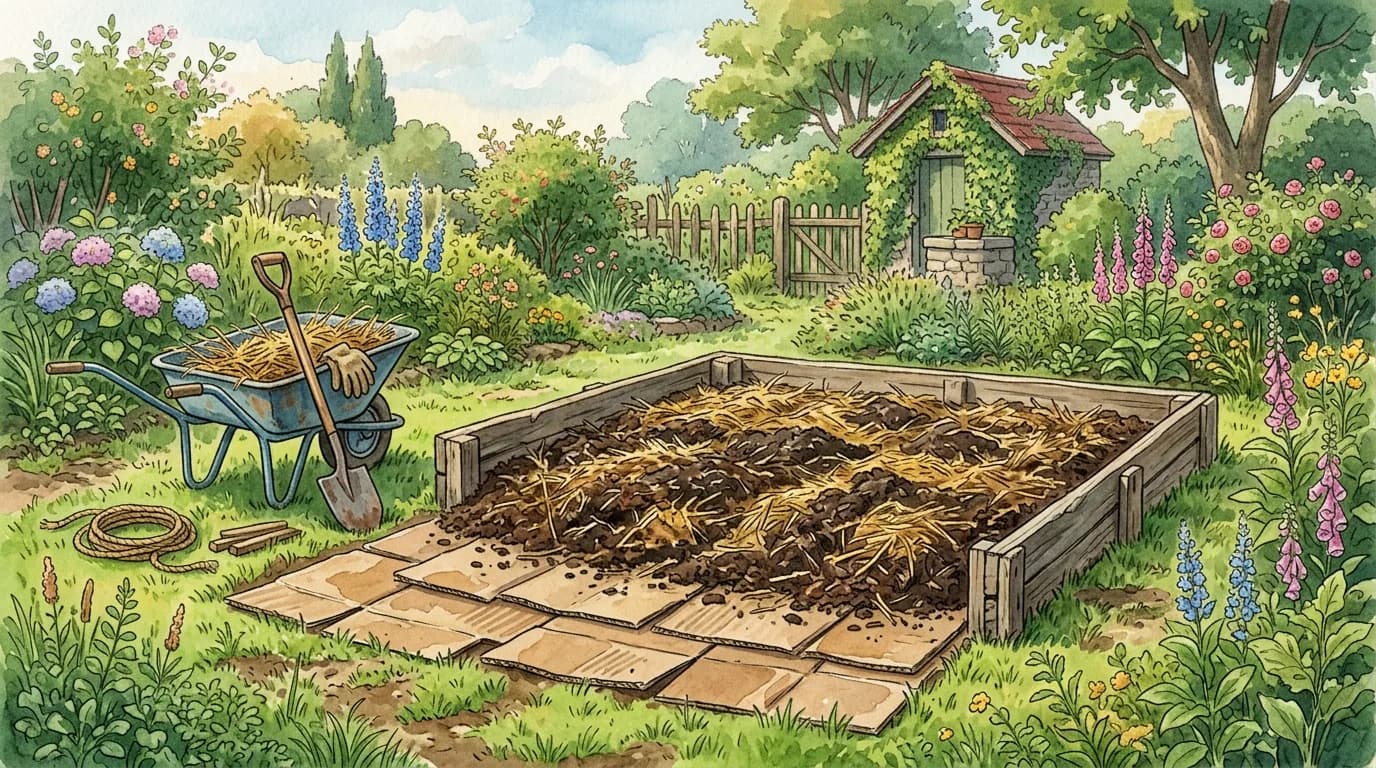
Cardboard on the ground
Wet cardboard covered with compost or mulch smothers lawn or weeds and creates a no-dig bed.
Works in practice. It is a way of turning lawn into a bed: overlapping corrugated cardboard and mulch, and in about 4–6 months it is ready to plant. Weeds with rhizomes can resist (a practical observation). See also “Cardboard and straw mulch against weeds”.
Before you start, read the precautions
You will need
- unvarnished cardboard
- compost
- straw or wood chips
- hose
When to use it
In autumn or at the end of winter to have a bed ready in spring; in summer, only if you will water often.
Step by step
1Mow the lawn short and remove tape, staples and labels from the cardboard. Use plain cardboard with no varnish or glossy printing.
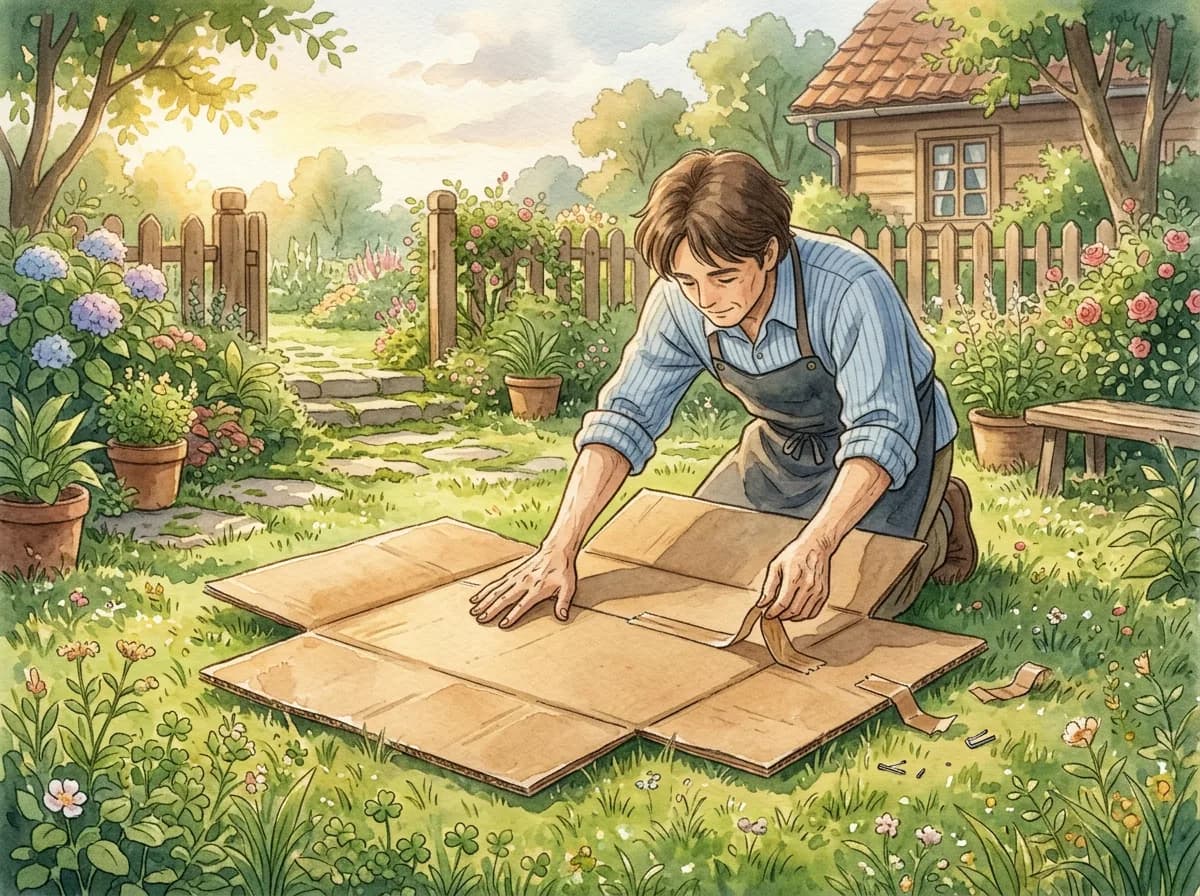
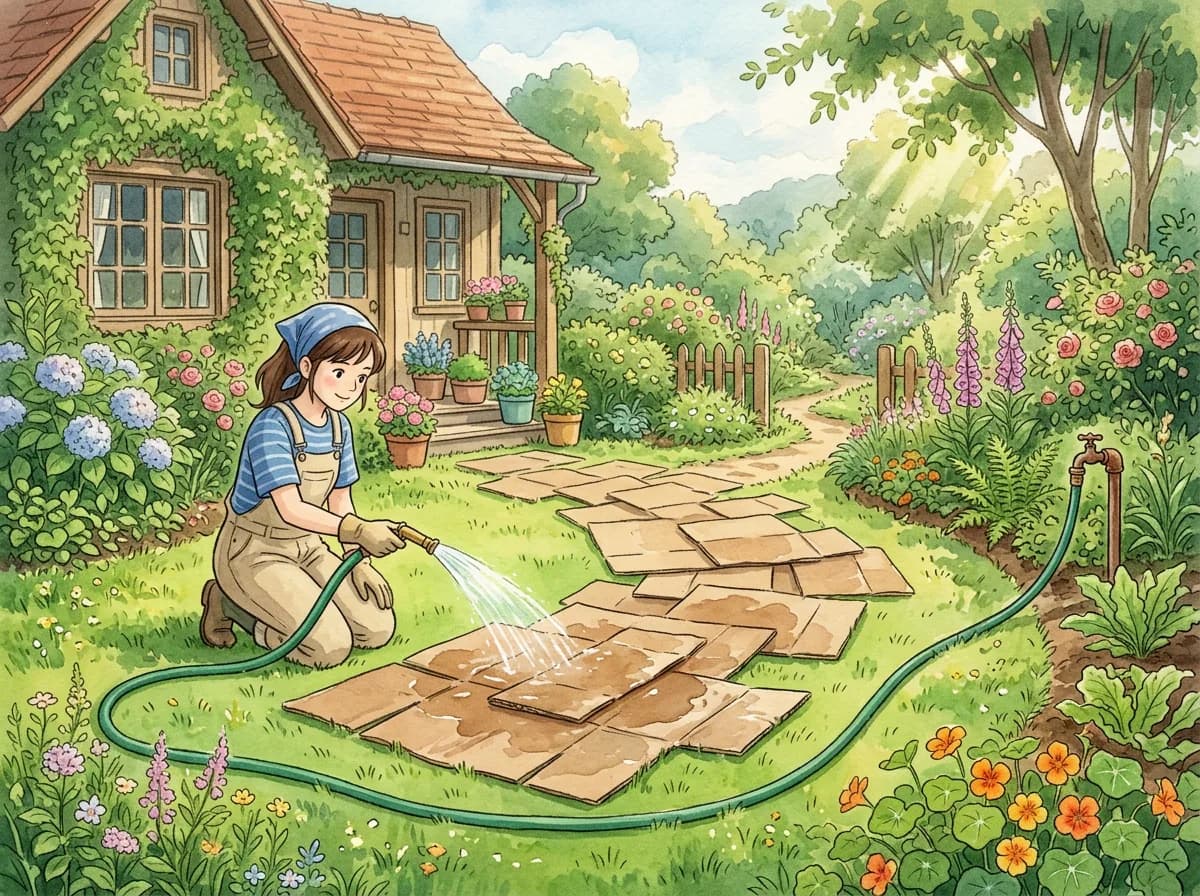
2Spread the cardboard overlapping 20–25 cm (7.9–9.8 in) (8–10 inches, no gaps) and soak it with the hose so it sticks to the ground.
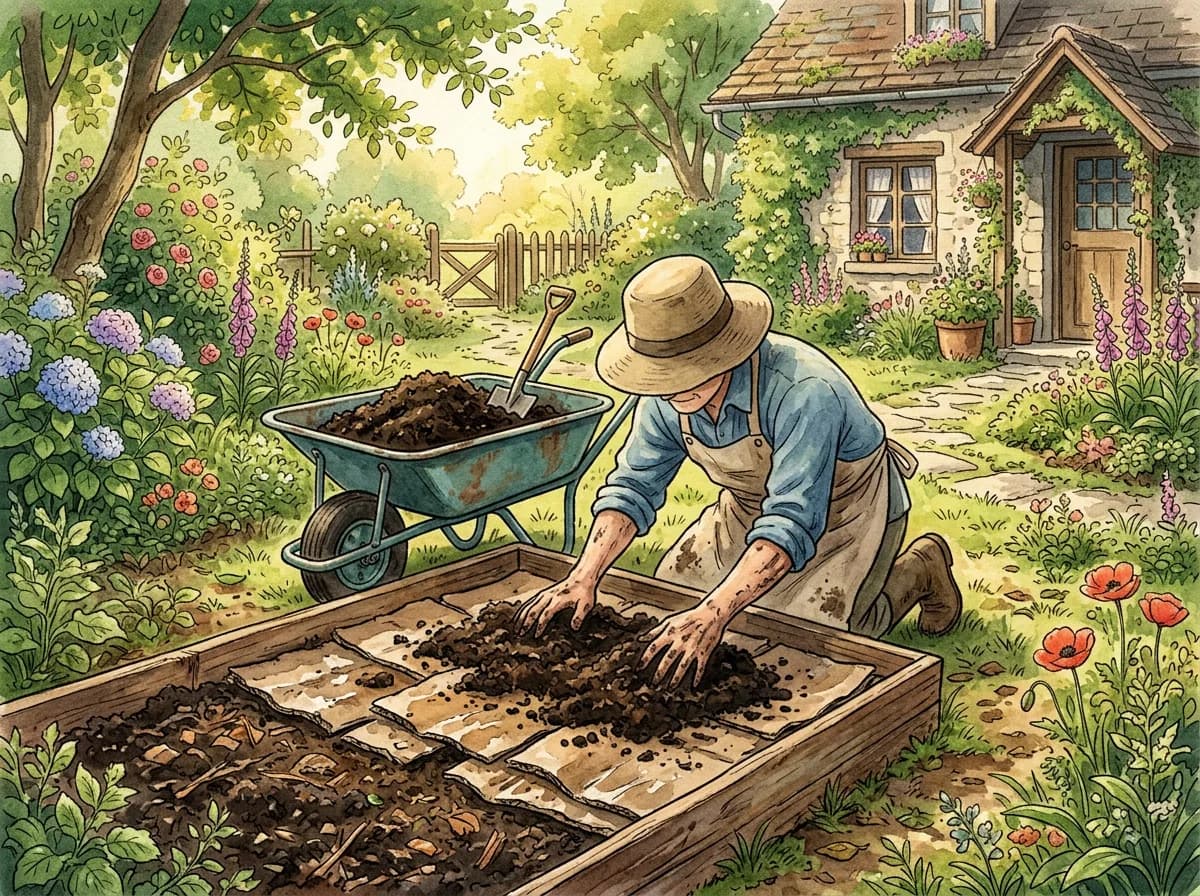
3Cover with 10–15 cm (3.9–5.9 in) of mulch (more for vegetables) and, if you want to plant soon, a layer of compost on top. The cardboard and mulch break down in 4–6 months.
Dose
One layer of corrugated cardboard (two if there are strong weeds), overlap of about 20–25 cm (7.9–9.8 in) and 10–15 cm (3.9–5.9 in) of mulch on top.
Which plants
Beds for vegetables, fruit trees and ornamentals; plant into the compost of the top layer.
Precautions
- Remove all plastic and tape; avoid cardboard with glossy inks or waxed papers.
- Weeds with rhizomes (couch grass, Bermuda grass) can push through it, according to practical experience: use a double layer and keep it well covered.
- It can attract slugs and snails under the damp cardboard.
- Do not leave it dry and exposed: it has to be wetted and covered at once.
Why it works
Cardboard and mulch smother the lawn by blocking light and break down over time. The compost layer on top supplies the growing medium in the meantime.
Sources
- University of Vermont Extension: Sheet mulching, lawn to garden conversion