
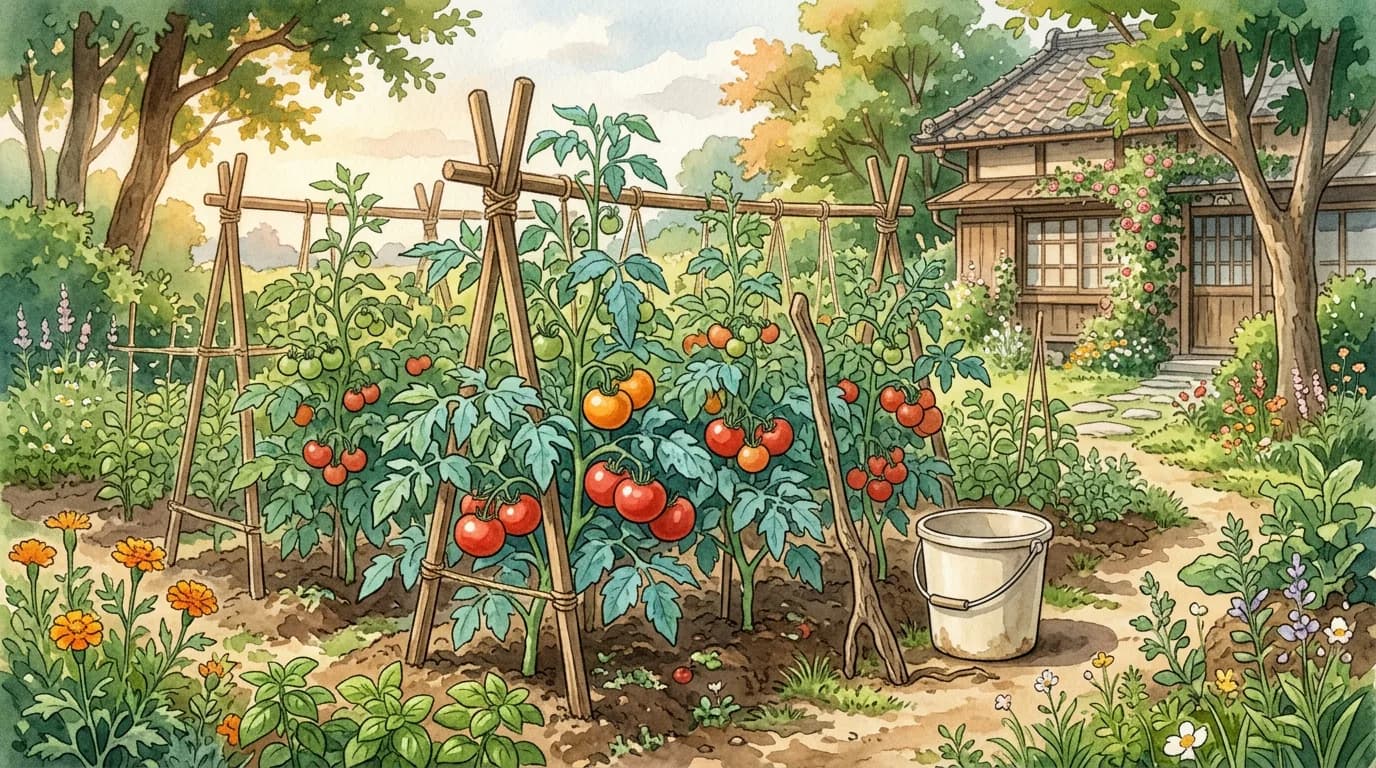
Bordeaux mixture (mildew and fungi): what it is and how to use it
A classic mix of copper sulphate and lime against downy mildew of tomato, potato or vine; effective, but copper builds up in the soil.
Use with care. Copper is rated “good” against early and late blight of tomato (less than chlorothalonil or mancozeb). But it is not an innocent home remedy: copper builds up in the soil, harms worms and aquatic life, and its use is regulated in the EU.
Before you start, read the precautions
You will need
- copper sulphate
- slaked lime
- water
- plastic buckets
- iron nail
- gloves and goggles
When to use it
Preventive before periods of rain or dew with mild temperatures (mildew), or after the first spots. In a small garden the most practical and safe thing is to buy ready-made commercial Bordeaux mixture.
Step by step
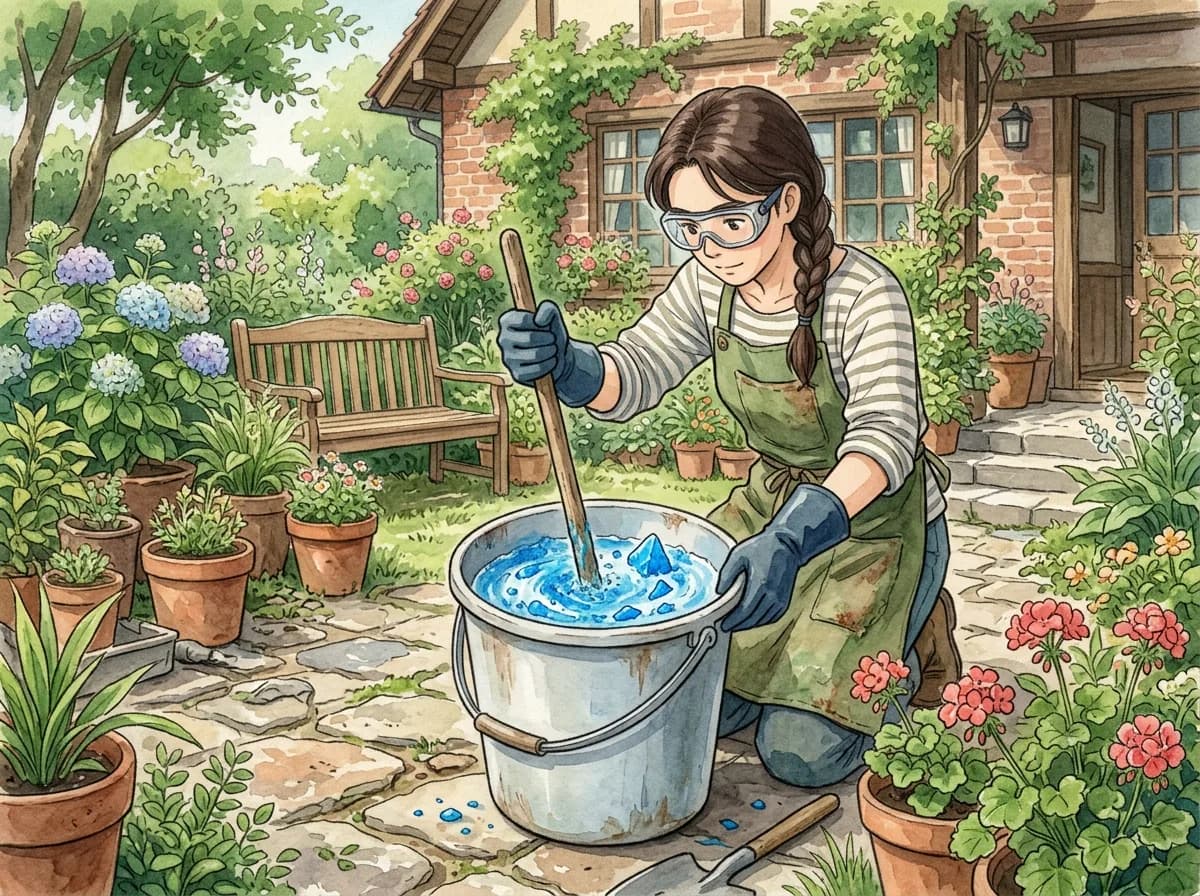
1Wearing gloves and goggles, dissolve 100 g (3.5 oz) of copper sulphate in 5 litres (about 1.3 US gal) of water in a plastic bucket (never metal).
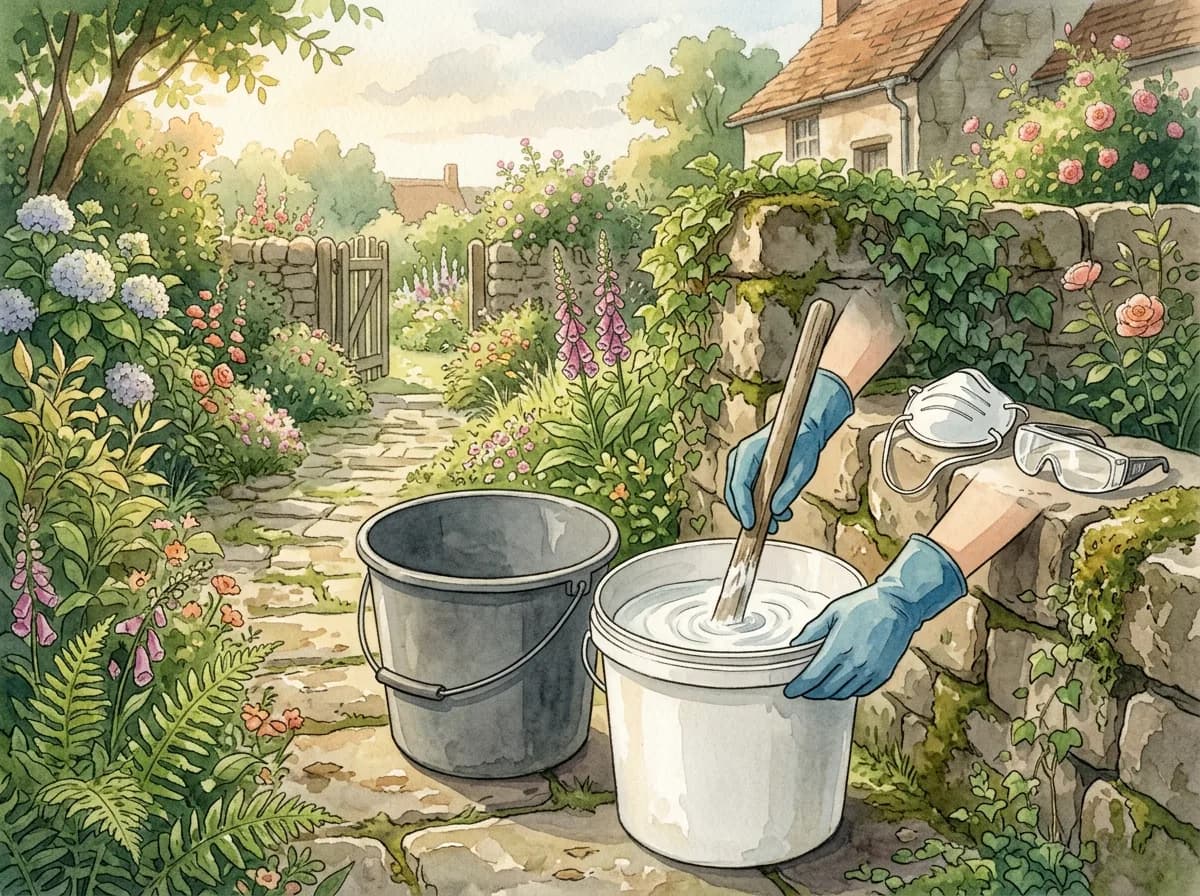
2In another bucket, mix 100 g (3.5 oz) of slaked lime (calcium hydroxide) with 5 litres (about 1.3 US gal) of water, stirring until you have a milk of lime. Do not use quicklime: it heats up a lot when wetted and can splash and burn.
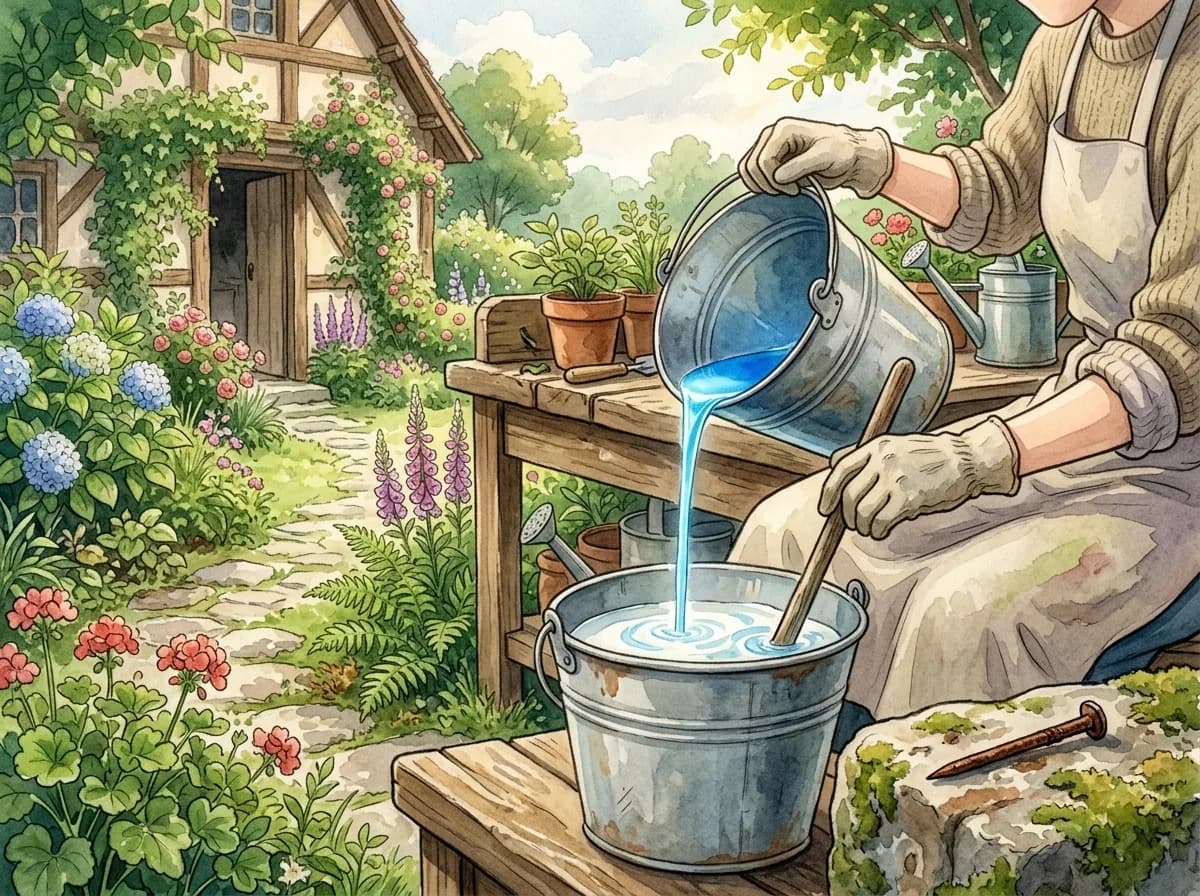
3Slowly pour the copper solution onto the milk of lime, stirring (never the other way round). A sky-blue liquid results. Put in a clean iron nail: if it comes out reddish, lime is lacking; add a little more.
4Spray the same day, in dry weather and without wind, on both sides of the leaf. Wash the buckets and the spray bottle straight away.
Dose
Mixture at 1 % (10 g, 0.4 oz of copper sulphate + 10 g, 0.4 oz of lime per litre; that is, 100 g, 3.5 oz of each per 10 litres, about 2.6 US gal). On young or sensitive plants, as a guide start with half (0.5 %), because there is no backed dose for the home garden. Maximum 3–4 treatments per season (indicative).
Which plants
Tomato, potato, vine, fruit trees, onion. Avoid on young cucurbits and very tender plants.
Plants mentioned in this remedy
 Tomato 'Marmande'Marmande tomato, flattened and ribbed, a good size for salads.
 Potato 'Kennebec'The 'Kennebec' potato is versatile in the kitchen, with pale skin.
 Italia table grapeA white grape with large, oval berries and a mild muscat flavour.
 Figueres onionThe Figueres onion is a sweet onion with purplish skin, typical of Catalonia in Spain.
Precautions
- Copper builds up in the soil and is toxic to worms, bees and aquatic organisms: do not apply it near watercourses or in flower.
- The EU limits copper (for general use, up to 4 kg, 8.8 lb per hectare per year on average, Regulation 2018/1981; organic farming has its own limits): in a small garden, use the minimum.
- Respect the safety interval before harvest given on the product label and wash vegetables well.
- Lime and copper sulphate irritate skin, eyes and airways: gloves, goggles and mask. Keep the sulphate out of reach of children and pets: it is toxic if swallowed.
- It can scorch leaves in cold, damp weather or on sensitive young plants. Copper sulphate for plant protection use is subject to registration: the simplest option is to buy an authorised product.
Why it works
Copper ions released on the leaf block enzymes in the spores and stop them germinating. The lime neutralises the acidity of the sulphate and helps it stay stuck to the leaf.
Sources
- Clemson University Home & Garden Information Center: tomato diseases; copper as a “good” option against early and late blight, and the product's interval/label
- Portal Frutícola: Bordeaux mixture, composition with copper sulphate and lime, it must end up neutral or slightly alkaline; gives no proportions
- Portal Frutícola: step-by-step preparation of Bordeaux mixture (1 % = 10 g of each product per litre, nail test, plastic or wood, copper onto the lime)