
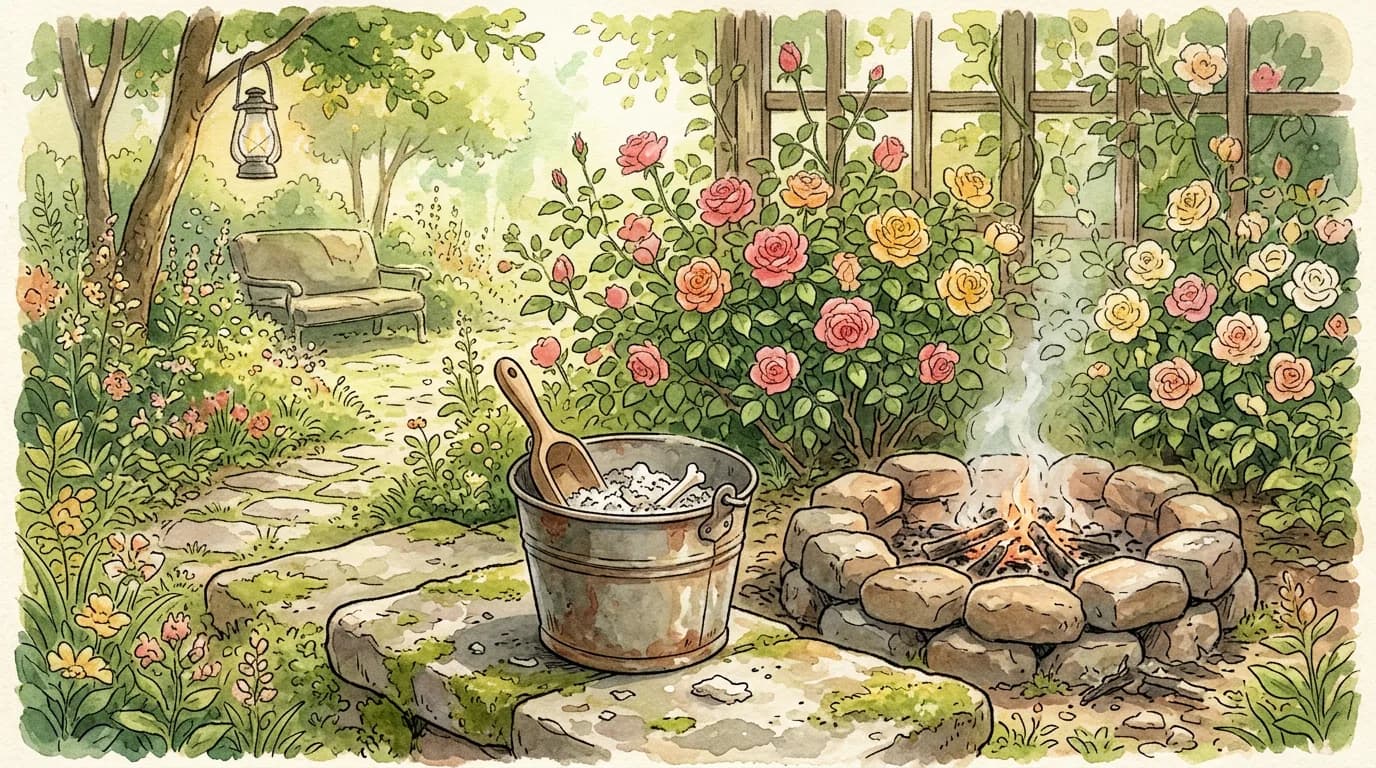
Bone ash
Calcined, ground bones: a very alkaline source of phosphorus and calcium that has to be used with care.
Use with care. Calcined bone concentrates phosphate and calcium, but there are no trials with homemade bone ash: the available evidence is on bone meal, where phosphorus is released with a delay. It is assumed to be alkaline and slow release, and it requires burning outdoors. It is simpler and better documented to use bone meal (see “Homemade bone meal”) and, if you want potassium, wood ash (see “Wood ash”).
Before you start, read the precautions
You will need
- clean bones
- metal bucket
- mortar
- mask
When to use it
Only if your soil is acid and has a phosphorus deficit, preferably after a soil test. Apply in autumn when preparing the bed.
Step by step
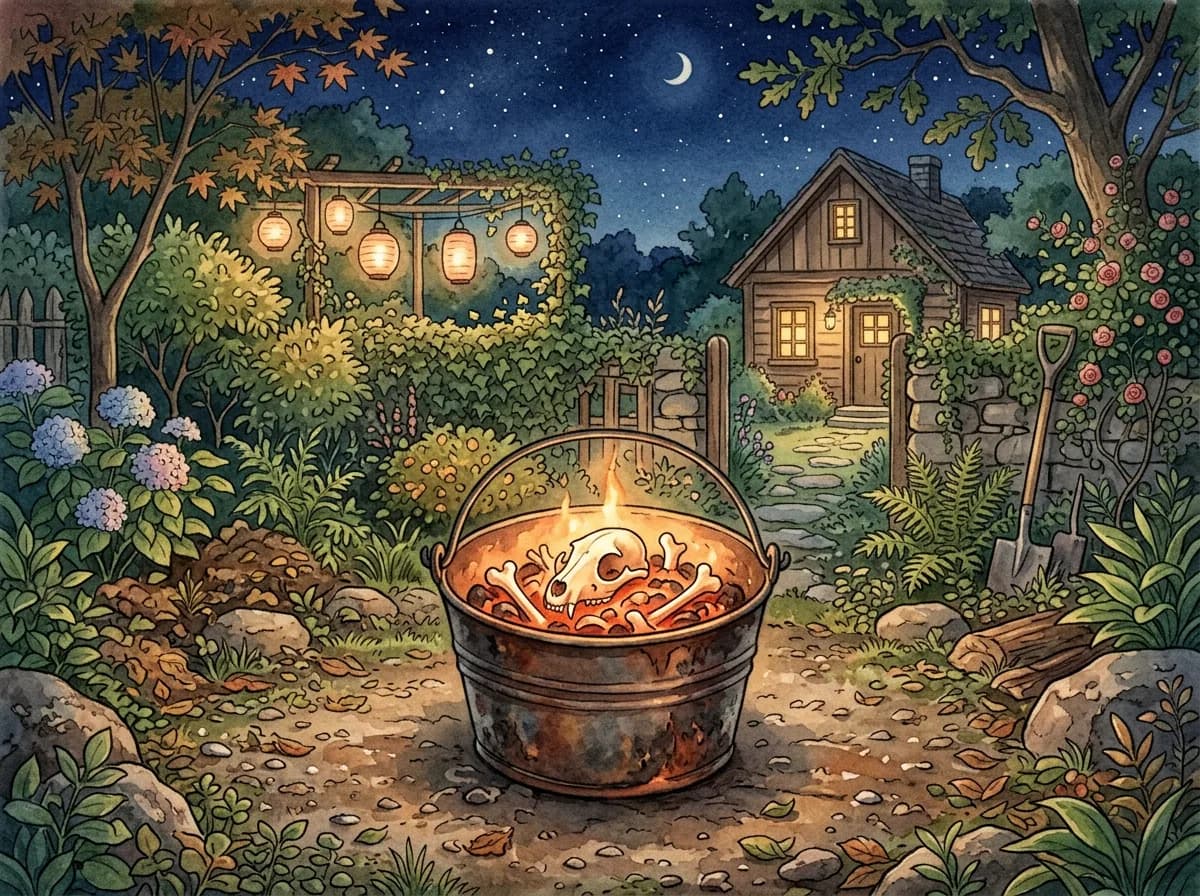
1In an open and permitted place, burn clean bones in a metal bucket over a fire until they are white or grey. Follow the burning regulations of your region.
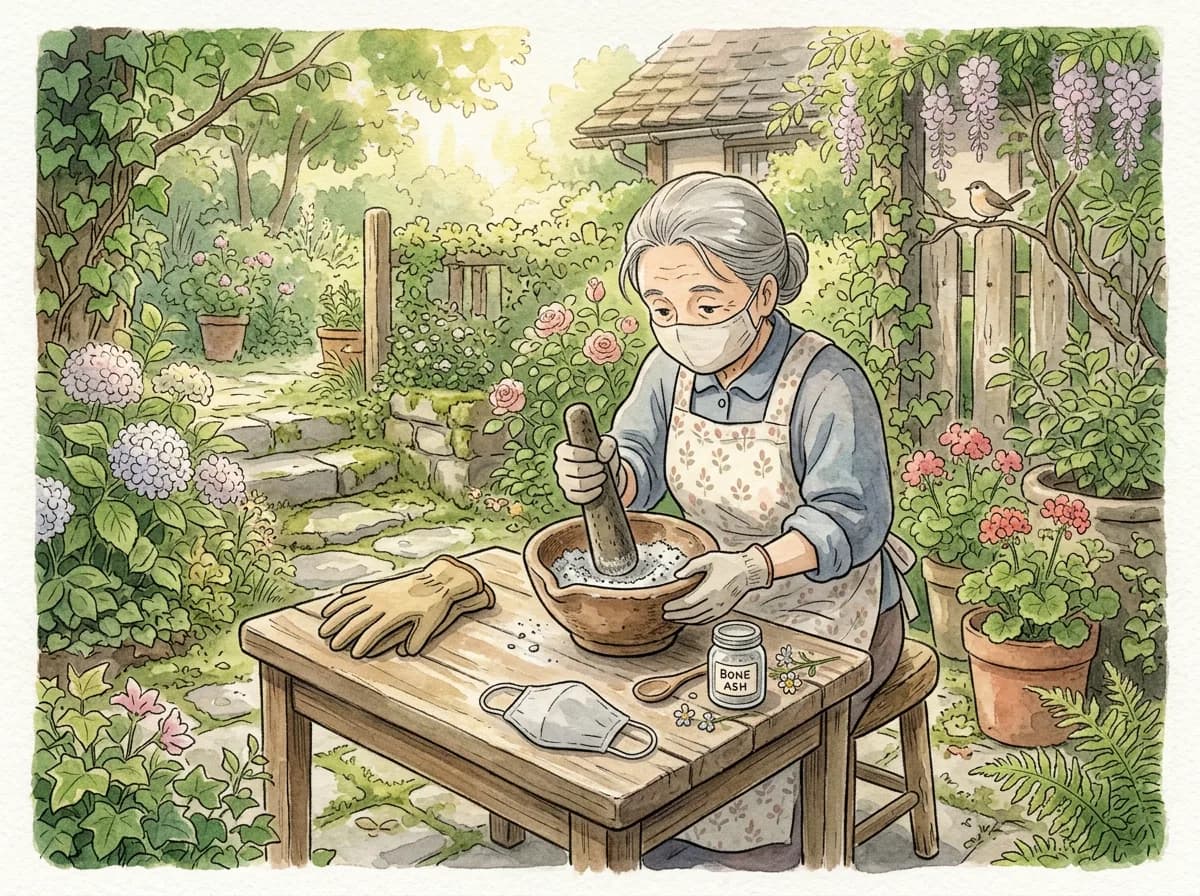
2Let them cool completely. Grind the ash in a mortar wearing a mask and gloves until you get a fine powder.
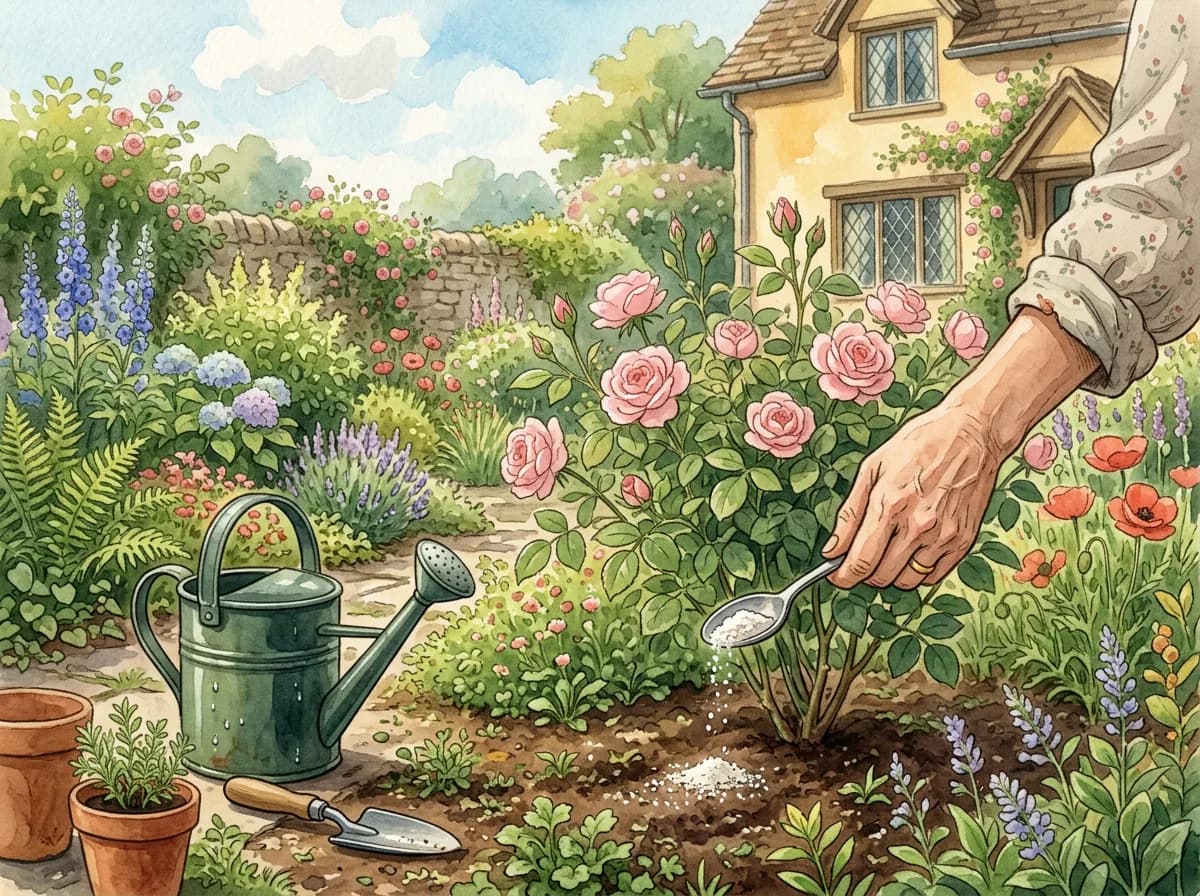
3Sprinkle a small amount around the plant or in the planting hole and mix it with the soil.
Dose
Indicative and cautious dose, with no trial backing: a tablespoon (about 15 g, 0.5 oz) per planting hole, or 20–30 g (0.7–1.1 oz) per square metre, once a year at most, and only with a test that shows a lack of phosphorus.
Which plants
Roses and fruit trees in acid soils poor in phosphorus. Avoid in chalky soils and acid-loving plants.
Precautions
- Burning outdoors is prohibited or restricted in many areas and during fire-risk seasons in Spain: check regional and local regulations.
- It is alkaline: it raises the pH. Do not use it in chalky soils or near acid-loving plants (hydrangeas, blueberries).
- Wear a mask and goggles when grinding it: the dust is irritating.
- Do not burn bones with scraps of meat, fat or treatments: the smoke is unpleasant and bothers neighbours.
Why it works
Calcining removes the organic matter and leaves the mineral of the bone, calcium phosphate, which dissolves slowly (more in acid soils, because of phosphate chemistry). The agronomic effect of homemade ash has not been measured.
Sources
- Trial with bone meal and acidulated meal (Soil Research Journal, Iran): phosphorus is released slowly; there are no trials with homemade ash
- Household practice with no specific verified trial