
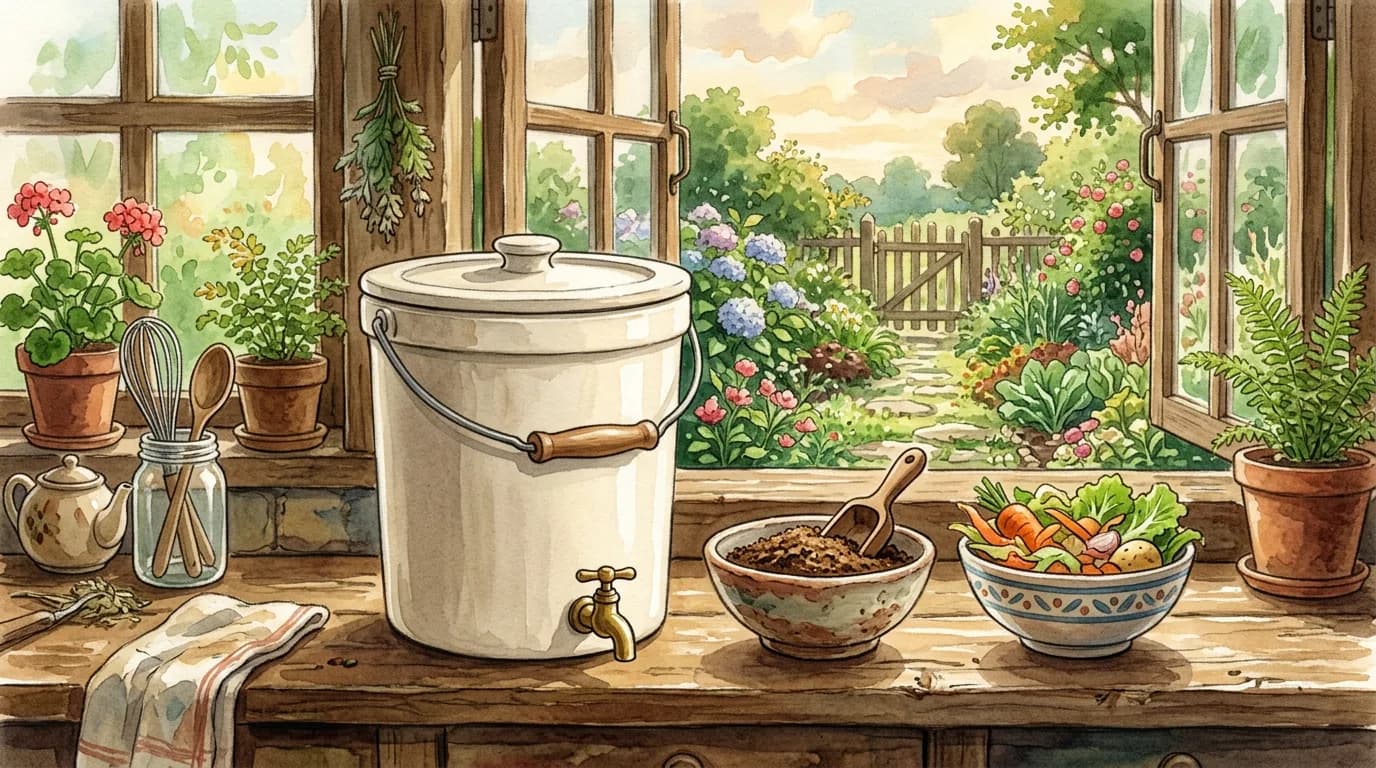
Bokashi: fermenting kitchen scraps
Airless fermentation of kitchen scraps with inoculated bran; afterwards it is buried in the soil or added to the compost.
Works in practice. It is an anaerobic fermentation with inoculated bran, lasting about 2 weeks, that produces a pre-compost (not finished compost) that has to be buried or finished in a compost bin. It accepts almost all food scraps, including cooked food, dairy, meat and small bones.
Before you start, read the precautions
You will need
- kitchen scraps
- inoculated wheat bran (bokashi)
- airtight bucket with a tap
When to use it
All year in the kitchen or on the balcony, for people who have no garden for a classic compost bin. Bury the result in the garden in autumn or two weeks before planting.
Step by step
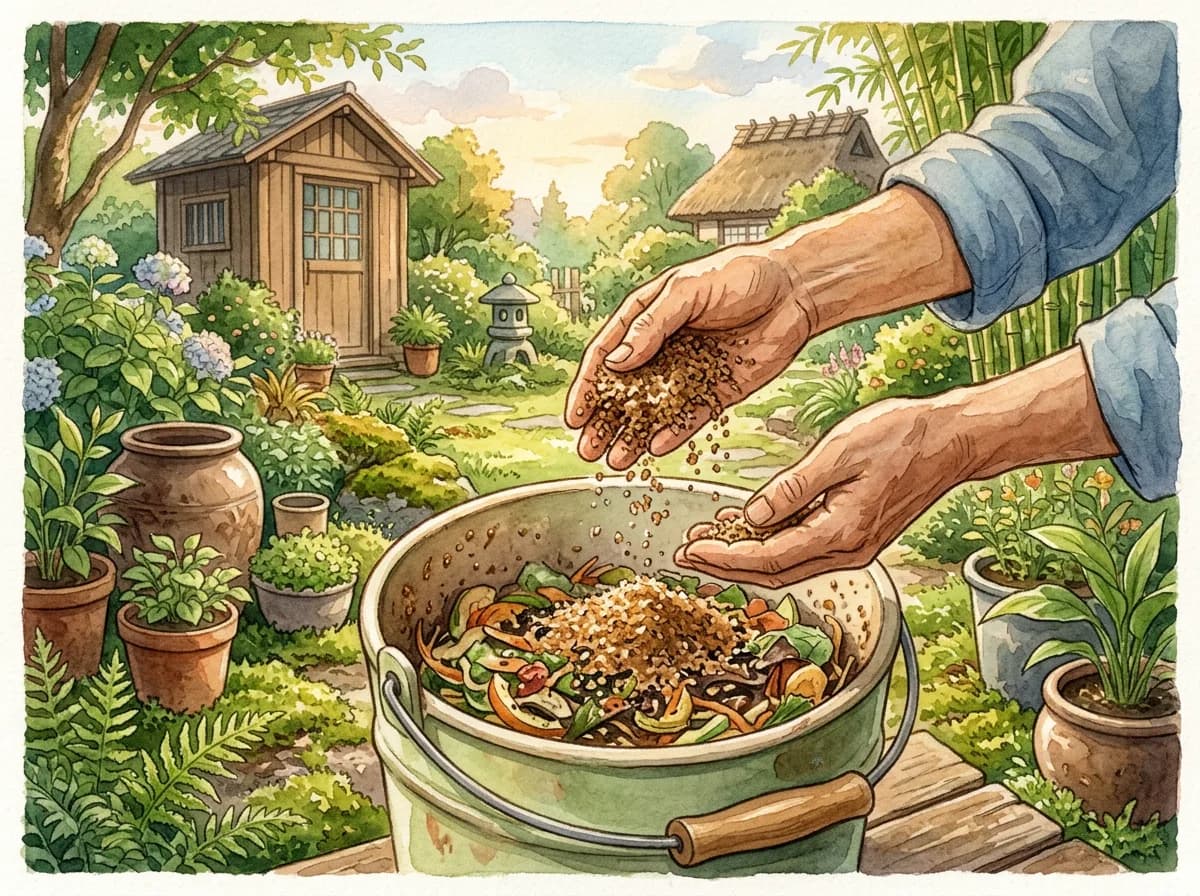
1Put a layer of chopped kitchen scraps in the bucket and sprinkle a handful of bokashi bran over it.
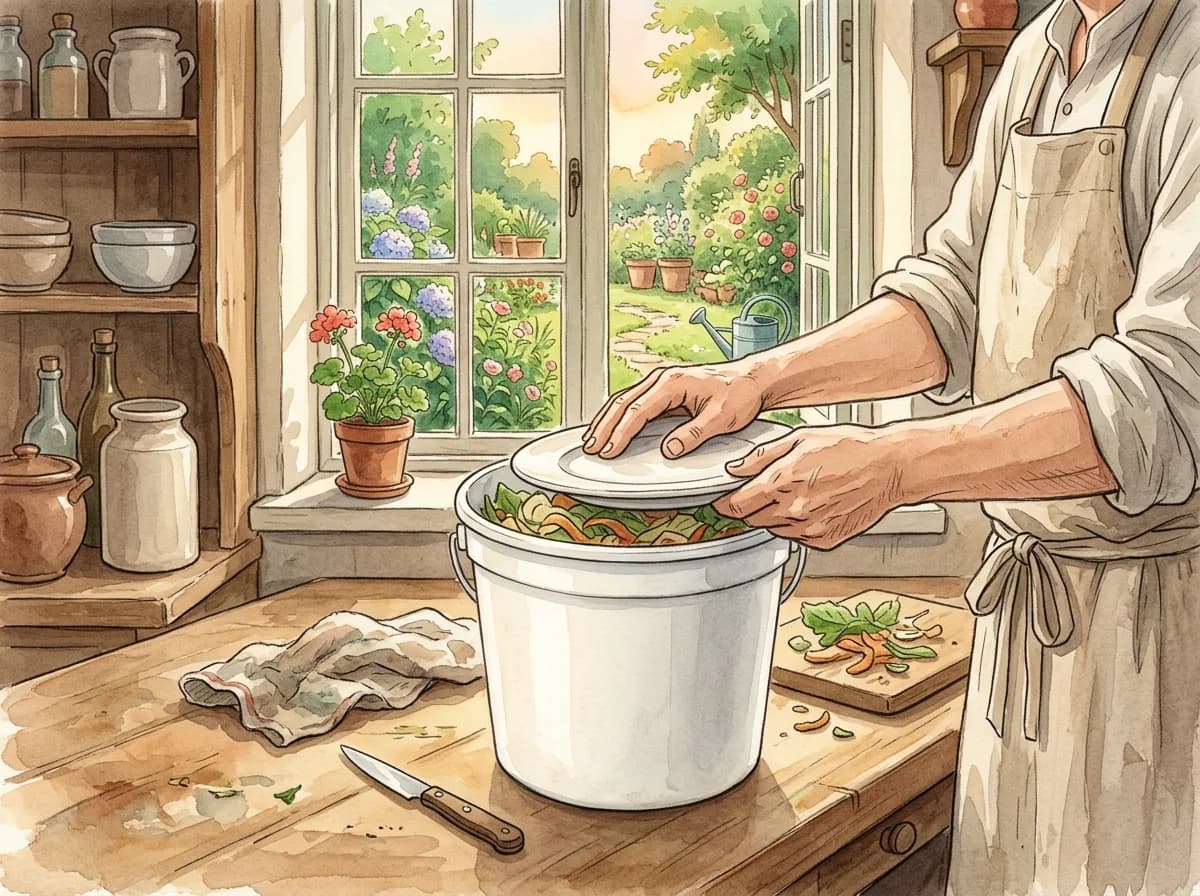
2Press down with a plate to push out the air and close the bucket airtight. Repeat layers until it is full and drain the liquid every 2–3 days.
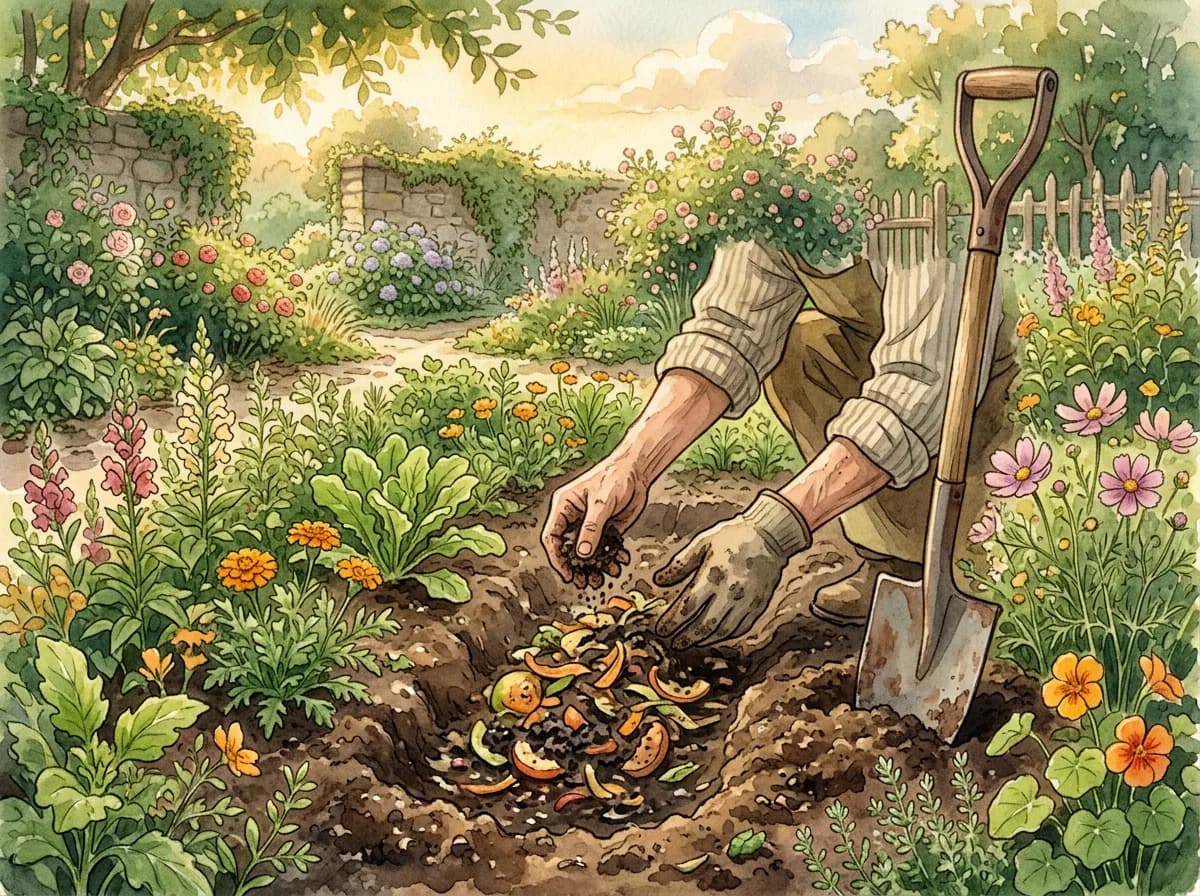
3Leave it to ferment for about 2 weeks (10–14 days) with the bucket closed. Bury the contents (sweet-sour smell) at 20–30 cm (7.9–11.8 in) deep, mixed with 2–3 times their volume of soil, and wait at least 2 weeks in warm soil (3–4 is ideal; more in cold soil or pots) before planting over it.
Dose
A handful of bran per layer (more if smell or mould appear), with no exact figure; the liquid is used diluted (there is no standard ratio; 1:100 is a usual practical rule, indicative).
Which plants
Vegetables and fruit trees, once the material is mixed into the soil and 2–4 weeks have passed.
Precautions
- Do not put the fermented material directly in contact with roots or seeds: it is very acid and can scorch them.
- Avoid soups, sauces and free liquids and do not use scraps with mould: a green-black mould is a sign of failure.
- The liquid that drains off is very acid; do not use it undiluted or pour it onto the soil just like that.
- The closed bucket in the kitchen should not smell rotten: if it smells rotten, something has gone wrong.
Why it works
In the absence of air, the micro-organisms inoculated in the bran ferment the sugars and lower the pH to 4 or less, which preserves the scraps and prevents putrefaction. When buried, soil microbes finish the breakdown.
Sources
- Washington State University Extension (Kitsap): Bokashi composting