
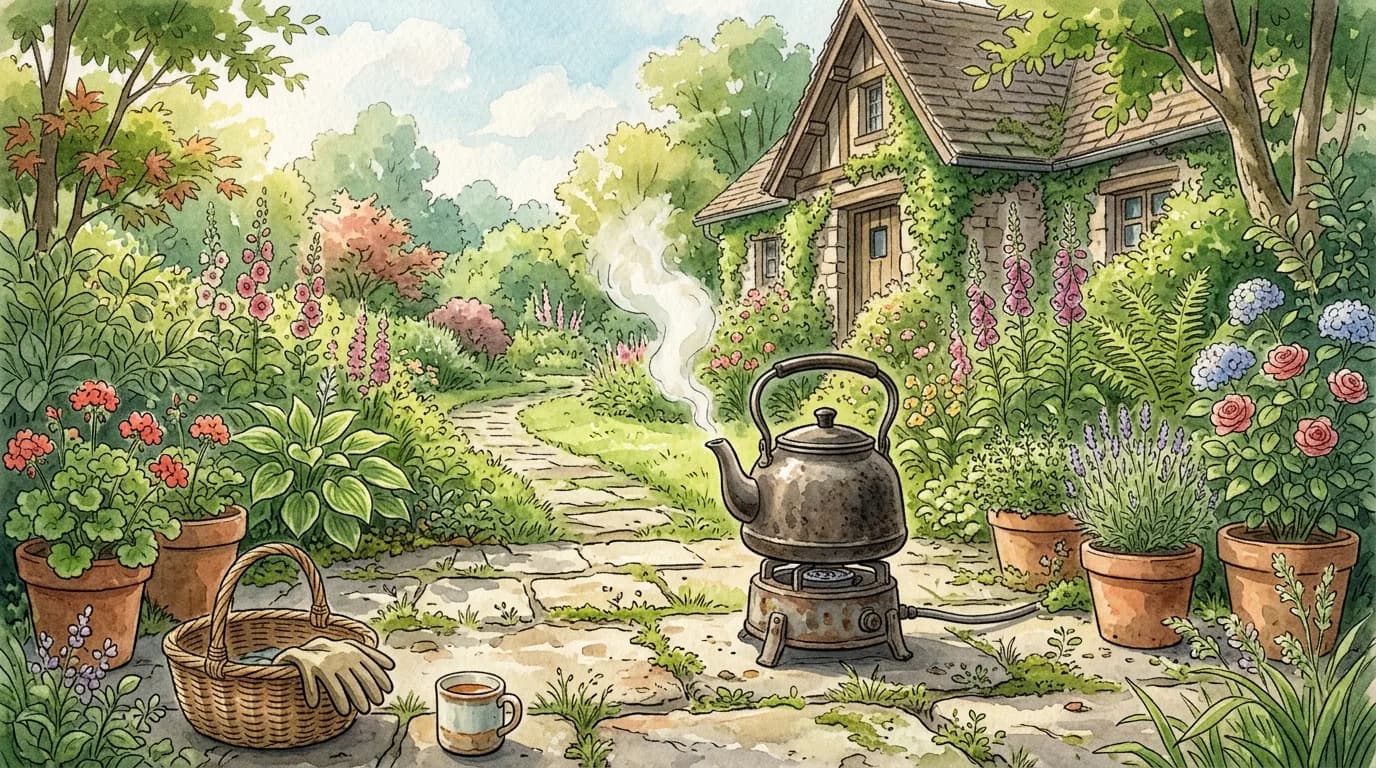
Boiling water for weeds in joints and paving
Pouring freshly boiled water over the weeds in gaps in paving: cheap, residue-free and effective on small ones.
Works in practice. It destroys the top growth of young weeds in paving; it may not reach the root of deep-rooted plants such as dandelion. It has to be repeated and it is not selective.
Before you start, read the precautions
You will need
- boiling water
- kettle
- thick gloves
- scraper
When to use it
In spring and summer, on small weeds in joints of a terrace, patio or paths, away from the roots of plants you want to keep.
Step by step
1Heat the water in a kettle (you can use the water from cooking pasta or vegetables without salt). Carry it to the spot wearing closed shoes and thick gloves.
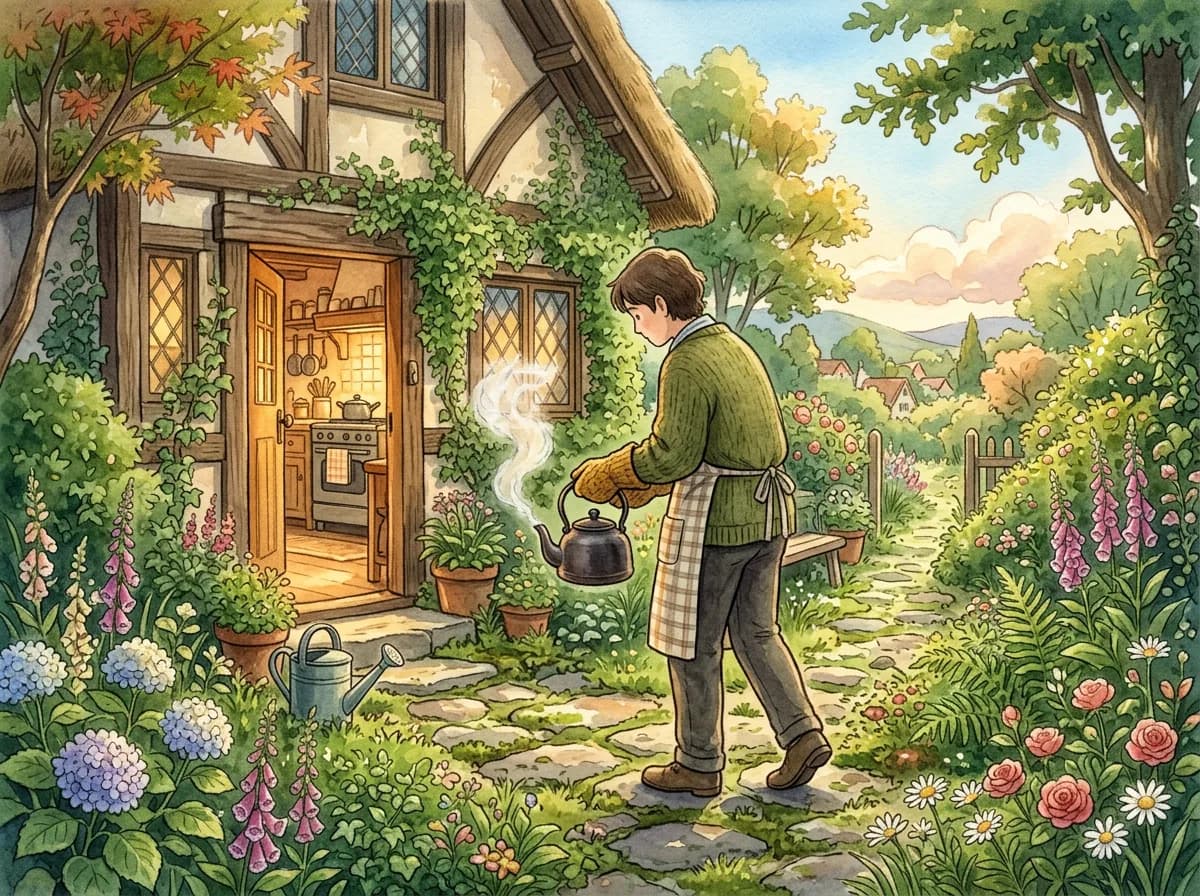
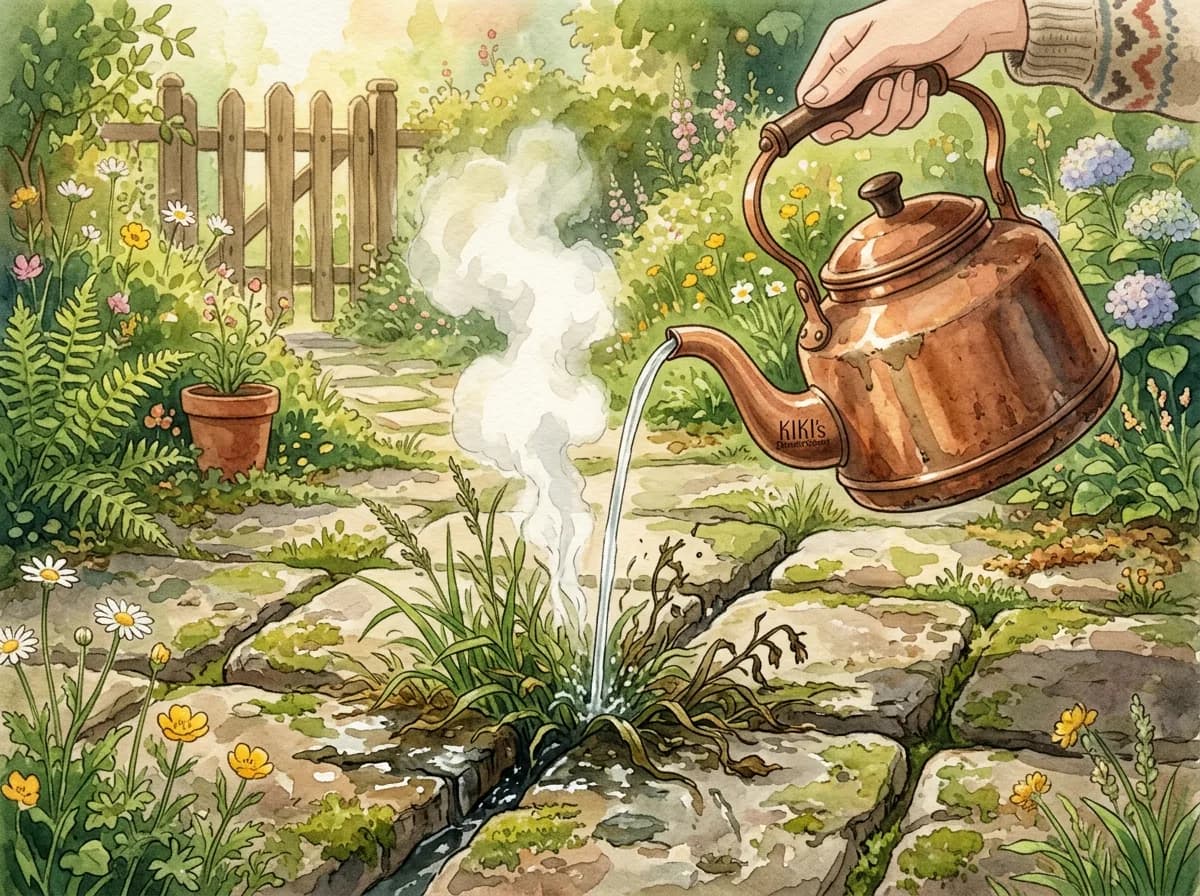
2Pour the water slowly straight onto the base of each weed, soaking the joint well. You will see them wilt within minutes.
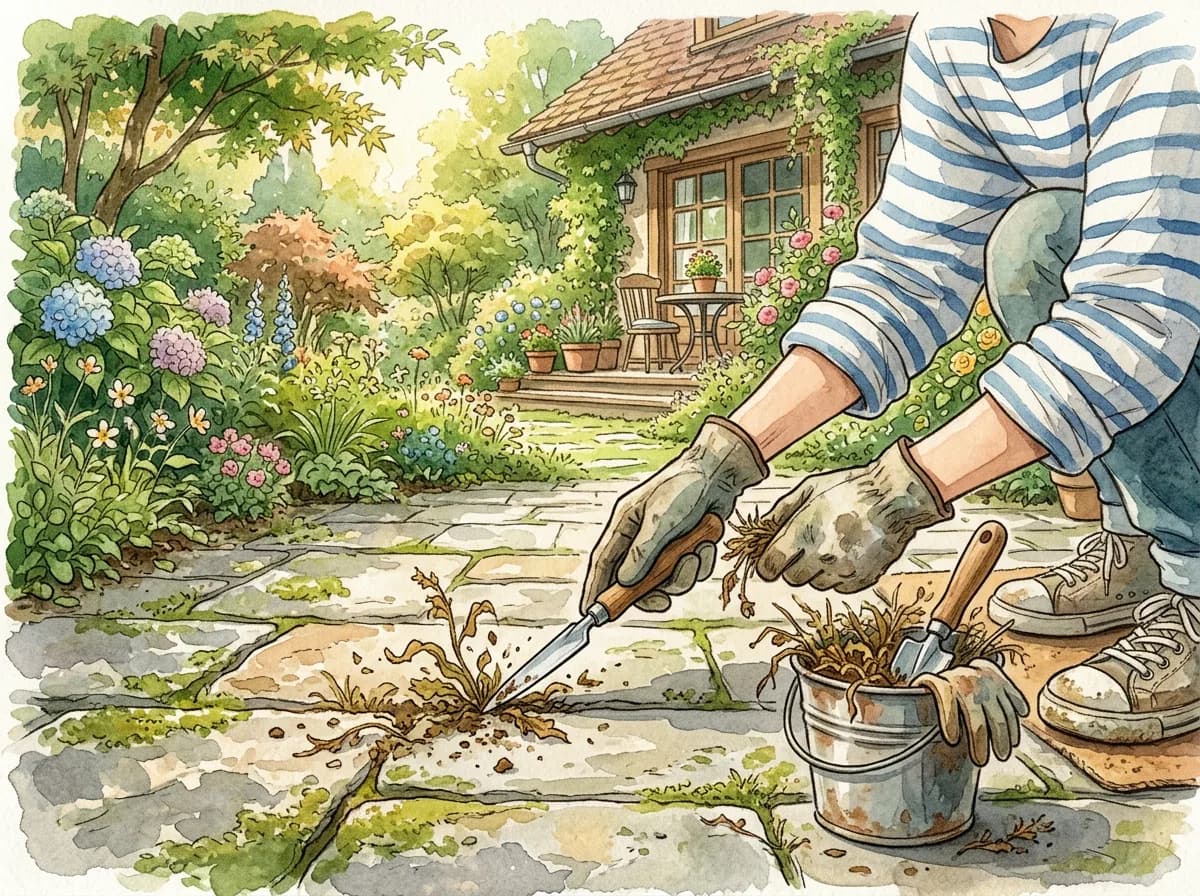
3After 2–3 days remove the dry material with a joint scraper and fill with sand if you want to stop them sprouting again.
4Repeat every 2–3 weeks on those that regrow.
Dose
As a guide, with no figures in the sources: about 250–500 ml (8.5–16.9 fl oz) of freshly boiled water per small clump. Repeat on those that regrow, at intervals of 10–15 days.
Which plants
Annual weeds and seedlings in paving. On deep-rooted perennials (dandelion, couch grass) it only delays regrowth.
Plants mentioned in this remedy

Precautions
- Risk of serious scalds: wear closed shoes and keep children and pets away.
- It damages the surface roots of any nearby plant: do not use it within 20–30 cm (7.9–11.8 in) of plants you want.
- Do not pour it near trees or potted shrubs.
- Not suitable on very delicate natural stone or on paint.
- Do not use salted cooking water: sodium also harms the soil.
Why it works
Heat breaks the cells and membranes of the leaves and surface roots; the plant dehydrates instantly. It leaves no residue in the soil.
Sources
- Gardeners' World: “The truth about weed control”, citing the Royal Horticultural Society chief horticulturist; boiling water destroys the top growth but may not reach deep roots (search summary only; premium article)