
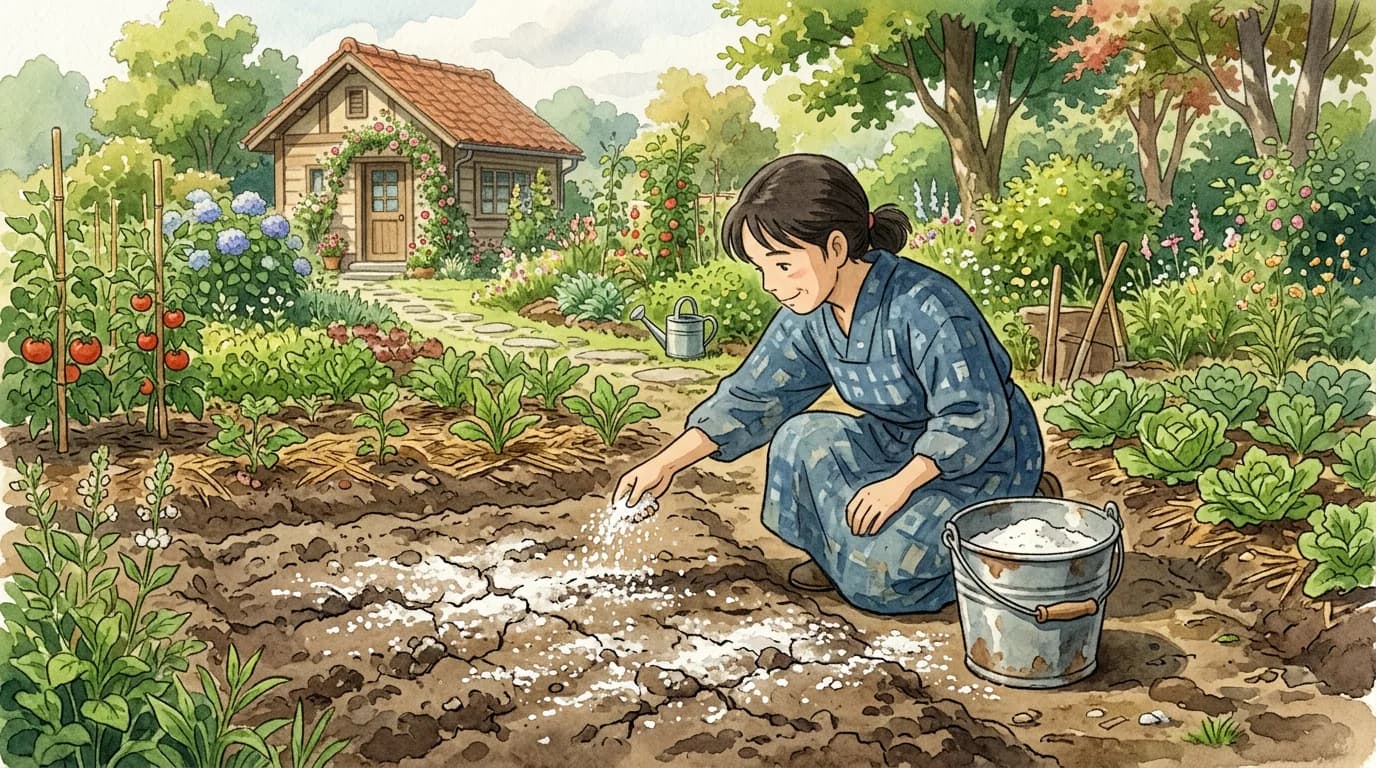
Agricultural gypsum for sodic and compacted soils
Gypsum (calcium sulphate) supplies calcium and sulphur and is used to recover soils with excess sodium; it does not lower the pH.
Well established. It is a classic agronomic practice for sodic soils (ESP ≥ 15 %): calcium displaces sodium, which is washed away by irrigation. In normal soils it is barely noticeable, and it does not change the pH.
Before you start, read the precautions
You will need
- agricultural gypsum
- plenty of irrigation water
When to use it
In soils with a surface crust, waterlogging and dispersed structure (typical of the Ebro valley, the Guadalquivir, Murcia or areas with saline irrigation water), ideally after an analysis with sodium and conductivity.
Step by step
1Have the soil or the water analysed: look for sodium that is high relative to calcium and magnesium. With that diagnosis, buy agricultural gypsum (calcium sulphate) in a sack; without it, it will not do much for you.
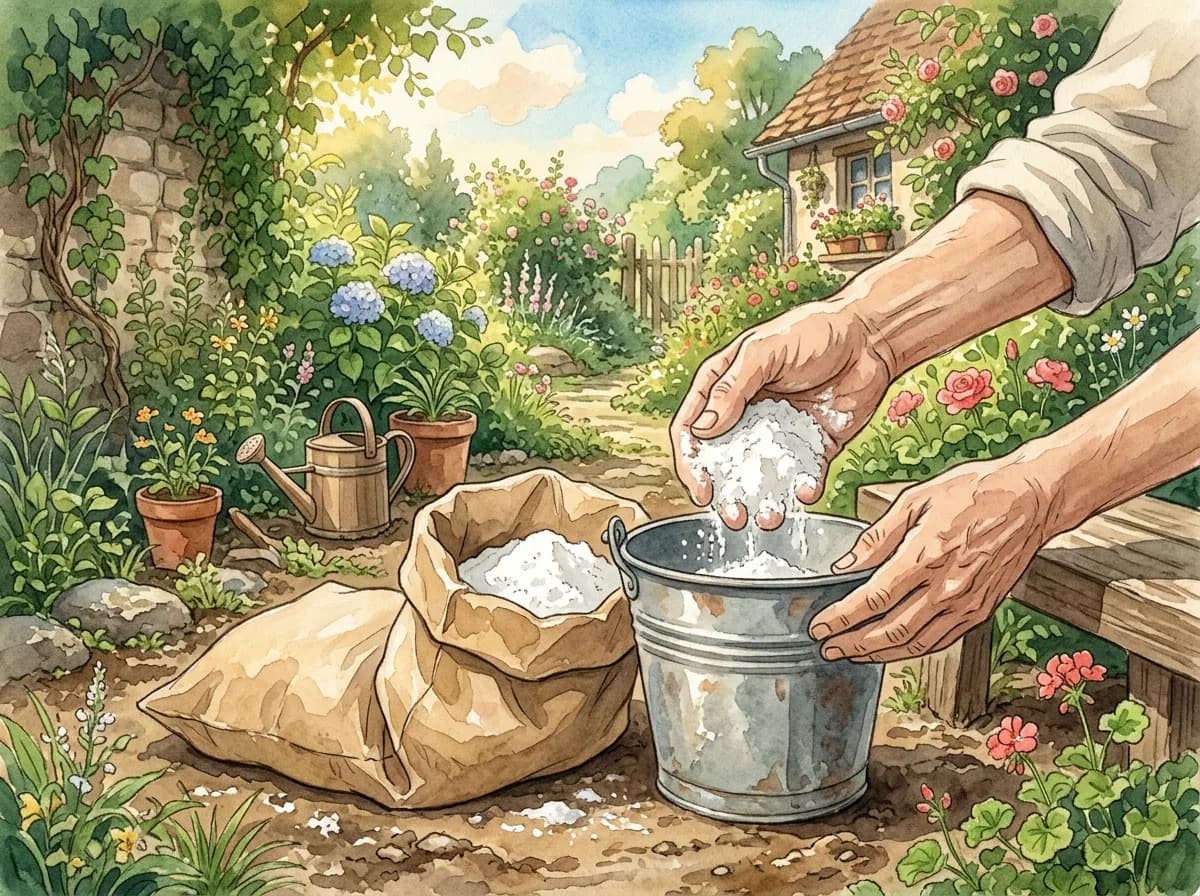
2Spread the powdered or granulated gypsum evenly over the bed, with the soil slightly moist and no wind.
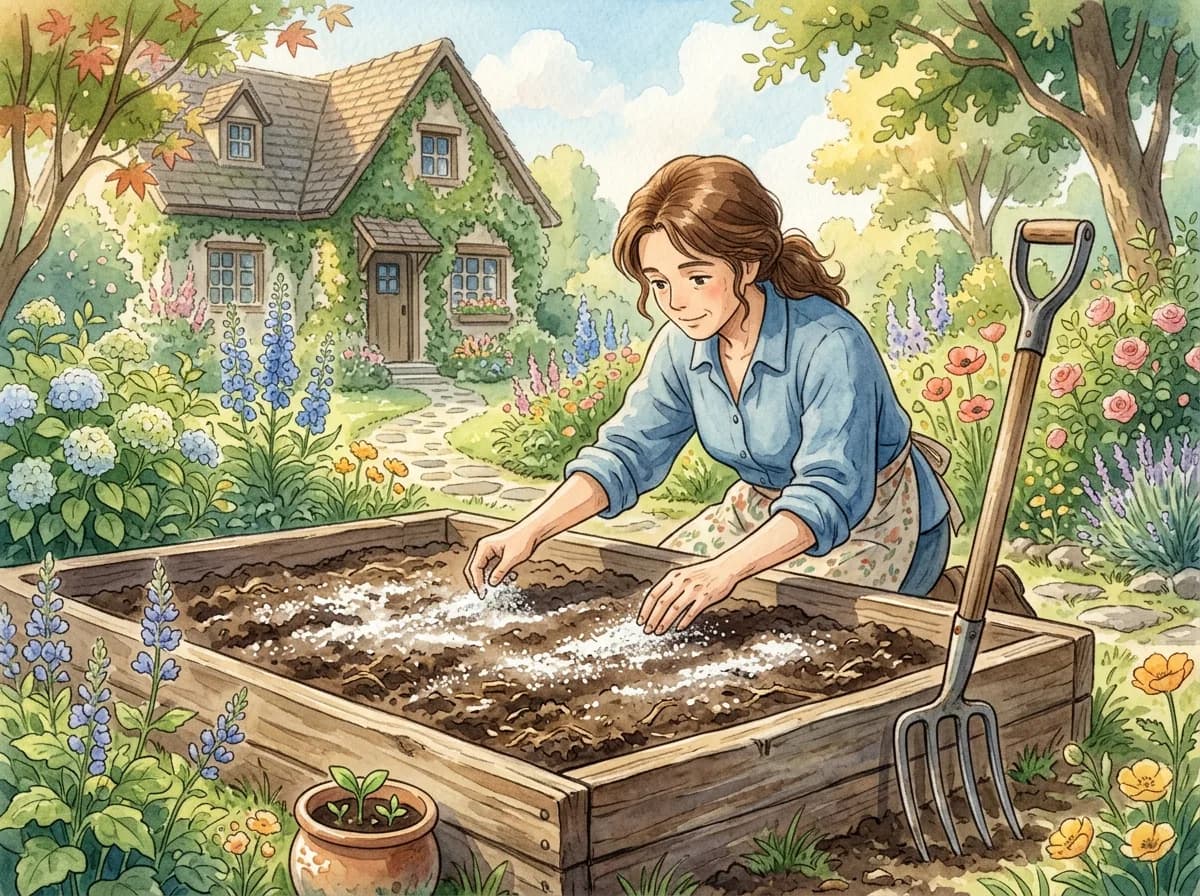
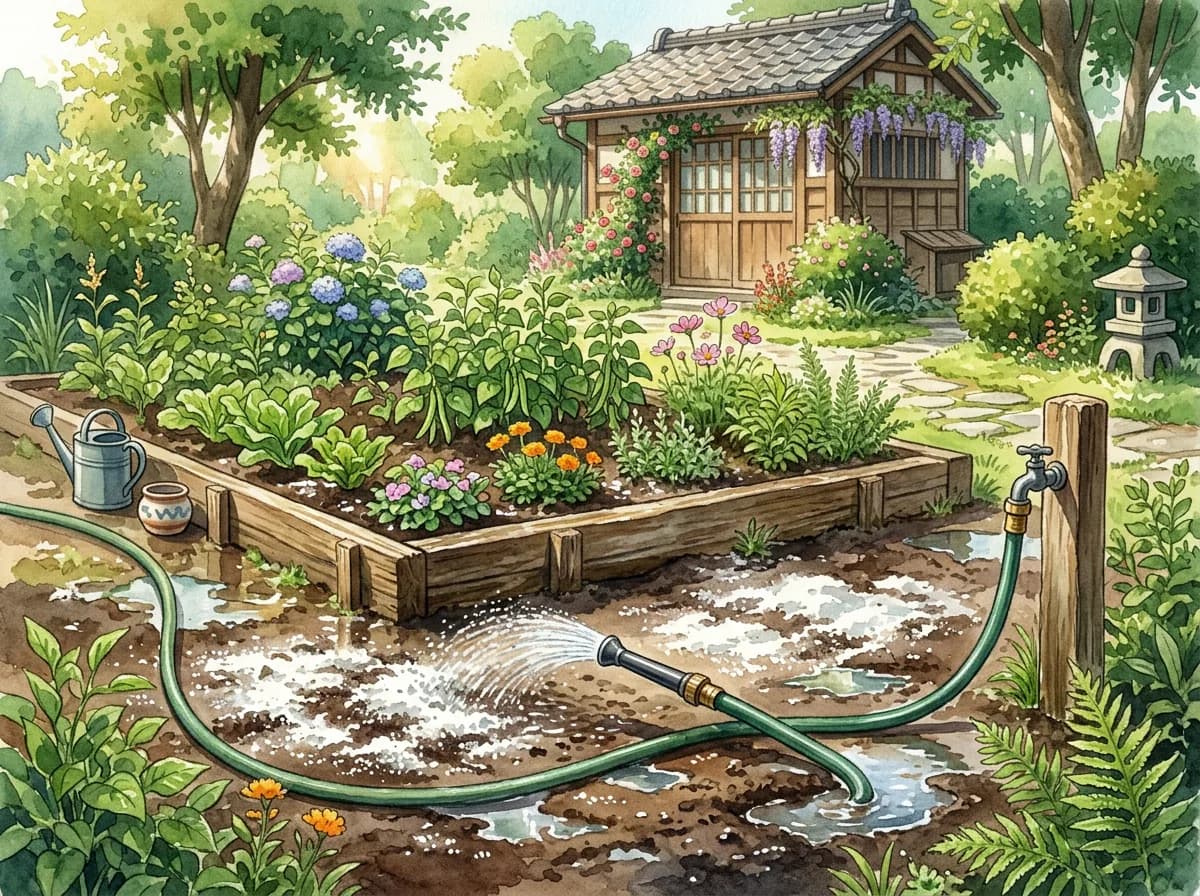
3Mix it in shallowly (5–10 cm, 2–3.9 in) and water abundantly to wash the sodium downwards. There must be good drainage.
Dose
It depends on the analysis (percentage of exchangeable sodium, ESP ≥ 15 % indicates sodic soil, and on the texture). As a very rough figure, 100–250 g/m² a year; the technician or the laboratory will indicate the real dose, which in very sodic soils can be considerably higher. Split the dose into two applications (autumn and early summer).
Which plants
All vegetables in sodic soils. Not needed in soils that are already rich in calcium and have no sodium.
Precautions
- It does not lower or raise the pH to any relevant degree: this is a widespread myth; it does not replace lime in acid soils.
- Without drainage or abundant irrigation, the displaced sodium stays in the root zone.
- Avoid inhaling the dust (mask) and do not overuse it: it adds nothing else either.
- It is no use in normal clay soils with little sodium; there what helps is organic matter.
Why it works
The calcium in gypsum displaces the sodium from clays, which group into stable aggregates instead of dispersing. The sodium leaves as soluble sodium sulphate with the wash water and the soil recovers pores and permeability.
Sources
- Government of British Columbia: Gypsum as a soil amendment (technical sheet)
- University of Arizona: Gypsum and sodic soils (Turf Tips)