
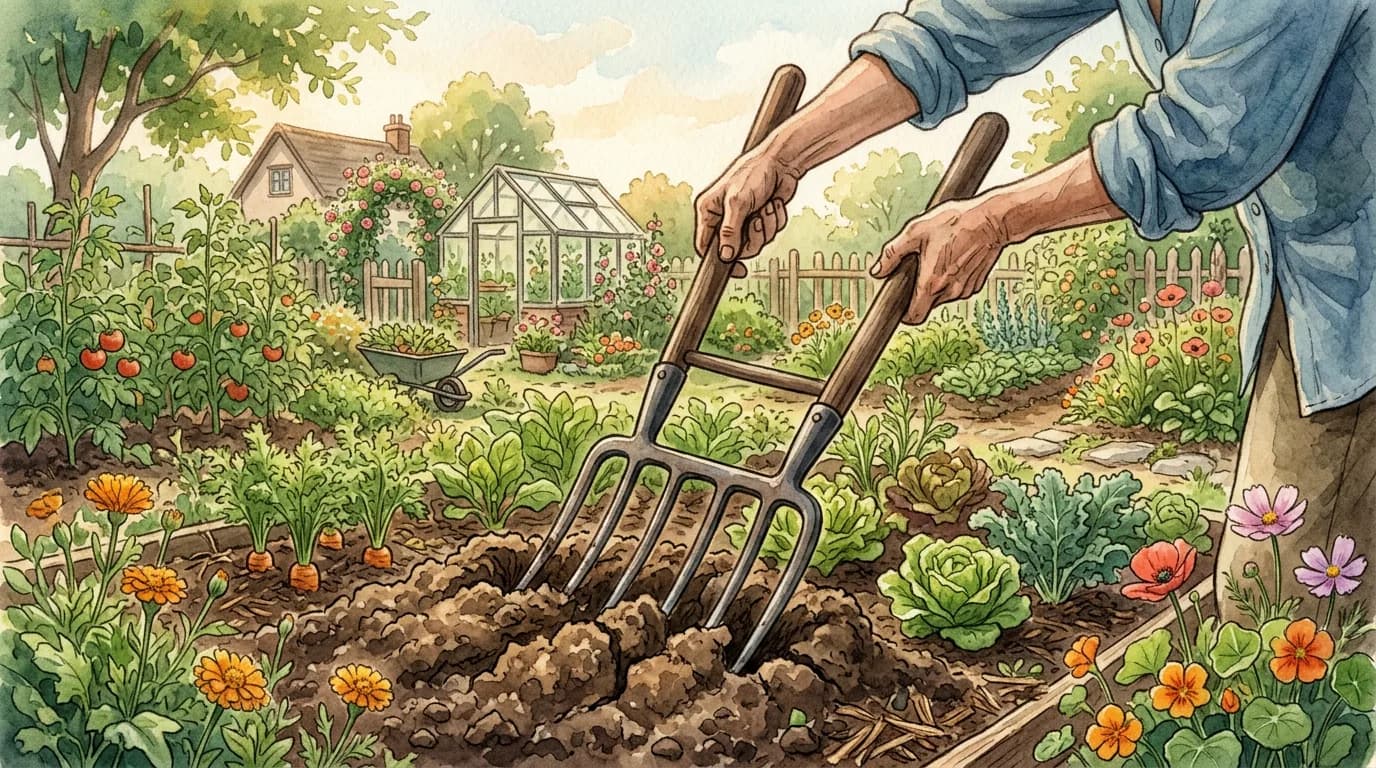
Aerating with a fork or double-handled broadfork
Pushing in the fork and rocking it without turning the soil loosens compacted clods and preserves the structure and life of the soil.
Works in practice. It is a way of reducing compaction without breaking the soil aggregates. We have not found trials that measure its effect on harvest compared with just adding organic matter, and some “no-dig” gardeners consider it unnecessary if the soil is fed with compost.
Before you start, read the precautions
You will need
- double-handled broadfork or garden fork
When to use it
With the soil moist but not wet, at the end of winter or in autumn, or between crops, on beds compacted by footsteps or rain.
Step by step
1Check that the soil is moist but not soaked. Push the fork in vertically, pressing with your foot until the tines sink in.
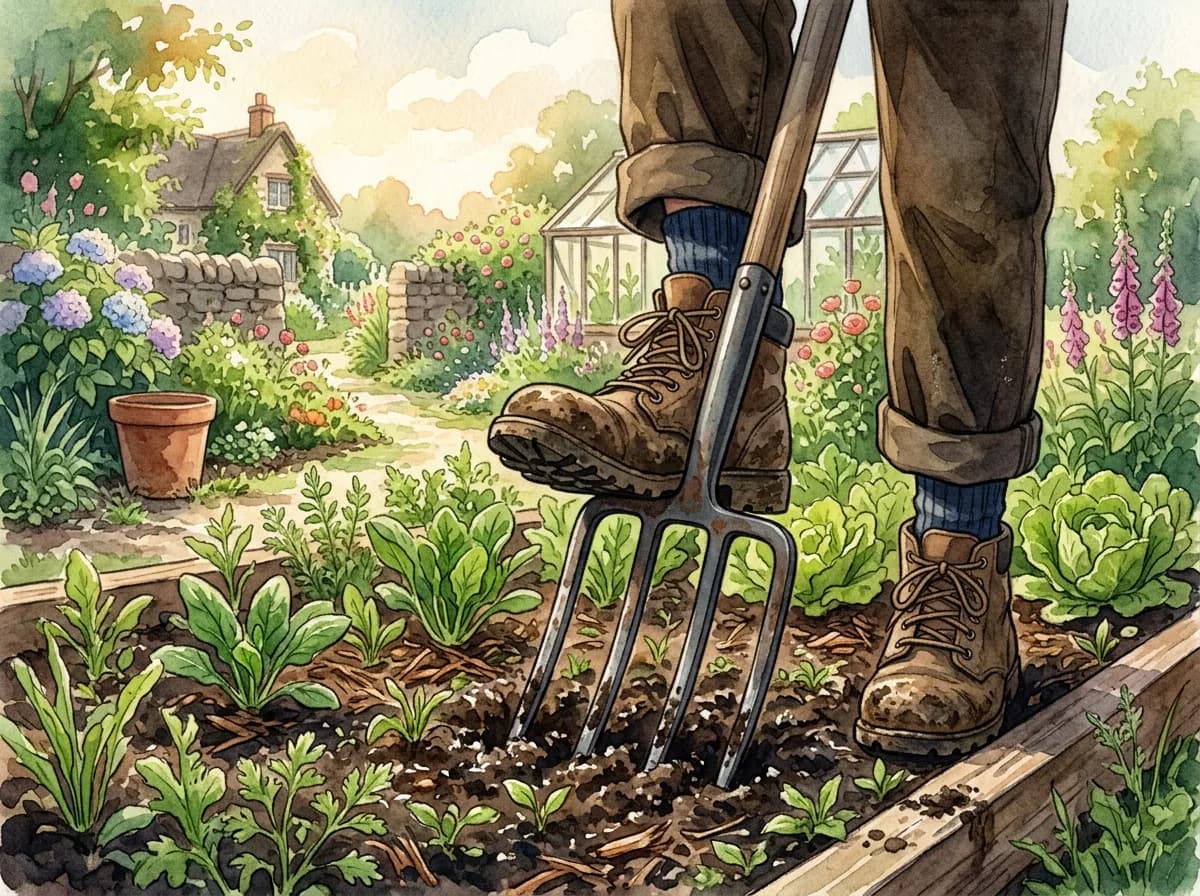
2Pull the handle back to lift and crack the soil without turning it over.
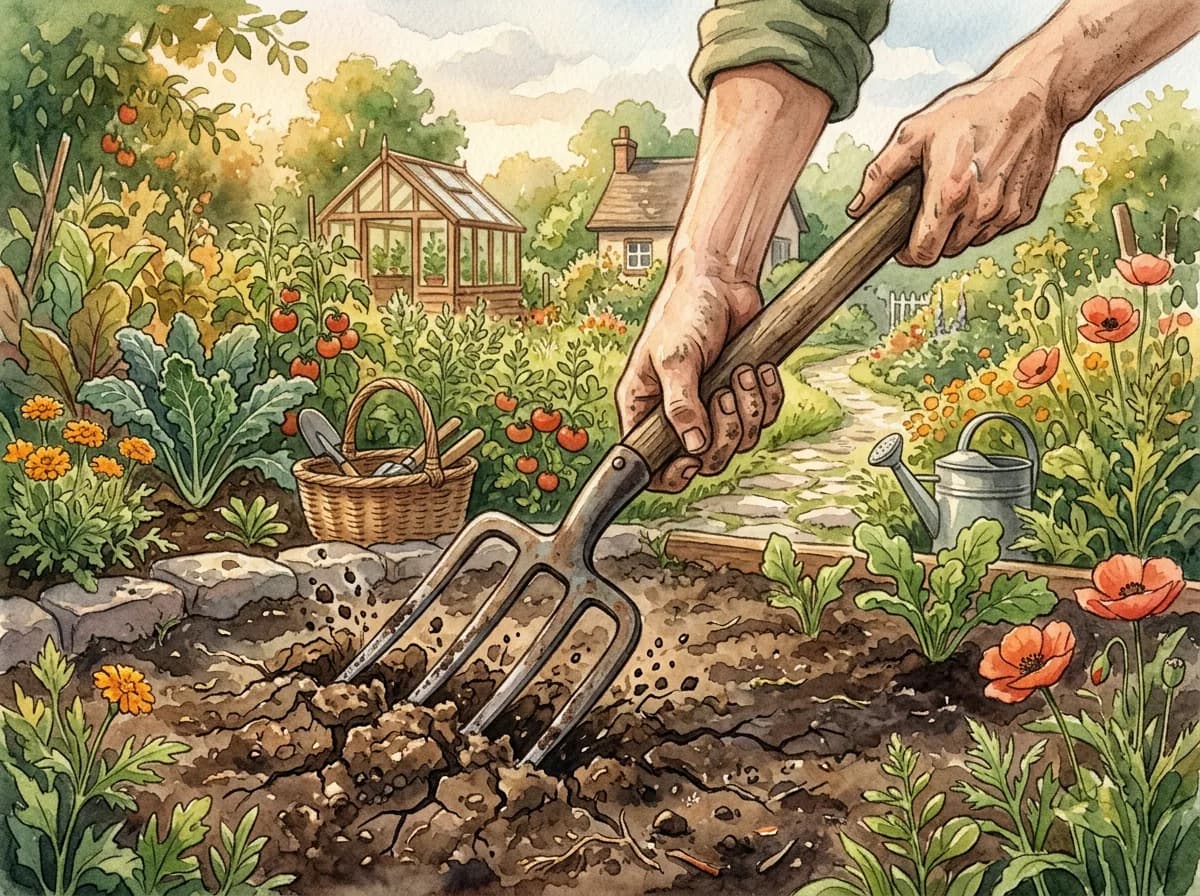
3Step back a spade's length and repeat in a line every 15–20 cm (5.9–7.9 in). Finish with the bed fluffy and add compost on top.
Dose
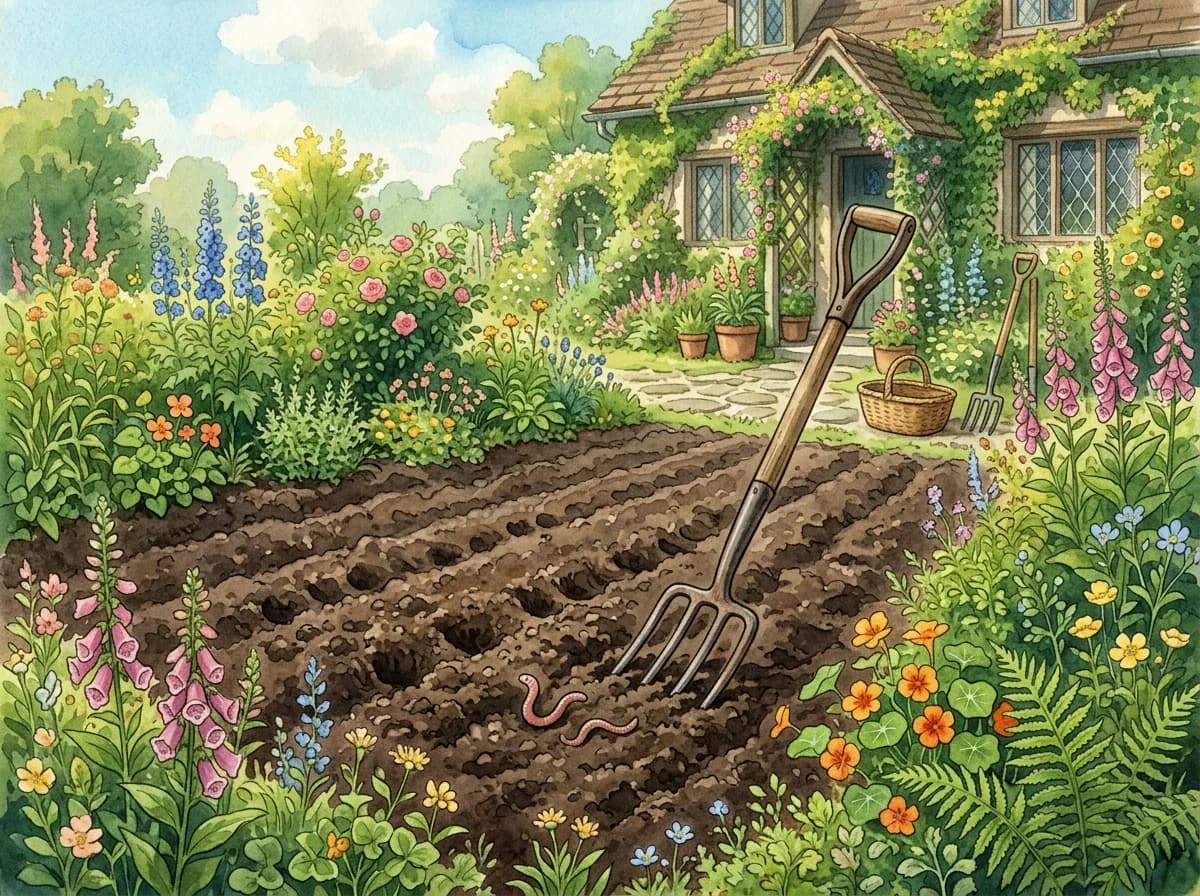
One pass per bed when needed (every 1–3 years or when starting the garden); do not repeat every season if the soil is in good shape.
Which plants
Deep-rooted vegetables, tomato, pumpkin and young fruit trees. Do not walk over seeds that have already been sown.
Plants mentioned in this remedy
 Tomato 'Marmande'Marmande tomato, flattened and ribbed, a good size for salads.
 Butternut squashButternut squash: elongated, sweet and long-keeping.
Precautions
- Do not work with wet soil: it packs down more.
- Do not turn deep layers: you disturb worms and fungi.
- Mind your back: keep an upright posture and let weight and legs do the work.
- If there is a deep hard layer (plough pan), it may need other solutions.
Why it works
By lifting and cracking the soil without inverting it, compacted layers are broken up, air and water get in and roots can go down, but the natural layering with its micro-organisms is maintained.
Sources
- University of Minnesota (Extension): the double-handled broadfork as a tool for reducing compaction without breaking aggregates
- Charles Dowding (forum): debate on the need for the broadfork in no-dig beds; not an extension source