
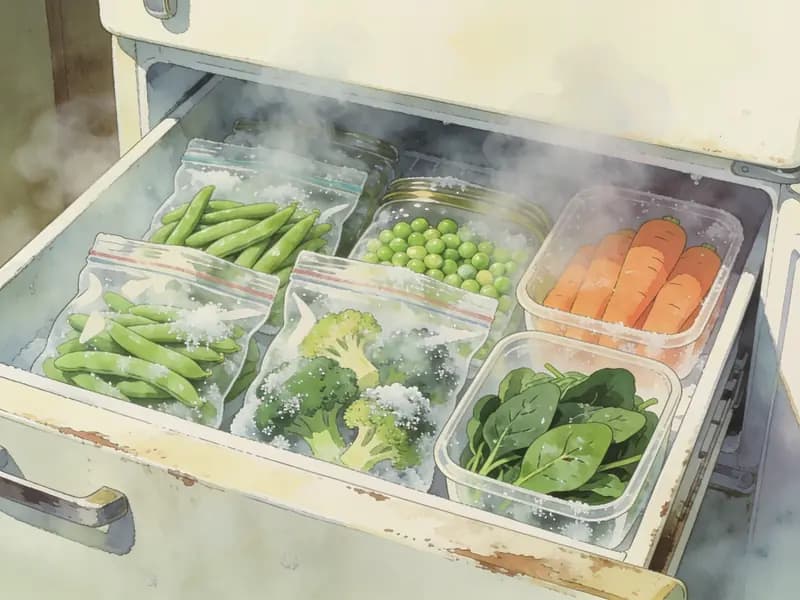
Freezing
Freezing vegetables (blanching first)
Blanching means boiling the vegetables for a few minutes and then cooling them straight away in iced water. This deactivates the enzymes that break the vegetables down during freezing; without this step, they lose colour, flavour and texture within a few weeks.
Very easy Keeps ~12 months
When to use it
When the harvest overwhelms you and you won't eat it within 3-4 days.
What you will need
- Large pan of boiling water
- Bowl of very cold water and ice
- Freezer bags or containers
Works well with
green beanspeasbroccolicauliflowercourgette (US zucchini)chardspinachsweetcornpepperasparagus
General process
- 1Wash the vegetables and cut them into pieces of the same size.
- 2Plunge them into plenty of boiling water for the appropriate time. As a guide: peas and leafy vegetables (chard, spinach), 1.5-2 minutes; green beans, broccoli, cauliflower, courgette and pepper in pieces, about 3 minutes; asparagus, 2 to 4 minutes depending on thickness; sweetcorn kernels, 4 minutes.
- 3Take them out and plunge them straight into iced water, for the same length of time that you blanched them.
- 4Drain and dry very well.
- 5Pack them in flat portions, pressing the air out of the bag.
- 6Label with the date and contents.
- 7When using them, cook them straight from frozen, without thawing first.
Worked example: Blanched and frozen green beans
Ingredients
- 1 kg (2.2 lb) green beans
Steps
- Top and tail and cut up.
- Bring plenty of water to the boil.
- Blanch them for 3 minutes.
- Drain and transfer to iced water.
- Drain and dry with a cloth.
- Freeze in flat bags in portions.
Food safety (important)
- Most vegetables can be frozen without blanching, but they lose colour, flavour and texture within a few weeks. Blanching is not a matter of safety, but of quality.
- Don't refreeze vegetables that have already thawed: they lose texture and, if they have been at room temperature, the microbiological risk increases.
- The freezer must be at -18 °C or colder.
- Freeze in flat bags: they take up less space, thaw sooner and are easier to portion.
Common mistakes
- If you blanch too little, the enzymes stay active and the vegetables lose colour, texture and vitamins when frozen.
- If you blanch too much, the vegetables turn soft when thawed; stick to the minutes for each type of piece.
Golden rule: if in doubt, throw it out. A suspicious jar is worth less than food poisoning. Once you have mastered one method, you will see the pantry fill itself and you will eat from your garden all year round.
Explore all the methods
Pickles, fermenting, jams, boiling water bath, oils, drying and freezing.