
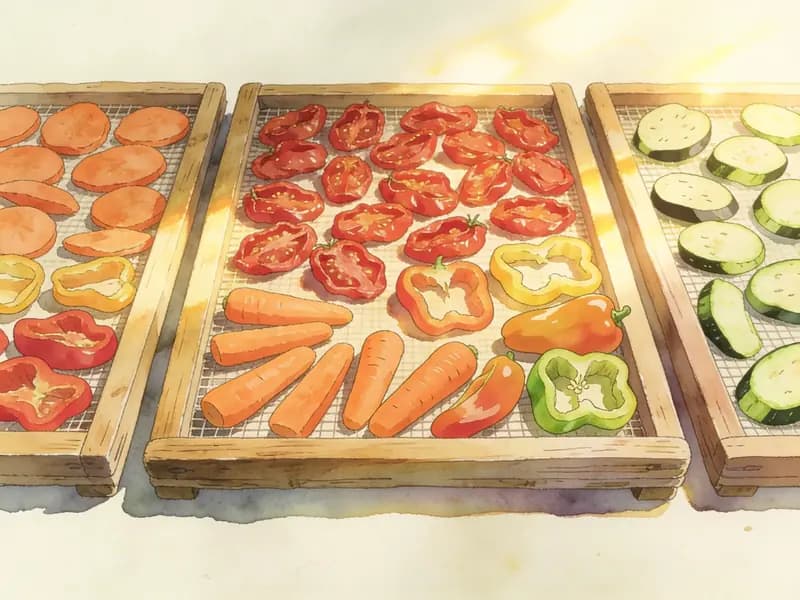
Drying
Drying (oven or sun)
It is one of the oldest methods and needs no salt, sugar or preservatives. You can do it in the sun (only in warm, dry climates), in the oven (at 60-70 °C, 140–158 °F with the door slightly open) or with an electric dehydrator, which gives more control.
Very easy Keeps ~12 months
When to use it
Herbs when they start to flower, ripe cherry tomatoes, chillies, slices of apple or pear, and mushrooms, as long as you are sure of the species.
What you will need
- Tray or rack
- Oven or dehydrator (or simply dry sun and air)
- Baking paper
- Airtight jars or bags to store the product
Works well with
tomato (cherry or plum)oreganorosemarythymebasilmintapplepearmushroomchilli
General process
- 1Wash and dry the produce well.
- 2Cut thin slices (3 to 6 mm, 0.12–0.24 in for fruit and vegetables; the leaves of herbs, whole).
- 3Arrange them spaced apart on the tray.
- 4In the oven, at the lowest possible temperature (60-70 °C, 140–158 °F) and with the door slightly open, for 6 to 12 hours depending on the product and thickness.
- 5In the sun: in a spot with a breeze, and covered with fine muslin to keep insects off.
- 6They are ready when they snap when bent (herbs) or are as flexible as leather, with no moisture when squeezed (fruit and tomatoes). Herbs also dry well hung in bunches, in the shade in a ventilated place, for 1-2 weeks.
- 7Store them in airtight jars, in a dark, cool place.
Worked example: Dried cherry tomatoes
Ingredients
- 500 g (17.6 oz) cherry tomatoes
- Salt
- Optional: dried oregano or thyme for flavour
Steps
- Cut the tomatoes in half and dry the insides with kitchen paper.
- Place them cut-side up on a tray lined with baking paper.
- Sprinkle them lightly with salt.
- Bake them at 60-70 °C (140–158 °F) with the door slightly open, for 6 to 12 hours depending on size.
- They are ready when they are like raisins: flexible but with no moisture when squeezed.
- Store them in an airtight, dry jar. If you want them in oil, follow the rules in the guide “Preserving in oil”: fridge and only a few days.
Food safety (important)
- If you dry in the sun, always bring the produce in at night: the dew rehydrates it and encourages mould.
- Store it only when it is completely cool and dry: if you close it while warm, it sweats and moisture appears.
- If mould appears in the jar, throw away the entire contents.
- Check the jar over the first few days: if you see condensation on the glass, the produce was not dry enough and needs drying again.
- Mushrooms: dry only those you identify with complete certainty (if in doubt, consult an expert or a mycological society). Drying does not remove toxins or replace cooking: cook them thoroughly before eating.
Golden rule: if in doubt, throw it out. A suspicious jar is worth less than food poisoning. Once you have mastered one method, you will see the pantry fill itself and you will eat from your garden all year round.
Explore all the methods
Pickles, fermenting, jams, boiling water bath, oils, drying and freezing.