Citronella essential oil with a home still
Also known as: homemade essential oil, essential oil distillation, citronella oil, citronella essential oil, steam distillation at home, home still essential oil
How to get real essential oil at home: you need a still (copper or steel) and quite a lot of plant material. Honest yields: ~5-15 ml (0.17–0.51 fl oz) of essential oil per kilo of fresh citronella.
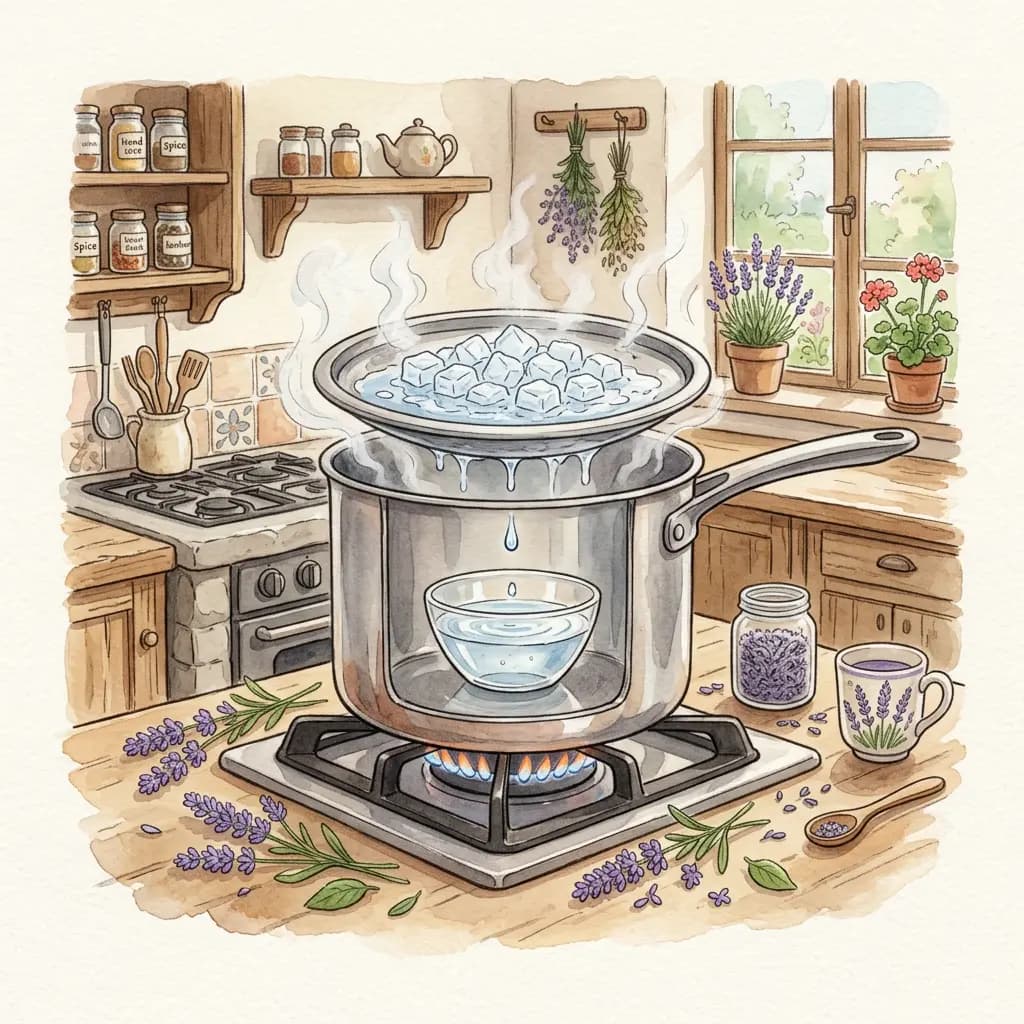
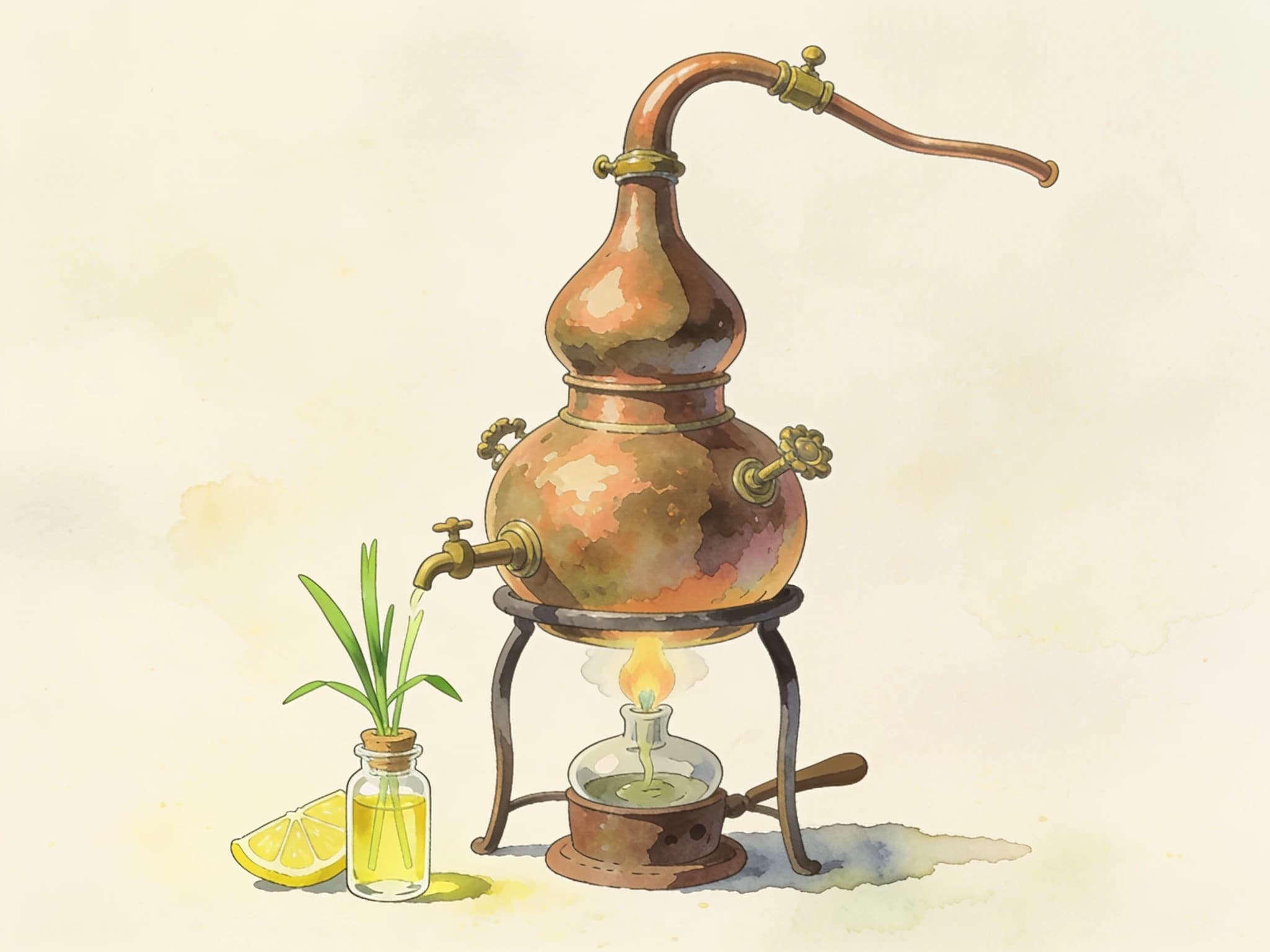
True essential oil (EO) is obtained by steam distillation in a still. You CANNOT do it without a still: the pot and bowl method gives a hydrosol with barely a trace of oil. If you fancy distilling seriously (citronella, lavender, rosemary, thyme, oregano, mint), the minimum is a stainless steel still of 5-10 L (about 1.3–2.6 US gal). Here we explain the general process and the real quantities you can expect.
Ingredients
- Fresh citronella (Cymbopogon nardus or C. winterianus)1-2 kg (2.2–4.4 lb)
It is a grass, not the “citronella” geranium (Pelargonium) of patios and terraces, which has hardly any of that oil. Lavender, rosemary, thyme, oregano, mint or eucalyptus also work
- Stainless steel or copper still5-20 L (about 1.3–5.3 US gal)
- Distilled water3-8 L (about 0.8–2.1 US gal) (depends on the still)
- Florentine flask (essencier)1
Separates oil from water by difference in density
Step by step
- 1Chop the citronella to maximise the surface area in contact with the steam. Do not grind it: it makes it harder for the steam to pass through.
- 2Fill the bottom of the still with distilled water: in steam distillation the plant material must never touch the water at the bottom.
- 3Place the citronella in the basket or upper rack, without packing it down (the steam has to pass through it).
- 4Close tightly and seal the joints with flour and water paste if necessary.
- 5Connect the cooling coil to a continuous flow of cold water.
- 6Heat over a medium-low heat for about thirty or forty minutes until a steady condensate drips from the coil; do not force the boil.
- 7Adjust the heat to keep a constant rate of 40-60 drops/min. Not too fast (it carries over impurities), not too slow.
- 8Collect the distillate in the Florentine flask: the essential oil (lighter) floats, the hydrosol stays underneath.
- 9Distil for 2-3 h in total. When the aroma of the distillate fades a lot, stop.
- 10Separate the essential oil from the hydrosol in the Florentine flask. Filter the EO through muslin or a coffee filter.
- 11Pour the EO into a small dark glass bottle (5-15 ml, 0.17–0.51 fl oz) with a dropper. The hydrosol goes in a separate dark bottle.
Storage
Essential oil: 2-3 years in dark glass, tightly closed and in a cool place. Hydrosol: as a guide 1-2 months in the fridge, in a sterilised bottle.
How to use it
- Mosquito repellent (5-10 drops in 100 ml, 3.4 fl oz of alcohol + distilled water)
- Diffuser to scent the garden in summer
- Ingredient for homemade candles and soaps
- Base for aromatherapy preparations (always diluted 1-3 % in a carrier oil)
Precautions
- Essential oil is very concentrated and irritating: never apply it neat to the skin.
- Always dilute 1-3 % in carrier oil (5-10 drops in 30 ml, 1 fl oz).
- Do not swallow it: it is a concentrated product, not a harmless homemade syrup.
- Do not use it in pregnancy or in children under 6.
- Copper stills can release traces of copper: check that the manufacturer guarantees it is food-grade.
- The still produces steam at a high temperature: never close it without a steam outlet (risk of explosion), do not leave it unattended and watch out for burns.
Tips and variations
- The spent plant material can go on the compost heap.
- The first 20 % of the distillate is the most aromatic (the heads), the last 20 % is usually the most resinous (the tails). Professionals separate the fractions.
- If it is your first distillation, start with lavender: it is the most forgiving of mistakes.
Gift idea. A jar with a handwritten label and a bow of raffia turns any recipe here into a memorable, original present, especially for Christmas, birthdays or when you are invited to lunch.