
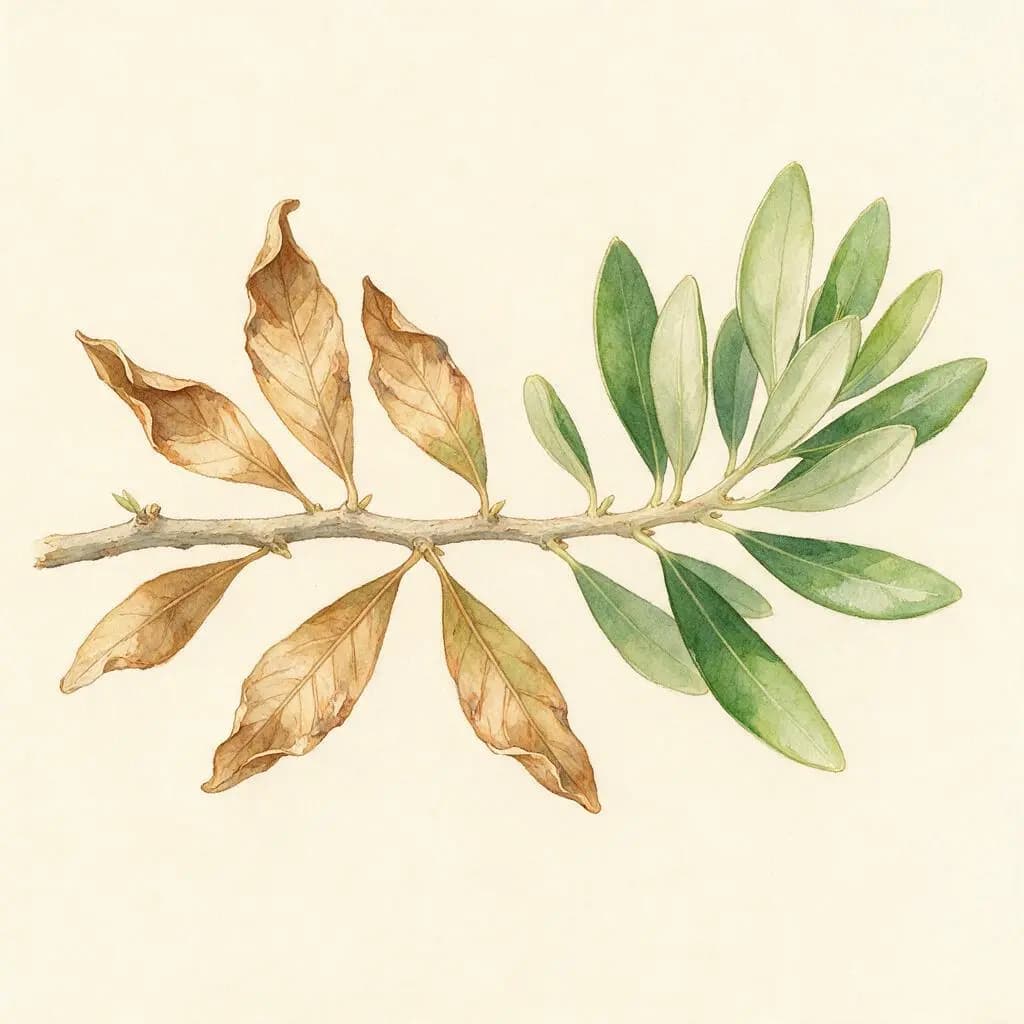
Verticillium wilt
Also known as: verticillium wilt, Verticillium, verticillium, Verticillium dahliae, olive verticillium wilt
A soil fungus that blocks the water-conducting vessels. It is very typical on olives and tomatoes: the plant wilts in summer and does not recover even when watered. The first step is to remove affected plants or branches and not replant a susceptible crop in that soil.

How to recognise it (symptoms)
- Wilting in sections: whole branches dry out while the rest stays green
- Yellowish leaves, sometimes with the yellowing in a ‘V’ shape from the edge towards the midrib
- When you cut the branch, the wood shows dark streaks: the fungus has colonised the vessels
- Apparent recovery in autumn and relapse the following year
Crops affected
 OliveThis is the most widely planted olive variety in Spain, originally from the province of Jaén.
 TomatoMarmande tomato, flattened and ribbed, a good size for salads.
 AubergineAn aubergine with glossy black fruit, for warm climates.
 PotatoThe 'Kennebec' potato is versatile in the kitchen, with pale skin.
 Globe artichokeAn artichoke with a green head and a cleft at the top, tender and with no choke, good for eating almost raw.
 AlmondGuara almond, a self-fertile variety that flowers later than the classic ones, useful where there are spring…
What favours it
- Soils with residues of susceptible crops (potato, cotton, alfalfa)
- Overwatering and heavy soils, which weaken the roots
- Rather cool soils (around 18-24 °C), in which the fungus spreads more easily
Prevention
- Do not plant after potatoes, cotton or alfalfa, which are strong hosts
- Use certified seed and plug plants, to start with less of the fungus
- For olives, plant tolerant varieties; ask a trusted nursery which ones suit your area
- Solarise the soil in summer and add well-rotted compost
Organic treatment
Always start here: these remedies are kind to the garden, the soil and pollinators.
- First: pull up dead plants with their roots (or prune out dry branches on olives) and take them out of the garden
- Trichoderma or Bacillus subtilis at the base as preventive support; they are no substitute for rotation and clearing up
- On olives, sanitary pruning of affected branches, putting the wood in the rubbish bin or taking it to a collection point; do not burn it on your own plot if local regulations prohibit it
Don't confuse it with…
With fusarium wilt, which is more aggressive in warm soil and shows the dark inner ring in the stem more clearly.
In-depth guide — verticillium wilt
This is a soil fungus (Verticillium) that blocks the vessels and causes wilting on one side of the plant. It persists for years in the soil: rotation and tolerant varieties are the real defence.
Recognising the pattern
- Yellowing and wilting on half the plant or on one side.
- Brown vessels when you cut the stem, which helps tell it apart from wilting caused by lack of water.
- Tomato, aubergine, potato, globe artichoke, olive and almond are hosts.
Do not spread it
Pull up affected plants with their roots and take them out of the garden. Do not use that soil for Solanaceae seed trays.
Long rotation
Leave four or five years before growing host crops on the same plot again. Cereals and onions help break the cycle, though only partly.
Solarisation and healthy material
- Solarise the soil in summer before replanting in a suspect area.
- Use grafted, tolerant tomato plants if you can find them.
- Disinfect your tools when you have been working soil from a diseased plot.
Use plant protection products responsibly, even organic ones. Always read and follow the label, the doses and the harvest interval, and never treat plants in flower or while bees are flying, in order to protect pollinators. If in doubt, put prevention and organic methods first.

In the plant catalogue you'll see what to plant, how and when: a well-tended plant resists pests much better.