
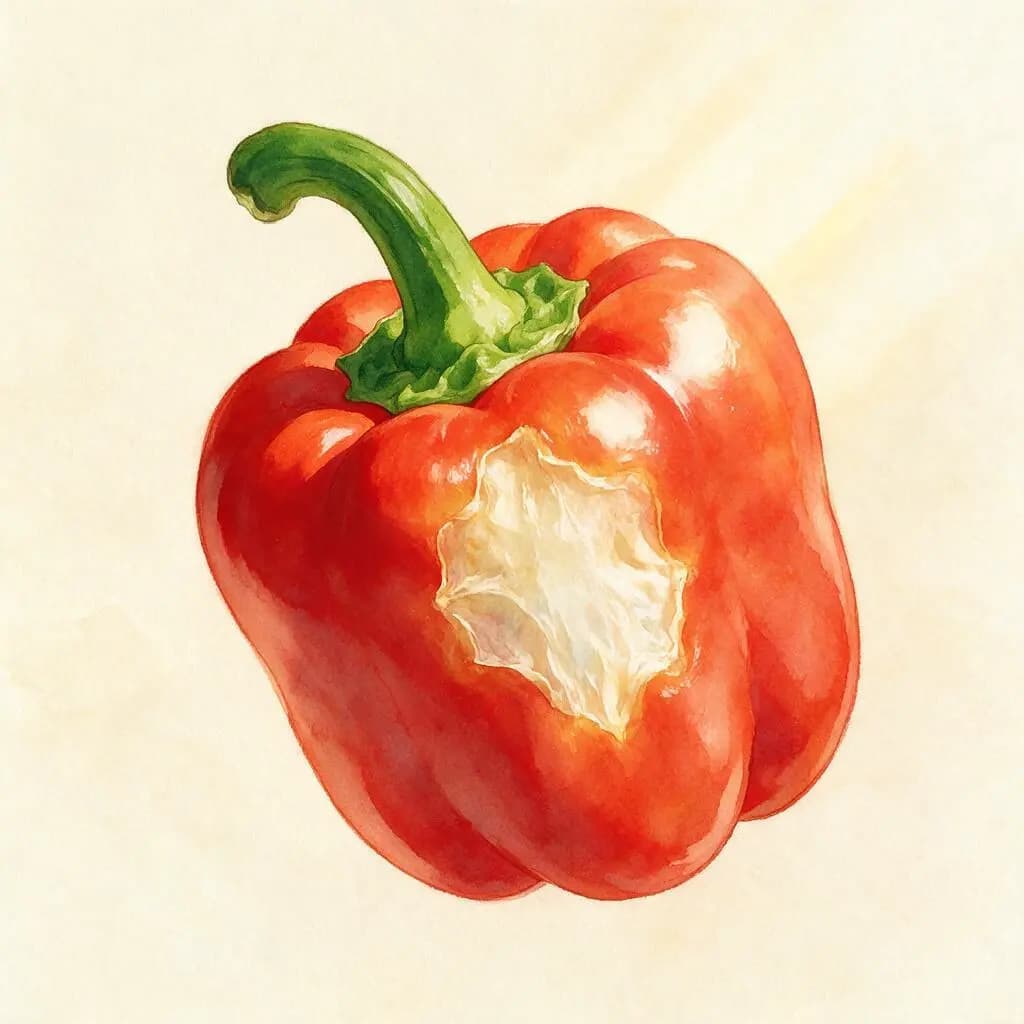
Sunscald
Also known as: sunscald, sunburn on fruit, sun scorch, leaf scorch, fruit sunburn
Areas of fruit or leaves exposed to direct sun that burn because of extreme temperatures or because they are suddenly left unprotected. It is not an infection. The first step is to shade the fruit and avoid stripping leaves in summer.

How to recognise it (symptoms)
- A sunken, whitish, papery area on the sunny side of the fruit
- Leaves with dry, light brown patches along the edge
- It often appears after pruning too hard in summer and leaving the fruit exposed
- In potatoes, exposure to sun at harvest turns them green
Crops affected
 TomatoMarmande tomato, flattened and ribbed, a good size for salads.
 PepperCalifornia Wonder pepper, a blocky bell type with thick flesh, for stuffing or eating fresh.
 AppleThe Fuji apple is crisp, sweet and juicy, and highly prized for eating fresh.
 GrapeA white grape with large, oval berries and a mild muscat flavour.
 OnionThe Figueres onion is a sweet onion with purplish skin, typical of Catalonia in Spain.
 Potato (at harvest)The 'Kennebec' potato is versatile in the kitchen, with pale skin.
What favours it
- Hard summer pruning that leaves the fruit exposed
- Heatwaves
- Transplanting in full sun without hardening the plant off
Prevention
- Do not remove the leaves that shade the fruit in summer
- Use light shade netting during heatwaves, in the middle of the day
- Harden off plug plants to the sun gradually before transplanting
- Cover freshly lifted potatoes and onions with sacks or straw
Organic treatment
Always start here: these remedies are kind to the garden, the soil and pollinators.
- First: provide shade with light netting or with the plant's own leaves, and stop removing leaves
- Kaolin (a white clay, as a registered product) sprayed on the fruit and canopy: it reflects the sun
- Water at dawn, not during the hours of strong sun
Don't confuse it with…
With blossom end rot, which appears only at the base of the fruit and is caused by irregular watering.
In-depth guide — sunscald on fruit and leaves
This is a physiological disorder caused by too much radiation and heat on exposed tissue. It is very common on tomatoes, peppers and apple trees after too much leaf removal in the Mediterranean summer.
Prevention on tomatoes and peppers
- Keep the leaves that protect the fruit from the midday sun.
- Use light shade netting during extreme heatwaves.
- Deep watering at dawn reduces drought stress.
Careful pruning
Do not strip leaves aggressively in July and August. Open up the centre of the plant without leaving fruit exposed to the afternoon sun.
Damaged fruit
White or corky areas on the shoulder of the tomato can be cut away: eat the rest soon or discard it. The wound makes it easier for botrytis to get in if it is damp.
Potatoes that have turned green from the sun contain solanine, which is toxic: cut off and throw away the green parts and do not eat them.
Fruit trees
On young apple trees, paint the trunk with diluted white paint or protect it with netting on the south and west sides. Water generously during prolonged heatwaves.
Use plant protection products responsibly, even organic ones. Always read and follow the label, the doses and the harvest interval, and never treat plants in flower or while bees are flying, in order to protect pollinators. If in doubt, put prevention and organic methods first.

In the plant catalogue you'll see what to plant, how and when: a well-tended plant resists pests much better.