
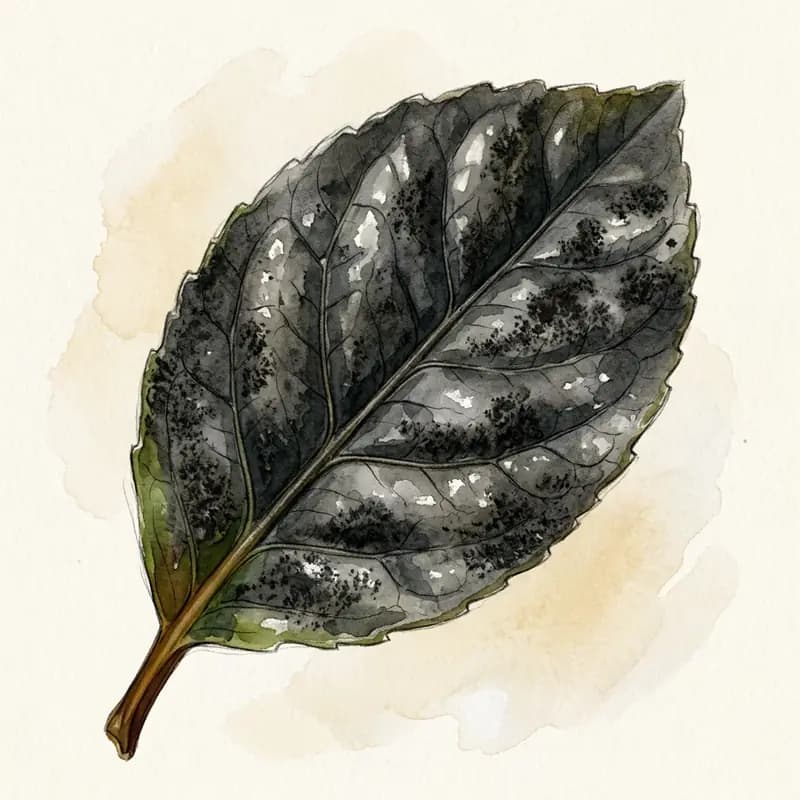
Sooty mould
Also known as: sooty mould, sooty mold, black mould on leaves, fumagine, honeydew mould
A black surface fungus that grows on the honeydew left by aphids, whitefly or scale insects. It does not infect the plant, but it covers the leaf and reduces photosynthesis. The first step is to get rid of the insect producing the honeydew.

How to recognise it (symptoms)
- A black, soot-like layer on leaves, stems and fruit
- It rubs off, because it is only on the surface
- It always appears alongside honeydew-producing pests
- Dull leaves that photosynthesise less well
Crops affected

What favours it
- Aphids, whitefly or scale insects (honeydew)
- Ants, which protect those pests in exchange for honeydew and spread them through the crop
- Poor ventilation: stagnant air keeps the leaves damp
Prevention
- Control the pest producing the honeydew: no honeydew, no sooty mould
- Monitor and control the ants associated with it
- Make sure the plant is well ventilated
Organic treatment
Always start here: these remedies are kind to the garden, the soil and pollinators.
- First: identify and get rid of the pest producing the honeydew (aphids, scale insects or whitefly), following its profile
- Wash the leaves with water and a little potassium soap to remove the soot
- Prune and clean the worst-blackened areas, and put the debris in the rubbish bin
Chemical treatment (with caution)
Sooty mould is not treated with fungicides: it is solved by getting rid of the insect producing the honeydew.
Don't confuse it with…
With dirt or ash. Sooty mould always goes with an infestation of sap-sucking insects.
In-depth guide — sooty mould
A black surface fungus on the honeydew of aphids, whitefly or scale insects. It does not infect the tissue: treat the insect producing it and wash the leaf.
Diagnosis
It is a black layer that partly comes off when rubbed with a damp finger. Underneath there is usually sticky honeydew and sap-sucking insects.
Step 1: control the insect
Work out whether it is aphids, whitefly or scale insects and apply the treatment for that pest. Without fresh honeydew, the sooty mould stops spreading.
Cleaning the leaves
- Rinse tough leaves with water and a little mild soap.
- Remove heavily coated leaves so that clean new shoots can grow.
- On citrus, gently brush the thicker branches in winter.
Prevention
Control the ants and check the undersides of the leaves weekly in summer. Sooty mould reduces photosynthesis and often appears before you notice the insect.
Use plant protection products responsibly, even organic ones. Always read and follow the label, the doses and the harvest interval, and never treat plants in flower or while bees are flying, in order to protect pollinators. If in doubt, put prevention and organic methods first.

In the plant catalogue you'll see what to plant, how and when: a well-tended plant resists pests much better.