
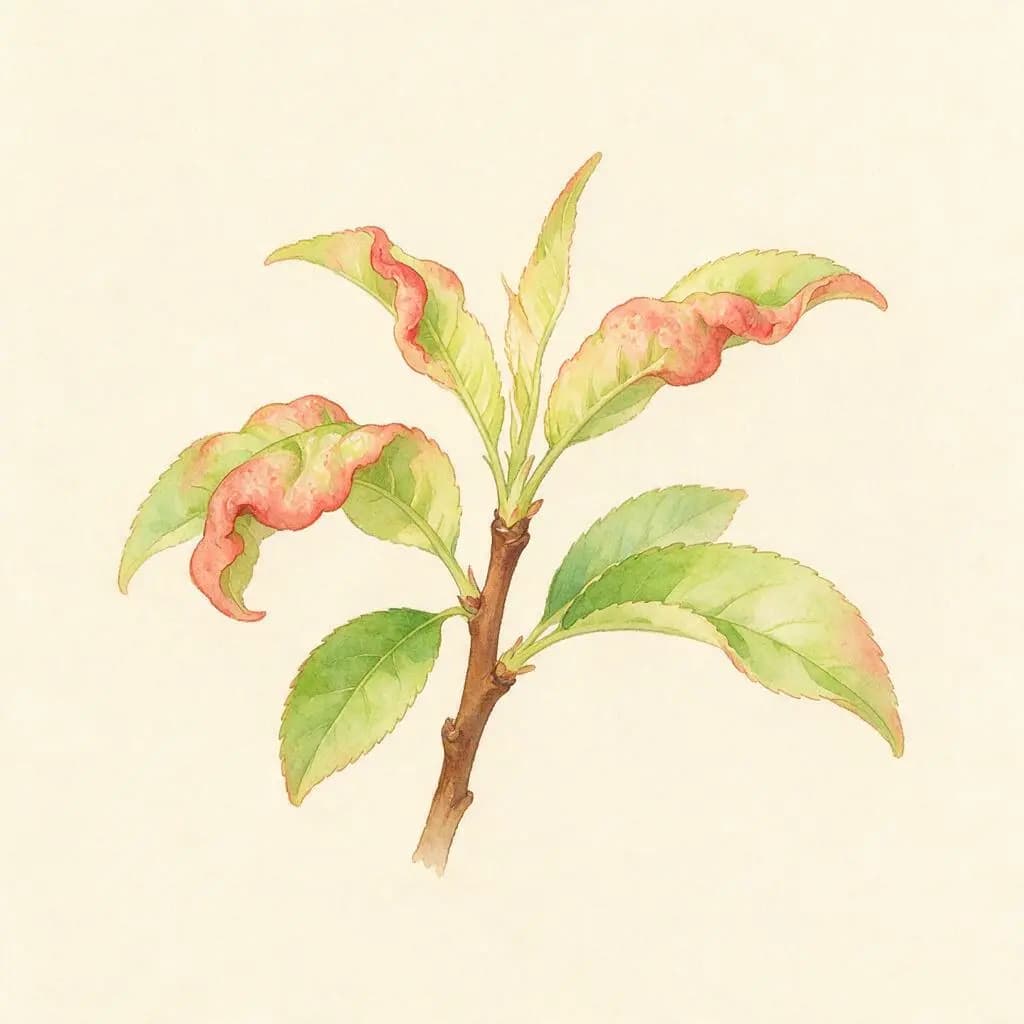
Peach leaf curl
Also known as: peach leaf curl, leaf curl, Taphrina deformans, peach curl
A fungus that causes twisted, puckered, thickened, reddish leaves as the peach tree comes into leaf. It greatly weakens the tree. The first step is to treat with copper in winter, before the buds open, because afterwards it is no longer any use.

How to recognise it (symptoms)
- New leaves that are curled, thick and reddish or yellowish
- Eventually they become covered in a whitish bloom and drop
- Short, bare shoots if the attack is severe
- Small, spotted, puckered fruit, if the damage reaches the fruit
Crops affected
 PeachA large, late yellow peach, very sweet and firm, which ripens in a protective bag on the tree.
 AlmondGuara almond, a self-fertile variety that flowers later than the classic ones, useful where there are spring…
 Japanese plumA large, yellow, very juicy and early Japanese plum with a thin skin.
What favours it
- Cool, damp springs just as the buds are breaking
- Susceptible varieties
Prevention
- Gather and destroy affected leaves throughout the year
- Do not plant peach trees in areas with persistent mist
- If you can, choose varieties that tolerate the disease better; ask at a nursery in your area
Organic treatment
Always start here: these remedies are kind to the garden, the soil and pollinators.
- First: treat with copper (oxychloride or hydroxide) in winter, from leaf fall until the buds swell, and repeat at the end of winter, according to the label
- Bordeaux mixture in winter, as a registered product, also reduces the fungus on the wood and buds
- It is essential to treat before the buds open: once the leaves are already distorted, there is nothing to be done that year
Don't confuse it with…
With leaf-curling aphids (wrinkled leaves, but not red or thick) or with powdery mildew.
In-depth guide — peach leaf curl
Taphrina deformans distorts the leaves as they emerge, in damp springs. A well-timed treatment before the buds open is worth more than trying to cure leaves that are already infected.
The critical moment
Treat at the end of winter or just before the buds open, when they are swollen but no leaves have unfolded.
Usual products
- Copper, where it is authorised for stone fruit, at the rate on the label.
- Repeat the treatment only if the spring is long and wet.
Hygiene
Gather any curled leaves that drop in summer and put them in the rubbish bin. Prune to improve ventilation and reduce the hours the leaves stay wet.
Susceptible varieties
In home gardens in damp valleys, consider varieties that tolerate the disease better, or plant on a slope that gets more morning sun.
Use plant protection products responsibly, even organic ones. Always read and follow the label, the doses and the harvest interval, and never treat plants in flower or while bees are flying, in order to protect pollinators. If in doubt, put prevention and organic methods first.

In the plant catalogue you'll see what to plant, how and when: a well-tended plant resists pests much better.