
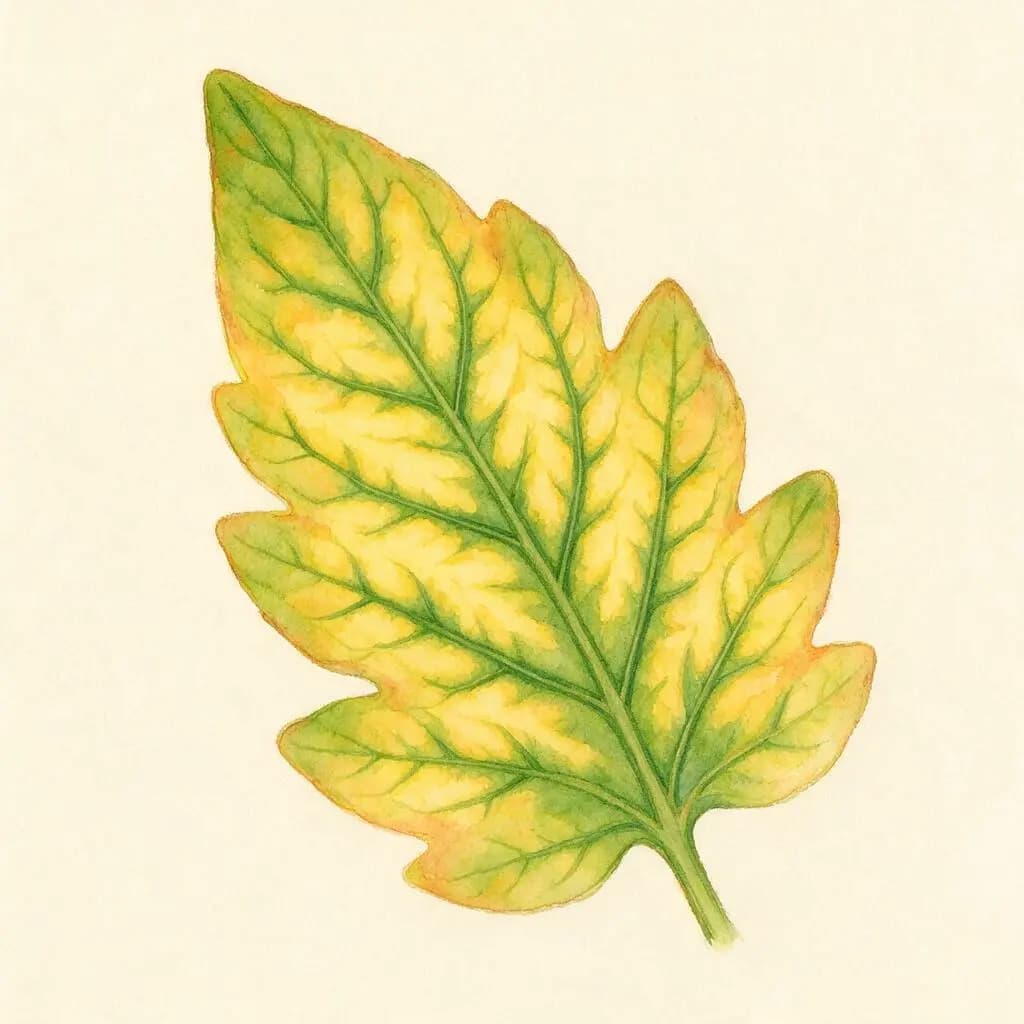
Magnesium deficiency
Also known as: magnesium deficiency, Mg deficiency, lack of magnesium, interveinal chlorosis, yellowing between leaf veins
Magnesium is the central atom of chlorophyll. A lack of it causes yellowing between the veins, which stay green, starting with the oldest leaves. The first step is to rule out other causes and, if it is confirmed, spray with Epsom salts.

How to recognise it (symptoms)
- Yellowing between the veins of the oldest leaves, leaving the veins green
- Dry brown patches at the edges of the leaves as it progresses
- Dull leaves and fruit, without any shine
- It appears earlier on tomatoes, peppers, potatoes and fruit trees
Crops affected
 TomatoMarmande tomato, flattened and ribbed, a good size for salads.
 PepperCalifornia Wonder pepper, a blocky bell type with thick flesh, for stuffing or eating fresh.
 PotatoThe 'Kennebec' potato is versatile in the kitchen, with pale skin.
 GrapeA white grape with large, oval berries and a mild muscat flavour.
 AppleThe Fuji apple is crisp, sweet and juicy, and highly prized for eating fresh.
What favours it
- Acid or sandy soils, which hold little magnesium
- Too much potassium or calcium, which compete with magnesium
- Heavy watering that washes magnesium out of the soil
Prevention
- Test the soil before feeding
- Add dolomite or magnesium sulphate on acid soils, if a soil test indicates it
- Do not overuse potassium or lime
Organic treatment
Always start here: these remedies are kind to the garden, the soil and pollinators.
- First: rule out other causes (watering, nitrogen, iron) and, if you can, have the soil tested
- Foliar spray with magnesium sulphate (Epsom salts), 5 g per litre of water, at dawn or dusk, 2-3 times 10-14 days apart
- To the soil, 10-20 g per m² dissolved in the irrigation water; on acid soils, dolomite supplies magnesium and calcium over a longer period
Don't confuse it with…
With iron chlorosis, which affects the young leaves rather than the old ones, or with a viral mosaic, which has an irregular pattern that does not follow the veins.
In-depth guide — magnesium deficiency versus iron deficiency
With a lack of magnesium, the old leaves turn yellow between the veins. With a lack of iron, the young leaves turn yellow first. Epsom salts will not fix an iron problem.
How to tell them apart
Look at which leaves turn yellow first.
- Lower leaves yellow between the veins: suspect magnesium.
- New shoots yellow with green veins: suspect iron (there is usually a high pH).
Correcting magnesium
Apply diluted magnesium sulphate (Epsom salts) as a foliar spray. Do not overdo it: too much upsets the plant's balance of potassium and calcium.
- As a guide, 5 g per litre as a foliar spray, at dusk, repeating after 10-14 days if necessary (maximum 2-3 applications per season).
- In the medium term, improve the soil with organic matter.
- If it is iron: iron chelate and a check of the pH of the irrigation water and the soil.
Use plant protection products responsibly, even organic ones. Always read and follow the label, the doses and the harvest interval, and never treat plants in flower or while bees are flying, in order to protect pollinators. If in doubt, put prevention and organic methods first.

In the plant catalogue you'll see what to plant, how and when: a well-tended plant resists pests much better.